Comments on Dr. Reiner’s Letter
Improvement Era, vol. 1, no. 7, May 1898, pp. 471 to 481
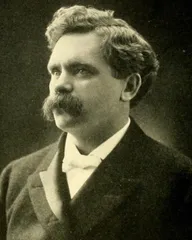
COMMENT ON DR. REINER'S LETTER. BY ELDER B. H. ROBERTS.
[The letter of Elder Roberts is addressed to the same company of gentlemen who had received Dr. Reiner's letter]
Gentlemen: Since in Doctor Reiner's judgment the subject of polygamy could have been left out of your investi- gations concerning "Mormonism," owing to the "Manifesto" issued by President Woodruff, in 1890, which discontinued plural marriages in the church, almost regret that he did I
not, with that remark, pass the subject, and proceed to the consideration of one more fundamental to what the world calls "Mormonism." I suppose, however, that in view of
.
472 IMPRO VEMENT ERA
your question he felt himself bound to say something on plural marriage; and as in any extended discussion of"Mor- monism" something sooner or later must be said on that sub- ject, as well say it now as at any other stage of the investiga- tion. The Doctor does not answer your question as to whether polygamy can be justified "from a biblical stand- point." He relies upon the authoritative decision of the Church of Rome to settle the matter for those of you who are Roman Catholics; while those of you who are Protestants he treats to a dissertation on the views of some of the sixteenth century "reformers" on the subject. And when I remember the Doctor's severity, not to say bitterness, against the Pro- testants, I cannot help but think that unconsciously he has
taken a thrust at them over the shoulders of the Latter-day Saints. But however interesting all that may be, or however learned, it neither answers your question, nor does it repre- sent the views of the Church of Jesus Christ of Latter-day Saints on the subject. So much by way of criticism on the Doctor's method of treating the subject; all of which, how- ever, is intended in the kindest spirit, as I entertain a very high respect for the doctor's learning, and also honor him for his evident intention to speak fairly of a people who have suffered much at the hands of those who have often pretended to investigate their faith. Before proceeding to the question as to whether a plu- rality of wives can be justified"from a biblical standpoint" or not, allow me to say that the Latter-day Saints never practiced plural marriage because they thought polygamy was justifiable from a biblical standpoint, or because Martin Luther and other sixteenth century "reformers" thought polygamy under some circumstances justifiable. The Prophet Joseph Smith inquired of the Lord why it was that he justi- fied his servants, Abraham, Jacob, Moses, David and others, in the matter of their having many wives and concubines. In answer to that inquiry the Lord gave to him a revelation on the subject of marriage, revealing the doctrine of the eternity of the marriage covenant, that is, he made known to his ser- vant the possibility of entering into the marriage covenant
DR. JOHN M. REINER ON MORMONISM. 473
not only "until death" ends the contract, but for time and for ail eternity; so that those entering into the holy state of matrimony under this law of God, with the engagement sealed and ratified by the authority of the holy priesthood, which has the power to "bind on earth and in heaven; to loose oh earth and in heaven" — might have claims upon each oLher in and after the resurrection; and that relationship which has contributed so much to their happiness and refine- ment here in this life, might continue throughout the count- less ages of eternity to minister to their exaltation and glory. Relative to the servants of God in ancient times being he was informed that it justified in having a plurality of wives, was because they had received them by commandment from God, and in nothing had they sinned except wherein they had acted outside the commandments of the Lord. "God commanded Abraham," says the revelation, "and Sarah gave Hagar to Abraham to wife. And why did she do it? Be- cause this was the law, and from Hagar sprang many people. This, therefore, was fulfilling, among other things, the promises. Was Abraham, therefore, under condemnation? Verily I say unto you, nay; for I the Lord commanded it. *
- David also received many wives and concubines, as also Solomon and Moses my servants; as also many others of my servants, from the beginning of the creation until this time, and in nothing did they sin, save those things which they received not of me."* Subsequently Joseph Smith received a commandment from the Lord to introduce that order of marriage into the church, and on the strength of that revelation, and not by reason of anything that is written in the old Jewish scriptures, the Latter-day Saints practiced plural marriage. But the question, "Is polygamy justifiable from a bibli- cal standpoint," still remains.The answer is, no; not in the sense that what is written of Abraham, Jacob, Moses, and others now authorizes any one to take a plurality of wives without further commandment and authority from God to do so. But if the question be changed somewhat, and made to read: "Does what is written in the Bible concerning Abraham, *Doc. & Cov,, Sec. CXXXII.
Jacob, David, and other men of God having a plurality of wives justify us in believing that God approved that form of marriage, and that it is therefore righteous? then the — answer is, yes; most emphatically it does. And the fact that it does, very much strengthened the faith of the Latter- day Saints in the revelation that Joseph Smith announced to the church on that subject. For example, they read of faith- ful Abraham taking Hagar, the handmaid of his wife Sarah, to wife; and when trouble arose in the family and Hagar de- parted from her husband's household, an angel of the Lord met her and commanded her to return.* Which, if plura:l marriage were sinful, the angel would not have done, but would rather have encouraged her in her flight from that which was evil. Nowhere do we find the Lord reproving Abraham for taking Hagar to wife; on the contrary, when the Lord appeared to him some time after the birth of Ishmael, he promised him a son by his wife Sarah, through whom all the seed of Abraham was to be blessed. And when Abraham prayed for the welfare of Ishmael the Lord promised to bless him also, saying: "And as for Ishmael, I have heard thee; Behold, I have blessed him, and will make him fruitful, and will multi- ply him exceedingly; twelve princes shall he beget, and I will make him a great nation, "f Subsequently, when about to destroy Sodom and Gomorrah, the Lord again visits Abraham, renews the promise that Sarah shall yet have a son, calls Abraham his friend, and reveals unto him his in- tentions of destroying the cities of the plain; and then Abraham successfully pleads for the righteous within the cities. In all this there appears no displeasure towards Abraham for marrying more wives than one. The history of Jacob furnishes still more striking proofs of God's approval of plural marriage. The story of his marrying the two daughters of Laban, Leah and Rachel, is too well known to need repeating. But when Rachel realized her barrenness she gave her handmaid, Bilhah, to be her husband's wife, and she bore Jacob a son. "And Rachel said, 'God hath judged me, and hath heard my voice, and hath given me a son.' "t Then, when Leah saw that she had Genesis XVI: 9. f Genesis XVII: 20. ^Genesis XXX: 6.
DR. JOHN M. REINER ON MORMONISM. 475
left off bearing children, she took Zilpah, her maid, and gave
her to Jacob to wife; and the sacred writer adds: "And God hearkened unto Leah, and she conceived and bear unto Jacob a fifth son. And Leah said: God hath given me my hire, be- cause I have given my maiden to my husband."'^ Again: "And God remembered Rachel, and God hearkened unto her, and opened her womb, and she con- ceived and bear a son; and said: God hath taken away my reproach.''^ If plurality of wives were wrong in the sight
of God, would he bless in so remarkable a manner those who practiced it? Would he hear the prayers of those polyga- mous wives, and answer them with blessings take away the — reproach of the barren Rachel, the second wife of Jacob, and make her fruitful, and give more children unto Leah as her "hire" for giving her husband another wife when he already had three? If a plurality of wives, I mean, of course, as practiced by Abraham, Jacob, and the prophets, is a sin at all, it must be — adultery it can be classed as no other. Paul says: "Now the works of the flesh are manifest, which are these: adultery, fornication, uncleanness, * * * ai^j such like, of the which I tell you before, as I have also told you in times past, that they which do such things shall not inherit the kingdom of God. "%
The adulterer, then, cannot inherit the kingdom of God; but we find the following coming from the lips of Jesus con- cerning Abraham, Jacob, and the prophets: "There shall be weeping and gnashing of teeth when ye shall see Abraham, Isaac and Jacob and all the prophets in the kingdom of God, and you yourselves thrust out."§ Again: "And I say unto you that many shall come from the east and the west and shall sit down with Abraham, Isaac and Jacob in the kingdom of heaven. "II We are driven to the conclusion by this testimony that polygamy is not adultery, for were it so con- sidered, then Abraham, Jacob and the prophets who practiced it would not be allowed an inheritance in the kingdom of
heaven; and if polygamy is not adultery then it cannot be classed as a sin at all.
*Genesis XXX: 17, 18. fGenesis XXX: 22, 23. JGal. V: 19, 21. §Luke XIII: 28. |Matthew VIII: 11.
David, the king of Israel, and a "man whose heart," we are informed, "was perfect before the Lord," had a plurality of wives. His first wife was the daughter of Saul; but while fleeing as a fugitive before the king of Israel, he married Abigail, the widow of Nabal, and also Ahinoam, of Jezrell, "and they were both of them his wives."* Yet notwith- standing David practiced a principle which the Christians of today denounce as evil, we are taught by the Scripture that "David did that which was right in the eyes of the Lord, and turned not aside from anything that he commanded him all the days of his life, save only in the matter of Uriah the
Hittite."t If David did that which was right in the eyes of the Lord all the days of his life, except in the matter of Uriah's wife, he must have done that which was right in the eyes of the Lord when he took Abigail and Ahinoam to be his wives; hence a plurality of wives, as David practiced it, must be right in the sight of God. David's great sin in the case of Uriah's wife also throws some light on the subject in hand. — The circumstance is well known David committed adultery with Bathsheba, the wife of Uriah, and then had her husband placed in the front of the battle where he was murdered. For this crime the Lord sent Nathan, the prophet, to reprove David. In the course of that reproof Nathan said: "Thus saith the Lord God of Israel, I anointed thee king over Israel, and I delivered thee out of the hand of Saul; and I gave unto thee thy master'' s house, and thy master'' s zuives into thy bosom, and gave thee the house of Israel and of Judah; and if that had been too little, I Tvould m,oreover have given unto tJiee such and such things"X
From this we learn that the Lord not only gave David the kingdom of Israel and Judah, but also delivered him out of the hands of Saul, and gave unto him his master's wives into his bosom, and intimates that if this was not enough he would have given unto him more wives. If polygamy were sinful, was it not wrong for the Lord to give unto David the widows of Saul into his bosom when he already had several wives? If for a man to have a plurality of wives is sinful, then in this instance, at least, the Lord was a party to the wrong. And the Christians of today who, in the face of the *I Samuel XXV: 42, 43. fl Kings XV: 5. |II Samuel XII: 7, 8,
DR. JOHN M. REINER ON MORMONISM. 477
truth just pointed out, will still insist on the sinfulness of polygamy —virtually accuse God of being a party to the evil.
The child which was the fruit of David's adulterous con- nection with Bathsheba was smitten by the Lord with death; and all David's fasting and praying was of no avail to save it.* After the same woman became the polygamous wife of — David, she bore unto him another son they called his name Solomon, "and the Lord loved him."f When King David waxed old and usurpers were laying their plans to secure the throne of Israel to themselves, instead of Nathan the prophet coming with a severe reproof from the Lord, we find him uniting with Zadock the priest in an effort to place this poly- gamous child Solomon on the throne of his father David, and they were successful, Solomon became king. J The Lord appears to sanction his appointment also, for no sooner is Solomon made king than the Lord appears to him and promises to grant whatever he might desire; and when Solomon prayed for wisdom, the Lord promised to be- stow it upon him in rich abundance, together with long life, honor and great riches. § Solomon was also chosen to build a temple to the Lord.ff And when it was dedicated the glory of God filled the house in attestation of Divine ac- ceptance. J J The Lord also appeared unto Solomon and gave him an assurance that the temple was accepted. §§ What a contrast between the child begotten in adultery and the one born in polygamy! The one is smitten of the Lord with death in his infancy, the other is "loved of the Lord," exalted to the throne of his father David, chosen to build a temple to God, who gives most positive and public proofs of his acceptance of it, and also reveals himself unto him, warning and encouraging him. Surely in all this the Lord God has stamped adultery with unmistakable marks of his displeasure, while, on the other hand, he has set his seal of approval on polygamy. Neither is the case of Solomon the only instance where God acknowledges and blesses the children born in polygamy. When Jacob, just previous to his death, blessed his children, *II Samuel: XII. fll Samuel XII: 24. :J:I Kings I: 13. §1 Kings: III. ffl Kings V: 5. XX\ Kings VIII: 10. 11. §§I Kings IX: 1-3.
he bestowed as great blessings upon the children of his polygamous wives as upon the children of Leah, nay, the blessing of Joseph the son of Rachel, is greater than that pronounced upon any one of the rest.* Moreover, when Reuben, Jacob's oldest son, by transgression lost his birth- right, instead of the birthright falling to Simeon, the next oldest son, we are informed that it was given unto the sons of Joseph, t We learn from the description given of the New Jerusa- lem that there will be twelve gates in the wall surrounding the holy city, and on these gates will be written the names of the twelve sons of Jacob, born of his four wives. We have al- ready quoted the words of Jesus, showing that polygamous Abraham, Jacob, and the prophets will be in the kingdom of God, and will doubtless have their abode in this New Jerusa- lem, so that it appears that if our modern friends, who so bitterly oppose the practice of the saints in having a plurality of wives, ever go to heaven, gain an admittance into the "heavenly city," it will be by passing through a gate upon which is written the name of a polygamous child, only to be ushered into the presence of such notorious polygamists as Abraham, Jacob and many of the old prophets. It appears to the writer that modern Christians must either learn to tolerate polygamy or give up for ever the glorious hope of resting in "Abraham's bosom" —a hope which has ever given a silvery lining to the clouds which hang about the deathbed of the dying Christian. But the indignant unbeliever in the rightfulness of a plurality of wives, rather than associate with polygamists, may prefer to pluck off his crown, lay aside the golden harp of many strings, give up the pleasure of walking the gold-paved streets of the holy city whose "builder and maker is God," and take up his abode outside, where the whoremonger, the liar and hypocrite dwell, and where there is weeping and gnashing of teeth. Surely he must do this or make up his mind to honor those who have believed in and — practiced plurality of wives more properly celestial marriage. Right here it might be as well to mention the fact that *See Genesis XLIX, 22-26; also, Deuteronomy XXXIII: 13-18. fl Chronicles V: i, 2.
DR. JOHN M. REINER ON MORMONISM. 479
according to the genealogies given by Matthew an d Luke, so far as the earthly parentage of Jesus is concerned, he came of a polygamous lineage, some of his progenitors being polygamous children, and many of them practiced that form of marriage. Surely some other line of descent would have been chosen for the Son of God if polygamy were sinful. — In the laws given to ancient Israel and God was their — law-giver we find several, which more than foreshadow the permission to practice plurality of wives. Here is one in Exodus which regulates the practice by forbidding the hus- band to diminish the food of the first wife, her raiment, or her duty of marriage when he takes him another wife: "If he take him another wife, her food (/. <?., of the first wife), her raiment, and her duty of marriage, shall he not diminish."* Again, we find a law regulating inheritances in families:
If a man have two wives, one beloved and another hated, and they have borne him children, both the loved and the hated; and if the first- born son be hers that was hated: then it shall be, that when he maketh his sons to inherit that which he hath, that he may not make the son of the be- loved first-born before the son of the hated, which is indeed the first-born: but he shall acknowledge the son of the hated for the first-born, by giving him a double portion of all that he hath; for he is the beginning of his strength; the right of the first born is his."f
It may be claimed that this law relates to cases of a man having two wives in succession, and that is true; but it also relates to the case of a man having two wives simultaneously, and this idea is more forcible when we remember that Israel was a polygamous nation; and this is where the force comes in as an argument concerning plural marriage: both women are regarded as wives — their rights and the rights of their children are considered equal; and if the second wife, even though she be hated, should bear the first son, that son must not be defrauded of his birthright, he must inherit a double portion of his father's possessions. This construction is not strained, and proves that God intended to pro- it is natural,
vide for the rights of the polygamous wife, as well as to pro-
*Ex. XXI: 7-12. fDeut. XXI; 15-17.
tect the first wife in hers. This careful legislation gives us another instance of God's approval of polygamy. We quote another law: "If brethren dwell together, and one of them die, and have no child, the wife of the dead shall not marry without unto a stranger: her husband's brother shall go in unto her, and take her unto him to wife, and perform the duty of an husband's brother unto her, and it shall be, that the first-
born which she beareth shall succeed in the name of the brother, which is dead, that his name be not put out of Israel. "*
How eminently unjust this law would be if God regarded polygamy as sinful, and prohibited its practice! Under such circumstances a young man would be liable to have forced upon him his brother's wife, and would be debarred from making any choice of a wife for himself. But there is no provision in the law which exempted a man who already had a wife from taking his deceased brother's wife — it is as bind-
ing on those already married as upon the single, and would occasionally enforce the practice of polygamy. Those who refused to comply with the requirements of this law were disgraced before all Israel by the wife of the deceased brother, before all the Elders, loosing the latchet of his shoes, and spitting in his face, and forever after "his name shall be called in Israel, The house of him that hath his shoe loosed."! Is it possible that God was such an imperfect legislator that he enacted laws for his people, which, if obeyed, would enforce upon them the practice of that which was sinful, that which would destroy the purity of the family, and undermine the prosperity of the state? Yet such must be our conclu- sions we adopt the opinions of the modern religionist, if
and moralist, who persist in saying that a plurality of wives, even though practiced under divine direction, and hedged about with all the restraining influences of religion, will result in these calamities to society. Need I comment on this presumption in poor, weak, short-sighted man, or ex- claim how consummate is that egotism that will call in ques- tion the wisdom of the great Jehovah's laws? The following is a summary of reasons we have for be- *Deut. XXV: 5, 6. fDeut. XXV: 9, lo.
—
DR. JOHN M. REINER ON MORMONiSM. 48l
lieving that God approved of a plurality of wives as practiced by the ancient patriarchs, and many of the leaders and prophets of Israel, and that in this sense polygamy is justi-
fiable "from a biblical standpoint:"
First. — When a polygamous wife deserted the family of which she was a member, the Lord sent an angel to bid her return to that family, and promised to make her seed a great nation. — Second. The Lord heard and answered the prayers of polygamous wives, blessing their marriage by granting them children; and, in the case of Rachel, the second wife of Jacob, performing what men call a "miracle" — — making the barren fruitful in attestation of his approval of her polyga- mous marriage with Jacob — Third. The men who practiced plural marriage by no means forfeited the peculiar blessings promised to them before they were polygamists; on the contrary, the promises were renewed to them, and greater blessings added — God continuing to be their friend, and revealing himself and his pur- poses to them. — Fourth. God himself gave unto David a plurality of wives, thus be- coming a party to the evil, if polygamy be sinful. Fifth. —God owned and blessed the issue of polygamous marriages making a marked contrast between them and illegitimate children. Sixth. —So far as the earthly parentage of Jesus is concerned, he came of a polygamous lineage, which certainly would not have occurred had polygamy been unlawful and the issue spurious. — Seventh. The Lord gave unto ancient Israel a number of laws under which polygamy was not only permitted, but in some instances made obli- gatory.
The force of the cases here cited does not depend upon technical translations of particular passages of scripture, they sweep through the whole history of Israel, and are inter- woven in the legislation of the Hebrew race.* And while all this may not justify men now —without further commandment from God — in marrying a plurality of wives, what here set is
forth does establish the fact that God did approve of a plu- rality of wives as practiced by his ancient servants, and pre- sents an array of testimony so strong that not even the au- thoritative voice of Rome can strike down its force; nor the *After this article was written, it occurred to me that in order that no question might arise between Doctor Reiner and myself about the proper translation of passages quoted, I had better quote from the Roman Catholic English translation of the scriptures, but on comparing the texts in that version of the scriptures with the King James' translation, the one commonly used by us, the difference was so slight and immaterial that I judged it to be unnecessaay to make the change. 37
— —
odium that may attach to some of the coarse utterances of Martin Luther and his associates on the subject, affect the fact of God's approval of that form of marriage. And that which he approves, and so strikingly approves, must be not only not bad, but positively good, pure, and holy. Therefore I conclude, that since God did approve of the plural marriage custom of the ancient patriarchs, prophets, and kings of Israel, it is not at all to be wondered at that in the dispensa- tion of the fullness of times, in which he has promised a restitution of all things, that God should again establish that system of marriage. And the fact of God's approval of plural marriage in ancient times, is a complete defense of the righteousness of the marriage system introduced by revelation through the Prophet Joseph Smith.