Absurdities of Immaterialism; or, a Reply to a Pamphlet Entitled “The Materialism of the Mormons or Latter-day Saints, Examined and Exposed”
A Series of Pamphlets by Orson Pratt, pp. 1 to 32
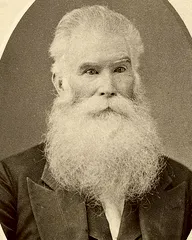
BY ORSON PRATT,
ONE OF THE TWELVE APOSTLES OF THE CHURCH OF JESUS CHBIST OF LATTEll-DAT SAINTS.
" What is truth ?" This is a question which has been aslced hy many. It is a question supposed to be of difBcult solution. Mr. Taylder in his tract against materialism, says, " It is a question which all the philosophers of the Grecian and Roman schools could not answer." He seems to think the question was unanswerable until the intro duotion of the gospel ; since which time he considers that the veil is taken away, and that " we now enjoy the full blaze of truth." He further confidently asserts, that " with the materials afforded us in that sacred book, (meaning the New Testament,) we are enabled satisfactorily to answer the question, What is truth ?"
What does this author mean by the foi-egoing assertions ? Does he mean, that no truth was understood by the Grecian and Roman schools ? That no truth was discerned by the nations, during the first four thousand years after the creation ? Or, does he mean, that the gospel truths were not understood until they were revealed ? ■He certainly must mean the latter and not the former. Both the liomans and Grecians could, without the least difficulty, answer the question, " What is truth ?" ■Nothing is more simple than an answer to this question. It is a truth, that something enlists in space, and this truth was just as well perceived by all nations before the book called the New Testament existed as afterwards. It is a truth that, " the three angles ,of a triangle are equal to two right angles." This was not learned from that sacred book — the Bible. We admit that the question, what is gospel truth, could not be answered by any one to whom the gospel had never been revealed. Dr. Good, in his " Book of Nature," says, " general truth may be defined, the connexion and agreement, or repugnancy and disagreement, of our ideas." This definition we consider erroneous ; for it makes general truth depend on the existence of ideas." Now truth is independent of all ideas. It is a necessary truth that, space is boundless, and that duration, is endless, abstract from all connexion and agreement of our ideas, or even of our existence, or the existence of any other being. If neither the universe nor> its Creator existed, these eternal unchangeable, and necessary truths would exist, unperceived and imknown. Truth is the relation which things bear to each other. Knowledge is the preception of truth. Truth may exist without knowledge, but knowledge cannot exist without truth.
The New Testament unfolds, not all the truths which exist, but some few truths of infinite importance. The vast majority of truths of less importance were discovered independently of that book.
"The followers of Joseph Smith," says this author, "hold the doctrine of the materiality of all existence in common with the ancient academics." This, sir, we admit. Our belief, however, in this doctrine, is founded, not on any modem supernatural revelation, unfolding this doctrine, as this author insinuates, but on reason and common sense. The doctrine of immaterialism, in our estimation, is false, and in the highest degree absurd, and unworthy the belief of any true Christian philosopher.
The author of the treatise against materialism has stated his first proposition as follows : —
" The Philosophy of the Mormons is Ibrational."
What the author means by this proposition is, that it is " irrational " to believe all substance material. To substantiate this proposition, he sets out in quest of proof. An im,material substance is the thing wanted. No other proof will answer. If he can prove the existence of an immaterial substance his point is gained, — his proposition established, and the iiTationaUty of the material theory will be demonstrated.
As we are about to launch forth into the wide field of existence in search of an " immaterial substance," it may be well to have the term correctly defined, so as to be able to distinguish such a substance from matter. It is of the utmost importance that every reasoner should clearly define the terms he employs. Two contending parties may use thesame word in altogether different meanings; and each draw correct conclusions from the meaning which he attaches to the same word ; hence arise endless disputes. As we have no confidence in the immaterial theory,~we shall let the immaterialist define his own terms. We shall give,
Taylder's Definition. — " What is meant by an immaterial substance is merely this, that something exists which is not matter and is evidently distinct from matter, which is not dependent on matter for its existence, and which possesses properties and qualities entirely different from those possessed by matter."*
This definition of an " immaterial substance" is ambiguous. It needs another definition to inform us what he means. Does he mean that all of " the properties and qualities" of an immaterial substance are " entirely different from those possessed by matter ;" and that it possesses no properties in common with matter ? Or does he mean that while it " possesses some properties and qualities entirely different " from matter it inherits others in common with matter ? If the latter be his meaning, we see no reason for calling any substance " immaterial." Iron possesses some properties and quahties " entu-ely different" from all other kinds of matter, and other properties it inherits in common with every other kind. Shall we therefore say that iron is not matter ? Among the various Idnd of matter, each has its distinct properties, and its common properties; and notwithstanding each possesses " entirely different" properties and qualities from all other kinds, yet each is called matter because it possesses some properties in common with all ether kinds. Hence the term matter should be given to all substances which possess any properties in common, however wide they may differ in other respects. A substance to be immaterial must possess NO properties or qualities in common with matter. All its qualities must be entirely distinct and different. It is to be regretted that our opponent has not defined an immaterial substance more clearly. As he is ambiguous in his definition, we shall presume that he entertains the same views as the modern advocates of immaterialism generally entertain.
That celebrated writer, Isaac Taylor,Sfiys, — "adisembodied spirit, orweshouldrather say, an unembodied spirit, or sheer mind, is nowhbhe. Place is a relation belonging to extension ; and extension is a property of matter ; but that which is wholly abstracted from matter, and in speaking of which we deny that it has any property in common therewith, can in itself be subjected to none of its conditions ; and we might as well say of a pure spirit that it is hard, heavy, or red, or that it is a cubic foot in dimensions, as say that it is here or there. It is only in a popular and improper sense that any such afiirmation is made concerning the Infinite Spirit, or that we speak of God as everywhere present." * * * « Using the terms as we use them of ourselves, God is Txoi here or there." * * "When we talk of' an absolute immateriality," continues this author, " and wish to withdraw mind altogether from matter, we must no longer allow ourselves to imagine that it is, or can be, in any place, or that it has any kind of relationship to the visible and extended universe."1" Dr. Good says, " The metaphysical immateriaUsts of modern times freely admit that the mind has NO PLACE of existence, that it does exist nowhere ; while at the same tune they are compelled to allow that the unmaterial Creator or universal spirit exists eterywheee, substanliially as well as virtually."!
* Taylder's Tract against Materialism. Page 14.
t Tajlor'3 " Physical Theory of Another Life." Chapter II.
I Good's "Book of Nature," Series III,, Lecture I,
J?r. AbercKopbie, in speajdug upon platter and mind, says, that " in as far as our 'Utmost concepjiioil of them ejrtends, we have no grounds for believing that tb batre anything in conunon,"*
With these definitions, we shall follow our opponent in hi* researches after an ('im material substance." Mle taking a minute survey of man, he believes he has found in his compoiljibn, and in connexion with his .bodily organization, sdmetMng immdier rial. He says, " the spirit is the purely immaterial part, which is capable of separ tion from the body, and can exist independently of the body."
" The body is what material part, ' formed out of the dust of the grovmd,' and is the medium through which the mind js mapifested."+
That the mind or spirit " is capable of separation from the body, and can exist independently of the bodyi" we most assuredly believe; but that it is "immaterial" we deny ; and it remains for.Mr. Taylder to prove its immateriality. His first proof is fomided on his own assertion, that "mind is simple, not compounded." If this assertion he admitted as true, it affords not the least evidence for the invmateriaUty of mind. Every material atom is Simple, not compotmded. Is it, therefore, not motto: ? ]$ust each simple, uncompounded elementary atom be immateirial f
Mr. Taylder nest says, ""Mind is not perceivable to corporeal organs, matter is so poeiyable." This assertion is altogether unfounded. " Corporeal organs " can perceive neither matter nor mfnd. The mind alone can perceive : coippOTeal organs are only the instruments of perception, ffiishop Butler, 'ifi his Analogy, expressly says, that " our organs of sense prepare and convey on objects, in order to their being perceived, in like mamier as foreign matter does, without affording any shadow of ■appearance, that they themselves perQeive."$ The mind clearly perceives its own -existence as well as the existence of other matter. Perception, then, is a quaU jpeculiar to that kind of matter called mind Mr. Taylder further remarks, that ■"All the qualities of matter are not comparable with the more excellent qualities of mind, such as power and intelligence." We are willing to admit that yower and ■intelligence, and some other, qualities of mind, are far superior to the qualities of other matter ; but we dp not admit that the superiority of some of the qualities of a substance prove its immateriality. The superiority of some qualities has nothing to do with the immateriality of the substance. Oxygen possesses some qualities, not only •distinct from, but superior to, those qualities possessed by Babium, Stboktidm; SruciUM, GliUCINitTM, ZlKCONlOM, and many other metals and material substances ; yet no one from this will draw the conclusion, that oxygen is immaterial. Oxygen is material though it possesses some distinct and superior qualities to other matter ; so mind or spirit is material, though it differs in the superiority of some of its qualities from other matter.
It is strange, indeed, to see the inconsistencies of this learned author : he remarks, " Mind thinks, matter cannot think. It is the existence of this thinking principle which clearly proves the immateriality of the mind or spirit." This method of reasoning may be termed (petitio principii), begging the question. First, he assumes that " matter cannot think ;" and, second, draws the conclusion that a thinking substance is immaterial. This conclusion is a legitimate one if the premises are granted; hut the premises are assumed, therefore the conclusion is false. Prove that mind is not matter before you assume that " matter cannot think." It would seepi from the assertions of this author, that the quality of " thinking" is to be the touchstone — the infallible test — the grand distinguishing characteristic between material and immaterial substances. It matters not, in his estimation, how many qualities different substances inherit in common, if one can be found that thinks, it must be immaterial. There is no one substance out <if the fifty or more substances discovered by chemists, but what possesses some qualities " entirely different ' from any of the rest ; therefore, each substance, when com|area with others, has equal claims with that of mind to be placed in the iriimaieriul list. In proving that mind is immaterial, it is not enough to prove that it has some properties entirely distinct from other substances ; but it must be proved to have no properties in cuminon with matter. Nothing short
* Aberoromliie mi the "' Intellectual Powers." Part I. Sec. I. + Taylder's Tract against Materialism. Page 8. J Butler's Analogy, Part I. Chap, I,
of this wjU.agree with the modern notions of immateriality'.. It must be shown that mind or spirit has no relation to duration or space — no ZocaZi«y— that it must exist "nowheeb" — that it has no «a;«eresiore — that it exists nof'NoVand" Then," neither
*' Here" nor " There" — that it cannot be moved from place to place that it has no
orm or figure — no boimdaries or limits of extension. These, according to the de- &iitions of modern immateriaJists, axe the negative conditions or qualities absolutely necessary to the existence of all immaterial substance. While the opposite of these,. «r the positive qualities or conditions are absolutely necessary to Ae existence of all mtaterial substance.
" How do you distinguish," inquires Mr. Taylder, "between any two given subiStances, such as, that a block of stone is not a log of wood ?" He answers, " Be- ■cause they possess different qualities." And then declares, " So also you distinguish Aetween mind and matter." But the " different qualities " by which " a block of stone" is distinguished from " a log of wood," do not prove either the stone or tha .wood to be immaterial ; neither do the different qualities by which the substance called mind is distinguished from other substances, prove either the mind or the other substances to be immaterial. So far as the different qualities are evidences, the mind ias as good a claim to materiality as the stone or wood.
" The properties of body," continues our learned opponent, " are size, weight, -solidity, resistance, &c. ; those of the mind are joy, hope, fear, &o. ; but weight is not joy, resistance is not hope, size is not fear; therefore, as a block of stone is not a log of wood, so mind is not matter." That a stone possesses many different qualifies from wood, and that mind possesses many different qualities from other substances, we by no means deny ; but that these different qualities prove stone, or wood, or mind, or any other substance to be immaterial, we do deny. We care not how many different properties mind possesses over and above other substances ; that is altogether foreign from the question. But is it destitute of any or of all the properties which ■other substances possess ? is the question. Is it destitute of "size, weight, solidity, jesistance, &c. ?" If not, then the mind possesses all the essential characteristics of jnatter, though its peculiar and distinct properties should be multiplied to infinity.
This author calls " weight" one of the properties of matter. What is weight ? It is nothing more nor less than force. Matter approaches to, or presses on, other matter with weight, or force, or power. Now matter either exerts tkas force of itself, or else it is impelled either directly or indirectly by other substances, possessing intelligence, power, and other properties of inind. If matter exerts this power of itself, then it exhibits one of the properties of mind ; but if the seat of this power is in that substance called mind, then it is mind that exhibits the power called weight, and not other sub- .stances. Mr. Taylder informs us that " it is mind, and mind alone, which is the seat of power. * If this be true, (and we feel no disposition to deny it), then weight is not tiie property of unintelligent matter, but a property of mind. And the same reasoning vidll apply to all other powers or forces which are generally ascribed to unintelligent matter. They are only the powers or forces of mind, or else other substances ediibit powers or forces which are common to mind : in the latter case, mind could not be iwmateyial : in the former ease, unintelligent matter (if such exist) is deprived «f every force usually ascribed to it. It can have neither gravitation, attraction, repulsion, chemical aflSnity, nor any other conceivable force. Though deprived of all -energy or force, unintelligent matter would still be possessed of those inert qualities- (if, indeed, they may be called qualities) essential to its existence. These qualities, or rather conditions necessary to its existence, are duration, extension or place, solidity, figure, &e. An immaterial substance must have none of those conditions or qualities.
It is amusing to trace this author's process of reasoning. He first assumes premises entirely false, argues from the same, shows the deductions to be absurd, and triumphantly exclaims, " Mind then is not matter." We will quote the following specimen: " If the mind, says this author, " be material and the brain nothing but a large gland, secreting the various affections of thought, hope, joy, memory, &c , then all these affections or qualities are mat rial, and must he also little particles of matter, of different forms and dimensions, and perhaps of various colours, Then we might, with
* Tajlder against Materialism, Page 12.
the utmost propriety, without the shadow of an absurdity, logically say, ' the twentieth part of our belief, the half of a hope, the top of memory, the corner of a fear, the-" north side of a doubt,' &c. Mind then is not matter."* It will be perceived thatr this logical author, in the foregoing quotation, confoimds affections or qualities with mind ; that is, he supposes " thought, hope, joy, memory," &o. all to be material as: well as the mind ; he then introduces a material brain that secretes the material affec- tions ; but what becomes of the material mind he does not tell us ; probably the material mind is stowed away in some extremity of the body — in the foot or big toe, so as not to interfere with its material affections, which are secreted in the material braioi at the other extremity. After imagining up such an unheard of being, no wonder that: he should discover some absurdities in its composition. No wonder that in such &. creature of his own invention, there should be, not only " the comer of a fear," and " the north side of a doubt, " but a cubical imagination with horns to it. No wondier- ■ that such frightful absurdities should cause as great a man as Taylder to exclaim with the upper part of a five-cornered assurance, that " Mind then is not matter." It would be a logical conclusion from his logical absurdities, founded on his material affections of a material mind*
But who does not know that " thought, hope, joy, memory," and all other affec~ tions or qualities are not substances of any kind, but merely different operations or states of the mind ? A material mind, possessing the power to think, to feel, to reason, to remember, is not the brain, nor secretions of the brain, nor any other part of the fleshy tabernacle ; but it is the being that inhabits it, that preserves its own identity, whether in the body or out of it, and remains unchangeable in its substance whatever changes may happen to the body. This material spirit or mind existed before ib entered the body, exists in the body, will exist after it leaves the body, and will be reunited again viith the body in the resurrection.
As another specimen of monstrous absurdities logically deduced from absurd premises, we quote the following: — " Materialism" he remarks, " is not only relatively but absolutely absurd. If mind be matter, or matter mind, then we may have the square! or cube of joy or grief, of pain or pleasiu'e. We may divide a great joy into a number of little joys, or we may accumulate a great joy by heaping together the solid parts o£ several little joys. We shall then have the color and shape of a thought. It will be either white, grey, brovra, crimson, purple, or it may be a mixture of two or more Colors. Then we shall have a dark grey hope, a bright yellow sorrow, around brown tall pain, and an octagonal green belief; an inch of thought, a mile of joy." We dot most cordially agree with Mr. Taylder that these results would be " not only relatively but absolutely absurd ;" and only equalled by the absurdity of the premises from which, they were deduced. , He has assumed that the several states or conditions of the mind, such as jo;r, grief, pain, pleasure, thought, &c., are material as well as the mind. With the same propriety he might have assumed that motioit is material as well as the matter moved. •Toy is no more a substance than motion, Both are merely the states or conditions of substance. As great absurdities could be deduced from assuming that motion is material, as there can be from Mr. Taylder's assump tion that joj/ IS material. As an illustration, let us take this author's own words with the exception of substituting iron for mind, motion for the affections of the mind ; it will then read thus : — " If" iron "be matter, or matter" iron, " then we may have the square or cube of" a solid motion. " We may divide a great " solid motion " into a number of little" solid motions, " or we may accumulate a great" solid motion " by heaping together the solid parts of several little" solid motions:. " We shall then have a color and shape of a" motion. " It will be either white, gre brown, crimson, purple, or it may be a mixture of two or more colors. Then we shall have a dark grey " motion, " a round, brown, tall" motion ; " an inch " or " a mile of " solid motion, Ife. It is strange that Mr. Taylder did not close his train rf reasoning, by saying, " Mind, therefore, is not matter ;" and then we could hae completed the paralTel by saying, iron, therefore, is not matter. If such reasoning proves mind immaterial, similar reasoning vm prove any other substance immateriaL
■• Mr. Orson Pratt," observes our author, « calls matter into existence, of which.
* Taylder against Materialism. Page 15.
thigiwOTld kn'pws l>ut'little. , He-has nofc oply ' intellent iB3£ter,'~'\ml ' all-wise/ aiid* •'alj-tp(>w6rftil' matter. Thismatter is; oftpable trf division into jmrts; for aB matter ha'WBh'gibreadth, an(} thickness. Then we shall have the half of an ihteUigtit atodi of 'matter,' th eighth of an all-wise atoip the thousandth part of an ali-poerful aiioiAj &e. Suoh are the absurdities ■which 'the LStter-day Sanit' embraces." £(ere the amthdr seems to have recovered prfaliy from the wild aBsurd notions of applying lite (term mAterial to the affections, and is willing to apply it to substance where K bdions. But he speaks of the division of atoms whi(4i ddes not accord with &e fleaferal notions of nliodem' philOspphy. The immortal Newton says, " It seems pr'oba. ble tiiat €od»< in the-beginning, formed matter }n solid, massy, hard, impenetrable thove(ibl&:pcfUcies." T-his>does not favor the divisibility- ofatoms. Newton further observes, '5That natiffe imi belasting, the changes of cojrpqreal ifiijigs tare to be plaieed oiily iuithe liarious separations, and new assoeiaiitons and motions of these rmanerit psEtioles ; compound bodies being apt to break, not .in the midst of solid partieiej Bui where those particles are kid together, and toch oiily in a fbw points. These are the views entertained by philosophers generally at the present day, vHth the exemption !of Herd and there an isolated individual who advocates the theory of the infinite' divisibility of matter. Perhaps our author may be of that class ; for he speak of the division cniatoms. It is admitted that substance is capable of division a&d suBdifisidn until arriving at its ultimate atoms, alter which aUfiirther separation ceases. Thi§ division of the same kind of sistance does hot' alter or chaise the natnr or properties of the respective parts ; if th'ey possessed attraction when united, thrals» possess it ■WheU separated, or else attraction is the result of uflion and ceases with it. So in relation to 'hitelligent substance, without regard to: its materiality or immateriality ; if it is intelligent as a whole, it is intlHgent in its respective parts after division., etelse;the intelfigeiiit power' is thereSult of the union of uniAteliigent parts, fahd cees itrhn the lAiion ceases. Therefore if the intelligent substance, called mind, is intelligent,, as a whde, it is intelljgeSit in all its parts; and there would be no more abstoiitf inspeakifig of the half, the eighth, or the thousandth part of an inteHigejit subiStaucej than there would be in speakiog.of the half, the eighth, or the thousandth part ef an attJfeitiBg substance. And yet Mr. Taylder exclaims, " Such are the absurdities Tihich the ' Latter-day Saint' Mnbraoes."
.."Eerhips our author's iminaierial mind or spirit -will not suffer him to believe that tile 'wAo&'spirit of tnan is niade up or consists of parts. If the spirit of manisa subafonee, as Mr. taylder mits, though he denies its'materiSUtjf, then it must be eithera ample uneomponnded being or atom, or a united collection of such beings or atoms.
. 'GBlshop Butler Bupposesrthe spirit of man to be a single, simple, indivisible being. ,e ceinarks that " since consmousness is a siitgle. and individual power, it should seemi fltat the'siibjeot in which it resides must be so too," " that is the consciousbeing." H6 further feays, "That we have noway of determining by eicperience. what is the certain bulk 6f thfe living being each man caiUs lum$@lf ; andjet, (continues jiej, till it be deteriiiiQecl ihat it is lger in bulk thafi the solid dsmentacy particles of matter, which ther;e is 90 ground to think any natural power can (ssqlve, there is no sort of reason to tlui ddath to bethe dissolution of it, of the living bing, even though it should not be atiaotetely indiscetptible." * Our author seems to be a little moreipesiuve than Butler, and feertSapparentlyiwithout. any doubt, that " mind is simple not c6jnpoimded."t Her flifen, aceormJigto both Butler and. Taylder, we haivea sinple, uncompdunded, indl- Tisible little atotu' of eoQScious substance, or, in oer lywds, an intelge/nt apm. 5Phe termfe'ra<0m:and biigiaxe synonymonsi when lapplied to a si,mple indivisible.b- ■tance isti small that Butler intimates tht its " bidk" has not teen determined to exceed
"theisblidi demefttary .particles pf matter.",
If the k|)irit jof lone fman .is' a Uttje, atom of intelligent (substanpe leaving " bulk," liihe
Sirit of eveiyx>thef 'ntan is a.-sijnilar atom; hence in.the human bodies now Uving. on e earth, 4ihere iaust exist inearly 'one ithousand million of intelligmt'atoifns, 'each .pqn- ous of.ifaownisteneej and capaWe of originating, iaotion .indifendeniJy of.iiie lithfers. Mr. yWertSays this iStelligeot !««m .prf>»i''S4jaB\)le oif iseparaition from the body, and can exist independently of the body." fs being adinittedj then
* Butler's Analogy. Fart I, Chap. L + Tavlder againJrt: Materialism. Page 14.
there must be many thousand million of intelligent atoms which once inhabited bodies but now exist independently of them. This is the legitimate result of the theory which assumes that the spirit of man is a little conscious being — a substance, simple, uncompounded and indivisible, capable of existing either in or out of a body. Where, then, Mr. Taylder, is the absurdity in believing as the " Saints " do, in the existence of immense numbers of intelligent atoms ? It agrees most perfectly with the results of your own theory — the only difference is in the name. You call these little indivisible substances immaterial, we call them material. You apply to them the sanne powers that ■we do. You believe them to be conscious, intelligent, and thinking atoms as well as _we. The name of a substance does not alter its nature ; as for instance some call one of the constituent elements of the atmosphere " azote," others call it " nitrogen," but all admit that it possesses the same nature and properties. If this indivisible conseiou.s being, or atom of substance, possesses " biilk," as Bishop Butler intimates, then in this respect it is like the atoms of all other substances, and therefore it must be matter.
If some atoms can possess various degrees of intelligence, wisdom, and power, whether in the body or out of it, then there is no absurdity in the theory that there are other atoms which,are "all-wise" and "all-powerful." Mr. Taylder admits that there must be a God, and that he is an aU-wise and all-powerful being or substance, — that substance must be either a simple uncompounded indivisible being or atom, or a collection of such beings or atoms. If it be an indivisible being or atom, it would prove the existence of one all- wise and all-powerful being or atom : if it be a collection of such beings or atoms, then the theory of all- wise and all-powerful atoms of substance is established. All theistical writers admit the existence of such a substance. It is not the existence of the substance that is questioned, but it is its nature. One class calls it immaterial, another material. Mi-. Taylder has undertaken to prove that it is immaterial, but as yet he has not furnished us with even the most distant shadow of an evidence, unless, indeed, his own assertions are evidence. Indeed, he has nowhere attempted to prove that the spiritual substance of either man or the Deity possesses no properties in common with other substance admitted to be matter.
As another specimen of Taylder's logic we quote the following : —
" There is another conclusion equally absurd, if the existence of an immaterial substance be denied, and thinking be ascribed to matter, and that is, the mind must always think in the same way, in the same du-ection." As a proof of this assumption our author refers to the writings of Priestley, as follows : — " If man," says Dr. Priestley, " be a material being, and the power of thinking the result of a certain organization of the brain, does it not follow, that all his functions must be regulated by the laws of mechanism, and that, of consequence, aU his actions proceed from an irresisti- ;blp necessity ? " " The doctrine of necessity," continues Priestley, " is the immediate result of the doctrine of the materiality of man ; for mechanism is the undoubted consequence of materialism."
we are willing to admit that "an irresistible necessity" would be the inevitable consequence of assuming that " the power of thinking is the result of a cebtam OKGANIZATION of the BRAESf." But this is a most absurd assumption ; for'lf "the poTwer of thinking be the result of a certain organization of the brain," then, when lat organization ceases, the power of thinking would cease also, and there could be nq separate existence for the mind or spirit.
But we believe that the power of thinking is not the KESUIT of a brain organization, but the original property of that substance called spirit or mind, which can exist independently of a brain organization, and entirely separate and apart from the body.
Priestley asserts that " mechanism is the undoubted consequence of materialism." ,Bijt this is a baseless assertion. Mechanism implies the incapability of a substance to aot only as it i» acted upon. All unintelligent substance is incapable of acting only siccording to the laws of Mechanism, as it is acted upon : hence, " an irresistible neces- .ty pharaoterizes all of its movements." But not so with an intelligent thinking sub- .poe : it can of iginate its own motions, and act according to its own will, independently of the laws of mechanism : hence, a perfect freedom characterizes all of its movements. Before Priestly or any other man can logically assert that " mechanism is the undoubted consequence of materialism/' -he. jnust first prove that matter cannot think, and will, and move, or, in othpr wprds, he must prove tha,t mind is not matter.
Our author endeavours to overthrow materialism because of the absurdities which Darwin advocated. He quotes the words of that author as follows : — " Ideas are material things : they are contractions, motions, or configurations of the fitii-es of the organs of sense." "Here," exclaims Mr. Taylder, "is the veaX perfection of materialism! It destroys man's accountability 1o God! There is then no such thing as praise or blame, fear or hope, reward or punishment, and, .consequently, no religion. "How," inquires our author, "can the Mormons reconcile this conclusion with their religious fabric, built on revelations and visions ? " "If their God be a material being, he must necessarily act mechanically." We reply that we do not wish to reconcile our religious fabric with Darwin's absurdities. Darwin has assumed that " ideas, contractions, motions, or configurations," are all material.
What man, disencumbered of a strait waistcoat, could ever believe in such ridiculous nonsense! It is only equalled by Taylder's material joys and sorrows, of which we have ah-eady had occasion to speak. The substance of the Deity, nor no other intelligent substance, is dependent on the "contractions, motions, or configurations" of organical fibres for its actions, but it is a self-moving substance, not subject to the law of necessity or mechanism like unintelligent matter.
" The last consideration," says this immaterialist author, " which it is necessary to advance for the real existence of mind, is consciousness." *
" The real existence of mind" is not doubted by us. Mr. Taylder has strayed entirely from the question. The question is not whether mind has a real existence, but whether it is immaterial.
" It is generally considered," remarks this author, " that in a few years our bodies are entirely changed. How, then, on the material scheme, can a Mormon tell that he is the same person now that he was twenty years since, or shall be ten years hence ?" We reply that it is only the substance of the material body that is constantly changing, while the material spirit which inhabits the body, remains unchangeable. Personal identity con.sists, not in the identity of a changeable body, but in the identity of an unchangeiible substance called spirit, which feels, thinks, reasons, and remembers. The Athenian galley, which was sent every year to Delos for a thousand years, had been repaired so often that every part of its materials had been changed more than once, therefore it did not remain the same identical substance during that period of time ; but if a certain unchangeable diamond had been carried within this galley for one thousand years, it would be the same identical substance still, though the galley that carried it had been changed ever so often ; so likewise let the material body meet with an entire change every few years, the unchangeable material spirit which it carries within will remain the same identical substance still.
Indeed, if Bishop Butler's intimation be correct, that the spirit of man is a small indivisible being or atom, whose bulk has not been determined to exceed the size of small elementary particles of matter, then it would be impossible for such a small conscious indivisible atom to change its substance in the least degree, and therefore it must preserve its entire identity under all possible circumstances.
Our author next inquires, " How can spiritual matter occupy the same space with the matter of which the body consists ? " We answer that it cannot occupy the same identical space with other matter, for this is in all cases an absolute impossibility. It can only occupy its own space in union with the matter of which the body consists. Every particle of the body occupies a distinct space of its own, and no two particles of the body can exist in the same space at the same time, neither can any atom of spirit occupy the same space at the same time with any other atom or substance. All substances are porous. It can be proved that the component particles of all Imown substances are not in absolute contact, for all bodies composed of these particles can be compressed, and their dimensions reduced without diminishing their mass. All organized substances are porous in a high degree, that is their " volume consists partly of material particles and partly of interstitial spaces, which spaces are either absolute void and empty, or filled by some substance of a different species from the body in question." t The material body being porous, there is room for the material spirit to ex-
* Taylder's Tract against Materialism. Page 18 •f Gardner's Scientific Lectures. Vol. II, Lecture 1,
ist in close connexion with its component parts, and this too without infringing upon the impenetrability of substances. If the material spirit be as small as Bishop Butler mtimatesj it will not occupy much room in the body. Many millions of millions of such spirits, if « not larger in bulk than the elemental-y particles of bodies," could occupy much less room than a cubic inch of space.
We have now examined all of Mr. Taylder's arguments (if, indeed, they may be called arguments) which have been adduced in support of his first proposition, which it will be recollected, was stated in these words— "The philosophy of the Monnons is Ibrational ? " or, in other words, it is irrational to believe in the materiality of all substance. How far he has supported this proposition our readers can judge for themselves. He has not brought forth the least shadow of evidence to prove that such a thing as an immaterial substance exists. He has, indeed, argued, that such a thing as mind or spirit has a real existence — that it thinks, and feels', and is conscious. In all these things he agrees with us, without the least variation. He ai-gues that the substance called mind, possesses many different and superior qualities to all other substance ; his views in this respect do not differ in the least from oui-s. He has clearly exhibited the absm'dities of Priestley, Darwin, and various other writers, who have made mind the result of the motions of the brain or of its organization. We agree with him most perfectly in the rejection of such absurdities, but in no place has he brought forward argument, reason, or evidence to prove that the substance called mind possesses no properties in common with other substances ; therefore he has utterly failed in establishing his proposition. As no immaterialist can, from experiment, reason, or any other process whatsoever, glean the least shadow of evidence in favour of the immateriality of any substance, therefore we shall now on our part show —
I. — That Immatbkialism is Ikeationai, opposed to teue Philosophy. II — That an Immateeiai, Substance cannot exist.
I. — Immaterialfsra is absm-d, and opposed to true Philosophy.
1. The immaterialist assumes that God consists of an immaterial substance, indivisible in its nature, " whose centre is everywhere and circumference nowhere." The indivisibility of a substance implies impenetrability ; that is, two substances cannot exist in the sariie space at the same time ; hence, if an indivisible substance exist everywhere, as it cannot be peneti-ated, it will absolutely exclude the existence of all other substances. Such a substance would be a boundless, infinite solid, without pores, incapablef condensation, or expansion, or motion, for there would be no empty space left to move too. Observation teaches us that this is not the case ; therefore an infinitely extended, indivisible, immaterial substance is absurd in the highest degree, and opposed to all true philosophy.
2. The immaterialist teaches that the Godhead consists of three persons of one substance, and that each of these persons can be everywhere present. Now in order to be everywhere present, each of these persons must be infinitely extended, or else each must be susceptible of occupying two or more places at the same time. If a substance be infinitely extended it ceases to be a person ; tor to all persons there are limits of extension called figure ; but that which is not limited can have no figure, and therefore cannot be a person. Therefore, it is absolutely necessary that a person should be included in a finite extent. Now that which is limited within one finite extent, cannot be included within some other extent at the same time ; therefore it is utterly impossible for a person to be in two or more places at the same time, hence immateriafism is totally absurd and unphilosophieal. '
3. The immaterialist teaches that the substance of the Deity is not only omnipresent and indivisible, but that all other substances are contained in his substance and per- ' form all their motions in it without any mutual action or resistance. The profound and illustrious Newton, in the Scholium" at the end of the " Principia," has fallen into this error ; he says, " God is one and the same God always and everywhere. He is omnipresent, not by means of his virtue alone, but also by his substance, for virtue cannot subsist without substance. In him all things are contained, and more, but without mutual passions God is not acted upon hy motions of the bodies; and they suffer no resistance from the omnipresence of God." Here we have an omnipresent substance, which is stud by immaterialists to be so compact as to be indivisible, with
worlds moving in it without suffering any resistance : ,this is the climax of absurdity. All laasses of substance with which we are acquainted, are susceptible of division, yet even in these, bodies cannot move without being resisted ; how much more impossible' it would be for worlds to esist and move in an indivisible substance without resistanqe, yet this is the absurdity of the immaterial hypothesis. There is nothing too ridiculous or too unphUosophical to be incorporated in an immaterial substance when its existence has been once assumed.
The reflecting mind turns away from such fooleries with the utmost disgust, and feels to pity those men who have degraded the great and all- wise Creator and Governor of the universe by applying to him such impossible, unheard of, and contradictory qualities. The heathen, in then' wildest imaginations never fancied up a god that could begin to compare with the absurd qualities ascribed to the immaterialists' god.
II. — An Immaterial Substance cannot exist.
1. We shall first endeavour to show what is absolutely essential to the existence of all substance. It wiU be generally admitted that space is essential to existence. Space, being boundless, all substances must exist in space. Space is not the property of substance, but the place of its existence. Infinite space has no qualities or properties of any description excepting divisibility. Some eminent phUosopherg have supposed extension to be a property of space, but such a supposition is absurd. Extension is space itself, and not a property of space. As well might we say that azote is a property of nitrogen, whereas they are only two different names given to the same substance, as to say that extension is a property of space. Infinite space is divisible, but otherwise it cannot possibly be described, for it has no other properties or qualities by which to describe it. It has no boundaries — no figure — no other conceivable properties of any description. It has a variety of names such as space, extension, volume, magnitude, distance, &c., all of which are synonymous terms.
2. Duration is also essential to the existence of substance. There can be no such thing as existence without duration. Duration, like infinite space, is divisible, but otherwise it has no properties or qualities of any description. Like space we can call it by different names, as duration, time, period, &c. ; but to give it any other kind of description would be absolutely impossible. Infinite space can only be distinguished from duration by certain imaginary qualities, which can be assigned to finite portions of it, but which cannot be assigned to duration. We can conceive of cubical, pi'ismatical, and spherical portions of space, but we cannot conceive of portions of duration under any kind of shape. Both space and duration are entirely powerless, being immovable, yet both are susceptible of division to infinity. To assist us in our future remarks we shall give the following definitions : —
Definition 1. — Space is magnitude, susceptible of division. Definition 2. — A Point is the negative of space, or the zero at which a magnitude begins or terminates ; it is not susceptible of division. IJefinition 3. — Dukation is not magnitude, but time susceptible of diviaon. Dejinition 4. — An Instant is the negative of duration, or the zero at wbieh duration begins or terminates ; it is not susceptible of division. Definition 5. — Matter is something that occupies space between any two instants, and is susqeptible of division and of being removed if am one portion of , space to another. ; Definition 6. — NoTHEfa is the negative of space, of dur£|!lion, and of matter; it is the zero of all existence. 3.' Modern immaterialists freely, admit, as we have already ghoyvn, that "a disfm- ■iodied spirit " is NowheBE." Wemust no longer allow oiu-sejves to imagine," says .the iroinaterJalist, " that it is, or can be, in any place." * Bijt that which does not ociCiqiy any place or space, has no jiMignitude,.and is not susoepibjeof division ; thare- Jbre it must be an unextended point or nothing — (see definjtiqns 2 awA 6,) the nggaitivcjof both space :and waiter, that.is, the negative of allpxirenee. JmmqteriaUty is a .representative of WotMnjr.* twwafeKcf'auib.stagce.is only ajiojier name for »'o §abetance ; thorn&sae such a substance does not, and cannot est.
* TayJpr's Physical Theory of another I,ife. Chapter H.
4. Having shown that an immaterial substance can have no existence, because it Kas no relation to space, we shall next show that it can have no existence, because it has no relation to duration. Isaac Taylor says; " that which is whoHy abstracted from matter, and in speaking of whidi we dieny that it has any property in common therewith, can in itself be subjected tanone of its conditions." One of the conditions absolutely essential to the existence of matter is duration or time. (See definition 5.) That which is not subjected to the condition of duration, must be subjected to the qondition of an instant, which is the negative of duration ; but nothing is also the negative of duration aid of substance ; (see definition 4 and 6 ;) therefore that which has no duration is nothing, sind canndt be a substance ; hence an immaterial substance cannot exist.
There are many truths which may be called pmsT truths, or self-evident truths,, which cannot be demtmstfated, because there are no truths of a simpler nature that can be adduced to establish them. Such truths are the foundation of all reasoning. They must be admitted without demonstration, because they are self-evident. Tlmt space and duration are essential conditions to the existence of all' substance, may be denominated a se1&evident1;ruth ; if so, it is useless to undertake to prove it. And in this case, the foregoing need not be considered as a demonstration, but merely different forms of expression representing the s£tme self-evident truth.
iMMATEBIililSTS ABE ATHEISTS.
There are two classics of Atheists in the world. One class denies the existence of 6od'in' the most pdsitive- language : the other denies his existence in duration or space. One 3ays, "Therfe is no God;" the other says, "God is not here or there, any' more Hjanhe exists wow and iften."* The infidel says, God does not exist anywhere. The Immaterialisfrsays, " He exists Nowhere.'''' The infidel says. There is no such substance as God. The Immaterialist Kiys, There is such a stuistance as God, but it is *' without Parts."t The Atheist says. There is no such substance as Spirit. The Iihmaterialist says, "A spirit, though he lives and acts,' occupies no room, and fills no aCe, in the same trig and after the same manner as matter, not even so much as does the ihinutest grain of sand." The Atheist does not seek to hide his infidelity :' but the Ilhmateriist, whose declared belief amounts to the same thing as the Atheist's, endeavours to hide his infidelity under the shallow covering of a few words.
The " thinking principle," says Dr. Thomas Brown, " is essentially one, not extended and divisible, but incapable by its verynature, of any subdivision into integral parts/'ll What is this but the rankest kind of infidelity ootidied in a blind, plausible form. That which is " not extended and not diviable " and " without parts," cannot be anything else than nothing. Take away these qualities and coniUtions, and' no power of language can give us the least idea of existence. The very idea conveyed by the term todstence is something extended, divisible, and with parts. Take these away, and you fekeaway existence itself. It cannot be so much as the negative of space, or, -what is 'gbklly called, an indivisible point, for that has a relation to the surrounding spaces. It cannot be so much as the negativeof duration, or, what is generally callsid, an indivisible instant, for that has a relation to die past and future. Therefore, it must be the negative of all existence, or what is called absolutely nothing. Kothing, and nothing only, is a representative of that which has no relation to space pr time — that is, unextended, indivisible, and without parts. Therefiire, the immateri- Blist is a religious Atheist; he roiilydiifeis from the~oiha classes of Atheists, by obtg im indivisible Unextended nothing With Ae powers of, a god. One class believes in BO' God; the other class bdieVes that NOJ'fflNaisigod, and worships it as, such. There is no tv«ing away from this. The iiHgst'prafaund'plHlesGipherinallthe I'anks 46f modern Ghristianily, cannot extriiraitethelflanaitejiiaJasts from ageism. He cannot show the -least difference betwsea the idea- represented by 4the -word nothirff, sai the
* Isaac Taylor's WiysteaT Theory of AttotherXife Cbap. II.
+ Good's Book of Nature.
First bif theThirtylnii* Articles; also 1 Art. Methodist JBiBcifflinc.
§ Kev. David James on the Trinity, >n Unitarianisin Confuted. Lee. VII., page 382
II Brown's " FhUosophy of the Buman Hind." Lee. XdVlL
idea represented by that which is unextended, indivisible, aijd without parts, having.no relation to space or time. All the philosophers of the universe could not give a better or more correct definition of Nothing. And yet this is the god worshipped by the Church of England — the Methodists — and millions of other atheistical idolaters, according to their own definitions, as recorded in tlieir respective articles of faith, ka open Atheist is not so dangerous as the Atheist who couches his atheistical doctrines Hnder the head of " Akticles or Eeligion." The first stands out with open colours, and boldly avows his infidelity ; the latter, under the sacred garb of religion, draws into his yawning vortex, the unhappy millions who are persuaded to believe in, and worship an unextended indivisible nothing without parts, deified into a god. A pious Atheist is much more serviceable in building up the kingdom of darkness than one who openly, and without any deception, avows his infidelity.
No wonder that this modem gpd has wrought no miracles and given no revelations since his followers invented their " Articles of Religion." A being without parts must be entirely powerless, and can perform no miracles. Nothing can be communi-, cared from such a being ; for, if nothing give nothing, nothing will be received. If, at death, his followers are to be made hke him, they will enjoy, with some of the modern Pagans, all the beauties of annihilation. To be made like him ! Admirabla thought ! How transcendently sublime to behold an innumerable multitude of unextended nothings, casting their crowns at the feet of the great, inextended, infinite Nothing, filling all space, and yet " without parts !" There will be no danger of quarrelling for want of room ; for the Rev. David James says, " Ten thousand spirits might be brought together into the smallest compass imaginable, and there exisfc without any inconvenience for want of room. As materiality," contiaues he, " forms no property of a spirit, the space which is sufficient for one, must be amply sufficient for myriads, yea, for all that exist."* According to this, all the spirits that exist, "could be brought together into the smallest compass imaginable," or, in other words, into no compass at all ; for, he says, a spirit occupies " no room, and fills no space." What an admirable description of Nothing ! Nothing " occupies no room, and fills no space !" If myriads of Nothings were " brought together into the smallest compass imaginable," they would " there exist without any inconvenience for want of room." Everything which the Immaterialist says, of the existence of Spirit, will apply, without any variation, to the existence of Nothing. If he says that his god cannot «xist " Here" or " There," the same is true of Nothing. If he affirms that he cannot exist "Now' and "Then," the same can, in all truth, be affirmed oi Nothing. It, he declares, that he is " unextended," so is Nothing. If he asserts that he is " indivisible" and " without parts," so is Nothing. If he declares that a spirit " occupies no room and fills no space," neither does Nothing. If he says a spirit is " Nowhere," so is Nothing. All that he affirms of the one, can, in like manner, and, with equal truth be affirmed of the other. Indeed, they are only two words, each of which express precisely the same idea. There is no more absurdity in calling Nothing a substance, and clothing it with Almighty powers, than there is in making a substance out of that which is precisely like nothing, and imagining it to have Almighty powers. Therefore, an immaterial god is a deified Nothing, and all his worshippers are atheistical idolaters.
A Spiritual Substance is Material.
That spirit or mind has a relation to space, is evident from the fact of its location in the body. The body itself exists in space, therefore every particle of substance which it contains must exist in space. No point can be assumed in the body but what has a relation to the surrounding space or extension. Therefore spirit must have a relation to extension or it cannot exist in the body. All imextended points have a relation to space, though they are no part of space, and do not occupy space ;.but an unextended substance to have no relation to space cannot be as much as a point. A. point is a heated nothingj but an unextended substance is nothing, having no location.
What can be more unphilosophical, contradictory, and absurd, than to assume that something can exist that is " imextended," — that " occupies no room, fills no space,"
* .Sev. David Jameson the Trinity, in XJnitarianism Confuted, Xeo. VII., page 382.
■ — has " no parts ?' We ask our readers to pause for a moment, and endeavour to conceive of a substance that has no parts, "wasp it if you can in your imaginations. Think of its existing where there is no space. Conceive, if you can, of a locality outside of where space ceases. Imagine a spirit, if possible, occupying no room on the outside of the bounds of a boundless space. Do not your judgments, and every power of your minds revolt at the absolute absurdities and palpable contradictions ? By this time, perhaps, you are ready to inquire, can it be possible that any man in aU the world could believe in such impossibilities ? Yes, it is possible. These very absurdities now stand in bold relief, not only in the most approved philosophical works of modern times, but incorporated in the very " Ai'ticles of Religion" which millions have received as their rule of faith.
That spirit or mind has a relation to duration is manifest in the act of remembering. Through the memory the mind perceives itself to be the same conscious being now, that it was, an hour, a day, a year ago ; it perceives that itself has existed through a certain period of duration. There is as much certainty of its own i-elations to aura tion as there is of any such relation in any other substance whatever. If there is no certainty that mind has a relation to duration, there is no certainty that any other substance has suoh reUtion ; hence all would be uncertainty, even our own existence. Bishop Berkeley denied the existence of the material world, and contended that mind alone existed. His philosophy swept away the material world, and the first Article of liis religion swept away the immaterial world from space ; and the modern immaterialist sweeps it away from all relation to time. So between them all, space and time are pretty well cleaned out ; not so much as a nest egg left to replenish the great infinite void.
Mind, like all other matter, is susceptible of being moved from place to place. We see this exemplified in the movements of the mind through the medium of the body which conveys it from place to place on the surface of the earth. But though man was stationary upon the earth's surface, the earth itself with all its inhabitants, is moving with the rapid velocity of nineteen miles every second, which proves to a demonstration that mind is capable of being moved from place to place with a velocity far exceeding that of a cannon ball. But motion involves the ideas of both space and time. Mind cannot be moved without being moved in space ; it cannot pass from point to point instantaneously. However rapid the velocity, time is an essential ingredient to all motion. That eminent and pi-ofound philosopher, the late Pi-ofessor Robison of Edinburgh, says, " In motion we observe the successive appearance of the thing moved in different parts of space. Therefore, in our idea of motion are involved the ideas or conceptions of space and time."
" All things are placed in space, in the order of situation. All events happen in time, in the order of succession."
" No motion can be conceived as instantaneous. For, since a moveable, in passing from the beginning to the end of its path, passes thrbugh the intermediate points ; to suppose the motion along the most minute portion of the path instantaneous, is to suppose the moveable in every intervening point at the same instant. This is inconceivable and absurd."* The motion of mind, therefore is another positive proof that it has a relation to both space and dtu'ation.
" Extension and resistance," says Dr. Thomas Brown, " are the complex elements of what we tej-m matter ; and nothing is matter to our conception, or a body, to use the simpler synonymous term which does not involve these elements." Figure, magnitude, divisibility, are only different modifications of extension. Solidity, liquidity, viscidity, hardness, softness, roughness, smoothness, are different modifications of resistance. All these terms are only extension and resistance, modified in a certain degree, and under other names. Our notion of extension is supposed by Dr. Brown to be acquired from our notion of time as successive, involving length and divisibility. Our notion of resistance he supposes to be obtained through our muscular organs. These organs are first exerted, and then excited by something vpithout, and in their turn excite the mind with a feeling of resistance. The feelmg of resistance combined with the feeling of extension gives us the notion of matter. If Dr. Brown's views be
* Kobison's Mechanical Philosophy. Vol. I. Introduction.
correct, no one can acquire a notion of matter, by seeing, heaijing, tasting, swelling, or simple touch. Either or all of these will only produce certain feelings'in the mind without giving us any notion of an external extended resistance. A muscular effort opposed by some substance or foreign body is the oijy possible way, according to his theory, for the infant mind to obtain a notion of extended solidity or resistance.*
If solidity and extension then are the essential characteristics of .matter ; and if the xesistanee of a muscular effort be the only possible way of learning these characteristics it may be asked, how did Dr. Brown learn that the rays of Ught are material? He has frequently in hisphilosophy called light material. Has light in any wayresisted his muscular efforts? Have the muscular organs ever been able to grasp a ray of hght? Have the particles of light either singly or collectively ever acted upon our muscular organs in such manner as to give us a notion of extension and resistance ? Have th ever affected the mind in any way only to impart to it the feeling of color ? Does not Dr. Brown himself repeatedly affirm, that light can only impart the sensation of color; and that extension, .magnitude, figure, solidity, can never be known by the sense of seeing ? Does he not assert, that " nothing .is matter to our conception which does not involve these elements ?" Why then does he assume light to be material ?
If, then, light can be ranked as a material substance without exhibiting the least resistance to the muscular organs, why not mind or spirit be considered material also ? Why believe that Ught consists of inconceivably small vibratory or emanating particles of matter from the mere affection of the mind called color, and yet be unwilling to beUeve that the mind affected is material ? If that which produces a sensation or feeling be regarded a solid extended substance, independently of muscular resistance, where is the impropriety, in regarding that which receives the sensation or feeling, as a solid extended substance also ?
Dr. Brown, and all other immaterialists, universally believe that the sensation of smell is produced by small material particles, acting upon our olfactory nerves. But we ask, how is Dr. Brown or any other person to determine those odorous particles to be material? It may be said, that we determine them to be solid and extended by tracing them to the substances from which they emanate. But can it be proved that they constitute any part of the solid extended substance from which they emanate, any more than light is a part of the substance from which it emanates ? We know a rose to be solid and extended, not from the sensation of vision or smell, but from the sensation of resistance which it offers to our muscular organs when we attempt to grasp it. But because a rose is solid and extended, that does not prove that light and fragrance, by which we discern its color and smell, are any part of the rose.
If Dr. Brown's theory be true, it is absolutely impossible to prove that the odoriferous particles which affect us with the sensation of fragrance, are a solid extended substance. These particles of odour appear, indeed, to have been connected in some way with bodies from which they emanate ; but there is no possible means for the muscular powers to determine them to be parts of those bodies, any more than the colored light or the heat which are also transmitted from them. No one in speaking of a rose would think of classifying heat and light as a portion of its solid substance ; yet both heat and light, Uke the particles of odour, are intimately connected with it, and are constantly being thrown off from it.
" What is there," inquires Dr. Brovni, " which we can discover in the mere sensation of fragrance, that is itself significant of solidity, extension, or whatever we may regard as essential to the existence of things without ? As a mere change in the form of our being, it may suggest to us the necessity of some cause or antecedent of the change. But it is far from implying the necessity of a corporeal cause ; — any more than such a direct corporeal cause is implied in any other modification of our being, intellectual or moral — in our belief, for example, of the most abstract truth, at which we may have arrived by a slow developement of proposition after propo.ition in a process of internal reflective analysis, or in the most refined and sublime of our emotions, when, vnthout thinking of any one of the objects around, we have been meditating on the divinity who formed them — himself the purest of spiritual existences.
* Brown's Philosophy of the Human Mind. From the XX to the XXIX Lecture inclusive.
Our belief of a system of external things, then, does not, as far as we can judge from the nature of the feelings, arise from our sensations of smell, more than from any of our internal pleasuras or pains."*
Odorous particles, then, have never been submitted to Dr. Brown's only test of materiality, and yet he, and all other immaterialists, without any hesitation, pronounce them to be matter. The spirit, like these particles of odour, can exist in connexion with the body or separate from it ; and yet it forms no part of the fleshly tabernacle. If like the particles of odour, it really eludes the grasp of the muscular organs, and if neither these odoriferous particles, nor the spirit, can be proved by any muscular effort to have solidity and extension ; why, then, should one be called material, and the other immaterial?
If the mind be unextended, how can it receive any sensations from things without? It could not act upon bodily organs, for they are extended. Neither could bodily organs act upon it.
Philosophers have endeavoured to invent numberless hypothesis to account for the, action of matter on the mind, which they have assumed to be immaterial. The old Peripatetic doctrine of perception, by species or phantasms, which for so many centuries held so unlimitell a sway in the philosophic world, was probably originated to connect material with immaterial substances. When this absurdity slowly died away, other hypothesis, no less erroneous, immediately supplied its place. Des Cartes, seeing no possibility of any reciprocal action between matter and something that was inextended, invented his system of occasional causes, and repi-esented the external world entirely incapable of affecting the mind in any way whatever. He ascribed all the sensations and affections of the mind to the immediate agency of the Deity, virtually rendering external objects entirely useless to the mind. This conjecture has been modified by succeeding philosSphers without, however-, removing its absurdities. It is useless to revert to all the absurd theories which have from time to time distracted the metaphysical world, and which have been originated for no other purpose than to uphold the still greater absurdity of immaterialism. Philosophers of ancient times imagined the existence of an immaterial substance, unextended in its nature, like nothing. To support this wild and vague imagination, learned metaphysicians have given birth to innumerable conjectures, in order to connect this imaginary substance with the material world.
Dr. Brown, however, being a little more wise than the immaterialists who preceded him, does not attempt to connect the mutual affections, existing between matter and mind, by substituting some conjectural intervening causes. Instead of this, he advocates the direct affection of the mind by the presence of material objects — that the <range of state in the one is produced by the change of state in the other, independently of intervening causes. Now this, in our view, is really what happens.
We believe that matter can only act upon mind because mind is an extended material substance. But Dr. Brown supposes there is no absurdity in matter acting upon that which is unextended. He endeavours to substantiate the possibility of the direct mutual affections of mind and matter, by referring to some examples of matter acting upon matter as in gravitation.t But we do not conceive these cast s to be in the least analogous ; for there is no absurdity in supposing one extended substance to act upon, another which is also extended. But for extended substances with parts to act upon unextended substances is without a parallel, and inconceivably absurd. Indeed there could be no action at all ; an immaterial mind could not act upon an immaterial mind any more than nothing could act upon nothing. To talk about matter affecting that which is inextended and without parts, is to ttlk about matter affecting nothing.
The very fact of the external organs affecting the mind without any intervening cause, the same as other matter affects other matter, is an argument of the strongest kind in favour of the materiality of mind. A piece of iron is affected in a certain manner by introducing into its presence a loadstone, so the mind is affected in a certain manner by the presence of light upon the retina, or by the presence of odour uppn the olfactory nerve. If, then, mind can be directh affected by other substances, the same as matter directly affects matter, why should it "be called an immaterial substance ?
* Brown's Philosophy of the Human Mind. Lecture XX. f - Lecture XXX.
If resistance to our muscular efforts, as Dr. Brown supposes, be our only test of solidity and extension, and consequently of matter, then mind itself has the greatest claims to materiality. A muscular effort is nothing more than an effort of the mind. Without the mind the muscles are incapable of any effort whatsoever. Two men sti-etch out then- arms, press their hands together, and resbt each other with great force. In this example as it is commonly said, the muscular efforts of the one ase resisted by the muscular efforts of the other ; but as the muscles have no power of themselves, the facts of the case are, that the mind of the one truly resists the mind of the other through the medium of their respective muscles. If that which causes resistance then be material, mind must be material.
If two bodies of u-on of equal size were moving with equal velocities towards each other, upon meeting they would destroy each others motion, and the next moment, though in contact, there would be no signs of resistance ; not so wdth the resistance which mind offers to mind through the medium of the muscular organs ; the resistance can be continued at the option of the two resisting minds ; hence mind exhibits resistance in a greater degree than other substance, and should, therefore, according to Dr. Brown's test, be considered material in preference to all other substances.
No two atoms of spirit or any other matter can occupy the same identical space at the same time. There is as much evidence in favor of the impenetrability of spirit as thei'e is of any other matter. The Rev. David James, nor no one else, has ever seen or heard of two or more spirits or atoms of any other substance, occupying the same space at the same time. Such an idea is not only without proof, but is inconceivably absurd. ■
No two atoms of spii'it or any other matter can occupy two or more places at the same time. We have never known of a circumstance of the spirit of man residing in the body and out of it at the same time. No panicle of light, odour, heat, electricity, can occupy two places at once. These substances can only be extensively diffused by being extensive in quantity. The particles of light which enter the right eye are not the same which enter the left eye. Though their qualities may be exactly alike, yet they are separate individual substances, as much so as if they were millions of mUes asunder. The same is true of the atoms of spirit and all other substances.
Op the Essence of Substances.
Philosophers of modem times have asserted that we know nothing of the essence of bodies. It is affirmed that all that can be known of mind or matter, are merely its properties. Dr. Abercrombie, says, " We talk, indeed, about matter, and we talk about mind ; we speculate concerning materiality and immateriality, until we argue ourselves into a kind of belief that we really understand somethinsr of the subject. The truth is, we understand nothing. Matter and mind are known to us by certain properties : but in regard to both it is entirely out of the reach of our faculties to advance a single step beyond the facts which are before us. Whether in their substratum or ultimate essence, they are the same, or whether they are different we know not, and never can know in our present state of being."*
There are many truths which we ascertain by reflection, independently in a great measure of our senses. We are assured and know in our own minds that duration must be endless, and that space must be boundless, not because we have learned these truths directly through the medium of our senses, or have been able to demonstrate them by any process of reasoning. In the same way we know concerning the essence of bodies. Instead of being entirely ignorant on the subject, as modern philosophers assert, it is directly the opposite ; we know the essence of all substances. Solidity is the only essence in existence. Although the ultimate atoms of matter ca.nnot come under the cognizance of our senses, and we cannot demonstrate their solidity by any process of reasoning, yet we are none the less assured of their solidity. We believe that they are solid because it is impossible for us to believe otherwise. We are as certain that the ultimate atoms of all substances are solid, as we are that they exist. What we mean by solidity is, that all substances completely fill a certain amount of space, and that it is impossible for them ever to fill a greater or less amount of space.
* Abercrombie on the Intellectual Powers. Part I. Sec. I.
The amount of absolute space occupied by tiny substance is constant, that is the elementary atoms cannot be increased or decreased in magnitude in the least dee. Particles may be divided, but their respective parts occupy the same amount of space when separated as when united. Condensation or expansion is not a property of the ultimate atoms of bodies, but merely the relation which these atoms sustain to each other. When a collection of atoms called body are forced into a closer connexion ■With each other, the body is said to be condensed. When their relative distances are increased the body is expanded. The maximum of density excludes all pores. In such a condition the space is wholly occupied — any further condensation is absolutely impqssible. A bar of iron varies its dimensions with its teimperature, while the atoms of' which the bar consists remain unchangeable in size. The pores of the iron increase in the same proportion as the bar increases, and diminish as the bar diminishes. Solidity is universally supposed to be a property of atoms, but this is an eiTor. Solidity is not a property, but' only another name for the essence. A property must be a property of something ; but solidity is not a property of anything — it is the essence itself -the thing that exists, aside from all properties and powers. If we suppose solidity to be a property, then it is evident that there miist be a distinction between atoms as possessors* and so]idj,ty as the thing or property possessed : but we find it impossible to conceive of atoms separate and apart from solidity. Deprive atoms of solidity, and they are deprived not of a property, but of existence itself, and nothing remains. Solidity is associated with existence, and vve cannot conceive of the one independently of the other. Solidity, then, is the essenceto which all qualities belong — taste, smell, colour, \yeight, &o., are the affections of solids. Every feeling or thought is the feeling or thought of solids. All the powers of the universe, from the almighty powers of Jehovah down to the most feeble powers that operate, are the powers of solid atoms. We can conceive of solid atoms existing without powers, but we cannot conceive of atoms existing without solidity ; therefore the vei-y essence of all substance is solidity. Jjove, joy, and all other affections are only the different states of this essence.
When the essence or solidity of substance is considered by itself, independently of its powers, there cannot possibly be any difference in atoms only in their magnitude and: form. The essence of all substance is precisely alike when the essence alone is considered. Substances can only differ in their magnitude, form,, and susceptibilities, but not in then- essences, for they are and must be alike.
The Immatebialists onlt Possible AR&uiiENT Refcted.
The only possible argument which the immaterialist pretends to bring forward, in support of the mextension and indivisibility of a thinking substance, and consequently of its immateriality — is founded on the self-consciousness of such substance.
A thinking substance is conscious of its own individual unity : it is conscious that itself is not many beings, but one. Mankind universally feel their own individual unity when each contemplates himself. Each one is certain that it is the same being that rejoiced yesterday who remembers to-day— that all past and present affections are the affections of one being, and not of many. The absolute oneness of a thinking being is supposed to be inconsistent with a plurality of parts. To avoid this supposed incoilsistency the immaterialist assumes that such a substance is without, parts.
i)r. Brown says " that the very notion of plurality and division is as inconsistent with the notion.of self as the notipns of existence and non-existence:"* That by the terjn " plurality," he means the plurality of parts, as well as a plurality of atoms, — is vei7 evident .from, the whole tenor of his reasoning. If the materialist, as Dr. Brown again says, " assert thought to be the q,ffection, of a single particle, a monade; e must i-emember that if what he chooses to teriji a single particle, be a pnrticle bi mattei', it too must still admit of division ; it-must have a top, and a bottom, a right gie and a left ; it must, as it is demonstrable in geometry, admit of being cut in different points, by an infinite number of strsfig'ht lines ;, and all the difficulty of the composition Of thought, therefore, remains precisely as before." " If it be supposed,"
* Brown's Philosophy of the flnman Mind. Lecture XCVI,
continues he, " so completely divested of all the qualities of matter, as not to be extended, nor consequently divisible, it is then mind which is asserted under another .name, and every thing which is at all important in the controversy is conceded.*
A unity of substance, consisting of pai-ts, is supposed by Dr. Brown and other immaterialists to be, not only relatively, but absolutely absurd. But this supposed absurdity is only imaginary, and is founded wholly on supposition and false reasoning, and not on our self-consciousness. Self-consciousness teaches us the unity of self, but it does not teach us that a unity of self is inconsistent with a plurality of parts, and •consequently inextended.
The absolute oneness or unity of a thinking being can, by no means, be denied. Every man in all the world, — the savage as well as the philosopher, — is conscious that what he calls himself is not many but one ; but no man is conscious that the thinking substance called self does not consist of a plurality of parts — no one is conscious that self is inextended. Indeed, in the very notion of unity is involved the notion of a plurality of parts. In abstract numbers themselves a unit consists of an unlimited number of fractional parts. A unit of time is composed of innumerable parts called moments. A unit of space embraces a countless number of fractional spaces. A imit of substance is composed of an immense number of fractional parts. Without a plurality of parts we can form no notion whatsoever of unity. If consciousness, therefore, teaches us of the unity of self, it must teach us of a- unity consisting of parts ; otherwise it teaches us nothing. The unity of the thinking being, then; proves to a demonstration that, it consists of parts, and consequently must be extended.
The term unity when applied to time, space, or substance, is entirely indefinite as to quantity. Any quantity, either great or small, may be assumed as a imit. In infinite space the universe may he assumed as a unit ; in the solar system a world ; in a multitude of human beings a man ; in a bodily organ a molecule of any compounded substance which enters into its composition ; and, in a molecule, an atom may be assumed as the unit. In an atom there is an indefinite number of parts, either of which may be chosen as a unit. But when we descend the scale still farther, and speak of that which has no parts, we can form no possible conception of a unit of inextension. The term nothing, instead of unity, is the only applicable term for that which is inextended. To think of unity in reference to external things, we think of something that has parts ; so likewise to feel the unity of the mind is to feel that it has parts.
If the unity or oneness of the mind is any evidence in favor of its being inextended and without parts, the unity or oneness of all other substances is equal evidence of their inextension. All the atoms of every substance in the immensity of space, when considered separately and apart, are imits, that is, each atom is not many substances, but one. Therefore, if the unity of substance necessarily impUes the inextension of substance, every atom in the universe must be inextended and without parts, and consequently immaterial.
K it be said that the universe contains no substances that can be called wnits, but that each atom is a plurality of substances, this would not obviate the difficulty in the least ; it would only be adding absurdity to absurdity ; for a plurality to exist without the possibility of a unity's existing, is inconceivable nonsense. A plural number, without a singular, or many substances to co-exist without the possibility of the existence of any single one, is as grossly absurd as immaterialism itself. Hence unity implies parts as much as plurality. Therefore, wherever a unity or plurality of substance exists, there matter exists, with all its essential characteristics.
No doubt but that the immaterialist absurdity was invented principally to combat the gross en-ors which have been embraced by some materialists, both of ancient and modern times. The great majority of materialists have contended that thought and feeling are the results of organization, beginning and ceasing with it. Hobbes, Spinosa, Priestiley, Darwin, and numerous other incfividuals, have strenuously advocated this inconsistency. They have asserted that particles of matter have no susceptibilities of thought and feeling when unorganized, but as soon as they were brought together into a certain system, the result of such union is thought and feeling. "Dr,
* Brown's Philosophy of the Hnmaa Mind. Lecture XCVI.
Brown, in combating this vague conjecture, has clearly shown that a system of particles can have no properties as a whole, whiojx it does not possess in its indjyidual parts; and, consequently, that a thought, or a joy, or a fear, or any other affections of the rttind, cannot possibly be the aiffections resulting from a plurality, but in all cases must he the affections or feelings of «very part of a substance. We most cordially believe ■with Dr. Brown, that a system of particles cannot possibly possess a, .property which the individuals composing the system do not possess. Had this greatphilosopher and metaphysician stopped here, his reasonings would have been amply sufficient to have overthrown the errors of Priestley, Darwin, and others who have supposed thoughtta. begin and end with organization. But by supposing an individual unity to be incon-* sistent with extension and parts, he has advocated an absurdity still more glaring than the one which a part of his reasoning has so successfully overthrown.
There ig another gross error of a very different' nature from the one advOcated.by Priestley and his followers, which Dr. Brown also very clearly exposes. This error consistsm assuming thought, hope, fear, joy, sorrow, desire, and all other affections to be little, particles of matter. Wo are not aware, however,, that there was ever a human being so void of common sense as to advocate this palpable inconsistency- . It is very evident that this wror is not necessarily incorporated with that absurd notion which supposes thought and other affections to be a property of an organized system of
S articles, but not a property of each individual particle. The two errors are widely ifferent : the one supposes a thought or feeling to be a.pruperty, not of a single particle, but of a collection of particles ; the other supposes a thought or feeling to bo a Jittle particle of matter itself, and not a property of either a particle or collection of f articles. The former error has had numerous advocates in such men as Priestley, )arwin, &c. j but the latter, so far as we are aware, has had no advocates. Dr. Brown, however, has attacked not only the former, but the latter error, as though ii really had an existence in some popular theory.
If thought be little particles of matter. Dr. Brown justly argues, " that it will be not more absurd to talk of the twentieth part of an affirmation, or the quarter of a hope, of the top of a remembrance, and the north and east corners of a comparison, than of the twentieth part of a pound, or of the different points •f the compass in reference to any part of the globe of which we may he speaking." We agree with him most perfectly in saying, " that with evei'y effort of attention which we can give to our mental analysis, we are as incapable of forming any conception of what is meant by the quarter of a doubtor the, half of a belief, as of foi-ming to ourselves an image of a circle without a central point,, or of a square without a single angle "
Dr. Brown al.so endeavours to bring this mode of reasoning to bear against the absurdity which supposes thought to be a quality of a collection of particles arranged in the form of an organ, but not a quality of single particles. But it is evident that the arguments which entirely demolish one error, leave the other entirely untouched. The weakness of Dr. Brown's argument, when wrongfully applied against the lastname I error, will more fully appear by reference to his own words which read as follow s : — .
" Even though it were admitted, however, in opposition to one of the clearest truths in science, that an organ is something more than a mere name for the separate anVi independent, bodies which it denotes, and that our various feelings are states of the sensorial organ, it must still be allowed that, if two hundred particles existing in a certain state form a doubt, the division of these into two equal aggregates of the particles, as they exist in this stale at the moment of that particular feeling, would form halves of a doubt ; that all the truths of arithmetic would be predicable of each separate thought, if it '\eie a state of a number of particles."
By a little reflection it will be seen that Dr. Brown's inference is entirely unfounded. " If I wo hundred particles existing in a certain state form a doubt," it does not necessarily follow that " the division of these into two equal aggregates of the particles," would form halves of a doubt. If two hundred pounds weight attached to a certain machine will produce a result called motion, it does not necessarily follow that one hundred pounds will produce a rult called half of a motion. If exactly two hundred particles organized in a certain form, were requisite to produce a certain' thought, then it is evident that to alter m the least either the number or organization would b«
a complete destruction of that partioulax' thought, instead of forming fractions of it This is what Friestiey and his followers assert. They say that iaughtl)egins and ends with the organization, arid Uiat thfe'siitgle' individuals ' entering into the system, form no lihbught riot? £5aoti6ns of a thought. " This ahsurdityj therefore, remains nntiaiiehed by tWS argument of Dr.Brown. It is eflFectuallyi demolished; however, by other''s{j(!cies of argument,- used by him to which we have alrfaidy referi:ed. He has proved Pflestle/s theory to he' false, not by supposing that .the fractions <}f a doubt coiildbe nnade totsult from it; but by clearly showirig that an organ is;only a name fbir a collection of many substances, which cannot possibly possess ai)[y property as ft whole,' which the individiikls do 'riot possess when existing singly. He has also proved the thebi which asserts that a-thbUghit or a feeling is a little Article of matter, to be talpef because it inV6ly£s the absurdity of fnictioiial thoughts, hopes; fears, &c.
But there is one more thieory which we venture to propose, that we believe, to.be. impreable, which no philosopher or metaphysieian, ever has or ever can refute. TKi& 1iheb*y'inay be staled as follows i-i—
A mbught, hope, feat, -joy, or ainy other feeling is not a little particle of matter, nor, theireult orquality of a oolleotion" of particles, called an organ or a stm of organs, but it 'is -the state or affection of ' a single individual substance, having extiision and parts, arid all- the essential characteristics belonging to all' other matter.
TheSre is no sibSUirdity in speating of the half, or of a quarter, or of any, other frac-. tional part of this substance, but there would b6 a great absurdity in speaking of the fraictiorial parts of its mere states or ajkctiorm. The half or a thousandth .part of a. thinking substance is as I'easohable as the half oi: a thdusaridth part of an attracting substance ; but rise top or bottom of a thought would be as absurd- as, the tpp or bottom of altraetioft. The' north or east' side of a substance which remembers; is just as. correct As the-ribrth or east corners of a sttbstancie which possesses a ohemicajl affinity j but the north side of a remembrance would-be as inconsistent as the north side of achemical afttnity. Hence, none qf the arguments- which are so successfully brought to bear against the Other two theories, wpiri the least affect this. It is invulnerable, jit every jloittt at which it may be assailed.
Every cbnceivable part of this suBstancej-howevra- minute,;possesses.the same property as the -whole; A thought, or any other state of feyibgis, therefore, perceived by every possible part of which a whole consists. . A unity of substance, as we have already had occasion to- reriiark, consists of an immense number of fractional parts. Tliese,jri order: to coriSfitute jtnifi/, niust be so closely connected -with, and relattid to each other, that Whatever state or affection one may happen to be in, all the rest must irii&tedialsly'bs notiflied of the same. If fine part beaffeeted with pain, every other jfai»tintiSt be' conscious of it. If oheajt rejoices, hopes, or fears, tihe whole must, by sympathy, rejoice, hope, or fear in th6:Same "manner. But if bne part could' suffer, while another part wis unconscious of such suffering ; or if the affection of one part had no tendency lib affeet' another, then the ■ individual unity would' be destroyed, and the 'substance wbuld'be'asinany distinct, thinkirtg, feeling- beings as there were parts imconscious of the affections of the others.
It is • not necessary that a thinking substa;nee should be limited -tot magnitudes or quantities that are exceedingly minute in order to constitute .aunitV;' Large amounts of substance are as consistent with unity as small ones. But in all cases, whether the (|uantity-be large or small, it is necessary that the parts should bear that relation to each otJierjthat when brie . is affecjed every other should be affected also ; other-wise, it'cbuldjilotbeauriity. The feeling or thinking substance of an elephant or whale is as much" an individual unity as the feeling substance or spirit of a gnat or animalculsp, though the magnitude of the former far exceeds that of the latter. It is the peculiar organiiiaMbri.bf 'ifelat'ibn of parts'irt such a manner as to be all conscious of each other's a,ffection*Meh -constitutes the 'unity, without any 'regard, to the size .brampunt of substance: ofgiiiiized; When thssgveraljparts-are so;orgai)izfed as to think, remember, hate, love, and feel alilte,, under the diffbrerit circumstances to which thejo.rganizatfori may be exposed; the Whble is ofleEinaiidUarunity or being; "
If the mind or Sjiu-ibbe of the\?ame magnitude as the body,, then the impressions received thrb'aghtJig' various orgsms of a human' body ■rt'o'uld' only have, .to be transferred to th©l-featiee of abotttSrefeetjia order that evei-y part of the inind migMJ
4)e alike- consfions of such impvqgsi(.'jLet the velwnty bei ever so rapid, time wdidd bean essential ingredient to the txae of these cqmnunioaons irom part to part. 'If th were communicated widt the velodty of sound, itti parts of the mind ibi> most distant from the one first affected, would receive the inpression'in the two hundredth part of a second. Ifthe transfer were-as rapid as IiDht,tEe impression would 'be conveyed to the most disi;ant extremities of the mind in the tro hundred milliontii art of a second.'- TheSje inconceivably minute portions of time wpul be altogthir jntoerceptible to the mind. Hence, wnenevei: any part of the mind is affected throqg}i ii.i sensorial organSj every other part seems to be. affected in the same instant, wh$D> .iBBKeaUty, the affection is conveyed successively from part. to part, the same as-soci . jlltfii conveyed from a sounding or a lummous body. . .tfTCBe'Conveyance of internal thoughts or emotions of y dlid pi one puj Ute ,f to the other, is pjpbably equal in velocity to the trailer of the yiiTipusiigtii {Hned by sensation.1 Therefore, in consequence of the iiconceiyable ydoftjiwj ..which all thoughts gid. sensations are conveyed from one teenuty of the mnto another, it is impossible for one part of the mind to have a. thought} sent!<9>> i!Qr feeling of any k)n which the Other parts of the mind cant ihng any term :of Je that is appreciable,, be igqofant of. It is fqi? this reason that the .toAofe of !tiie;;B#4 thinks, — the tuhole of the.ipind Ioves,.-the whole of the mind ;hates, — the whohj the mind wills, &c.
If the term of time were.pf j&ny pprecmble length in which thoughts and fegs
■are conveyed fromone part of the perceptive .mind to the oliier, then, 'while oi)Q>p
'of the mind was hating an obj.ect, another part of the same njind might be loyi|)g;|t because of newly discovered. qualities; and while a part of thenund in. one foot Wfia suffering intense pain, caused by treading upon , hot iron, anbther pa]$.of the d inithe other foot, not .having had time to receive the information, would venture also
. ilito the same danger. '
< .Weueitipossiblefpr the different parts of the mind to feel and think withpqtrleiijg aUe to communicate their respective feelings to each other, then every part tj;tat,;tlij|3 ittought) and feltj would be a distinct individual, as much so as if it were septurat for tiniies fhnn all the iest, or, as if it were a separate oi;ganization. In this oartihe
,. whole being Or' mind which we before termed I, would cease its indiyiduiSr unity;; «qd each part which thought and felt independently, could appropriate tp.itselftheteita
-3ii add iwith the greatest; prppiiety couldApply the term YOU to every other parttrhich thought and felt distinctly and (ufferently from itself.
-:It iff, therefore,' because all parts of the mind seem to be affectecl in the same way, and apparently at the same time, that it is felt to be a single individual nund- It is ■•iSt. apA this only, that; opnstitutes the unity of a thinking b«ing', and not,: th? hn- (materialist asserts, .a something 'without parts,-" which from its very • natwAiMl ,tt»l4tltute nether a unity, nor piiirality, nor any thing else, but iiiitiig., . ... ".-i ..' :':it'jBthe faiunan spirit be nearly the same form and nagnitnde, aa ili/fyli!t$ifyff' 'dn'in which it dweUl, it must be eompc of an inmiense Ba>w:cf!jit§gf.iMSi isf, which is susceptible of almost an, infinite variety of thoughts, empggsfSHflggleiligs. Whence originated these susoeptibiliti,es ? 'Are they the restdtg jaiimgf'i fJDid each- particle obtain its susceptibilities by being vnitd -with oth.P.tlsSHli'Wd 'ebclt impossible ; for if a particle were entirely destitute of the cape(»tT J thiiiigiwii iiUng, no possible organization could impart to it that power.. ' ]pqiwei''toitili« '■ and feeU is npt nor can not be derived from any arrangement cf ,ptBtioles. ' iJf tji ''fcave not this power before organization, they can never have-kcaiards. It. fol- Jows then, that if ever there were a tune when the particles of? , bman spirit.existed in a disorganized state, each riacle so existing, must haef;! all the U9<k>P« .tibililiies of feeling and thought thatit«otohgA!;)a{i4tPSu*4/>l paitioleffiust . ba've been a separate independent being of j. I ,T$iefore, un. such iiix((|i(nBtgdaiOejf, onepartide would have been no moraHgjh the sta1iej»rcPssliti<MiMer9> jthan one man is affected with the pleasui of othersi'vitiir.'mhoni! liciiiMiot tiSSQciated. --..tiAvv - --- '- - ' '
: vM'tnv, liben, it' niay be asked, can these 8i|e~Hulein4ent b!0C bejPtediAs to form but one being,' possessing the same susceptlbiiities as each of the inviduab of which it i» composed ? The answer to Ijbis fvestion ma; be moraclaarly under*
stood by the following illustration. Let a certain number of iron' "filings exist in a Scattered condition, widely separated from each other. It is evident that each; possessesihe susceptibility of magnetism. Such as are brought within the influence of a loadstone or magnet, under favourable circumstances, will exhibit all the magnetic phenomena, while others unconnected and at a distandd, will remain entirely unaffected. ' But let all these filings he firmly united together into one bar of h-on, and te exposed to the influence of a ttiagnet or loadstone, and they will then be affected alike. Those which were before the union distinct individual particles, exhibiting at' the sanle time different susceptibilities and qualities, according to the different circumstances in which they were placed,-are,' by their union, consolidated- ihto one mass." In this condition, if one part be magnetized, the whole will be magnetized ; if one part he moved, the whole will b'e moved. Therefore the particles in this bar, though dis-' tinct parts of the same substance, can no longer be considered distinct individuals, because. they are no longer affected differently, but alike. So it- is -with the human spirit : its particles previous to the organization, are, as above stated, separate and dis- ■tdnct beings, and the affections of each are entirely indepeindent of the slate of the others But when organized into a person, all particles must from henceforth he subject to th» same influences; and though they are distinct parts of the same substance, yet they are one in all their thoughts and feelings ; atid it is this which constitutes individuality, in all intelligent organizations. '
If a bar of iron, weighing one pound, had the power of expressing its different t|ualities, it could with the greatest propriety say, I am heavy — I am magnetized-I Biove. The term I would represent the whole bar, consisting of an infinite number of parts,— all affected precisely in the same moment and in the same manner. Now no one would for a moment "suppose the pound of iron to be immaterial and -without parts, because the term I was the Tepresentative of a single individual bar. So like- •wise in the expressions, I think, — I feel,— I remember ; the term I is, a representative of the whole being, every part of which thinks, feels, and remembers in the same moment and in the same manner. ■ ■ - ■
The arguments which Dr. Brown has used* against the materiality of the mind, TTOuld apply vnth the same force against the materiality of iron or any other substance,; for if thought or feeling prove thevlnity and inextension of mind, — weight, magnetism, or motion will; with as much reasouj prove the unity and inextension of iron.
Mr. Taylder has asserted that "The Materiahsm of the Mormons is not only unscriptural, but anti-scriptural."+ ■ /'I. — 'He undertakes to show that it is unscriptural, by asserting that it is "iii-oppo-' sition to the sfimtoaZiJy of the. Divinity. "J ' ' ' ' '
We readily admit that any system which is " in opposition to the spirituality of the Divinity," is not only unscriptural but dangerously false. That the Spirits of the" I'ather and the Son, as well as the Holy Spirit, consist of a substanceTpurely spiritual, > -icah by no means be denied by any believer in the sacred scriptures. 'It is a doctrine firmly believed by us arid all- the Latter-day Saints. It is a doctrine most definitely pressed and advocated in our'paimphlet on the Kingdom of God, and that, too, on ' the very-page from which Mr.' Taylder makes copious extracts. It is there that we - have definitely spoken of "the Spikits 0/ the I'ather and Son:" it is there that we speak- of the Holy Spirit : it is there that we have expressly said that ■" God i* a SPiBiTi"- And yet in the twee of all these declarations Mr. Taylder has had the hardihood to say that our theoly is "in opposition to the spirituality of the Divinity.". Instead of- this, it is the material theory alone that' estahhshes the very existence, of: Spiriti • Take away the materiality of Spirit, and you at once destroy its very- exis- ' tfflice, as we have'abundantly shown in the foregoing pages. . , i
The inimaterialists have aimed a deadly blow at the' foiindation of all spiritual exis- > ■lence, by denying it extension and parts. • We, in opposition to this unphUosopMo, J unscriptural, arid atheistical doctrine, have'most clearly expressed our belief in real ■tangible substance caJled Spirit, which has extension and parts, like all other matter; i , fin the case of the angeb' visit to Abraham, and of their partaking of food, who," ' inquiries Mr. Taylder, "would conclude they must have fleshy bodies ?"§ We answra:
* Brown's Philosophy of the Human lUind. Lecture XCVI. t Taylder against Materialism, page 21. % Ibid, page 22. § Ibid, page S4.
that a "fieahly hody" and a spiritual body are entirely different things. One is a body of material flesh ; the other is a hody of material spirit — they are entirely different kinds Of matter, as much so as iron and oxygen. Jesus says, " God is a Spirit ; " and again he says, " a Spirit hath not flesh and hones." From these sayings of Jesus, we can see that spiritual matter and fleshy or bony matter are distinct substances. These passages are sometimes quoted as a supposed proof of immateriality. But every one knows that there are millions of substances that are not flesh and bones. A house, a stone, or a tree, " hath not flesh and bones," any more than a spirit ; shall we therefore say that all these substances are immaterial ?lta. spirit must be immaterial because it hath not flesh and bones, then every substance in the universe, except flesh and hones, must be immaterial.
Mr. Taylder supposes that the persons who appeared to Abraham, and ate, and walked, and conversed with him, were only " bodily forms," " assumed in mercy to man." But, we ask, how does our author know but what these bodily forms were the real, true, substantial forms of these beings, instead of assumed ones ? He seems to think that " it might be assumed,' with equal propi'iety, that the Divine Being is • a rock,' ' a fortress,' ' a tower,' ' a shield,' ' a buckler,' because he is so styled in the bible." But did heaver appear in the form of a " rock," or " a forti'ess," to any person anciently? Did he ever appear to Abraham, to Jacob, to Moses, to the Seventy Elders of Israel, to Micaiah, to Isaiah, or to the Jewish nation, when he walked among them," in the flesh, as a tower, a shield, or a buckler ? No : he appeared to them all as a person. If the three persons whom Abraham saw had appeared like a shield, or any other inanimate thing, they would not have been called men. It was because that resembled the human species that they were thxis called.
Mr. Taylder says, " this scheme condradiots itself; for if Christ were possessed of a body of flesh and blood, how could he become incarnate ? The Mormons believe," continues he, " in the incarnation, but this contradicts it. Their doctrine implies that he had a body before he was incarnate, or he had a body before he had a body, or he had a body and had not a body at the same time."*
This author must be very ignorant of our doctrine if he supposes that ■ft'e think that Christ had "a body of flesh and blood" before his incarnation. Christ, before his incarnation, was a spiritual body, and not a body of flesh and bones. It was the body of his spirit and not a fleshly body that was with the Father in the beginning, when God said, "let us make man in our likeness and in OUE image." Whenever he appeared before he dwelt in flesh, it was the pure spiritual matter only that was seen. The spiritual hody of Christ has hands, faCe, feet, and all other members, the same as his body of flesh and bones. The spiritual bodies of all men were in the likeness of the spiritual body of Christ when they were first created.
That spiritual bodies are capable of condensation, is evident from the fact of their occupying the small bodies of infants. The spirits of just men, who have departed from the fleshly tabernacle, have been seen by the inspired writers ; and from their description of them, we should not only judge them to be of the saxae form, but likewise of about the same size as man in this life. These departed spirits, then, which are about the same magnitude as men in the flesh, once occupied infant bodies. There are only two methods by which to account for their increase in magnitude ; one is by an additional quantity of spiritual matter, being gradually and continually incorporated in the spuitual body, by which its magnitude is increased in the same way and in the same proportion as the fleshly body is increased. And the other is by its elasticity or espansive properties by which it increases in size, as the tabernacle of flesh and bones increases, until it attains to its natural magnitude, or until its expansive and cohesive prcjperties balance each other, or are in a state of equilibrium.
The latter method seems to he in accordance with scripture. The spiritual body of Christ, when seen previous to his incarnation, is not represented as an infant in stature, hut as a man, and ccmsequently his spirit must have been of the size of a man. Therefore, when he came and dwelt in the infant tabernacle of flesh, horn of a virgin, his spirit must have been greatly condensed ; and did not completely regain its former magnitude until the fleshly tabernacle had attained its fuU gi'owth.
As a further evidence of the condensation of spiritual matter, we read of seven
♦ Taylder's Tract, page 26.
devils beings cast out of Mary Magdalene, and of a legion of others inhabiting one man, and which, after being cast out, entered a large herd of swine. Now these devils were once angels who kept not their first estate. Those angels who kept their first estate, that have been seen, appear about the size and of the form of men, insomuch that they are frequently called men in the scriptures : and it is reasonable to suppose that those angels who fell did not, to any great extent, alter their size and form. Therefore, they must have been very much condensed and crowded when 4, legion of them entered one body. ,
That the different particles of a spirit are not all in actual contact is very evident from the fact that a spiritual body can alter its dimensions by condensation or expansion. It is also evident from the fact of its entering into union with fle and bones, and also withdrawing itself at death. If the particles were in contact, and inseparably connected, there would be no possibility of getting in and out of a fleshly body, unless by entirely dissolving its parts. But, as it is, each refined particle of the spirit can, like heat or electricity, pass between the fleshly particles; and thus the whole body of spiritual particles can liberate themselves; and by their own self-moving powers and free will, can still preserve and maintain their own organization. Here is manifested the great superiority of spiritual matter to all other matter ; each particle has the power of self-motion. Thq whole mass of particles have power to preserve themselves in an organized form as long as they please. Should they, by any contingency, be disai'ranged, as in passing in or out of a body, they can, with the greatest ease, resume their former position, and maintain their bodily organization either in pr out of a fleshly tabernacle.
Mr. Taylder, in speaking of the seven devils which possessed Mary Magdalene, says, if they were material they must have " condensed themselves into a very small space," He then remarks, " No doubt the reader questions the possibiUty of any sane person, first embracing and then calmly propagating such errors.* But we calmly ask Mr. Taylder, which would be the most reasonable and philosophic, — to believe that seven substances could all occupy the same space at the same time, or to believe, as we do, in the condensation of substance? The former is an admitted absurdity, but the latter is something that is constantly taking place in a great variety of substances. None could believe the former, unless his mental vision was obscured and his. eyies blinded by the absurd insane notions of priestcraft and false tradition; but any man of somid sense, who dares think for himself, could believe the latter, because it does not involve an absurdity.
" The Holy Ghost descended in a bodily shape Jike a dove " upon the Savioxa-, and like " as cloven tongues of fire " on the apostles. " How can a dove," inquires Mr. Taylder, " extend through all space and intermingle with all other matter ? " " It is (he asserts) a clear impossibility." We readily admit that a dove or a cloven tongue pf fire cannot be omnipresent. It is, as Mr. Taylder says, " a clear impossibility." And it is likewise just as impossible for a, person to be everywhere present, as it isfpr a dove. Why should our author suppose it possible for a person to be everywhere present, when he admits that a dove could not be in such a condition ? The " eleven tongues of fire " that appeared unto the disciples on the day of pentecost, were only parts of that all-vrise substance which extends through space. The cloven tongue pf lire which rested upon one man, was not the same that rested upon all the others; hence there was a plurality of them that appeared, The prophet Joel informs us, ihat in the last days the Spirit shall be poured out upon all flesh. No two persons can receive the same identical particles of this Spirit at the same instant; a'psut therefi)re of the Holy Spirit will rest upon one man, and another part wiU rest upon another, If the Spirit rests upon all flesh at the same time, then there wUl be as many paits of the Spirit as there are distinct individuals in whom it dwells. No one pf these parts' of the Spirit can be everywhere present any more than a dove. Each part can occupy only one place at a time. If the whole be infinite in quantity, it can extend through infinite space ; if it be finite in quantity, it can only occupy finite space.
That different parts of this spirit can assume different shapes, is evident from its appealing as a dove at one time, and as cloven tongues of fire at another. It is also
» Taylder's Tract, page 28,
evident from the fact of the Saviour's spealiing of the Holy Spirit as a personage. " Howbeit, when Ae the Spirit of truth; is come, He will guide you into all truth ; for He shall not speak of himself, but whatsoever He shall hear, that shall He speak : and He will shew you things to come."* There is no more inconsistency in one part of the Holy Spirit existing in the form of a pel-son, than there is in another part existing in the form of a dove, and several other parts existing- in the foi-m of cloven tongues of fire. That the all-powerful matter called the Holy Spirit is V617 vridelydiffiised, is evident from the fact that the time will come when it will be poured out upon all flesh. It is very certain that the Psalmist ' had some idea of the immense quantities of this substance, and of its extensive diffiision, when he exclaims, " Whither shall I go from th;f Spirit?" &o. The Spirit of God moved upon the face of the deep, and by his Spirit the heavens were garnished. When we speak of the Spirit of God, extending through all space, we do not mean that it absolutely fills every minute portion of space, for if this were the case, there would be no room for any other matter. A substance, to absolutely fill all space. Would be an infinite solid, without pores and immovable in all its parts ; therefore, the Spirit exists in different parts of space in greater or less degrees of density, like heat, light, or electricity. It is this glorious and all-powerful substance that governs and controls all other substances by its actual presence, producing all the phenomena ascribed to the laws of nature ; in it we exist, we live, we move, and by it we receive wisdom and knowledge, and are guided into truth in proportion as we permit it to dwell within us and receive its heavenly teachmgs.
2_. — " The next consideMtion," says our author, " is their denial of the infinity, perfection, and omnipresence of the 6odhead."t Under this head he quotes many passages of sdripture to fehow that the presence of God fills heaven and earth, and that the heaven of heavens cannot contain him. All these things we freely admit. The Holy Spirit is' called God in the scriptures, as well as the Father and Son. This, we presume, Mr. Taylder will admit. It is God, the Holy Spirit, then, that is everywhere, substantially and virtually. The Holy Spirit is infinitely perfect and wise, ' ind good, and powerful, as well' as the Father and Son. These three are one; not one in substance, but one in vvisdbnl, power, glory, and goodness. Jesus prayed that all- his diiples might be made one, as he and his Father are one. If Jesus and the Father are one person, then all the disciples must, according to the prayer of Jesus, lose their individual identity iind become one person : this would be perfect nonsense. Therefore, Jesus and the Father are two persons or two substances, the same in kind, but not the same in identity — in the same sense that his disciples are different persons : and,' consequently, distinct substances. His disciples are to be made one with him, arid with each other, the same as Jesus and the Father are one ; that is, they are to be one in wisdom, power, and glory, but not in person an& substance. The substance Of the' Father, Son, and Holy Ghost are three distinct substances, as much as the substance of three matt are distinct.
These three substances act in concert in the same way that all the innumerable millions of his disciples, after they are glorified, -will act in c(aicert. The disciples win then be like him. Their glorified bodies will be similar to that of Christ's, but not the same as Christ's ; they will all maintain their separate individualities, like the Patheu and Son. ' The oneness of the Godhead may be in some measure illustrated hy two gallons of pui-e water, existing in separate vessels, representing the Father and Bon, and an ocean of pure water; representing the Holy Spirit. No one would say of these three p6r4ions of water that they; were identically the same. Every portion would be a separate substance of itself, but yet the sepjtrate portions would be one in all their properties and qualities. The three substances would be one in kind.— one in quality, but three in sepai-ate distmct identities. So it is *ith the Godhead so far as the spiritual matter is concerned. There is the same power, wisdom, glory, and goodness in every part, and yet every part has its own -work to perform, which accords in the most perfeict harmony 'With the mind and will of every other part. Each atom of the Holy Spn-it is inteOigent, and like all other matter lias so£dity, 'form, and size. It is because each acts in the most perfect unison -with all the rest tiiat the whole is considered one Holy Spirit. • All these innumerable atoms are con-
♦ John, xvi., 13. f TSylder's Tract, page 31.
sidered one Holy Spirit in the same sense that the Father, Son, and Holy Spirit are considered one God. The immense number of atoms, though each is all- wise and all-powerful, is, by virtue of their perfect concord and agreenient, but one Holy Spirit, the same as the intelligent particles of a man's spirit are, by their peculiar union, but one human spirit. Their unity or oneness does not consist in that inexplicable, xn- . comprehensible, imaginary something without extension or parts, as taught in the -first of the " Thu"ty-nine Articles," but it consists in a unity or oneness of wisdom, power, and glory, each part performing its own splendid works and operations in unison with the mind a«d will of every other part. No one part can perform any work but what is the mind of the whole. Therefore, in this sense it is the same mind — the same will — the same wisdom that pervades the whole.
Mr. Taylder, in order to establish his views of a god without parts, quotes from the theological works of a very celebrated writer on the omnipresence of God, which reads as follows : —
■ " The essential presence is without any division of himself. I fill heaven and earth, not part in heaven and part in earth : I -fill one as well as the other. One part of his essence is not in one place, and another part of his essence in another place ; he would then be changeable, for that part of his essence which visas now in this place he might alter to another, and place that part of his essence which were in another place to this ; but he is undivided everywhere. It is impossible that one part of his essence can be separated from another : for he is not a body, to have one part separable from another. The light of the sun cannot be cut into parts ; it cannot be shut into any place, and kept there ; it is entire in every place : shall not God, who gives the light that power, be much more present himself? Whatsoever hath parts is finite, 'but God is infinite ; therefore, hath no parts of his essence. Besides, if there were such a division of his being, he would not be the most simple and uncompounded being, but would be made up of various parts ; he would not be a spirit, for parts are evidences of composition, and it could not be said that God is here or there, but only a part of God is here and a part of God is there. But he fills heaven and earth ; he is as much a God in the earth beneath as he is in heaven above. ' The Lord he is God in heaven above and upon the' earth beneath; there is none else.' — Deut. iv. 39. Entirely in all places, not by scraps and fragments of his essence."*
Of all the absurdities ever imagined up by mortal man m relation to God, the above caps the climax. " One part of his essence," says Charnock, " is not in one plkce and another part of his essence in another place." How does he eist ? According to this theologian, the whole of the essence of God entire must exist in every place. The whole of his essence, not a part, must exist in every cubic inch of space. In one cubic foot of space, according to Charnock, there would be seventeen hundred and twentyright cubic inches, each containing, the whole of the essence of God. As each cubic inch of space is susceptible of being divided into an infinite number, of fractional spaces, each fractional space must contain the whole of the essenceof God ; hence the whole of his essence would be repeated an infinite number of times in every cubic inch. Therefore, if the whole of the essence of God constitutes God, we shall have an infinite number of gods in every cubic inch of space.
But the absurdity does not stop here. Charnock admits the omnipresence of God ; he supposes his essence to fill the infinity of space. Now the whole of this infinitely extended essence must exist in the smallest fractional space that can be imagined, and must be repeated an infinite number of times in all miite spaces, in order that the whole.qf his essence may be in every possible space.
" It is impossible," says Charnock, " that one part of his essence can be sepated from another." But, we ask, are not the different parts of space separated from each • other ? And if he fills all space, then his essence that is in one part of space must he separate from his essence in another part of space. If the whole of his essence occupies a cubic foot of space on the earth, and the whole of his essence occupies another cubic foot of space at the distance of the sun, how is it that these essences at this great distance axe not separate from each other ? But does not every school-boy know that the whole of any essence cannot be in two separate places at the same instant ? And
* Charnock on the " Ommpresence of God."
does not every one hnow that the whole of an essence, infinitely extended, cannot possibly exist in a finite space.
Charnock endeavours to illustrate his absurdities by referring to the rays of Ught. "The light of the sun," he says, " cannot be cut into parts," — it is entire in every place." What does this great theologian mean by this ? Does he mean that the light of the sun is without parts like his god ? or that the whole light of the sun is in every place ? Does the whole light of the sun enter our eyes or only a part of his Mjrs? If the whole Ught of the sun "is entire in every place," then the intensity of his light must be equal in all places. If this be the case, philosophers must be entirely mistaken, for they, say that light varies in its intensity inversely as the square of ' the distance from the luminous body ; they inform us that a body situated at twice or three times the distance of the earth from the sun will enjoy only one-fourth or oneninth of the amount of light that we enjoy ; but how could this be possible, if the whole light of the sun, instead of a part, "is entire in every place?"
It takes light over eight minutes to come from the sun to the earth.' Charnock saysj " The light of the sun cannot be cut into parts." This is not true; for if an opaque body, one million of miles in diameter, were to be placed at any given instant half way between the earth and sun, the light of the sun would still continue to be seen for upwards of four minutes after the intervention of this body. The rays of light between the earth and the opaque body would be entirely cut off from the rays on the opposite side of the body.
It' matters not whether the corpuscular or the undnlatory theory of light be adopted — whether the particles of light emanate from the sun or merely vibrate ; each atom is separate from every other atom, and each is only a part of the great whole. An infinite number of parts enter into the vast assemblage of luminous atoms. Light radiates from the sun in all directions, and fills the surrounding spaces by a part being in one space and a part in another, and not, like Mr. Chamock's god, the whole being repeated in every part of space. • That part of the essence of light which is in one place, cannot by any possibility be in any other place at the same instant. In one sense it may be said to be- One light, or the same Bght, because the properties are alike. Each particle is a distinct, separate essence from every other particle, but the qualities of each are alike or sintllar. Therefore, in this sense we may speak of the light of the sun as one light, thoujEfh it possesses an infinite number of parts, the same as we speak of God being one God, though the parts of his essence are infinite in number. Mr. Charnock says, "Whatsoever hath parts is finite, but God is infinite, and, therefiare, hath no parts of his essence." Space lik*ise is infinite, and therefore,' according to this gentleman's logic, it can have no parts. Duration is infinite, and, therefore, it also must be without parts. What would a cubic inch of space be ? Any man that was not insane would at once say that it is a part of space. ' Therefore, if an infinite space or an ■ infinite duration can have parts, why not an infinite essence have parts ?
" The Lord he is God in heaven above and upon the earth beneath ; there is none else."-Deut. iv. 39. Such a passage when referring to the person of God, should be understood the same as we would understand a similar expression. concerning any earthly ruler : for instance, it can be said of her Majesty, she is queen in Great Britain and also in Canada, and there is none else; that is, there is none else that is queen in these two places'. " This woidd have no reference to her person being in these tWo places at the same time ; it only shows that she should be the only acknowledged queenin these two places; But ■when God says, "I fill heaven and earth," he has reference to his Holy Spirit, a part of which fills heaven, and another part fills the earth. That part which fills the earth has the same wisdom, knowledge, glory, and power as' the part 'that fills the heaven; hence, 'though distinct and separate essences their perfections' and aittributes are one. One wisdoni— one glory — one power, per-- vade eVery part of this glorious essence. ' This oneness fe such that the part which fills the earth will-never act contwry to the will of the part which fills the heavens. The essence possesses a phitality of parts, but e wisdoin possesses no divisibilify of parts ; it is infinite wisdom in every part. Wisdom cannot be divided into parts any more than love hope,' joj, or fear. A truth is identically the same truth whether possessed by one or a miUioh of persons, and is not' susceptible of being divided into fractions. The Holy Spirit is called " The Spirit of Truth." Though the essence that
possfesses this truth may be divided into an infinite numbeir of parts, occupying! aa-ihnnite number of separate spaces, yet the truth that pervades them all is oSi; truth. It is the indivisibility and unity iof these perfections or qualities -that constitute- the oneness of the Godhead.
3. — Mr. Taylder supposes my assertion that "there is'no sucih 'thing as moral image," to be unscriptiul, aind that"it denies in some respects the moral peetions •of the Godhead."*
WeistillJmaintain tbatthere cannot beany sntthingts indral image indtipeilflentiiy of an essence or substance to which it belongs. And this is the only sense 'vvSiich we intended to convey in our tract on the "Kingdom op God." Indeed,, it is there «x- ;pressly.' said, that " Morality is a property of some being or substance. A property without a substance or being to which it appertains is inconceivable. A profriertyican neverchave figure, shape, or image of anykind." ' This is a truth admitted ,by(?aJl philosophers. Sir Isaac Newton,, in the Seholixim, at the end of the "priwiipiitf.hi speaking of God says, " He is omnipresent, not by means of- his virtue alone,' butTalso by his (sa6«toncey fort virtue cinnot .subsist without substance." Virtue or moraMty cannot isubsist .without substimnerheace it can. have no imcte without substance. Substance alone can have an image. Such an image may havethe.property of virtue, or of morality, and by reason of this property may be called a Virtuous image, nor la moral hnage. : It is in this sense alone that :the apostle Paul apphesi the term istoge to the new man. " Ye have put on the new man,' which is renewed in knowle(%e, • after the image of him that eireated him." Gol. iii. 10. " Ye faaye put on the newman, which after God is created in i righteousness and true holiness." Eph.iv. 24. Now what is this new man? It' istie 'Spirit of man renewed in its properties but not changed in its substance or essence. This substance preriously to the renewal of .its qualities was immoral, after -the renewal it become moral or virtueusj poasesMng'tilie same quality in a degree as the substance or image of the Deity. The substance of the Deity may be termed a moral substance or image, the same as the 'Substance <>£ gold is called a yellow substance, or yellow image, if it resembles a person. The yellowness of geld could not be an- image independently of the substance, neither could -the morality of the Deity bean image independently of his essence.
'The spiritual substance of man was formed in the beginning alter the same linage as the spiritual substance »f the persons of the Father and Son. Previously to the fall these spirits were all moral in; their nature; by the fall the spirits of men'lost thor moraUty and virtue, but not their essaicethat contmuedthe same ; by the new birth man regains his moraUty and -drtuej while the essence remains the same ; it now becomes a moral -virtuous ' image, whereas the same substance was brfore jianiorsl. Paul, in ' speaking of the-, reaurreetioni says, "As we have borne the image of the ' I earJihly, we shall also bear the image; of .the heanrenly." -1 Cor. xv. 49.
This cannot mean a; heavenly image i vrithout- substance ; for when man rises froln the dead, he certainly vdll rise "with flesh and bones. The immortal bodies Of the saints when they rise from the grave " will be fashioned,"' as Paul says, " -like tittto the rglorious bodyof Jesus Christ." As Jesus ascended into heaven with a body of flesh
. ' and bones, so -vrill his saints bear the same image,' having- flesh and bones aAe' " the image of the heavenly." That these glorious bodies of immortalr flesh' and- Im-
-mortal bones will be-moral images, in the sense above stated, thereis.no doubt.; ;'Bfat
'Euch a thing as a moralimage in -the sense that the Jinmaterialists usethetermjiKa
-'.dear impossibility. Such; animage, as we remarked in our treatise on tiie ": E]iw-
DOM OF. God," .never can and never will have ."ani existence only in the brains of modern idolaters."
4. — Mr. Taylder fallsely-aeeuses us of. denying -" the j>ersonality of eachpersonm the Trinity,imaking each to be only/ apart in the Oodhead."t
This author very well lnowts that thej Jjersonalities in the Godheaid are not denied by us. It -willbe seen Onthe-veiyipagesto wluch he has so frequently 'referFed,>thlU:
we believe the Father and Son to be two' separate . distinct personages, as muoh'sOtAs fathers and sons of the human race; it -will there, be seen that we also believe -tie
■ Holy Spirit to be a separate distinct substance from the two siitanoes of theiher
'-and'Son. That- all' may see. &at this -author has vrrongfully accused us oft denying
* Taylder's Tract, page 33. f Ibid, page 34.
« the ersonali.of ' each person in-the Trinity,'" we make tfae following extract from our ti-eatise on the "Kingdom oP'Q-op."
"The -Godhead conastsof the Father, the Sonj and the Holy Spirit. The Father is a material being. The substanceof which he iB composed is wholly material. It is a substance widely different in some respects>from thevacious substances with which we are more immediately acquainted> In other respects it is precisely Jike all otiier natemls. The substance of his person occuoies space the same as othev matter. It. has «0liditylength, breadth, and thickness, like all other matter. The elementary materials of . his body are not; susceptible of occupying, at the same i time,, the same identical space with other matter. The substance of his person, like other matter cannot be- in two places at the same instant. It also requires time for him to transport himself from ' place to plaeev t It matters not -ho w great the velocity of his , movements, time is an essential ingredient to all motion, whether rapid or slow. It differs' from other matter in the superiority of its powers, bg intdligentt all- wise, and possessing, the power of self-motion to a far greater extent than the coarser materials of. natm'e. " God is a spirit." But that does not make him an immaterial being — a being' that has no properties in common with, matter. The expression, " an iintmalletiiai being," is a ntradiction in terms. Immateriality is onlyi another name fbr nothing,. It is thenegativeof all existence. A 'spirit'' is as much matter as< oxygen or -liydrogen. > It hasmany properties in common with all. other matter. Chemists' have discovered between fifty and sixty kinds of matter ;. and each kind hassorae propej'ties in common with- all other matter, andsome properties peculiar to itself wMoh the othersdo not inherit. ISaw, no chemist in classifyiiig his .substances would' presume to say, this substance is 'material, but that: one is immaterial, because it differs in some respects, from the first. He would' call them all material, though they ini some respects differed widely. So the. substance called .spirit is materia), though' it differs in a remarkable degree from other substances.. It is only the. addition of anofiieB element of a more powerful nature than any yet discovered. He is not a being "•mthovit parts" as modern idolaters teach; for every whole is made up of parts. The whole person of the Father consists of innumerable paits ; and each part is sO: situated as to bear certain relations of distance to every oer pint. There must also be, tO'a certaindsgreea freedom of' motion among these parts, which is au essential condition to the movement of his limbs, without wHeh he could only move as a whole.
" All the foregoing statements.in relation to the person; of. the Father, are equally applioable.to the person of the Son.
" The Holy Spirit being one part of the Godhead, is also a material substance, of the same natui'e and. properties in many respects, as the-spuits of the Father and. Son. It Vexistsi in vast immeasura/ble quantities, in. connexion with all material worlds. This; is called God in the Scriptures, as well asthe Father and. Son. God the Father and God the Soni,cannot be everywhere present ; indeed they cannot be even' in two places at the same instant : but God the Holy Spirit is omnipresent — it extends through all space, inteiimiaglipg. with all other matter, yet no one atom of the Holy Spirit can be ilj two places at the same instant,..whioh in all cases is an absolute impossibility. It; must exist injnexhaustible quantities,avliioli is. the only possible way for any substance to be omnipresent. . All the innumerable phenomena of, universal nature ai-e produced in their lODigjn by the actual presence of this intelligent all- wise and alLpowerfiiLma-' terial substance called the Holy Spirit. It is the most acve matter in the universe, producing. all its opeiiaftions according to fixed and definite laws enaotedby itself, in ooniunotionwithi the Father and tie Son. What are called the laws of nature aa-e nothing more nor less; than, the fixed method by which this spiritual matter opej-ates. Each atom of the Holy. Spirit is intelligent, and like other matter has solidity, form, and; size, and occupies spacer Two atoms of this spii'it cannot occupy the same space; at the same time,. neither can one atom, as before stated, occupy . two separate spaces at the same time. In all these)iiBspeot5'it does noli differ in the least from all otheE matter.. Its distinguishing characteristics fi-om.qther matter ara its almighty; powers and infinite wisdom, and many other, glorious attributes which other materials! do; not possess. If iseveral of the atoms of. this Spirit should .exist united together in the form of a person, then this person of the Holy Spirit would be subject to the same necessity as the other two persons, of the Gadhd,Lthat is, it could not be everywhere present. No finite number of atoms can be omnipresent. An infinite number of
atoms is requisite to be evetywhere in infinite space. Two persons receiving the gMt of the Holy Spirit, do not each receive at the same time,the same identical particles, though they' each receive a substance exactly similar in kind? It would be as impossible for each to receive the same identical atoms at the .same instant, as it would be for two men at the same time to drink the same identical pint of water."*..
From this extract it will- be perceived that the Father, Son, and Holy Spirit, are believed by us to be three distinct material substances, the same in .kind, but not the same in identity. The person of the Father is a bodyof Spirit, consisting of: parts. Mr. Taylder enquires, " What does the author mean by ' the elementoa-y materials of his body?' Is his body a compounded substance . capable of being reduced -to original and simple elements?" We answer that the ,elements of his body are the different parts of which it copsists. The whole, being " compounded" of " el& mentary" parts.
The Godhead may be further illustrated by a coxmcil, consisting of three mea — all possessing equal vidsdom, knowledge, and truth, together with equal qualifications -ia every other respect. Each person would be a separate distinct person or substance from the other two, and yet the three would form but one council. Eachalone possesses, by supposition, the same wisdom and truth that the three united or the OKB council possesses. The union of tihe three men in one council.wjjuld not increase the knowledge or wisdom of either. Each man would be one purl /•{ the council when reference is made to his person ; but the wisdom and truth of each man would bs the whole wisdom and truth of the council, and not a part. If it were pi issible to divide truth, and other qualities of a similar nature into fractions, so that the Father should have the third part of truth, the third part of wisdom, the third part of knowledge, the third part of love, while the Son and the Holy Spirit possessed the other two-thirds of these qualities or affections, then neither of these perso-s could make " one God," " but only a part of a God." But because the . divisibility of wisdom, truth, or love is impossible, thewhole ofihese qualities d.well in the Father — the whole dwells in the Son — the whole is possessed by the Holy Spirit. " The Holy Spirit is one part of the Godhead" in essence; bur the wlm/i-. of God in wisdom, truth, and other similar quahties. If a truth could become thioe truths, distinct from each other, by dwelling in three persons or substances, then there would be three Gods instead of one. But as it is, the Trinity \s.tliree, in essence but one in truth and other similar principles. The oneness of the Godhead, as described in the Scriptures, never was intended to apply to the essence, hut only to the perfections and other attributes.
If the Father possess infinite wisdom and knowledge, why, soine may ask, can he not get along with his work without the assistance of the Son, and Hdly Spirit? We answer, the Son is necessary to reconcile fallen man to the Father : the" Holy Spirit is necessary to sanctify and purify the affections of men, and also to dwell in them as a teacher of truth. Immense quantities of this substiinoe are jil.io necessary in order to be present in connexion with all other substances, to control ;md govern them aoeprding to fixed and definite laws that good order and hiirniony may obtain in every department of the universe. The Father and Son g.ivern the iniim-n.ity of creation, not by their own actual presence, but by the actual presence (if il e Spirit. The umon of the three does not give any additional wisdom and l(nowlerlt>e to ether, but by the union, they are able to carry on certain works which cnuld no lie canied on by one singly. One singly, as for instance the Father, could have powji- to do all things not inconsistent with his perfections and attributes, that is, he fuulil act where he was present, but without the assistance of the Holy Spirit or snme other being, he being a person, could not act where he is not present. By the uninn of the three, each is able to act in al places through the assistance of the others. The | ersons of the Father and Son can be in heaven, and yet, through the agenc\ m' the Spirit, act upoa the earth. An omnipresent person is impossible, hut an omnipresent substance, diffused through space, is not only consistent, but reasonable. Pei-soiis thiui gh the medium of such an all-wise and all-powerful substance,, can exercise Alitiirhty power, at the same time in the most distant departments of creati.in. W rh ut such a substance
* Kingdom of God. Part I, puKe i
with which they were in iinion, they could not carry on the grand and powerful <rations of universal nature ; for no substance can act where it is not present.
Perhaps the ohjector may refer to matter attracting matter as a proof that it can ax!t where it is not present. But we are bold to affirm that such a thing as attraction caniiot possibly exist. For matter to draw distant matter towards itself, and consequently act wneSe it is not present, would he as utterly impossible as it would be for a person to be in two or more places at the same time. All the phenomena of universal gravitation can be accounted for upon principles infinitely more simple and consistent, than to ascribe to matter the impossible power of acting where it is not present. The author may, at some future time, give his views with regard to the powers of nature, and -the laws by which it is governed. But to enter in this work into a full development of our theory in relation to those intricate though sublime subjects, would be a digression foreign to the objects we have in view in this treatise.
No doubt many apparent objections to our views of the Godhead will arise in the minds of many who have been traditionated in the absurd doctrines of immaterialism. Not long since a series of questions were propounded to the Latter-day Saints by the Rev, F. Austin, a Roman Catholic minister, a few of which, relating to the nature of God, we insert here toother with our answers.*
Question. — " If the God of the Mormonites be like a man in figure, we must suppose the organs of the senses to have the same uses, and to be dependent on the same sources for mformation ; his ear, in consequence, for healing must be dependent on the transmission of sound. How, then, can he hear his people praying to him in Europe when he is in America ? " "
Answer. — Because the figure of two substances are alike, that is no evidence that the qualities of the two substances are alike. A wax fure may be in the shape of a man, and yet, we all know, that it has not the qualities of a man. A wise man may have the figure of a foolish man, and yet be far superior to him in the qualities of wisdom, knowledge and understanding. God may have the Ugare of a man, and yet have many qualities and susceptibilities which man has not got. The resemblance' of figure, then, has nothing to do, as to whether other qualities shall be alike or unlike. The spiritual body of the Deity is altogether a different kind of substance from the fleshly body of man, yet they may resemble each other in figure. The substances are entirely different, therefore, though the figures shoidd resemble each other, this is no evidence that all the qualities must be alike. The ear of the fleshly body may be affected by the vibrations of our atmosphere ; the ear of a spiritual body may be affected in an entirely different manner, and yet their figures may resemble each other. The ear of the fleshly body may be affected by the vibrations of many elastic substances besides the atmosphere. Sound is conveyed through various mediums with different degrees of velocity. The ear of the spiritual body may be affected, not only by the atmosphere and other elastic mediums which affect the ear of flesh, but it also may bs affected by a vast number of other more subtle and refined mediums, which may transfer sound withavelocity immensely superior to any motion with which we are acquainted. A refined medium which would convey soimd with no greater velocity than that of light, would carry information from Emrope to America in less than the sixtieth part of a second. But if God foreknows all things, he must have foreknown all about our prayers millions of ages before we were born, and must also have foreknown the precise time when we would pray, and the kind of spirit or feeling, and the degree of faith that would accompany each prayer ; and if he knew all these things before they come to pass, he must certainly know them the moment they do come to pass ; and, therefore, with a foreknowledge of all things, there would be no necessity for his receiving information of om* prayers by the transmission of sound; he would know and understand om- prayers the moment they were offered up, the same as he knew them and understood tiiem in ages before they were offered up. " He that formed the ear shall he not hear." Because God knows the nature of music, that is no reason why he may not rejoice in hearing music. One use, then, of the ears of his spiritual body is, no doubt, to hear and rejoice in delightful music, not that it increases
• The whole series of questions, together with the answers, will be published in the « Milennial Star."
his knowledge,' but it is joyful to his ear. The ear of man.erves a double purpose ; it is not only a medium of information, but a medium, of sounds that aredpljghtful to the.mind, The ear of the Lord may be delighted, jjirith sounds, though he receive no additional knowledge by those, sounds. , .
Question — " If he be like man, his legs must be the organs of motion ; if not, vyhat purpose do they serve ? If they are, are they gC|od for walking through th air as well as on land ? Or has he wings, or how ? or some organ ffif ,ino;tipn we have not got ?, Aaid if we haye not trot this organ, how can we be created, to his image and , likeness, supposing the resemblance in every thing ?"
Answer. — The resemblance between man and God has reference, as we have alrea4y observed, to the shape or figure ; other qualities may or may not resemble each other. Man has legs, so has God, as is; evident, from his appearance to Abraham. Man walks-with bis legs, so does God sometimes, as is evident from his going with Abraham toyvards Sodom. God, can i)of only walk, but he can move up pr down through the air without using his legs as in the process of walking. (See Gen, xvij. 22 ; also xi. 5 ; also x.kxv. 13.) — " A man wrestled with Ja,cpb until the breaking of day ;" after which, Jacob says — " I have seen God. face to face,, and my life is preserved." — Gen. xxxii. 24 — 30. That this person had legs is evident from his wrestling with Jacob, His image and likeness was so miuih.lik? iW's, that, Jacob at first supposed him to be a man. — (See 24th verse.) Gpd, though in, lie figure of » man, has many powers that man has not, got. He can go upwards thrpugh the air. He can waft himself from wprld tp world byhisowji self-moving powers, These are powers not possessed by man only through faith, as in the instances, of Enoch and Elijah. Therefore, though in the figure of a man, he has ppwers lar superior.tp man.
Questiou" When God appears surirounded with glory, is this glory essential to him or not? J£ esse;atial, how can he lay it aside,, as he seems to have done when he appeared tp Abraham ? If hfe appearing se dpes not prpye.it esenjtial, hpw does.his appearance in the fprm pf a map prpve that fprm; essential tpbim,?"
AnswerThe glory, of God is essential to him under all eircumstanees, whether his person is visible pr invisible— whether man is permitted tP behold tha,t' glory or not. He never lay? aside his glory, though he may not always render It visible to mortals. " The God pf glory," says the martyr Stephen, "appeared unto our father Abraham, when he was inMesppotamia, befpre he dwelt in, Chairan." — Acts, to.. 2. But because he shpwed Abraham his person, it did net necessarily follow that, he must alse shpw him his glpry. The perspn pf God is one thing, anjlhis glory is anbthev; they are inseparably connected. He .cannot divest his perspn of his glpry, nor lay it aside, but Jie oan.hide his glory from, the gaze of mauj or he can reveal it anil his per-, son also,,or hecan reveal his person and not his.glory. The, visibility ov the invisibility of the glory of God does npt render it non-essential jto him. The glory is just as essential as his image and likeness, and _his,, image or likeness, resembling that of man's, is as essential as his glory — neither can be laid aside, thpugh pne pr bpth may be rendered visible or invisible.
Question. — " If his presence do, npt extel(d, beyond, his, size, tijajt is, the , size of a man, hew could he divide the waters of the sea— hew ,cpuld, he held them up? If they were a splid mass, it might be cpnceived ; but all the sti'ength in the world wont, hold up water; aod.it must be remerabeved, that a person must be present where.he ax!ta." 1
Answer.— He could divide th? waters of ;the sea, and hold' them up by the actua presence of his Holy Spirit which not only moves, upon the face p thp waters, but is likewise in find .thi-ough the waters, governing them ndscontrolling all theelements according to the milid of God. It is the- actual presence of, this Spirit thq,t, produces all the phenomena aseribed. to the laws, of .jiature, js-wU as many of the (Jevitiopsj from those laws, commonly callfid, miracles; it extends,, like the golden ray oi the bright, luminary of hea;en, through all, extent ; t spr.eads life and happins? through adlthevaiiied species pf, animated bedng5,.and gild.tbg starry firmBent, wit a migiiificent splendor, iceJestiaJcloJBjortal, ,aiji. eternal.,
15, Wiltm Street, Liverpool, July 31si, 1849.
B. JAMES, PBINIEB, 39, SODTH CASILE SIBEET, WVEBPOOXi.