The Leaven of the Gospel
Improvement Era, vol. 33, no. 7, May 1930, pp. 478 to 479
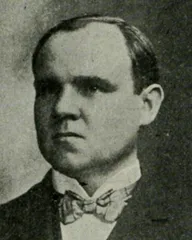
The Leaven of the Gospel A Century of Demonstration By JAMES E. TALMAGE of the Council of the Twelve "Knotv ye not that a little leaven leaveneth the whole lump?" (I Cor. 5 :6.) A scriptural passages and is "leaven" occurs in several scriptural passages and is now commonly current as symbol- izing the contagion of evil, it is also employed as an expressive fig- ure indicating the quiet, pervasive and effective influences of living truth. Christ warned his disciples against "the leaven of the Phari- sees and of the Sadducees" and the "leaven of Herod;" but he likened the Kingdom of Heaven unto leav- en, and instanced its living power by parable — that of the woman who put, or hid away, a little leaven in three measures of meal- — and lo, the whole became leavened! What would otherwise have been a mass of heavy soggy dough was permeated through and through by the living cells of the yeast, which multiplied many thousand fold and so completely impreg- nated the otherwise dead meal that all became light and living, so that every particle was leavened, with the power of leavening other meal, and so on by endless process. Let it be remembered that the yeast cell is as truly a living organism as is the seed of a tree. '"THE Gospel of Jesus Christ has . been restored to earth, after the night of centuries during which the world of mankind lay in spir- itual slumber, seemingly dead, un- der the benighting influences of the spirit of apostasy, which dom- inated the minds and souls of men. The renewal of the Gospel to earth in these latter times, in fulfilment of the predictions of the Lord Christ and his ancient prophets and apostles, was a planting of the leaven of life in the hearts of mankind. The story— the history — of the century demonstrates be- yond rational challenge the vitali- ty of that divinely prepared leaven, for, in some degree, it has already leavened the world. Now, dropping the figure and turning to plain facts of record, we see that the religious system called "Mormonism" has spread its enlightening and uplifting in- fluence far beyond the actual mem- bership of the Church of Jesus Christ of Latter-day Saints, which Church has been established by divine command in natural and in- evitable sequence to the restora- tion of the Holy Priesthood, with- out which there never has been, never can be, a Church of Christ upon the earth. Scriptorians, the- ologians, and thinking people gen- erally— those who think with their hearts as well as their minds — have observed with feelings ranging from apprehensive fear to loving welcome the operation of a new spiritual force, before which the unscriptural dogmas conceived in the minds of men, and the cor- rupting fancies born afield during the black night of apostasy, have been largely shorn of their power to subjugate the souls of God's children. The Author 'T'HE Gospel thus restored was something new to men, though in a relative sense only, for it is nothing more or less than the an- cient Gospel come again. Its effect during the one hundred years just completed is a phenomenon of sur- passing importance, the literal ful- filment of the divine proclamation, made by the mouth of Isaiah the prophet: 'Therefore, behold, I will proceed to do a marvellous work among this people, even a marvellous work and a wonder: for the wisdom of their wise men shall perish, and the understanding of their prudent men shall be hid." The world has seen the devel- opment of a New Theology by which many tenets, dicta, and doc- trines, long held to be fundamental to Christian faith, have been modi- fied, superseded or positively disa- vowed. In this pew theology "Mor- monism" has pioneered the way. It is a fact obvious to the discern- ing observer that "Mormonism" has led and is leading the world in theology. So sweeping a state- ment demands citation if not dis- cussion of illustrative examples. Let us consider a few out of the many instances within reach of the studious reader. AN element of supreme impor- tance in religious belief and practice is an understanding of the nature and attributes of God, so far as these have been revealed. Through ages of mental and spir- itual lethargy men tried to believe the really incomprehensible dogma of a bodiless, passionless, shape- less existence which they called God; and in the formulated creeds of some sects and churches the mystic paradox is retained, in words at least. Gradually, however, the minds of men have turned with relief from this unintelligible con- ception of God to a realization of
The Improvement Era for May, 1930 479 his personality as the Being Su- preme, in whose likeness and image man has been begotten and born. Through whom was the life-giv- ing light of truth respecting the personality of Deity given to the world? Through Joseph Smith, the prophet of these the last days, who in the year 1820 was blessed with the unprecedented theophany of personal manifestation of the Eternal Father and his Son Jesus Christ. The prophet affirmed and steadfastly maintained, in the face of ridicule and persecution, which culminated in his martyrdom, that the Father and Son are in form and appearance like unto perfect men. Another instance: The unscrip- tural and repellant dogma of in- herent degeneracy and the contam- inating effect of "original sin," by which every child is born vile in the sight and judgment of God, long cast its dark shadow over the minds of men. From this conception sprang the practice of infant baptism and the perverted doctrine of assured damnation for all babes who die unbaptized. Do people at large accept or believe that abhorrent invention of cloud- ed minds today? Even the colossal Catholic Church has modified its teachings and now permits its members to believe that children who die without baptism pass to a state of relative happiness and content, though forever denied the supreme bliss of "the beatific vi- sion of God." [T is conceded, of course, that no doctrine of men can determine the fate of souls, infant or adult, in the hereafter; nevertheless, the- ological teachings have direct effect upon the thoughts and lives of mankind. It is cheering to know that practically all Christendom today repudiates the frightful her- esy of the eternal condemnation of babes who die without baptism. Hear now the word of "Mor- monism" on the matter, and note the time of its enunciation. In 1830 the Book of Mormon was given to the world. Therein we read in an epistle of the ancient prophet Mormon to his son Moro- ni: "Little children are whole, for they are not capable of committing sin; wherefore the curse of Adam is taken from them in me, that it hath no power over them. * * * I know that it is solemn mock- ery before God, that ye should baptize little children. Behold I say unto you that this thing shall ye teach — repentance and baptism unto those who are accountable and capable of committing sin; yea, teach parents that they must repent and be baptized, and hum- ble themselves as their little chil- dren. * * * And their little chil- dren need no repentance, neither baptism. * * * Little children are alive in Christ, even from the foundation of the world." pURTHER: The one-time gen- eral conception of heaven and hell is regarded today as antiquat- ed, unreasonable, unscriptural and untrue. I speak of the heaven and the hell once thought of as the only places or conditions prepared for the souls of men, to one or the other of which states every being who has or shall have tabernacled in the flesh is to be consigned, per- haps on a very narrow margin of merit or desert. True, the support of scriptural warrant was lacking for the churchly dogma; but cen- turies were required for the world to discover the fact: Belief in graded conditions in the hereafter is widespread today, and in this rational substitution of ennobling truth for degrading error, "Mor- monism" is again the world's teacher. Joseph Smith, the proph- et of this the Dispensation of the Fulness of Times, avowed that in February, 1832, he received a di- vine revelation, in which the con- ditions of the hereafter were shown to be the direct result of individ- ual life in mortality, and by which the existence of distinct kingdoms of glory, each with its own nu- merous gradations, was made plain. Omitting quotations I cite Doctrine and Covenants, Section 76, as ample demonstration. The Church affirms the possi- bility of eternal advancement within the several kingdoms pro- vided in the hereafter and teaches that repentance is possible even beyond the grave. It utters solemn warning, however, against procrastination and wilful neglect here, holding that this life is strictly a probationary period given unto men for repentance and valiant service, and that to neglect is to lose the ability to repent. Neglect of opportunity here shall surely be a handicap to eternal progress; but the sinner may ad- vance in eternity if he will but repent and try. By way of other illustration: In the old theology, liberally tinc- tured by misunderstanding and consequent fallacy in the interpre- tation of scripture, it was taught that the sanctifying grace of God was all that was requisite for sal- vation, and that moreover, the fate of souls in the hereafter depended upon the arbitrary judgment of the Omnipotent. Modern revela- tion, which is in strict accord with ancient scripture rightfully interpreted, rejects caprice and ar- bitrariness as elements of the Di- vine, and holds to the universal operation of law both in the deal- ings of God with mankind in mor- tality and in the judgment yet to come. This law comprises, in all their glorious fulness, both Justice and Mercy. A sufficient attesta- tion appears in the revelation given to Joseph Smith in 1832: "I, the Lord, am bound when ye do what I say; but when ye do not what 1 say, ye have no promise." Fol- lowing this proclamation of eter- nal truth, Christendom has grad- ually come to repudiate the con- ception of uncertainty in the issue when every man shall stand to answer for himself before the bar of the Just Judge. ET these items and instances suffice. They fully warrant the affirmation that during the first cen- tury of its existence the Church of Jesus Christ of Latter-day Saints has attained a position of eminent leadership in theological concep- tion and in that of true religion. Consult the latest and most prom- inent Bible Dictionaries, Commen- taries, etc., comparing these with publications of the class now a century old, and note the incorpo- ration of many of the fundamental truths of "Mormonism." Reverting to the simile with which we began, we may con- template with assurance and thanksgiving the effectiveness of the leaven of the Gospel of Jesus Christ, which is working in the hearts of men of all nations, kin- dreds and tongues, producing in rich supply the indispensable Bread of Life which sustains and satisfies the hungry but healthy soul.