Is Reason Sufficient?
Improvement Era, vol. 29, no. 8, June 1926, pp. 717 to 718
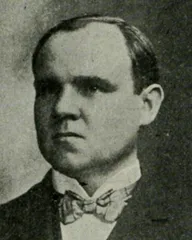
IS REASON SUFFICIENT? By Elder James E. Talmage, President of the British and European Missions The incident of Peter's inspired and fervent declaration — that Jesus of Nazareth was in solemn truth "the Christ, the Son of the living God" — finds frequent place in sermon, song, or printed dis- course. All the better that we know the circumstances well; we should thereby be the better able to comprehend the lesson now to be considered. Let us remember that our Lord first asked the Twelve as to what were the common rumors concerning his identity; and that then, with deep solemnity, and as a soul-searching test for which the Twelve had been in unconscious preparation through many months of close and privileged companions.1 ip with the Lord, he asked of them in summoning forcefulness: "But whom say ye that I am?" Then, an- swering for all, but more particularly testifying as to his personal conviction, Peter voiced the great confession: "Thou are the Christ, the Son of the living God." This was no avowal of mere beiief, no announcement of a result at which the man had arrived by mental process; no solution of a problem laboriously worked out; no verdict based on the weighing of evidence. Peter spoke in the sure knowledge that knows no question, and from which all doubt and reservation are as far removed as is the sky from the earth. There are problems, vital problems, pertaining to human ex- istence and destiny, for the solution of which the mind of man is confessedly inadequate. And of these seemingly insoluble difficulties many are solved in the heart, while the mind remains impotent. Who dares aver that he believes nothing, accepts nothing as real and true, save only what he can demonstrate by his mental powers? Where is the chemist who can explain, even to his own satisfaction, the subtle transmutation of the acid juice in an immature peach into the nectar of the ripened fruit? Who can tell how the sun's warm kiss can bring out from the dull unripe skin the rainbow hues of the fruit in perfection? Physiologists know but little of the way by which the well masti- cated food is converted into chyme within the stomach, and this into chyle in the further recesses of the alimentary tract; they tell us that the prepared chyle is taken up by myriads of absorbing lacteals, and by them poured into the pulsing blood-current, and that from this red river of life each tissue of the body selects, with nicest and unfailing discrimination, the particular aliment required for its own maintenance. Yet who has learned how the latent energy of the food so assimilated is liberated and made potent — manifested perchance in the driving hammer-stroke, in the strong hand on the plow, in the swing of the
718 IMPROVEMENT ERA scythe, in the brain-force of the mathematician, the mechanic, the statesman, in the inspired thoughts of the poet, or in voicing the revealed truths given of God through the prophets? We make reason unreasonable when we say, we will have to do with nothing that reason can not circumscribe and demonstrate. Notwithstanding it be by his mental attributes that man is chiefly distinguished from the animal, mind and reason should know their own limitations. They are far from comprising all that is . If the Atonement by Jesus Christ were available only to those who, by their own powers, can reason out its full purpose, operation and extent, not a soul would be saved thereby. The intellect is to be exercised to the full in the study of the things of God; but beyond all possible assurances that the mind can give is the convincing, convicting, soul-satisfying wisdom that comes as a gift from heaven to the humble, contrite seeker after truth. Mind may be cultivated at the expense of soul. The student for whom there is least hope is he who believes that he already knows all that he is sent to learn. Contrition, humility, willingness to receive, these are primal conditions requisite to the divine gift of a testimony of the gospel. Men's knowledge must go the way of their wealth — both secondary to the saving wisdom that God alone can impart. The learned Apostle, Paul, drew a forceful distinction between the mind's knowledge and the soul's wisdom, thus: "And I, brethren, when I came to you, came not with excellency of speech or of wisdom, declaring unto you the testimony of God. "For I determined not to know anything among you, save Jesus Christ, and him crucified. "And I was with you in weakness, and in fear, and in trembling. "And my speech and my preaching was not with enticing words of man's wisdom, but in demonstration of the Spirit and of power: "That your faith should not stand in the wisdom of men, but in the power of God." — 1 Cor. 2:1-5. The ancient prophet Jacob bewailed and denounced the en- throning of mind above heart, of human precept as superior to divine command: "When they are learned they think they are wise, and they hearken not unto the counsel of God, for they set it aside, supposing they know of themselves, wherefore, their wisdom is foolishness, and it profiteth them not. And they shall perish." — Book of Mormon, 2 Nephi, 9:28. The experience of past ignorance prompts one to be careful, prudent and thoughtful before undertaking to proclaim that human leason is ample to cope with the great problems of existence. Well directed exercise of the human mind may give man knowledge; but to insure to its possessor wisdom, the mind must cooperate with that faculty or attribute, which, because of our certain knowledge of its existence coupled with our ignorance of its operation, we call the heart.