Ye Shall Answer for Yourselves
Improvement Era, vol. 29, no. 6, April 1926, pp. 573 to 574
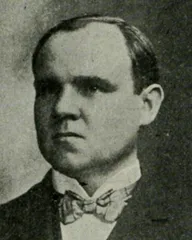
YE SHALL ANSWER FOR YOURSELVES By President James E. Talmage, of the British Mission In the early history of the Church of Jesus Christ of Latter- day Saints, when its membership was small but scarcely less hetero- geneous than at present, Joseph Smith the Prophet gave a very im- pressive and significant answer to a simple question. An investigator remarked that the organization was made up of people from all quarters of the earth, representing many nations and divers traditions, and asked how the Church authorities managed to govern such a com- posite body. The memorable reply was "We teach them correct principles, and they govern themselves." The basal fact involved in this declaration is expressive of the system of government operative in the Church today. There is naught by way of compulsion within the Church, as of right there ought to be freedom in matters of worship amongst all men. Authority in the holy Priesthood is to be exercised only in the spirit of justice, associated with mercy and love; and every member of the Church is as free to withdraw as he was to enter. Upon himself rests the responsibility for either step. The coherency of the Church is a matter of comment, specula- tion and wonder to observant non-members. They see a highly organized body, all parts of which work in unison, the status of membership entailing sacrifice and renunciation of much that may have been held dear, together with active cooperation in a system of service that knows no idlers, and all this without any compelling power except the consciousness of individual duty and voluntary submission to the laws of the Church, in the administration of which every one has a voice. Ample explanation is found in that profound fact of individual consciousness. The organized Priesthood is the embodiment of authority given of God, but the human bearers of that high com- mission minister in their sacred offices according to a revealed order, which all members voluntarily and with strong purpose uphold. Counsel takes the place of command, and enlightened obedience prevails over blind servility. Every member must have a personal conviction of the divine origin of the organization as The Church of Jesus Christ, re-established upon the earth in these last days; otherwise he is a member in name only. Every one must know that no priest, elder or apostle can stand between him and his God, to condone sin or facilitate salvation upon any other terms than those of individual compliance with the laws and ordinances of the gospel prescribed by Jesus Christ.
574 IMPROVEMENT ERA The officers established in the Primitive Church — apostles, prophets, evangelists, elders, pastors, teachers, etc. — are as truly needed today as of old and their purpose is equally essential: "For the perfecting of the saints for the work of the ministry, for the edifying of the body of Christ" (Eph. 4:11-12). Each must know for hrmself that Jesus is the Christ, the son of the living God, the resurrected Lord, whose name is the only name under heaven whereby men may attain salvation. Every man's con- viction must be as certain as was that of Peter, who, with the full fervor of his soul, avowed to his Lord: "Thou art the Christ, the son of the living God." How had Peter come into possession of this knowledge of greatest worth? The Lord's rejoinder, full of blessing and assurance, gives answer: "Blessed art thou, Simon Barjona: for flesh and blood hath not revealed it unto thee, but my Father which is in heaven." Read Matt. 16:13-17. The source from which Peter derived the knowledge that made him one of the wisest of men is the source from which our indi- vidual conviction of the truth must come; and every one must secure it for himself, by rendering obedience to the requirements of the gospel as Peter had done. The testimony of the truth is not to be had for the idle asking, nor to be bought with money. Though priceless, it is made accessible to all, rich or poor, learned or illiterate. The terms are those summarized by the Master while in the flesh in answer to disturbed queries as to the authority whereby he spake: "My doctrine is not mine, but his that sent me. If any man will do his will, he shall know of the doctrine, whether it be of God, or whether I speak of myself" (John 7:16-17). The scriptures are definite in affirming that in the judgment of souls each shall be answerable for his own deeds or misdeeds, his personal sins of omission or commission. Justice demands that to every soul the saving testimony of the Christ shall be accessible. The solidarity of the Church of Jesus Christ of Latter-day Saints is primarily dependent upon the possesion of individual assurance of its genuineness by every soul belonging thereto; and the bond that holds its members together is this common testimony, which no man can give nor take away. Prize Offered for a Short Play The Improvement Era offers $35 and a gold medal for a short one-act play. Open to all who may wish to write. For particulars see March Era, p. 509, or write to the editor, 47 East South Temple Street, Salt Lake City, Utah.