The Beginning of the “Improvement Era,” 1897
Improvement Era, vol. 28, no. 9, July 1925, pp. 869 to 896
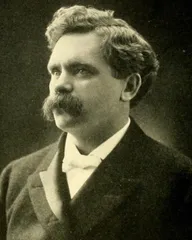
THE BEGINNING OF THE "IMPROVEMENT ERA" 1897 By B. H. Roberts of the First Council of Seventy and President of the Eastern States Mission In the early summer of 1896, the writer was called to fill a preaching mission through the principal cities of the Central and Eastern portions of the United States, with Elders George D. Pyper, Melvin J. Ballard and Edward Midgley. Before starting on this mission, however, the writer had been ap- pointed on a committee to make a survey of the status of the Young Men's Mutual Improvement Association at that time. It was then quite generally conceded that these associations for the spiritual, moral and intellectual uplift of the young men of Zion, were not func- tioning as perfectly as they should, and it was suggested that a report on their condition, following careful investigation of the causes of deterioration, might result to their advantage. I do not remember definitely all the membership of that committee, but I think that Rudger Clawson, Thomas Hull, Bryant S. Hinckley, Edward H. An- derson, and myself were the committee; and I think, by the way, that I was chairman of this body of investigators of Mutual Improvement. I had already been called to fill the above mentioned mission through- out the larger cities of the middle and eastern states, and I remember that this circumstance lent to the investigation, and the report subse- quently based upon it, a sense of freedom that was indeed gratifying. It will be enough to say of the report of this committee that it was quite drastic in several respects, too bold, in the opinion of some of the committee, although I believe there was finally complete agreement up- on the recommendations made. Almost immediately after submitting this, report to the Presi- dency of the Church, the writer went upon his mission, in which he continued for nearly one year. Meantime, the report submitted was discussed by the Superintendency and General Board through quite a number of sessions, and very generally agreed upon, though some of the committee's recommendations were not acted upon, at least at that time. The Contributor, for seventeen years the organ of the associa- tions, discontinued publication on the 1st of October, 1896, so there was no medium through which the members and the associations of the organization could be directly reached. It was therefore suggested that one of the things absolutely essential to unity of effort, and the success of the revival of the organization was that an organ of the Young Men's Mutual Improvement Association should be revived; that the Mutual Improvement cause could not more than half live with-
870 IMPROVEMENT ERA out such an organ. No definite action was taken as to how the revival of the Young Men's Mutual Improvement periodical could be started, until the writer returned from his completed mission tour to the chief cities of the middle West and Eastern states, in the late summer of 1897. Then, as I remember it, the committee on the subject of said periodical was appointed, of which the writer was a member, but I do not recall, with certainty, the names of the associate members, but the question of the periodical was very earnestly considered. The main obstacle to the undertaking was the question of capital. We had no means with which to start, no prospect of making a suc- cessful loan of capital, and we were given to understand from the office of the Trustee in Trust of the Church, that the financial con- dition of the Church, at that time, would not warrant any hope of financial aid from that quarter, either in the commencement of such an enterprise, or further along in its development. We must rely upon our own resources, and of these we seemingly, for a time, had none. All details of the interesting discussion had upon this subject now no longer remain in sufficient clearness in my mind for me to venture upon giving an account of them; but this I know was the outcome of the deliberation: The strong assertion that those who supposed we had no capital with which to begin the publication of the organ for the Young Men's Mutual Improvement Association were entirely mis- taken. Our capital was the interest of the young men of the Church of Jesus Christ of Latter-day Saints in the Mutual Improvement cause; and that had only to be appealed to, and drawn upon, in order to be sufficient and permanent in the maintenance of the Young Men's organ. It was urged with complete confidence that if our case were fittingly presented to the young men of the Church, and our deter- mination to publish such an organ was strong enough, that we could supply the capital by asking our young men for a one year's sub- scription to the magazine, strictly in advance, and before any numbers were printed at all. Rather a unique plan this, for raising capital, and many were the predictions of failure should we attempt to execute it! But the committee in charge were then young men, and represented at that time the spirit of faith and confidence in things undertaken, characteristic of the young men of the Church; and so the plan, with some mis- givings was assented to, and a campaign for raising the capital was planned. The general outline of that plan, as I now recall it, was first of all to adopt a name, have the management and editorial staff appointed, and then send out campaigning companies into all the terri- tory occupied by the Church organizations to solicit subscriptions. The business management was placed in the capable and enthusiastic hands of Heber J. Grant, as business manager, with Thomas Hull, assist- ant, and the editors were announced as Joseph F. Smith and B. H. Roberts. As already stated the appeal to be made for the establishment of
BEGINNING OF THE IMPROVEMENT ERA 871 this organ of the Young Men's Mutual Improvement Association was to represent the fact that the young men of the Church were to be con- sidered the capital of the publication; and that they were to subscribe for the monthly magazine by payment, strictly in advance, of the sub- scription price of $2 per annum. The dividend upon their capital was to come as value received in the excellence of the proposed periodical, and in the fact that their organization had an organ. I do not now remember the number of canvassing companies that went out to make good this plan, but I do know that there were several and they vis- ited practically all parts of the Church territory where Improvement Associations existed. Some members of the General Board, being members of the Council of Twelve and the First Council of Seventy, took the matter up in the quarterly conferences which they happened to be attending, during the two or three months remaining of 1897. Several stake superintendents of the Y. M. M. I. A. took up the work in their respective stakes, and in this way added many subscribers. The Com- pany of canvassers with which the writer was associated was assigned a group of counties in northern Utah and southern Idaho, and their tour occupied something more than a month or six weeks and was somewhat typical of other groups who went out upon the same mis- sion. Our territory consisted of the Afton stake, in Wyoming, Bear Lake and Oneida stake, Idaho and Cache stake, Utah. The personnel of our party included the late Robert Easton, and his wife Jeanette Young Easton, Thomas Hull and his wife Margaret Hull, Douglas M. Todd, Viola Pratt Gillett and her mother, Mrs. Milando Pratt, Walter S. Lamoreaux, and myself. Those who are acquainted with the per- sonnel of this company will at once surmise that it was strong for its singing talent, especially in the personages of "Bob" Easton. Viola Pratt Gillett, Mrs. Margaret Hull, and Mr. Lamoreaux. They were to give concerts and the rest of us were to represent the prose propo- sition of raising the Era's capital. It was a very delightful journey through the mountains and valleys of the territory to be traversed, in these late months of 189 7. Before it was concluded the shooting sea- son had opened, and the game of the sage brush plains and the marshes of Bear Lake, and the river flowing from it, afforded some sport, as also did the streams we whipped somewhat with fly hooks, but the chief enjoyment was in meeting the good people who yielded to the spell of our singers, and the earnestness, if not the eloqunce, of those who, presented the cause of the Improvement Era. Easton and his associate singers were at their best. Something in the outdoor life, and meeting in the homes, seemed to give a touch of romance to our undertaking. Everyone was cheerful, and we often went serenading the people at their homes in out-of-the-way places. There "Bob" Easton, in Scotch songs, and Viola Pratt Gillett, in sentimental ones, with solos by Sister Hull and duets and trios thrown in for good measure, in which Lamoreaux joined, together with choruses and hymns in which
872 IMPROVEMENT ERA even Hull and myself sometimes swelled the chorus, seemed to be taken as currency for the large draughts of buttermilk and lunches our company consumed. Everywhere our public meetings were well attended, subscriptions for the forthcoming magazine rolled up on every hand, until we were satisfied that if the other companies of canvassers were as successful as our company was, the organ for the Young Men's Mutual Improve- ment Association was assured.* And that is what came to pass. In other parts of the Church territory, as well as in ours, everywhere the young men of Israel responded to this appeal, and became the capital, and the only capital with which the magazine started. That has re- mained true throughout all the twenty-eight years of the magazine's existence, except perhaps for some accumulations that have resulted from some of the fat years of the plan's operations. The young men, as I understand it, now are, and doubtless will continue to be the capital of the Improvement Era, now the organ of not only the Young Men's Association, but of the Priesthood Quorums, and of the Schools of the Church of Jesus Christ of Latter-day Saints. Long may it continue in its successful career, and distant, far dis- tant be its euthanasia. Brooklyn, N. Y. Stop and Think — Before you fly into a tantrum because the toast is burned at break- fast. You wouldn't do such a thing, if you'd been properly trained or well thrashed when a child. Stop and think before you scold the children for talking while you read the morning paper. Probably you have an abused stomach that won't allow you to concentrate on what you are trying to read. Stop and think before you complain about your sleepless nights. With- out a doubt you squander the time you should be in bed by doing something useless. Stop and think before you find fault with those with whom you live. You have no more right not to control your temper than they have. Stop and think before you blame everyone for everything that goes wrong with you. When, maybe, it is some foolish habit of your own that distorts your ideas and vision. Stop and think before you say it is your nerves. Indigestion often causes nerves; gluttony causes indigestion. Moderation in all things indicates a well balanced individual. San Diego, California. D. C. RETSLOFF. *Elder Brigham Young of the Council of the Twelve, stated at a General Board meeting, in April, 1898, that the missionaries in California were greatly pleased with the Era, and that in our southern settlements wherever he had met the people, they were delighted with it. He said further that the publication of the Era was one of the most popular movements in many years. — Editors.
HISTORICAL SKETCH OF THE Y. M. M. I. A. First Period II By Junius F. Wells Pursuant to the instruction of the First Presidency, missionaries were appointed by the Central Committee to vigorously carry on the work. The Deseret News, which at this time was the Association's dependence for publicity, commented upon this procedure in the fol- lowing editorial. As it, and the preceding circular signed by Elder John Nicholson as secretary, present evidences of his interest in the work, I will quote it at length: MUTUAL IMPROVEMENT Under the sanction and advice of the authorities of the Church a mis- sionary system has been organized, in connection with the Central Committee of the Y. M. M. I. Associations, to visit the several societies throughout the Territory. A number of appointments of members of the societies have been made to the various M. I. Associations in this city and adjacent settle- ments and are being filled. The missionaries are mostly young men, and besides their labors being of benefit to the societies visited by them, they are also conducive to their own advancement, giving them opportunities of becoming proficient in public speaking, and making it necessary to store their minds with useful knowledge, in order to acquit themselves with credit to the cause they are engaged in. In this labor Elder Junius F. Wells, president of the Central Committee has recently been on a visit to some of the settlements of Davis county and lately took part in organizing an association at Kaysville. These missionary labors among the young are for the purpose of in- creasing and maintaining an interest among them regarding religious, moral and intellectual culture. We look upon it as a good work, promising most excellent results. — • Deseret News, January 13, 1877. Throughout the winter and spring of 1877 the missionaries ap~ pointed, as above, visited several counties, encouraging the Associations already formed and organizing others as opportunity afforded. Most active among the young men performing this labor were the following. They went in pairs and spent one, two, three or more days filling the respective appointments made for them: J. F. Wells, B. F. Cum- mings, Jr., Briant Stringham, Richard W, Young, Benjamin F Howells, M. H. Hardy, Orson Woolley, Benjamin Cluff, Jr., V. L. Halliday, R. C. Badger and others, whose names I do not now recall; and I find no complete record. It is, perhaps, relevant to say here that the practice of appointing special missionaries — young men chosen from the officers and active members of the Associations — obtained for several years, periodically. It gave those engaged in it a fine early practical missionary experience
DR. MILTON H. HARDY Leading organizer and staunch worker in the early days of the Young Men's Mutual Improvement Association
HISTORICAL SKETCH OF THE Y. M. M. I. A. 875 and they were not only themselves much benefited by it; but atten- tion to their qualifications for more extended missions was called to the notice of the Church. The committee of the apostles were so impressed by it that later they called upon the stake superintendents for names of the best qualified, to go on foreign missions; as indicated in the following letter sent to Elder Hardy and to the other stake super- intendents: Salt Lake City, U. T. June 20, 1879. Elder M. H. Hardy, President of Y. M. M. I. Associations of Utah Stake of Zion. Dear Brother: We wish you to select and submit to us the names and addresses of, say one from each Mutual Improvement Association in your stake of Zion, the most faithful and competent young man, who lives his religion, possesses the faith of the gospel, and is also blessed with means to enable him to bear the necessary expenses of a mission to the United States, and report the same to President John Taylor, at his office, who will further direct in the matter. Your early and careful attention to this will oblige, Your Brethren in the gospel, (Signed) F. D. Richards, Jos. F. Smith. Prior to this, in fact as early as April, 187,7, I was requested by President Brigham Young, personally, to prepare a list of twenty or twenty-five young men, who were active in the associations, to take foreign missions. In this instruction I recall it was also specified that a number should be of such intelligence that they could readily acquire a knowledge of other languages, especially the Spanish, as it was in- tended to send some of them to Mexico. This requirement, by President Young, was made at St. George in April, 1877. I called upon the association officers there and consulted the bishops and other lead- ing men — particularly Elders Erastus Snow, James G. Bleak and others, and prepared a list of twenty-two names, which they approved as eligible. At the head of it was the name of Anthony W. Ivins — then an officer of the St. George association, now first counselor in the presidency of the Church. President Young and party left St. George for Salt Lake via Iron, Sevier and Sanpete counties, on the 16th of April. At the St. George tabernacle meeting, on Sunday the 15th, at which the president spoke, I was called to the stand and bore my testimony, saying also that I was proud of the fact that the Y. M. M. I. A. had so far prospered that we then numbered 130 associations, and about 5,000 members. He called upon me to speak at Parowan and at Richfield, on the home- ward journey, in the interest of the associations. President Young died on August 29, 1877. His son John W. soon afterwards departed for the East and lost active connection with the associations. As already mentioned, the latter months of the president's life were partly devoted to organizing stakes of Zion and
8 76 IMPROVEMENT ERA I resuscitating the few that were in existence. I was present at several of the conferences where this was done, and took the keynote from that experience to effect stake organizations of the young men in harmony therewith, as will be seen from the following published in the Deseret Neivs, November 19, 1877: MUTUAL IMPROVEMENT "The first meeting of the season of the Central Committee of the Y. M. M. I. A. was held at the Council House, on Saturday evening (Nov. 17). "In consequence of other duties interfering with the performance of those of the secretaryship of the Commitee John Nicholson tendered his resig- nation of that position. Benjamin F. Cummings, Jr., was unanimously elected to fill the vacancy thus created. The officers now are: President, Junius F. Wells; Counselors, Milton H. Hardy and Rodney C. Badger; Secretary, Benjamin F. Cummings, Jr.; Assistant Secretary, Richard W. Young; Cor- responding Secretary, George F. Gibbs; Treasurer, Mathoni W. Pratt. "It is intended to appoint in each Stake of Zion a President whose duty it will be, among other things, to superintend or direct the missionary labors of members of the several associations; also to receive reports and condense them into one for the stake to be forwarded to the Central organization. "We understand it is intended during the season to deliver a course of lectures, under the auspices of the Committee." It was not a great while after this, in the Spring of 1878, that President John Taylor, who with the twelve apostles had succeeded, upon the demise of President Young, to the presiding authority in the Church, sent for me. I had an extended interview concerning the associations. President Taylor was very deeply interested in their work. He was better informed than I supposed about it; and he was very complimentary in his observations upon what had so far been done in its progress and development. He particularly approved of the proposal to effect Stake Superintendencies and gave us a key, which he admonished us always to use, i. e. to follow the example of the general Church organization; as it was expected that we should pre- pare men for responsible positions in the Church. This caused us later to appoint stake superintendents with two counselors, which had not at first been contemplated. President Taylor inquired about the circumstances of myself and Elder Hardy, my first counselor, to know if we were able and at liberty to devote the time required to go ahead and complete the stake organizations throughout the Church. I told him that I would confer with Elder Hardy and report. He apprehended that we might need some help. I reported to him, I think in May, 1878, that we were about prepared to go; that I had a four-spring wagon, which only needed some repairs; that Elder Hardy felt assured he could procure a span of horses and a driver. The President told me to send my wagon to the Church blacksmith shop for repairs, and expressed his high appre- ciation of the spirit Elder Hardy manifested. He held me by the hand and gave me a wonderful blessing in connection with the tour of the Territory we were to undertake. I have never forgotten its impress- iveness, and have lived to realize that it was prophetic and inspired.
HISTORICAL SKETCH OF THE Y. M. M. I. A. 877 We rigged up my wagon, and Elder Hardy was fortunate in securing the voluntary services of Brother John Craner, of Tooele, then a student of the Brigham Young Academy, at Provo, with his good span of horses. We planned our tour in two divisions, North and South, each to occupy about two months time. We sent out notices for meetings and, commended by the general Church authorities to the stake presidents and ward bishops, whom we were instructed to con- sult, we set out to accomplish our mission, of which Elder Hardy made the following record: "Elders Junius F. Wells and Milton H. Hardy, accompanied by Brother John Craner, at that time a student of the Brigham Young Academy, commenced, on July 5, 18 78, ,by appointment of President John Taylor, a complete territorial tour in two parts. First, northern; comprising the counties of Davis, Morgan, Summit. Weber, Box Elder, Cache, Wasatch and Rich, including Uintah county, Wyoming, and Bear Lake and Oneida counties, Idaho. Second, southern; comprising the coun- ties of Tooele, Utah, Juab, Sanpete, Sevier, Piute, Iron, Kane, Washington, and Millard, including the settlements in Grass Valley. "A business meeting of the officers of the Associations was held, either pre- ceding or succeeding the general public meeting, at which the details of the workings of the organizations were entered into, and an opportunity presented for an extended acquaintance by the asking and answering of questions, describing and recommending books for joint libraries, a list of which was left with each, as well as a copy of suggestive programs, and a copy of serial lecture subjects, also a portion of each of the three analyses; taking each item in the suggestive program, explaining its nature and the reason for its incorporation in the regular exercises. "In addition to weekly class work, monthly joint sessions, libraries, cabinets, lectures, etc., already partly established progressive subjective work was made special; for which brief analyses of the Bible, Book of Mormon, and Church history, adapted to the combined Associations, generally, were prepared. Inter-missionary labor was more thoroughly established and stake organizations were effected in each county by the election of a superintendent and secretary for each. Stake quarterly conferences were made universal. Literary entertainments, the regulating of the public amuse- ments, correspondence for home papers, and identification with Sunday schools, were made prominent. "During this tour of more than eighteen hundred miles, one hundred and fifteen meetings were held in one hundred days." This was a remarkable tour, of varied experience, adventure, and much significance to the associations. The invaluable quality of the service of Elder Milton H. Hardy was brought out. His companion- ship was most enjoyable to me. We sat together on the back seat, Brother Craner ahead driving. Our light four-spring wagon was quite comfortable, canvas covered and with spring seats. It was laden with our personal effects, a quantity of tracts and books, rugs and quilts to supplement scant bedding in case of need. In fact they provided us entirely once or twice, when we were delayed or our team gave out and nightfall compelled us to camp. I recall vividly one night in the sand, between Kanab and Virgin City. We made a practice of starting early mornings and of stopping along the way to take note of places and objects of interest. It was our custom to stop and bathe in every spring, lake and stream large enough to cover us, and to swim the rivers. I was not a very strong nor bold swimmer but Brother Hardy was
878 IMPROVEMENT ERA both, and my confidence in him was such that I ventured wherever he led. Thus it came to pass that I accomplished marvels for me, of which I am not yet through boasting. We swam Bear river, at the place where President Woodruff's son was drowned. That was my most terrible swimming adventure. My trust in Brother Hardy led me into the river and we got across, he swimming on the lower side. When it came to make the return, it taxed my faith as well as my strength and unskillful limbs to the utmost. How considerate and encouraging dear Hardy was, as we battled the heavy flowing stream, I so feebly, and finally landed on the opposite bank a long way down below our starting point. On another occasion we were overtaken by darkness long before reaching our stopping place. It was near Portage I believe on the Malad, and approaching a house faintly indicated in the darkness by a light in the window, to inquire the way, I was rushed upon by a damnable dog, who bit me in the thigh. Hardy jumped out of the wagon instantly to my rescue and beat him off. The owner of the place alarmed by my scream, for I was more scared than hurt, although I carried the scar for years, ran out, swore at the miserable cur and said that I was not the first person he had attacked and that he wished the vicious hound were dead. Hardy took the hint, asked him if he meant it and, getting my sporting rifle from the wagon, with a well directed shot speedily put an end to that dog's evil career. Our adventures were not many, but our delight on the way, especially in the early morning drives, was very great. Hardy' was very happy, not only in the daily consciousness of duties well done, but he was in love. It was not so long before he married the objett of his affection, Miss Elizabeth Smoot, daughter of President A. O. Smoot, of Provo, and sister of the Senator. I discovered the state of his affections and charged him with it one morning, just as the sun appeared over the mountains, soon after we left Mayfield for Salina on the Sevier. Hardy suddenly broke out with the following, and I have never learned whether it was a quotation or an improvisation: "Lo! I have beheld the glorious sun arise, Ere the cold earth had yet forgot the night, Blushing all rosy, as with glad surprise. Like a young girl when first she sees her heart's delight." I merely said, "Libbie" and Hardy blushed. Then I knew. As we journeyed we prepared the programs of exercises, made copies on our pencil tablets and left them with the officers of each association, fully explaining them at special officers' meetings. These exercises — so far as the scriptural subjects were concerned — were prepared by Elder Hardy. They constitute the original basis of all the M. I. A. man- uals. They were prepared by him as early if not before as such analyses were introduced at the B. Y. Academy, Provo, or elsewhere, so far as I know. In his "History of the General Organization," he published them. They were of such excellence and, notwithstanding that they were much amplified later, being grouped and consecutively numbered,
HISTORICAL SKETCH OF THE Y. M. M. I. A. 879 as synoptical headings for lectures, by the collaboration of Elders Hardy and George H. Brimhall, I believe their republication now would be of real service to many associations, and to individual students of the scriptures. Space will not allow this, however, and I can only epit- omize the arrangement. The subjects were listed under dispensational headings, giving the Period of each dispensation with scriptural references. The following is an example: Adamic-Dispensation. (Period 4004 to 2469 B. C. Account Gen. 1-5.) 1. The Creation I. 2. The Garden of Eden II. 3. The Fall III. 4. Cain and Abel (3875) IV. 5. Enoch and the Ten Patriarchs (294 8) V. The Noachean, Abrahamic, Mosaic and Prophetic dispensations were treated in the same way — a total of 85 Old Testament and of 3 7 New Testament subjects. The Book of Mormon was analyzed with 74 titles and Church History with 58. The subjective titles for lectures before the joint sessions of the associations were given under the following comprehensive captions: Historical, Literature, Scientific, Geographical, Biographical, Indus- tries, Artistic, Travels, Jurisprudence, Government in General and Constitution of the United States. Throughout the season 1878-1879 considerable missionary work was undertaken. I recall a trip in Weber county when the snow was upon the ground. I spent a week there going in sleighs, Elder Joseph A. West, the stake superintendent and Central Committee of Weber county accompanied me. We held three meetings a day for six days and they were of such interest that before the tour was over as many as twenty sleigh loads of officers and members followed from ward »o ward. On Sunday, at the beginning of this memorable tour, a conference of the associations of Ogden City was held, the stake board was or- ganized and four city ward associations, to take the place of the com- bined Ogden City associations which had been in operation from the Spring of 1873, when the first association there was established by President Franklin D. Richards. Elder Orson F. Whitney, who had been pressed into service as secretary and treasurer of the Central Com- mittee, attended this conference and spoke eloquently. He was not able to accompany us on the tour of the county. These meetings were reported in The Amateur, a bi-monthly mag- azine which was established and conducted through two volumes by the associations of Ogden City from November, 1877 to May, 1879. It was a most praiseworthy journal, reflecting great credit upon the enterprise of the young men who managed and edited it. It was an example of what the associations generally needed, but its circulation was largely confined to Weber county. An entertaining description
880 IMPROVEMENT ERA JOSEPH A. WEST Assistant General Superintendent 1885-1892. First Editor and Publisher of the Amateur, 18 77-1879. of The Amateur is given in the June, 1925, issue of the Improvement Era, by Elder Preston Nibley. From the organization of the Central Committee, December, 1876, an effort was made to hold semi-annual conferences, at the time of the general conferences of the Church. Usually, but not al- ways, an evening was allowed for this purpose in the Tabernacle or Assembly Hall. Upon one or two occasions, even after the announce- ment had been made, other meetings interfered and we were denied the opportunity we so much needed. Upon one notable occasion we took refuge by arranging for our annual meeting in the Salt Lake theatre. Elder O. F. Whitney officiated for the first, and I think for the last time, as secretary, at this conference. His duties as bishop of the Eighteenth ward were taking him from us.
HISTORICAL SKETCH OF THE Y. M. M. I. A. 881 The notice and report of the conference, as published in the Deseret News, April 7 and 9, 1879, follows: NOTICE: There will be a Territorial annual meeting of the Young Men's Mutual Improvement Associations in the Theatre on Tuesday evening, April 8th. The Young Ladies Associations are invited to meet with us on this occasion. The representatives from the several Stakes invited to this meeting on Sunday evening will please take notice of the change of date and govern themselves accordingly. Meeting will commence at half past seven o'clock. Junius F. Wells, Milton H. Hardy, Rodney C. Badger, President and Counselors Cen- tral Committee. Y. M. M. I. A. TERRITORIAL MEETING Salt Lake Theatre April 8, 1879 Meeting was called to order by the president of the Territorial Central Committee, Junius F. Wells. Singing by the Fifteenth ward choir. Prayer by Brother Erastus Snow. Singing. The president stated the nature of the meeting. The roll of stakes was called by the secretary. The following were represented: Bear Lake, Davis, Sevier, Cache, Salt Lake Co., Beaver, Box Elder, Tooele, Parowan, Weber., Utah, St. George, Morgan, Juab, Summit, San- pete, Panguitch, Wasatch. Millard. Reports from the various stakes were then read. Elder Moses Thatcher then addressed the audience, expressing his pleas- ure at meeting with the young people. Contrasted the different circumstances surrounding the youth now, to those of the early years of our settlement here. Urged the young men to avoid the wine cup, with the horrors attend- ing upon its constant use. He urged the superintendents and officers to use every endeavor to suppress all signs of the habit, and show the youth of Utah the effects of drunkenness. In the process of chromo printing no trace of a picture was visible until the eighth impression, and the picture received twenty-eight impressions be- fore complete, after which it is turned out a hideous or a lovely picture, as the case may be. Even so the minds of the young receive the first impressions of sin without any visible result, but they are lasting and progressive. Elder Erastus Snow alluded to the larger proportion of children under eight years of age, and the great number between eight and sixteen, who attended Sunday Schools and Improvement Associations; advised the youth to cultivate purity of mind. Strength of character, and eternal watchfulness was the price of virtue and integrity. The books placed within the reach of the youth should be carefully selected. Alluded to many points which the superintendents of these societies should present and inculcate by precept and example upon the young men, and invoked God's blessing upon all. Elder Joseph F. Smith spoke a few moments on the value and import- ance of proper education and educators for the children and youths of Zion. The benefit of these societies. After considering carefully, he had concluded that it would be better, according to his judgment, to hold the meetings of the Young Men's Mutual Improvement Associations and the Young Ladies' Mutual Improvement Associations separate, as many advantages would thus be given to each. Monthly joint meetings could be held, and a spirit of
882 IMPROVEMENT ERA proper emulation between the societies encouraged. Was adverse to the prac- tice of introducing too much amusement in these meetings. The first books put into these libraries should be the complete works of the Church. After being thoroughly digested, these may be added unto, but great care should be exercised in selecting. Drunkenness was a vice to be shunned. To say that it lowers its vic- tims to the level of beasts was an insult to the brute creation, for man was the only animal that would so debase himself. With an exhortation to watch- fulness on the part of parents the speaker closed his remarks. Elder Junius F. Wells spoke to the congregation, intimating that it would be better to close the meetings during the summer, than to let them die out, and then try to resurrect them. But no time was stated for their discontinuance. Wanted to adopt Brother Smith's proposition in relation to meetings being held separately and monthly meetings jointly. Would like to have the reports more complete next time. Systematic labor was recommended and to further this end, blanks would be furnished the various societies. A conference would be held semi-annually at which, in accordance with the suggestion of the Twelve, verbal reports would be given by various stake superintendents. The choir sang an anthem and the benediction was pronounced by Counselor Daniel H. Wells. (To be continued) WEED YOUR OWN GARDENS By Joseph S. Peery In a sermon on repentance President Brigham Young said: "Weed your own gardens, and let your neighbor's garden alone. If you devote your time to your own weeding, you will have no time left to weed your neighbor's gardens." When the day is done, let us consider: Have I given away to anger or ill will, talked about anyone, or grieved the Spirit in any way? If so, I ask God to forgive me, and grant me strength to do better tomorrow. When a person praises others, he praises himself: for everyone likes to hear something good and likes the bearer of good news. When he slanders others, he injures himself; for his hearers think, "You will now go out and attack us." It is not for me to sit on the judgment seat against my neighbor. It is for me to try to overcome my own faults, and let my neighbor alone. I have a life's job, plenty to do, in overcoming my own weak- nesses, with no time left to deride my neighbor's shortcomings. A constructive motto is, "Look for the best in every person you meet." My father, David Harold Peery, of Ogden, used to say to his sons: "Don't talk about any one. Talk about the sun, moon and stars." Ivan Panin, a Russian philosopher said, "Tell me only good about my neighbor. The bad I will find out soon enough myself."
PRESIDENT CHARLES WILSON NIBLEY (See Frontispiece) Bishop Charles W. Nibley was appointed and set apart as second counselor in the First Presidency of the Church of Jesus Christ of Latter-day Saints, on May 28, 1925, to fill the vacancy caused by the passing of President Charles W. Penrose. In our opinion no more suitable or capable man for the position could be found in all the land. He is an active, progressive and aggressive man of affairs, whose life and character are irreproachable and whose integrity is unquestioned. His judgment and ability are of the highest order and his spirituality is that of a good Latter-day Saint. President Heber J. Grant's choice of him as counselor will meet approval and applause throughout the Church. His administration of the Bishop's Office during the past eighteen years has been characterized by deep business acumen and sterling ability, efficient management and a clear vision, tending to- wards helpfulness of the people, both in business and in religious matters. President Nibley was born February 5, 1849, at Hunterfield near Edinburgh, Scotland. His father, James Nibley, was a coal miner and had difficulty in providing for his family, but was ably assisted by his frugal, energetic and thrifty wife, Jean Wilson. She was of a deeply religious nature, and in the year 1844 listened to the teachings of Henry McCune of the Church of Jesus Christ of Latter-day Saints, with whose teachings she felt so satisfied that within a week after hearing him both she and her husband were baptized into the Church. From that time they lived in the hope that they might join the main body of the Saints in America, though poverty prevented the fruition of their hopes for ten long years. James Nibley, acted as president of the branch until he emigrated to America in 1855. The Nibleys crossed the Atlantic in the steerage of a sailing vessel and abode in Rhode Island, because their money was not sufficient to carry them further. Here they resided for five years, working in the woollen mills to obtain means to complete their journey to Utah. In 1860 they started westward and reached Florence, Nebraska, joining a com- pany led by James D. Ross as captain, and reached Salt Lake Valley on September 3, 1860. Wellsville, Cache county, was their first home. Here they lived in a dugout. Charles was then a lad of eleven years and began at that early age to provide for his own support by gleaning wheat, herding sheep, and doing other chores. Later he secured a clerkship in the village store, and with his thrift and business ability, at that early age, made good use of his opportunities to ob- tain what little education it was possible for him to get at that time, and in this effort he has continued, until he is today among the best informed men in the Church, both in literature and in business- In
884 IMPROVEMENT ERA 1865 he removed to Brigham City engaging as clerk for a Jewish merchant, Morris Rosenbaum, who was a member of the Church. The advancement which has come to President Nibley has been earned by faithful and painstaking Church labors in the past. On Decem- ber 1 1, 1875, he was chosen first counselor in the first organized Y. M. M. I. A. at Logan, with George F. Gibbs president. He was ordained to the Priesthood in early life and filled a short mission in the United States in the fall of 1869, followed by a mission to England in 1877, where he labored under the Presidency of President Joseph F. Smith in charge of the emigration and business of the mission. When President Brigham Young died in August of that year, President Smith was called home and Elder Nibley and Henry W. Naisbitt were given charge of the mission until the arrival of President William Budge in 1878. In May, 1879, Elder Nibley returned to Utah in charge of a company of emigrating Saints. He settled in Logan and always took active part in ecclesiastical affairs, among other activities being superin- tendent of Sunday schools in Cache stake, then comprising the whole valley, for many years. In 1906 he was chosen first counselor to President Franklin S. Bramwell of the Union stake of Zion when it was organized June 9, 1901. In 1906 he accompanied President Joseph F. Smith on a trip to Europe and on returning, was later chosen Presiding Bishop of the Church, being ordained and set apart to that office December 11, 1907. Under his administration the tithing system was changed and everything 'placed on a cash basis. The tithing orders which had been used for many years were abandoned and many excellent reforms in handling the tithes of the people, both at headquarters and in the settlements, were inaugurated and materially improved and carried out. During his incumbency he made a number of trips with President Joseph F. Smith to the Hawaiian Islands, and in 1910, a second trip to Europe with President Smith, visiting the Holland, Scandinavian, Swiss- German, and the British Missions. In 1913, with President Smith he went to Canada where the temple site was dedicated on June 27, 1913. He accompanied President Smith to Chicago, where the mission home and chapel were dedicated, and at various times also he visited Arizona, Canada, the Southern States, California and the Hawaiian Islands. On the visit to Honolulu in May, 1915, the temple site on which the temple now stands at Laie on the Island of Oahu was selected and dedicated on June 13, 1915. The following year another trip was made to Hawaii in order to give instruction in regard to the building of the temple. He accompanied President Heber J. Grant and others to the Hawaiian Islands in 1919 on which occasion the temple was dedicated. Since then he has made several trips with President Grant to various places, and in 1920 to Arizona where the site for a temple at Mesa was discussed. In business affairs he stands high among the leaders of the State.
PRESIDENT CHARLES WILSON NIBLEY ' 885 i When he returned from his mission in the spring of 1869 he obtained work with the Central Pacific as station agent, and later as an employee of the Utah Northern Railroad, in 1872. He was general freight agent of that company for five years, making several trips east and west in the interest of the road. In 1879 he settled in Logan where he be- came manager and secretary of the United Order Manufacturing and Building Company and occupied civil and business positions in Cache county. His business ventures drew him north, and in 1889, Elder Nibley with other prominent business men of Utah, organized the Oregon Lumber Company, of Baker City, of which he acted as secretary for many years. In 1890 he was one of the organizers of the Sumpter Valley Railroad Company, and in other respects occupied the position of leadership in business circles in eastern Oregon, later becoming presi- dent of the Payette Valley Railroad. He was one of the founders and chief officials of the LaGrande Sugar Company, and also took an active part in the colonization of Grande Ronde Valley, being looked upon as an aggressive and up-to-date man of affairs; and as with business affairs, so in religious matters. In 1916 Bishop Nibley was chosen director of the Western Pacific Railroad, and during the great World War he was active in assisting with Church and private means and his personal influence in movements inaugurated to assist the allies. He was State Chairman of the Red Cross organization, and visited on the way to Hawaii and California military training camps where the Utah boys were training, giving words of encouragement to those who were in the service of their country. In Church work he figures as a popular and forceful speaker. At the General conference his sermons are always enjoyed and are pregnant with effective points, faithful testimony, and practical and wholesome advice. Bishop Nibley has placed his Church work first, and has not allowed the attainment of wealth to stand in the way of his Church duties. His appointment to the First Presidency will add great strength to that quorum, and an influence for good that will be felt throughout the whole Church. — A. Tomorrow Think ye not of tomorrow, Today is the day we may labor, 'Tis like borrowing troubles today; The present is firm in our grasp; For what we see in the future, Future joys and sorrows, May never come our way. Our hands may never clasp; 'Tis better just to be hopeful. To plan for the future is madness. And cheerfully work each day ; 'Twill only bring misery and gloom, Faithfully doing our duty, And fill the present with sadness, Enjoying our labors today. And lead to a sorrowful doom. Wailuku, Maui. T. H. W. M. HODSON.
BISHOP SYLVESTER Q. CANNON Born in Salt Lake City, Utah. June 10, 18 77; president of the Pioneer stake since 1917; chosen Presiding Bishop of the Church, June 4, 1925.
BISHOP SYLVESTER Q. CANNON On the 4th of June, 1925, Elder Sylvester Q. Cannon, who has acted as president of the Pioneer stake of Zion since January, 19L7, was chosen Presiding Bishop of the Church to succeed Bishop Charles W. Nibley who was chosen Second Counselor in the First Presidency on the 28th of May, 1925. The choice of President Cannon for the position of Bishop is highly approved by all, since he is especially qualified for the work that will devolve upon him, both by tempera ment, education and experience. He is a man also of lovable character, sociable and kind. He chose for his counselors Bishops David A. Smith and John Wells, who had faithfully acted as counselors to Bishop Nibley for many years. Sylvester's father, President George Q. Cannon, and his mother, Elizabeth Hoagland Cannon, came to Utah in 1847, and he was born in Salt Lake City on the 10th of June, 1877. He was brought up on the Cannon farm southwest of the city. His education began in a private school maintained by his father. Later he attended the Latter-day Saints' college in the old Social Hall, and took special sub- jects a year later at the University of Utah, following which he pur- sued a four-year course at the Massachusetts Institute of Technology, Boston, graduating in 1899 with the degree of Bachelor of Science in Mining Engineering. In religious work he filled a mission to the Netherlands and Belgium in the fall of 1899, where he was engaged in missionary work near Liege for ten months, speaking both the French and German languages. Called to Rotterdam in 1900 to preside over the mission, he was compelled to learn the Dutch language also. Elder Francis M. Lyman, then president of the European mission, called him while thus engaged to visit the Turkish mission with Elder Lyman, and on a three months' journey, they visited Egypt, Palestine, Syria, Turkey, Greece, Italy and France. He was released to return home, three years to the day after his arrival in Liverpool. On returning home he engaged in the engineering profession, and when the Pioneer stake was organized, in May, 1904, he was appointed first counselor in the presidency. He was married to Winnifred Saville in June of that year. They have seven children, four sons and three daughters. In May, 1907, he left with his family for the Nether- lands-Belgian mission, following a call to preside over that field, and especially to publish the first edition of the Doctrine and Covenants in the Dutch language, the translation of which he had previously super- vised. His labors included likewise the publication of new improved editions of the Book of Mormon, French and Dutch song books, and extensive successful missionary work. Returning home in 1909 he engaged in general engineering work, and was in 1912 appointed water supply engineer of Salt Lake City.
888 IMPROVEMENT ERA In 1913 he was appointed city engineer and has occupied that position since that time, covering the longest period for any engineer of this city. Among his positions he is chairman of the Board of Presidents of the Associated Canals, Director of the East Jordan Irrigation Com- pany, Supervisor of Salt Lake Drainage District No. 2, and Trustee of Salt Lake City Mosquito Abatement District, and represents the city in all these positions. During his incumbency as city engineer the public improvements, such as water supply, paving, sewage, special lighting, etc., in the city have been vastly increased and improved. Also the smoke abatement and mosquito abatement campaigns and the city planning work have all been initiated. Under his administration over $1 1,000,000 have been expended. He is President of the Cannon Investment Company, member of the American Society of Civil Engin eers, and of the American Society for Municipal Improvements, and oi the National Conference of City Planning. In January, 1917, following the death of President William Mc- Lachlan, he was selected president of the Pioneer stake. He has also been a member of the Board of Control of the Deseret Gymnasium since its organization; and since 1923, president of the Board of Trustees of the Latter-day Saints University. The Church may confidently look for an efficient administration of the financial and spiritual affairs of the Presiding Bishop's Office under his direction. — A. God's Love When love of God is in my soul, I live a higher life; Though conflict's billows fiercely roll Within, I feel no strife. When love of God is in my heart, It casteth out all fear; Though storms rise high or night be dark Its presence whispers cheer. When love of God is in my heart, I see with vision clear, That worldly lore shall all depart; His work alone is dear. When love of God is in my heart, Sin cannot enter there To leave behind a stinging smart, Or bring me deep despair. When love of God is in my soul, The brambles find no room To grow within that hallowed soil, Where flowers of heaven bloom. Ogden. Utah OLIVE BELNAP JENSON
JUNE DAYS A Pioneer Story By Dorothy C. Robinson "For what is so rare as a day in June? Then, if ever, come perfect days, Then Earth tries Nature if it be in tune And over it softly her warm ear lays." The old lines took on a new meaning to Anise, as she looked out over her little world this first day in June. Somehow even the trees and flowers looked greener and brighter, and the sky was perfect as only June skies can be. Earth and nature were surely in tune and her heart was in tune with both. Lovingly her eyes followed the lines of the garden out to a pasture beyond where her husband was attempting to catch a half-broken colt. It was so good to have him home again after so many months away at work. But his work had not been unfruitful, and now they had means to finish paying for their little home. What a comfort that was. It was a beautiful old world and just now she wondered if she did not have more than her share of it's good things. From her husband's figure her eyes strayed to the two little boys perched on the top bar of the pasture gate and to the little girl peering through the lower bars. She sat down on the kitchen steps and watched the children's delight over the antics of the horse. What, she wondered, could take her nearer heaven than to be the wife of such a man — the mother of such children? Whimsically she wondered if the baby-to-come would have brown eyes like the three out there, or blue ones like little May at her side. Now they all come up the path, the little ones flying ahead so as to run no risk from the horse's heels. "What in the world," she asked, as her husband came up, "are you going to do with that horse, Nathan?" "I am going to ride out over the hills and see how the cattle are, and see if any have strayed away since I was home last." Her face fell. "I don't like to have you go away on that horse. Why not take one of the work horses?" Nathan laughed as he answered: "The work horses are too slow, besides I am going to work them tomorrow. Don't worry about me and this horse, I can handle him alright. I won't be gone long. It's just ten now and by twelve I'll be back to have luncheon with you and the youngsters. Goodbye, boys, take care of Mama until I get back." He leaped on the horse's back and, with a bound, was off down
890 IMPROVEMENT ERA the lane. As he turned the corner, Nathan looked back and blew a kiss to the little mother standing among her babies. The same June day, twelve hours later, and the same little mother, now anxious and careworn, waited for the sound of footsteps that did not come. When he had not returned at luncheon time she had told herself and the children that his work had taken him longer than he anticipated. Over and over, through the long afternoon, she had re- peated the same thing. Hopefully she had prepared supper and then wearily waited trying to keep it fresh for him. Now at ten o'clock the children were in bed and asleep and she sat on the steps waiting — a great unnamed fear at her heart. Was it only this morning he had left? Only this morning that the world had seemed so bright? Was she the happy creature that had counted her many blessings only a few hours before? Suddenly, far down the road, she caught the sound of horses' hoofs coming rapidly nearer. She heaved a great sigh. At last! He had merely been detained. How foolish her fears! But, as he came nearer her hopes died again. In the bright moonlight she could see clearly and recognized not the form of her loved one but a neighbor who lived about a mile up the road. She met him at the gate and as he threw himself off the horse almost before it had stopped, cried: "What is the matter?" Without answering her the man asked: "Where is Brother Robinson?" "Gone," she answered. "Gone? Where?" Briefly but without hope she told him. Kindly, but without hope, he answered, his hand on her arm. "Sister Robinson, you are a pioneer wife. You must not give up now. The Indians are on the warpath. They have broken away from the Reservation. A Runner just came from Snowflake with the news. I must take you to safety. Have you a team here?" Bereft of words she motioned him to the pasture. He understood, and his heart ached for her. He would gladly have suffered much to spare her the pain he knew was hers, but there was no time for con- dolences. "Get your children dressed. Roll up your bedding, and you'd better take what food you have. We may need it." As he finished speaking he was well toward the pasture. Anise forced her dragging feet inside. No time to conjecture. No time now to grieve. Her babies — their babies — must be protected. Swiftly, but as one without volition, she aroused and dressed the chil- dren. Though her hands flew to their tasks her mind seemed paralyzed. Dully, automatically, she silently repeated over and over: "Indians. Nathan! My unborn babe." When the man returned with the team harnessed to their light
JUNE DAYS 891 wagon she was ready. Swiftly and silently they put in the bedding, cuddling the children down among it, put in the box of provisions and were gone. As they turned the corner and Anise looked back on their little home something seemed to snap within her and she buried her head in her arms with an unspeakable prayer for strength to bear the burden she now knew was hers. Three days they huddled together in the scant protection of a barn. Three long agonizing days for the women and children. Three days of feverish work for the men, throwing up temporary earthworks for protection in case of an attack. Three days a picked number of them hunted cautiously and fruitlessly; while Anise waited all hope gone praying only that God would give her the body of her loved one to bury. The third day the men fasted and prayed that their search might not be in vain; but evening came and still no trace of the missing man. It seemed there was nothing but to go empty-handed again. Suddenly with a cry of surprise one of the men pointed to an object not ten feet from where they were standing. Hanging on a willow was an undershirt. Beneath the willow were bloodstains and unmistakable evidences of foul play — but nothing else. They traced diligently; they searched in ever widening circles but all in vain. Finally Brother Carden, who had been a missionary companion and close friend of Nathan's, asked the men again to join him in prayer. Kneeling in a circle they asked for help and guidance, that they might be led to the spot where the body lay. After the prayer was finished Brother Carden rose and went directly to a beaver-pond not many yards from where they had found the shirt. They had looked here many times and found nothing, but now through the clear depths he thought he discerned something white. Calling to the others he hastily undressed and dived into the water. In the bottom completely covered except where the rocks had slipped from one foot was the object of their search. It was the foot Brother Carden had seen rising and falling with the motion of the water. So through the deepening dusk they bore back to Anise all that was earthly of her loved one. Many years later through the confession of an Indian it was learn- ed that Nathan had come suddenly upon three Indians skinning one of his steers. When he remonstrated they, after the manner of renegades the world over, disposed of him the quickest way possible. In the early grey of another June morning two weeks later. Anise lay in her bed exhausted and worn and half asleep but a great pride tempering her sorrow. Beside her cuddled in blankets lay her new-born babe, her fatherless boy. Her face flushed with adoration as she gazed at the tiny form but her wounded heart cried out: "Oh, why? Why need he have been taken? Oh, my baby, my
892 IMPROVEMENT ERA little boy! How could God take from you your father's love and protection?" It seemed her heart would burst with the sorrow and pity of it. Never to know his father's face. Never to know his wonderful love and affection! Suddenly she sat upright in bed. What was it she heard? Was it — could it be Nathan's whistle? his words? Her eyes turned eagerly to the door. The knob turned — it opened — it was Nathan smiling and well. Anise stretched out both arms to him. "Oh, Nathan, why did you leave us? We need you so!" He advanced to the bed and she lay back upon the pillows. "Don't grieve, Anise dear, it was best that I go. Now I came to sec my boy." Tenderly he pushed back the blankets and gazed on the baby face as he said gently: "Isn't he a wonderful boy? You must call him Phileon that he may be constantly reminded of the great love his father had for him — I must go now, dear one, but will send you a Comforter." Later the Comforter came in the form of another good and true husband whose wife had died, and whose little daughter found a fond mother in Anise. So the little boy grew up, after all, knowing the full measure of a father's love and protection for he was not kinder to his own children than to the little ones intrusted to his care. Another June day, years later this same mother now proud and happy accompanied her son to the House of the Lord and there saw him united to the girl of his choice. Three weeks after seeing for the first time their first son, her call came suddenly. Quietly and peacefully, and shall we not say hap- pily, she slipped away to join the husband of her youth; leaving behind twelve children as a living memorial to her noble name. Boise, Idaho To the Graduates You've crossed the bay; beyond, in splendor, lies the ocean. Sail on! Sail on! O mariners of life's broad, mighty deep. Your dry dock days are o'er, long hours of preparation Have come before the breasting of the waves; you will reap The seeds that have been sown. Have you well-manned your vessel? If so, fear not, but onward press toward the haven fair. With faith and energy, plough bravely through the billows, But watch the path ahead, of hidden reefs and rocks beware, Lest you be shipwrecked on the shoals of sin and folly. Remember well that joy and peace await the sailor wise, Who seeks the guidance of the light house rays effulgent, Which leadeth on toward the harbor calm beyond the skies. Raymond, Canada HELEN KIMBALL ORGILL
PIONEER "WAGON" GREASE By Minnie Crawford, Brigham Young University "I used to live in Parowan, a small settlement in Iron county," Peter N. Guymon, a pioneer of the southland, began as I sat by all-ears- open waiting for his story. After a short pause, in which he appeared to be absorbed in ex- amining a piece of kindling he had picked up, he held it out to me saying, more as a statement than a question: "See this piece of board." I am not very familiar with the different kinds of woods, but I have been in the forest enough to learn to recognize a piece of yellow pine when I see it, and this much I explained to Mr. Guymon. "Yes," he went on, "this is a piece of yellow pine such as is found in great quantities in Parowan canyon. It used to be one of our best friends." - "How so?" I asked wondering. "When we first moved to southern Utah it wasn't always con- venient to get supplies just when we needed them, especially thing: that weren't required for food or clothing. Among these things was grease for our wagon wheels, as the shining, squeaky axels would frequently testify. "Well, someone hit onto an idea, and the rest of us weren't long picking it up. We found that pine tar made a fair substitute for grease, and so we didn't have to worry much more about our wagons." "But," I objected, "was it any easier to import pine tar than it was to import axle grease?" "That's just it!" he exulted. "We didn't have to bring it in; we made it!" Then he told me how: "We would select a place along some sort of embankment, either on the side of a creek-bed or ditch, and here spade out a round pit about three feet from the edge. For ordinary purposes we would make the pit about four feet deep and the same in diameter. The bottom was left basin-shaped to aid in drainage. From the edge of the outer wall a two-inch hole was drilled into the bottom of the pit, and into this we placed a short length of iron pipe or a piece of tin bent to form a spout. That constituted our manufacturing plant." "Not much to that, was there?" I ventured. "Oh, no; anyone could make the factory, but fixing for the tar required a little more skill." Here he chuckled softly to himself, and I fancied — it may have been but fancy — that he was recalling some amusing proof of this last assertion. At length he resumed his story: "I learned how 'twas done by watching my father, when I was just a little shaver. I can see him now — cutting those dry, dead pine trees into four foot lengths —
894 IMPROVEMENT ERA as plain as if 'twas yesterday he did it. When he had it all chopped he split it into strips about two inches thick. You know yellow pine splits very easily along the grain," [I hadn't known, but I was learning several new things so I made no comment 1. "These pieces were resplit so that they were about two-by-two at the ends, and when piled up they looked very much like a huge heap of kindlings. They were ready now to be placed in the pit. I have watched my father fill the hole by standing the strips as close together as he could crowd them; then, when I thought there couldn't possibly be room for another piece, he would drive some more in to make them tight," he said. I later learned to do this myself as the firm wedging kept the pine from blazing while the pitch was being melted out. "When the pit was finally filled, the outer rows of pine stood up higher than the others, due to the basin-shaped bottom of the hole. The sloping cavity thus formed at the top was covered with a three or four inch layer of green cedar boughs, leaving only a small, eight- inch opening in the center. On top of the bough a covering of din about ten inches deep was piled. "This completed, it was time to set off the 'fireworks,' " and he laughed. "That was the part I liked best when I was a boy. We'd heap the small opening in the center full of pine shavings which would ignite readily, then we'd set her going. How the pitch would sizzle and pop! That was the most fun of all. This burning mass would ignite the tops of the pine strips so that in two or three hours all the tips under the heavy covering would be blazing. Then this opening was covered with boughs and dirt as the other had been and the entire mass was left. The flames soon smothered out so that the wood wasn't consumed, but the heat was sufficient to melt the pitch which soon began to run out of the spout at the bottom of the pit. It usually took about eight or ten hours for all of the tar to drain out; then the pit was opened and only charcoal remained of all those strips of glossy, yellow pine." He paused at the close of his story, then added: "You know the smoke boxed up inside that smouldering mass is what makes the pitch turn black. I've seen as many as twenty gallons of it flow from one pit. We called it 'Pioneer Wagon Grease.' "Wasn't any of it wasted in the manufacturing?" I asked. "Very little. You see the tar formed a coating over the dirt in the bottom of the pit, so none of it soaked away, and the basin-shaped drain prevented any of it standing in pools inside." "Did this make a good substitute for the real grease?" I ques- tioned, and laughed. "Not exactly; but it was better than nothing. In the summer time you could follow a wagon by the drops of tar that melted and fell from the axle onto the ground, and in the winter — well, then, most of the time we thought we were using sleighs, for the tar got so hard that it locked our wagon wheels. But, as I say, it was better than having them go ungreased, so we were glad to get it."
PIONEER "WAGON" GREASE 895 "And that's why the yellow pine was one of your best friends?" I ventured at last, when Mr. Guymon had again examined the piece of kindling he still held in his hand, and I was putting on my coat. "That's one reason. There's a great many others," he answered. "Come over again and I'll tell you how we used to make rosin for our fiddle strings." And I am going soon. Provo, Utah Round The Camp-Fire* Tune — "Every Little Movement." Round the gleaming campfire, when the evening sun sinks low; Cheery songs and laughter ringing in the twilight's glow. Tales of risk and daring thrill us; Thoughts of life and beauty fill us; Round the gleaming campfire, when the evening sun sinks low. Round the glowing campfire, when the darkness closes round; Voices hushed and softened as we thrill at every sound. Tales of love and friendship told us, While night's blanket soft enfolds us; Round the glowing campfire when the darkness closes round. Round the dying campfire when the embers feebly glow. Human voices silent, but the Infinite sings low. Whispering winds in pine trees playing; Souls attuned in silence praying; Round the dying campfire, when the embers feebly glow. Preston. Idaho 6. E. HOWELL. *This Scout Camp-fire Song received honorable mention in the Im- provement Era Jubilee contest.