Qualifications in Leadership
Improvement Era, vol. 24, no. 12, October 1921, pp. 1059 to 1064
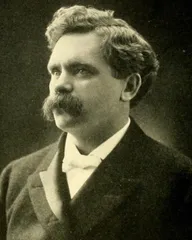
Qualifications in Leadership* By Brigham H. Roberts, of the First Council of Seventy I could almost wish that the statement of Brother Ivins about the subject of this talk being of my own choosing were strictly accurate, but in a gathering of this sort, it is the gather- ing that really determines the subject that I shall attempt to consider in your presence. Where we have gathered together as we have here practically all the superintendents from all the stakes of Zion in the Church — a gathering not only of leaders, but of leaders of leaders, there can be only one subject that is paramount, and that is, of course, leadership. I do not use the term leaders of leaders in any merely complimentary way; I refer to it as a fact ; for just the least consideration will convince you that it is a fact. You are the superintendents in your re- spective stakes. That, I think, makes it very clear that we have gathered around these tables the leaders of leaders in the Young Men's Mutual Improvement Association work ; and there- fore I think it not only suggests but compels the consideration of leadership. I am going to discuss very briefly the elements of leadership. I take it that it will go without saying that the leaders are at least men of above average intelligence; it doubtless was that fact that marked them all and suggested and impelled their se- lection as leaders. With that conceded, the next great element of leadership, is mental alertness. I have learned by some experience that it is not enough that you have gas in the receptacle of your auto, and that you have oil, and that you have the electricity supplied, but you have got to press the button and bring in contact your gas and electricity in order to get your explosions, which give you the motive power. So I am going to say to you that it is not enough that you recognize, and that those who labor under you as leaders be recognized as men above average intelligence, but you have got to have that intelligence plus action, plus alertness — mental activity. You cannot get along with a lead- ership that is mentally lazy; it has got to be mentally alert. I appreciate the fact that I am just dealing with commonplaces, and that you have considered all these matters that I now name, *An address delivered to the Y. M. M. I. A. superintendents of stakes, at the June, 1921, conference, Salt Lake City.
1060 IMPROVEMENT ERA. and that I may name further on, but we are so made up that once in a while we need to pass these things in review, and that is what I am trying to do in these few moments that I speak to you — to awaken recollection of these commonplace things in your minds. So now, remember, that one of the elements of leadership is mental alertness. Following that I would say that another element of leader- ship is moral straightness. We have gone by the time, if it ever existed, when mere precept, or the mouthings of mere pre- cept, is sufficient in the leadership of men. It is no longer com- petent to say, Do as I suggest, and pay no attention to what I do. The man who is going to be a real leader, and especially in great moral movements, has got to be a man who practices his own precepts. To paraphrase a little the language of Shakes- peare's Ophelia, when she speaks to her brother, who has just been giving her some good advice. Then she turns upon him : >. ****** But good my brother Do not, as some ungracious pastors do, Show me the steep and thorny ways to heaven "Whiles, like a puffd and reckless libertine, • Himself the primrose of dalliance treads And regards not his own councils. v So with us, we may not take the course denounced by Ophelia. We have got to practice what we preach. People have an awkward, but a very good habit of assessing the value of pulpit precept by the test of personal example. So in matters of leadership, there has got to be moral soundness; and men must put over in the practices of their lives the things they ad- vise, and that the institution they represent stands for. I think we must take that home very seriously, viz., that in leadership we must regard moral soundness, the straight life, the walking of the straight path from which we may not turn aside — as of prime importance. The next element in leadership is spiritual power. Every man who has given thought to the matter of leadership at all and has come up against (as I take it we all have) the problems in leadership, knows very well that some of those problems that his leadership is required to overcome are beyond his own un- aided strength, and he has to rely upon God for help. Somehow or other, he needs God to seek out his own strength. He must ap- peal to a source of strength that is higher and above his own, that is stronger than he is, a wisdom that understands the prob- lems and that can be made available in solving them. The true leader has got to have access to God; and God-power has got to be a reality in his life, so that when he finds his own strength
QUALIFICATIONS IN LEADERSHIP 1061 failing, he can stretch forth his own hand and feel the grip of the hand of God and the helpfulness of it. The leadership that does not contemplate that as entering into his administration as a factor, has not yet touched the very great secret of successful leadership. We have got to come to acknowledge it and live all the while in the consciousness of it, that God is our helper, and remember the words of the Christ above all things, when he said to those messengers and witnesses of his that he was going to send out to carry the gospel of Jesus Christ abroad, "Without me ye can do nothing." He emphasized that on another occa- sion, by calling attention to the fact that the relationship of these authorized disciples of his, and of all his disciples, is the relationship of the branch to the vine. We all know what hap- pens to the branch when it is once cut from the vine; it withers and dies; it brings forth neither leaf nor fruit; men gather it up and it is fit only for the burning. And so men who fail to connect their life of leadership with the life of God, and who fail to unite the spiritual power that comes from conscious union with God to their work of leadership, will fail. We can only succeed through spiritual power, maintained by a close union with God. The next element of leadership is love for the purpose for which the leadership exists. In this case — speaking now to M. I. A. workers and leaders — it is the love of the boy. The ob- jective of the Mutual Improvement work is the making of men. Your raw material is the boy. The purpose is to so direct his life and his activities that you will make of the boy a man; a man in the fullest sense of the word; the man that is recognized as the good citizen, the man that is recognized as the good father, the man that is recognized as the good Christian. This is our objective: to develop the boys of our generation into the men of the next generation that shall stand responsible before God for family life of their generation, for citizenship of their generation, for the Christian manhood of their generation. And now then, in order to attain success in this work of leadership, we must love the boy, and we are not going to succeed unless we do love him. A very homely lesson on this subject came to me indirectly through the late President Joseph F. Smith. While presiding in the Southern mission, many years ago, and when I was a young man of but twenty-three or twenty-four years of age, and having about one hundred elders laboring in that field, a man was sent to us, to fill a mission in the south. It was Brother Sidney Teebles, of Holden, Millard county. He related the in- cident to me that constitutes the lesson I refer to. Calling upon President Joseph F. Smith, with whom he was personally
1062 IMPROVEMENT ERA. acquainted and who was his friend, he deplored having been called upon this mission, and told President Smith if it had only been a call to work in his life work, the care of herds of sheep, bands of horses, or herds of cattle and calves, then he felt very certain that he could have accomplished something in it; but to be called to preach the gospel was something for which he felt himself entirely unfitted. President Smith remarked to him, "Brother Teebles, when you can learn to love men as dearly as you now love stock calves, you can succeed in preach- ing the gospel. That is the secret of success in missionary work, and I am persuaded, also, in leadership — to love the pur- pose that you are working at, the objective at which you aim; and in this case, it is the love of boyhood that is going to be one of the chief factors in the success of your leadership. And love him — the boy — I pray you, not just for what he is now, but love him for the possibilities that are in him, and that you may develop out of him. The Christ gave as the great and first commandment this, "Thou shalt love the Lord thy God with all thy heart, and with all thy soul, and with all thy mind. * * * And the second is like unto it, Thou shalt love thy neighbor as thyself." So the whole law of God resolves itself into this great principle, love of God and love of fellow man. Well, that part of it which deals with the love of God is very easy of attainment, it seems to me, because you have only got to know God, to get acquainted with him, to know him as you may know him through Jesus Christ, and it is an easy matter to love God as you see him revealed through Jesus Christ; but when you turn to men, and you are required to love them, that is another story. What! love man, with as great failings as he possesses, such great sin and wickedness sometimes, so many con- temptible characteristics! Love him, down in the mire, in the mud where he is so disgusting, so treacherous, so unworthy even of the title of man; love him! Yes, that is possible when you learn to look at man as God looks at him, and that is not in the light of what he is now, in his weak and fallen state, but what he may become when God puts his power upon him and his life is connected up with the life of God, until there is accom- plished union between that poor, weak man and God, and he begins to feel the thrill of God's life in him, until he begins to rise up and respond to the call of his Father in his soul and begins to develop the nobility that is latent even in the weakest and humblest of men. And so if you will learn to look upon men and boys in the light of their possibilities, what they may become through the ages, you can love men and boys though many of them at present are very undesirable characters, and fill one with disgust if you contemplate them closely. You
QUALIFICATIONS IN LEADERSHIP 1063 can learn to love them in the light of their possibilities, we are called upon to stretch out our hands and seek to save them. But when it comes to our boys, we are confronted with no such difficulty as some men may present to us, because here we have boys that call forth our love and our confidence, and who will quickly respond to our efforts, and it will be easy to love them, especially when you think of what they may become under wise and inspired guidance. Well now, these are a few of the elements of leadership that have occurred to me. The question has come to my mind, Have we such leadership as includes these elements that I have spoken of? In the main, I think we have. There may be cases where there are misfits, but in many of those cases may we not hope that we can make such corrections, may give such admon- itions, and point out the way by which the qualities of leader- ship may be developed by those who may at the present time be somewhat deficient in the elements of leadership herein considered. I take it that all of us can improve by intensifying and emphasizing these elements of leadership in ourselves. I think we can. If, however, there should exist under your ad- ministration—and now I include in my thought, of course, your counselors and the members of your respective stake boards, and all the presidents of your associations — if you find there are hopeless cases, where there are constitutional defects as to lead- ership, such as we may not hope to overcome by admonition and instruction, then it becomes our duty to rid ourselves of that much timber, and bring into the work such young men that we can hope so to improve as to make our leadership efficient. But I am one who believes that it is quite possible, in the main, to so bring to pass repentance and effort along the lines of leader- ship, that we can practically hold the present leadership in our work to the line, and get the results that are desired. Let me here emphasize by an anecdote the matter of leader- ship as I have so far presented it. I can remember from my boyhood reading of a work now obsolete, Rollin's Ancient His- tory, a story about Cyrus, the founder of the Medio-Persian em- pire. He was called to the head of the Persian army when he was but twenty years of age, and he was to take this army into Media and join it with the Median forces, and so begin his great conquests in the world. His father, Cambyses, rather con- cluded to have a "f ather and son's outing" out of this expedition, and so the old gentleman rode along at the head of the army, with the young commander; and one day, as they were separated from the staff, riding along, old Cambyses said to his son, in substance, — My son, it will be necessary for you to make this army believe that you are the most alert man in camp ; that you are first to awaken, that you are the last to retire; that you know
1064 IMPROVEMENT ERA. more about the science of war than any of your staff — any of your subordinate commanders. It is necessary for you to make them believe that you know clearly the objectives that you are aiming at, and that you also make them believe that you know the means you are employing will be adequate to attain the ob- jectives; and you must impress with the conviction that you are superior to all other men connected with this great expedition. All this in greater detail than I have time to follow. After he got through the admonition there was a silence, and after a while the young commander said: "Father, how can I make them be- lieve all that of me?" And the father's answer is golden: "By being all that!" I think very likely it is from that circumstance that we get the old motto — I forget the Latin phrase of it, but it is this in English — and I give it to you as your slogan in lead- ership— "To be, rather than to seem." You must be the leader. And you must be the leader by developing all these great ele- ments of leadership, to which I have called your attention. Carlysle, in his Heroes and Hero Worship, discusses this very interesting program: He calls attention to the fact that there are a set of thinkers who say that it is "opportunity," "the times," that call for a man, and the opportunity of the times develops the hero or leader — he is merely a "true child of the times." Then he goes on to say that he can pick out times that have called for their hero, for their leader, but the leader did not come. And in the discussion he rather inclines to the no- tion that it is the hero that creates the opportunities; that he brings to pass the conditions. Now there is much to be said, perhaps, on both sides of that controversy, but that need not concern us, for this reason, that the "times" with us are constant in our work, and the call is continuous. The problem of the boy is an everlasting problem; it never passes out of existence; he is always here. When the youth of this present day passes on to the men and to the men of middle age, his place is just as rapidly taken up by the incoming boy, and so it keeps our prob- lem of the boy constantly before us. The opportunity for leadership with respect to him is always present. And now if we can only join the two, this ever present opportunity, and this ever-continuous call for efficient leadership, there will always be a job, and always men to do the job. Now then, are we the men, and will we take note of the great opportunity that is con- tinuously before us? My brethren, and fellow leaders, in this great cause of ours, it is hardly necesary for me to admonish you to diligence, to a determined effort to attain unto efficiency in leadership, and to gather inspiration from the occasion of this conference, to go back to our work as strengthened leaders of leaders. God bless you all. Amen.