Man's Need of God
Improvement Era, vol. 24, no. 9, July 1921, pp. 811 to 816
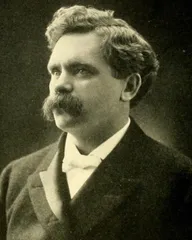
Man's Need of God By President B. H. Roberts, of the First Council of Seventy
"As the hart panteth after the water brooks, so panteth my soul after thee, O God. My soul thirsteth for God, for the living God. Why art thou cast down, O, my soul? Why art thou disquieted in me? Hope thou in God: for I shall yet praise him for the help of his countenance." (Ps. 42.) "Without me ye can do nothing." Jesus to his disciples. St. John 15. These scriptures justify the thought in the title of this — writing man's need of God. The quotation from the Psalms represents David's strongly felt and passionately expressed need — of God every man's felt need of God. And the quotation from the words of Christ to the disciples affirms that need in the most positive form. If "without God we can do nothing," the need of him is most urgent. I am assuming, you see, the Divinity of the Christ. Hence "without me [the Christ] ye can do nothing," is equivalent to "without God, ye can do nothing." And this is emphasized by the Christ, in the assertion that the disciple
occupies the same relationship to the Christ as the branch does to the vine. If the branch is severed from the vine, it dies. If the disciple is separated from the divine Master, the same thing — happens he dies. The spiritual life of man depends upon his union with Christ, i. e. with God. Hence the Christ said, "With- out me ye can do nothing." Whence comes this need in man for God? Even from man's inadequacy. Out of man's limitations, and incompleteness is it born. Man stands in the midst of things created, the earth and all things that are in it, and that make it; mountains and plains; oceans and rivers; forests and prairies; vegetable and animal life; the life of the seas., and the life of the air — all life. Nor is the earth and the things that make it, and that are in it, all the created things that man stands in the midst of. There are the heavens, the sun and the planets, the major ones, eight of them, and their satellites; then the minor planets, the asteroids, seven hundred of them between Jupiter and Mars. All these having sol for their center make up the solar system. There is also the sidereal system, made up of what astronomers call the "fixed stars," though they know, as a matter of fact, that they are not "fixed," that they move, but in orbits of such immensity in the
*A companion article, "God's Need of Man," will appear in the August number of the Era.
8]2 IMPROVEMENT ERA
space depths that thousands of years must elapse before per- ceptive changes will be observed in their relative positions in our field of vision, and hence they are conventionally called "fixed" stars. The number and size of them are quite bewilder- ing, the human mind fails to grasp such immensity as they repre- sent. We know they exist in space; perhaps some trend of their movement; the substances which enter their composition; the relative position the groups hold to one another from age to age, and that they are sustained in magnificent order by a power that challenges our wonder and amazement. Man is conscious that he is not the creator of these things, the earth and the heavens; and yet he is conscious that they must be the product of intelligence and power, because all things else that are produced within his experience are produced by intelligence and power. By parity of reasoning, then, such things as earth, and sun, and stars, come not by chance, but by creative power intelligently and purposefully directed; and that creative power, in the nature of things, and as represented by its achievements — that power must be infinitely superior to any power in man, individually or collectively exercised. Worlds and world systems exist, and man acsribes their creation to a superior Intelligence which he calls God. "In the beginning God created the heavens and the earth," is so generally accepted, that it may as well be regarded as the universal creed of man. Moreover, man is conscious that he lives in an orderly crea- tion. Day and night follow each the other with great precision through the months, the years, the centuries, the ages. Also — the seasons life-reviving spring, growing summer, ripening autumn, and nature's rest-time, winter. These season-changes follow not less regularly than day and night, wrought by the progress of the earth in its orbit about the sun. These changes, together with unnumbered millions of world systems also mov- ing in majesty and glory throughout space — all these give evi- dence of a universe held in majestic balance, in imperial order. All this is beyond man and his power. This orderly universe, this world upholding power, man controls it not. Yet it is upheld, this orderly universe! What majesty and glory must attend upon the Intelligent Power, that is not man, which creates and maintains this orderly universe! Since man exercises not this power, he refers its existence to a superior Intelligence which he calls God. Again Man is conscious of the existence throughout things :
things in the earth and in the sea, of a vital force, life power, which seems all pervading. This, too, exists outside of man. While capable of creating many things, man cannot create life, only as he* co-operates with existent life forces in nature. Apart
MAN'S NEED OF GOD 813
from this, man cannot give life to a blade of grass, nor a kernel of wheat, or corn; creation of life is beyond man. Yet life exists in earth, and sea, and air. And it persists independent of man. Also objects, through which it is manifested, die; and die in spite of man. Man controls not life. Some other power external to man controls it, both in its persistence and in its passing. This power also man refers to God. Still again: Man perceives and sees demonstrated in the things considered in the foregoing, the existence of a larger Intelligence than his own; and since its existence is necessary to the accounting of things, and to make intelligible the universe, man feels the necessity of definite knowledge of that larger In- telligence, the need of cooperation with it, and perhaps union with it, if he would attain the utmost heights of achievement. For union with that larger Intelligence would doubtless be an inspiration to man, an intelligence-inspiring power to him. Man, then, conceives the existence of this larger Intelligence as necessary to the accounting for things; for creation, for the upholding of creation in orderly progression, and as source of, and guiding power of, the vital energy in all things manifest- ing life, the life power of the world. These are the "invisible things of Him," of Paul's passage in Romans, that "are clearly seen, being understood by the things that are made, even His eternal power and Godhead." In another series of things it is manifest that man needs God. The series in this second instance has to do with mind qualities and soul powers. Man is a conscious entity. He feels and he knows some things. He exists and he thinks, and he knows himself both as existing and as thinking, and is aware of the objects upon which his thoughts rest. He is therefore conscious of self and of objects other than himself. He is conscious of a certain power of deliberation. He is able to dwell in thought upon himself and upon objects other than himself. He can compare things. One object is heavy, another is of lighter weight; he observes that objects differ in color, in form, in hardness, or softness, and he can make his comparisons between objects on the basis of these qualities. His thoughts can rise to and deal with ideas; he can regard thoughts themselves as objects, and contemplate moral qualities also. Enlightened by experience, his own or the accumulated experience of the race, he can pass certain judgments upon the objects of his thought, be they physical things or creations of the mind, and he is able to say this is good, but that is bad;' or this is good, but that is better; this best; or this state of things is to be preferred to that state of things.
814 IMPROVEMENT ERA
After things have thus passed in review, and having judged of them, man becomes aware of a power within himself to choose between objects or courses of action. That is, he may not only say, this is to be preferred to that, but he can say, I choose this, or I will to take this action instead of that. But while man is conscious of these mind qualities and powers he also is aware, and often painfully aware, of the limitations of these powers. As for example: (a) Knoiveldge: Man is aware that he sees many things as but through a glass, darkly; knowing things only in part; yet man conceives of perfect knowledge, of knowing the whole of things, and yearns to know all things. (b) Truth: Man now knows only relative truth, limited truth; but he conceives of absolute truth, the sum of all that is, "the sum of existence," and knowledge of it; but this sum
of existence or absolute truth he does not now know. (c) Justice: Man knows only an imperfect justice now; but he conceives of absolute justice; a justice wherein there is no shuffling, where actions lie in their true light; where there is nothing extenuated, and nought set down in malice.
(d) Mercy: Man knows, in his human experience, only a partial mercy, but he conceives of a fulness of mercy, the counterpoise of a perfect justice, yet robbing it of nothing; and yet the mercy that blesses him that gives, and him that takes, and is mightiest in the Mightiest. (e) Righteousness — Holiness: Man knows only of relative righteousness, and relative holiness; but he conceives of the possibility of souls possessed of these attributes in perfection; a holiness wherein there is no spot or blemish, a righteousness that knows no defect. (f) Love: Man knows of love; but it is a love limited and imperfect. It extends not to many objects it should include; it is often selfish ; but man conceives of perfect love, love with-
out alloy, responsive to worth and reason, the love which casteth out fear, and fulfils the law, and is the sum of duty, "the great- est thing in the world." All these qualities from (a) to (f), from "Knowledge" to "Love" are qualities that adhere to man, belong to him, and are held by him in ensemble, and are so held by no other creature yet held by him but imperfectly. Man arrives at his conception of the existence of the abso- lute, of perfection, of completeness, of wholeness, of the exist- ence of the infinite, by ratiocination, reasoning. Consciousness of the existence of the part, suggests the existence of a whole, just as when one sees only the arc of a circle, it suggests the whole circle. Starting with the consciousness of the changeable,
MAN'S NEED OF GOD 815
leads to the conception of the existence of the permanent, the unchangeable, and so following. Knowing in part, suggests know- ing completely; loving imperfectly, suggests the possibility of perfect love; the existence of a limited justice, gives somewhat assurance of the existence somewhere of complete justice. And so imperfect man, with all his limitations, in all the respects noted in the foregoing, as to knowledge, truth, justice, mercy, righteousness, holiness, love, man suggests a Being in which all these qualities would become attributes and mark the per- fection of that Being, the necessary Being to man's conceptions of completeness, of perfection; a Being in whom man may trust, in whom he may have faith, and flee to as a refuge. Ajnd as in the case of these qualities adhering to man, though imperfectly adhering to him, yet having no existence or manifestation only as they exist in connection with man, so these qualities, becom- ing attributes in the conceivable Perfect Being, can only have existence in connection with some Reality, with some Perfect Being, that is, with God; without whom these mind and soul attributes would not exist anywhere in perfection, hence the universe would be incomplete, utterly lacking in cohesion, with- out purpose, meaningless; for nothing is clearer than that with- out God, there is no meaning to the world. The Universe needs God for its completeness. Man, most of all, needs him. Man needs God as a guide to truth; as a teacher; as a revelator, for man's mental powers are not sufficient to solve the problems he meets in his earth existence. The questions — God is represented as putting to Job in olden time "Where wast thou when I laid the foundation of the earth? declare if thou hast understanding? Whereupon are the foundations thereof fastened? or who laid the cornerstone thereof, when the morning stars sang together and all the sons of God shouted for joy?" These questions, I say, remain unanswered, unless God's answer be taken into account. Man out of his own knowl- edge or wisdom cannot make answer, therefore he needs God to answer these questions, if there is to be an answer. The Psalmist's great question "What is man?" also remains not only unanswered but unanswerable from man's unaided wisdom. The Psalmist, when the above question is propounded, notes that a certain primacy and honor in nature is accorded to man. He has dominion among created things, "all things are put under his feet;" but whence and what is he? and why should he have this distinction accorded him? What is the purpose of his existence? Is his present life and honor and glory that he has in nature but an "all hail" to a higher glory yet to come? What is the "whence" and the "what" of man? Or is there nothing but the gloom of eternal oblivion for him?
816 IMPROVEMENT ERA
Has the Creative Power, whatever that may be, has the Creative Power been at such pains to bring into existence such a being as man only to round out his troubled earth existence with an end- less sleep, with annihilation? Interesting and vital questions these to man, but unanswered and unanswerable, unless God answers them. They represent man's sorest need of God, these questions; for here man must have Divine guidance, or remain forever in darkness. Such knowledge is too wonderful for the uninspired achievements of his intellect. It is high; he cannot attain unto it. Man lives in the midst of broken harmonies, in the midst of life and death. Who is the master of them, what do they mean? There are promising talents in the young cut short by death, why? Valuable friendships also are frequently cut short by death, why? Why should there be physical suffering at all in the world? Why should moral evil exist? Why is man so made, apparently, that he chooses evil, and loves it? Why are not all men made good, and just, and brave, and generous: and why are not all the women fair, and chaste, and beautiful? Why are the good, and often the best, so frequently plunged into adversity, and this not by their own acts, but by the actions of others? Why are the innocent involved in the crimes and misery of the wicked, and made to suffer through the faults of others? Why are the wicked and ungodly prosperous, and apparent- ly happy; while the good suffer adversity and poverty, and often endure great wretchedness in life? Why is there such a tardiness in the appearance of, and so partial a distribution of, moral and religious knowledge in the world, knowledge, we will say, of God? Do these problems awaken no curiosity in the minds of men? Do they press for no solution? Of one thing I am sure: Man's wisdom alone is not ade- quate to solve them. He needs an Intelligence higher than merely human understanding to deal effectively with these mat- ters. Consideration of them will but stress man's need of God. Again: Man needs God to aid him in the attainment of righteousness. Always man is falling short of attaining his ideals, let him get those ideals when and how he may — always he sins against them, and dishonors them. Also let man's standards of righteousness be what they may, if he has standards, while he