Joseph Smith the Modern American Prophet
Improvement Era, vol. 23, no. 6, April 1920, pp. 526 to 532
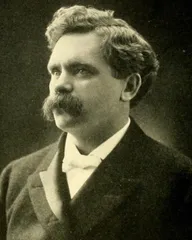
Joseph Smith the Modern American Prophet
By B. H. Roberts
Joseph Smith by birth, and more especially by reason of the many things he revealed concerning the land of America, her past and her future, is by pre-eminence the American Prophet. He is not the "boy prophet;" I dislike that term. He is not the "Prophet of Palmyra;" he is the Prophet of the dispensation of the fulness of times.; if localized at all he must be known as the "American Prophet."
JOSEPH SMITH, THE AMERICAN PROPHET 527
America the Land of Eden and of Zion That this is true, let me a little show it. A line in one of our hymns runs:
"For in Adam-ondi-Ahman, Zion rose where Eden was."
What is the meaning of this? It means that the Prophet taught that the American continents are not the New World, but the Old; that Eden was here in America. Adam-ondi Ahman, the place where Adam dwelt after being driven from Eden, the Prophet declared to be in Missouri, in the valley of the Grand River. He represents a gathering together there of the patriarchs of the antediluvian age, and tells how they blessed Adam, or "Michael," the "Ancient of Days;" and Adam rose among them and blessed the patriarchs, his posterity, and told what should befall them to their latest generations. (Doc. and Cov., Sec. 107.) Among the Patriarchs Enoch was pre-eminent for righteousness. He, in this western hemisphere, founded a city, sanctified and called it "Zion," the abode of the pure in heart; "for it,
this is Zion" — — wherein that word relates to a people "the pure in heart." Hence "Zion rose where Eden was," here in America. But in the course of time "Enoch walked with God: and he was not; for God took him." (Gen. 5.) That is, according to Paul, God translated him, that he should not see death (Heb. 11); and it came to pass that Zion was not, for God received it up into his own bosom and from thence went forth the saying, "Zion is fled." (Book of Moses, Ch. vii.) Then after the flood, the Lord led to these western continents the Jaredite colony from the Euphrates valley; and sixteen centuries later the Nephite colony from Jerusalem. In each case the Lord declared to the peoples so led to the western world that it was "a choice land above all other lands." The Savior, in the most glorious manner, after His resurrection from the dead, visited these blessed Western Continents and declared that here should be built a Holy City by the united efforts of the house of Israel, chiefly the descendants of the Patriarch Joseph, of Egyptian fame, and the Gentile races who have right to an inheritance in the land; and the City should be called "Zion," a "New Jerusalem"—the "Zion" from which "the law should go forth," as the word of the Lord should go forth from Old Jerusalem. Because of the future establishment of this City ** f Zion upon these western continents, as also on account of Enoch's Zion, they are called the "Land of Zion."
528 IMPROVEMENT ERA
The Constitution of the United States Inspired of God Joseph Smith also taught that the Constitution of the United States was a God-inspired instrument. "It is not right," he represents the Lord as saying, "that one man should be in bondage to another;" and hence the Constitution should be maintained for the preservation of the rights, and the protection, of all flesh, "according to just and holy principles, that every man may act in doctrine and principle, pertaining to futurity, according to the moral agency which I [the Lord] have given unto him, that every man may be accountable for his own sins in the day of judgment. And for this purpose have I established the Constitution of this land by the hands of wise men whom I raised up unto this very purpose." So Joseph Smith's disciples hold the Constitution of the United States to be inspired of God. I think sometimes, however, that we do not realize all that this truth means. We are apt to think of things in mass, and do not take the time to analyze them. What does it mean to say that the Constitution of the United States is an inspired instrument? Undoubtedly, it means primarily that God recognizes the right of the people, in their political capacity, to govern themselves. It expresses the divine belief, so to speak, in the capacity of man for self-government. It means that the people in their political affairs are sovereign; for this is the chief thing which distinguishes the American government from other political systems of government. We are not always happy in our forms of expression. We do not make our terminology always meet our ideas. In spite of — the fact just alluded to viz., the people are sovereign, we talk of, and pray for, "those who rule over us," meaning presidents, cabinet officers, senators, governors, and the like; but these are not "rulers," they are the people's servants, elected for a limited time to administer government according to law, under the provisions of our Constitution; but they serve, they do not rule. The people are sovereign, and the people alone are rulers, and they appoint or elect their servants. Moreover, this Constitution provides for the freedom of the press; for freedom of speech; for freedom and independence of the individual. It guarantees religious liberty, hence a free church, as well as a free state, each independent of and separate from the other. The government is an indestructible Union, composed of indestructible States. To hold that the Constitution, which provides for these things, is inspired of God is to hold that each of these separate things, as well as the thing in mass, is ordained of God by the hands of wise men whom he raised up to establish this system of government; and to deny to the people the enjoyment of these several
JOSEPH SMITH, THE AMERICAN PROPHET 529
rights; to undertake, by any means whatsoever, to thwart the realization of government by the people, to attempt to defeat the expression of their will, or make it result different from what their untrammeled judgment would have it, is to make an infraction upon the things that have been ordained of God. In the above quotation concerning the system of government established by the Constitution of the United States being inspired of God, we may discern the purpose of God in the establishment of such a government. That purpose is that every man may become directly and personally responsible to God for — his actions in matters relating to civil government "that every man may be accountable for his own sins in the day of judgment.*' The principle is, however, more fully developed in the Book of Mormon than in the quotation here considered. The incident which develops the principle occurs in the reign of the first Mosiah, and at a period that corresponds with the latter half of the second century B. C. The old king proposed to his people a revolution in the form of government by which monarchy should be abandoned and a republican form of government established in its place. In urging this revolutionary measure the good king said: "It is not common that the voice of the people desireth anything contrary to that which is right; but it is common for the lesser part of the people to desire that which is not right; therefore this shall ye observe, and make it your law, to do your business by the voice of the people. And if the time comes that the voice of the people doth choose iniquity, then is the time that the judgments of God will come upon you, yea, then is the time he will visit you with great destruction, even as he has hitherto visited this land. * * * And I command you to do these things in the fear of the Lord; and I command you to do these things, and that ye have no king; that if these people commit sins and iniquities, they shall be answered upon their own heads. For behold, I say unto you, the sins of many people have been caused by the iniquities of their kings; therefore their iniquities are answered upon the heads of their kings. And now I desire that this inequality should be no more in this land, especially among this my people; but I desire that this be a land of liberty, that every man may enjoy his rights and privileges alike, so long as the Lord sees fit that we may live and inherit the land; yea, even as long as any of our posterity remains upon the face of the land." In order that this element of moral responsibility may be brought into civil government, however, it stands to reason that every individual must be free and untrammeled in the exercise of his political duties, including the casting of his vote. Each in-
530 IMPROVEMENT ERA
dividual must have an equal voice in the government. Every man must be a sovereign in the civil institution, and his vote must represent the voice and judgment of a free man, a vote unawed by influence, and uncoerced by any power whatsoever. Less than this would convert the whole scheme of government by the voice of the people into mockery. Under a system of government by the people, in order to retain the element of moral responsibility of the people in civil affairs, there must be no appeal but to the intelligent judgment of the individual. Each man's act must be the act of a free man and those who would corrupt the elector- ;
ate of a government where the people rule, or sway it by any other force than by an appeal to reason, would destroy this element of personal, moral responsibility in civil government, and in the case of those of us who accept this book from which I — am quoting if we would appeal to any other force than to that of reason or resort to any species of coercion, we would be setting ourselves against an order of things that God has ordained. Adherence to these principles is pure Americanism. This is constitutional morality. This is both the principle and the policy that will most inure to the perpetuation of our free institutions. — This is the sheet-anchor of our safety as a nation our surest guarantee of God's favor. The man who promulgated this doctrine of individual, personal responsibility to God in the affairs of civil government, where the people rule, is worthy to be numbered among the greatest of American statesmen, American teachers, American prophets. It means a great deal, this idea that the Constitution of the United States is inspired of God.
America Fortified of God Against Other Nations Not only did the Prophet teach the doctrine that the United States Constitution was inspired of God, but he tells us through the Book of Mormon that God has fortified this land against all other nations. I will quote you the passage. The Lord said to Lehi: "Behold, this land shall be the land of thine inheritance, and the Gentiles shall be blessed upon the land. This land shall be a land of liberty unto the Gentiles, and there shall be no kings upon the land who shall raise up unto the Gentiles. And I will fortify this land against all other nations, and he that fighteth against Zion [these continents of the western world] shall perish, saith God; for he that raiseth up a king against me shall perish, for I, the Lord, the King of Heaven, will be their King, and I will be a light unto them forever that hear my words." This guarantee, however, this fortifying this land against all other nations, is upon a certain condition: the condition W
Joseph smith, the American prophet 531
the "God of the land, who is Jesus Christ," shall be honored by the people thereof. On this head I want to quote a passage from a certain American statesman, that I can easily believe was one of the God-inspired men appointed to assist in the maintenance of true constitutional principles, as others were inspired to found the Constitution. I refer to the great statesman of nationalism, Daniel Webster, who, before the New York Historical society, in 1852, in his last public address, said: "Unborn ages and visions of glory crowd upon my soul, the realization of all which, however, is in the hands and good pleasure of Almighty God; but, under His divine blessing, it will be dependent on the character and the virtues of ourselves, and of our posterity. If classical history has been found to be, is now, and shall continue to be, the concomitant of free institutions, and of popular eloquence, what a field is opening to us for another Herodotus, another Thucydides, and another Livy! "And let me say, gentlemen, that if we and our posterity shall be true to the Christian religion —if we and they shall live always in the fear of God, and shall respect his commandments — if we and they shall maintain just, moral sentiments, and such conscientious convictions of duty as shall control the heart and life —we may have the highest hopes of the future fortunes of our country, and if we maintain those institutions of government and that political union, exceeding all praise as much as it exceeds all former examples of political associations, we may be — sure of one thing that, while our country furnishes materials for a thousand masters of the historic art, it will afford no topic for a Gibbon. It will have no decline and fall. It will go on prospering and to prosper. "But if we and our posterity reject religious instruction and authority, violate the rules of eternal justice, trifle with the injunctions of morality, and recklessly destroy the political Constitution which holds us together, no man can tell how sudden a catastrophe may overwhelm us, that shall bury all our glory in profound obscurity. Should that catastrophe happen, let it have no history! Let the horrible narrative never be written! Let its fate be like that of the lost books of Livy, which no human eye shall ever read; or the missing pleiad, of which no man can ever know more, than that it is lost, and lost forever!" Such were the sentiments of this patriotic statesman ; but the beautiful and flowing periods in which he expresses his thought, are in no respects better or stronger, or more patriotic than the rugged utterances of Joseph Smith, in whose utterances throughout our sacred books, there is a wealth of pure American sentiment that is the basis of a patriotism that shall yet exceed all praise.
— ;
532 IMPROVEMENT ERA
These several declarations by the prophet Joseph Smith, respecting America, by which so much light is shed upon her past, and her future glory; the characterization of her modern free governments, wherein there shall be no toleration of kings the great doctrine of personal responsibility existing where free government based upon the consent of the governed obtains; the prophetic guarantee of the perpetuation of free institutions with the favor of God upon the land and upon the people, on the condition that the people adhere to righteousness and honor Jesus Christ, the Son of God, in their hearts and lives —all this in relation to America, contributed in the teaching and prophecies of Joseph Smith, makes him pre-eminently the American prophet.
The Vision* A Sacred Historical Cantata, for Tenor Solo, Women, Men and Mixed Choirs and Orchestra
Words and Music by Evan Stephens
(Dedicated to the Church of Jesus Christ of Latter-day Saints)
Written and composed especially for the centennial of The Vision given to the boy prophet Joseph Smith, in which the Father and the Son appeared in person, restoring to earth tk.3 everlasting gospel, and opening "The Dispensation of the Fulness of Times." (Time of performance, 45 minutes.) Written at the special request of President Heber J. Grant and Presiding Bishop Charles W. Nibley, Dec. 20, 1919—Jan. 8, 1920, at "Pine Lodge," Salt Lake City, Utah.
No. 1.—Prelude, "Morning Gently Wakes" Women's voices. Morning gently wakes the songsters of the grove, With its gentle touch of living light and love: And with whisp'ring breezes stirring at their wings Bids the choirs give voice to all they feel and sing. Join in harmony the rustling of the leaves, As they wave their welcome to the rising sun, While in eastern skies a victory bright he cleaves Through the mists of night: his resurrection won. Bend, with graceful arching, O ye forest trees; Bend, and greet with courtly grace this royal morn, With whose heavenly light the night of man shall cease, With whose rays anew the world again is born.
*Copyright by Heber J. Grant, for the Church of Jesus Christ of Latterday Saints. All rights reserved.