A Man More Precious than Gold
Improvement Era, vol. 22, no. 11, September 1919, pp. 956 to 964
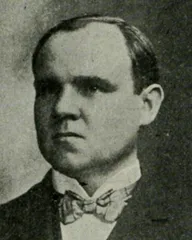
A Man More Precious Than Gold* By Dr. James E. Talmage
"I will make a man more precious than fine gold; even a man than the golden wedge of Ophir" (Isa. 13:12). Thus spake the Lord through the mouth of Isaiah, the prophet, concerning the days in which we live — the days of tur- moil and strife when all things would be in commotion, and manhood be at a higher premium than ever before in the history of the race. The prediction, the promise conveyed in these — words, speaks of the man of character the man who is genuine, the one who is truly great because his ways are the ways of righteousness. Someone has said that reputation is what people think of us, while character is what God knows of us. The derivation of the word "character" is instructive. It is of Greek origin, and signified primarily the work of an engraver, the handcraft of one who with hammer and chisel cuts deep into the stone. Character is the granite shaft thus graved, bearing an inscrip- tion of worth for future generations to profit by, as compared with a painted post, the letters of which may be removed by the storm of a single night. Character is the man, reputation the clothes. Not long ago I read, as perhaps you also did, of an attempt made by a gang of criminals to break into the strong vaults of a wholesale jewelry establishment. The institution was well managed. At night the gems and gold were put into a box and stowed away in the vault, the doors of which were secured by a combination of time locks. The plan of the robbers was that they would secrete themselves about the establishment during the day, so as to be locked in at closing time. They had calcu- lated that by hard work it would be possible, with their equip- ment and tools, to cut through the door during the night and so gain access to the precious contents of the vault; and then, when the doors of the house opened next morning, they would trust to luck to dash out and make their escape. They were prepared to kill if occasion seemed to make such a crime ad- vantageous to them. A good part of the program was carried out as intended. The thieves managed to be locked in. They *Revised and abridged version of Baccalaureate Sermon delivered Sun- day, June 8, 1919, at the Utah Agricultural College, Logan.
A MAN MORE PRECIOUS THAN GOLD 957
worked hard, for their task proved harder than they had an- ticipated. Nevertheless, by the use of tempered tools and small charges of explosives, they succeeded to the extent that just as the outer doors of the establishment were opened, when the day force came on duty, they were able to turn the bolts and swing back the outer door of the vault, expecting to see the cases of jewels within their easy grasp. But what did they find? An- other door, of harder steel, with more complicated mechanism, a door impenetrable, a fortress impregnable! As I read the story I said to myself: That inner door is character; the outer one is reputation. A good name is greatly to be desired; it is to be esteemed above rubies. But even a good name honorably deserved may be besmirched. Remember that, though men batter at the outer door of your reputation, you may yet be composed if blessed with the consciousness that the inner door of character is in- tact.
Remember further that every one of us is a unit in the com- munity. No building is long beautiful or stable if the compon- ent blocks be friable and disintegrating. No machine is depend- able if any one of its constituent parts be defective. The char- acter of a community, of a nation, is the algebraic sum of the in- dividual characters of its citizens. I commend to you, my graduate friends, that you fail not to think well of yourselves, and therefore that you live to be worthy of your own high estimate. Much of the degeneracy and crime of the age is traceable to the fact that men and women have not thought well enough of themselves. Oh, understand me aright! I abhor self-conceit; but I reverence self-esteem. The self-assur- ance that only probity can produce is a source of power. The greatest good that we can do to society is to make ourselves in- dividually better. If you do not think well of yourselves, people will not think well of you, except, perchance, during the short period of but slight acquaintance. Are you on good visiting terms with yourself? Do you ap- preciate the sanctity of solitude? In what kind of company are you when alone? In my experience as professor and president of institutions of learning, I have had many opportunities for observation. On more than one occasion, when a new student entered, I have said to my associates: Please watch that young man; ask some of the older and tried students to make friends with him; above all things, don't leave him alone. Whenever that young man is alone he is in the worst of company. Every hour that he spends by himself is an hour to the bad. When he is alone he is thinking evil thoughts, unconsciously planning evil
—
958 IMPROVEMENT ERA
deeds. And in many another case I have been able to say: Do not be too much concerned about that student; he may well be left alone. When he is left to himself he is in the best of com- pany, in good society, and to him every hour of solitude is an hour to the good. In school and out of school we recognize these two classes those who are in good company when alone, and those to whom solitude means bad association. One reason for some of us not liking to be left to ourselves is that we have made no preparation for the entertainment of self, and give no thought to the reception of the distinguished guest. I have looked into some minds and souls, have peered in- to the alcove or cabinet that should be sacred to self-commun- ion; and what have I there seen? Some such retreats I can com- pare only to a room in the slums —dirty, cobwebby, musty. Who would want to stay there? Who would seek rest in such a place as that? Right glad am I to have seen that in the souls of some others, both men and women, there are veritable sanctuaries, made sweet with the atmosphere of heaven, clean, inviting, en- ticing, yea commanding, for who could resist the invitation to enter and tarry? What about the furnishings in your soul's retiring room? What kind of pictures are there? Mark you, those pictures, whether good or bad, do not hang upon the wall; they are like the mural decorations of olden days, a part of the wall itself. If the pictures were hanging there, the bad ones could possibly be taken out and destroyed. I have seen depicted on memory's walls, scenes that the owner, yourself let me say, should never have witnessed, places to which you never should have gone, true photographs of actions in which you never should have figured, pictures that prove that you have knowledge which you would be better without, for you never could have gained it had you not gone into the devil's secret places. Small wonder that you do not like to repair to such a room, for you cannot shut out those accusing and condemning pictures. But I have seen many of another sort, bright and inviting, scenes of bygone happiness that make tears come to your eyes every time you gaze upon them. Happiness often comes with tears you know. Have you never been so happy that you have had to cry? I have, thank God, many times. Oh, I would that we could prepare for ourselves and be able to entertain ourselves during the rare and precious periods of solitude allowed us, eo that we shall grow to have such respect for ourselves that we shall shrink from that which is mean and evil, though no living being other than self knows of it. Such
A MAN MORE PRECIOUS THAN GOLD 959
condition is that of the man of promise, the man of character, and he indeed is precious, more precious than fine gold, more to be desired than the golden wedge of Ophir. That kind of man is true, there is no camouflage about him cr his actions. He is what he seems to be, and in that lies the glory of his liberty. He is not afraid of being found out. He walks erect, with firm tread and uplifted face, without fear that someone will confront him to make him drop his eyes in shame. The man who knows that he is living in harmony with the spirit of righteous law is he who can look the whole world in the face without embarrassment. Be genuine, be true! Remember that this is a day of coun- terfeitsand imitations, of adulteration and substitutes. The devil's shop is well supplied, and he is an expert, with centuries of experience behind him, in offering his adulterated wares with all the arts of most persuasive salesmanship. There is too much gilded brass passing for gold, too many bits of polished paste serving as diamonds. I would rather be a genuine diamond of only a hundredth of a carat weight than be the size of the Cul- linan and be only paste. If you would succeed in developing character put yourself into your work. Many of us work by rote and rule instead of by law. Men make rules, the laws that shall endure are decreed of God. It was my privilege years ago to visit the Royal Academy in London, as one of a small body of invited guests conducted by distinguished hosts. I do not claim to be a connoisseur in paint- ing, but I was particularly attracted by one small canvas. It was a landscape scene, and the artist-guide who was with me was a specialist in landscape painting. Having already openly and freely confessed my ignorance of the technique of art, I felt my- self free to ask questions ; so I said to my guide : "Please tell me something about that picture; it is rather puzzling to me." My companion smiled and asked why I was especially interested. I replied that the picture was somehow unsatisfying. He said he was glad that I had asked him about it, and continued: "First tell me what you see in it." I replied that it seemed to me to be well drawn and that the perspective seemed good. He agreed that it was well drawn and that the perspective was well-nigh perfect. Indeed, he proceeded to explain, it was obvious that the artist had studied perspective carefully, so devotedly indeed that an expert could tell just what books on the subject he had read, and the authors by whom he was most influenced. My guide then asked me what I thought of the color, and I replied that it appealed to me. He rejoined that every rule of coloring had been carefully followed, and that he was able to name the principal masters whom the author had followed in the matter
960 IMPROVEMENT ERA
of color. As I hesitated, lie prompted me by asking, "What do you think of the composition?" "Well," I said, "it seems to me to be a well balanced picture;" and he agreed with me. Then I asked, "Is it a good picture?" and my guide answered force- fully, "No, it is not good." I inquired then what was the matter with it, perspective, color, composition, all being according to rule. "That picture," my companion averred, "lacks just — that!" The last word was accompanied by a sweeping gesture of the hand. I understood him. He meant that the picture was ma- chine-made, that the artist had worked according to rule, not law. In fact, the painting was an imitation. My friend com- mented in an undertone that canvas pigments and oils are not enough to make a painting. Later, as I communed with myself over the incident, I soliloquized: "Pigments and oils are not enough for a great painting; there must be some of the artist's own blood mixed in to make the canvas a master- piece." We must learn to give of ourselves. Think of the Christ. He gave Himself. A spark of His nature, of His very spirit, was in every word that He spoke, whether of instruction, con- demnation, warning or encouragement; and that is one reason why He is the One of all those who have ever trodden the earth o! whom most has been said and sung. Aye, as the Son of the Living God, the Savior and Redeemer of the world, He could not have done otherwise. I have seen many who were skilled lesson-givers but who as teachers were mere figures, or to be more frank, failures. Of themselves they would give nothing; they were void of inspiration, and their words of instruction were as sounding brass and tinkling cymbals. I have seen students who never would exercise energy of mind or will enough to draw from the teachers what was needed. Between teacher and pupil there should be an intimate psychic relationship such as shall bring into play a force not of the mind alone but of the soul. We have long been told that men are dual beings, con- sisting of body and mind; but we now have learned that we are triple beings, each comprising body, mind and spirit, the mind, indeed, being an afflation of the spirit; and a symmetri- cal education will develop all three entities. You and I have seen physical giants, men in whom the muscular system had been trained and overtrained until they were able to perform marvelous feats of strength, but whose minds were literally dwarfed. We have seen corresponding monstrosities manifested in the combination of overtrained minds and neglected bodies. And a third type of misshapen abnormality is that of the man trained perchance in both mind and body, but spiritually in-
A MAN MORE PRECIOUS THAN GOLD 961
active. No one of these is the man so much needed, the man who is more precious than fine gold. We are triple beings in another sense. Perhaps you re- member Dr. Holmes' friend John. The Doctor combines phil- osophy and humor in his remark that there were three of — him the John that John knew, the John that John's friends knew (a very different being indeed), and the John that only John's God knew. If these three could be merged into one, and that one be good, if the three should be so much alike that you could not tell one from the other, then indeed would we have the man more to be desired than the golden wedge of Ophir. was the Creator's intent that we cultivate all our facul- It ties; we develop and not merely grow. Between growth that and development there is a vital distinction. Growth is a pro- cess of accretion, a mere massing of substance. Development is an extension, an expansion, an amplification of power. We are placed upon earth not merely to grow but to develop in all godliness; and the work of the world is required at our hands. To be successful one must be happy in his work; but, re- member, please, in this remark I draw a distinction between happiness and pleasure. Pleasure is the gilded brass, the paste gems I have mentioned; happiness is the genuine metal royal, or the diamond of the first water. Happiness leaves no bad taste in themouth, nor the nausea that follows the wrong kind of pleasure. A good man ought to be happy and will be, for happiness is a gift from God. The experience of happiness never leaves a sting, some of our aphorisms to the contrary notwithstanding. The Decalog is often cited as a complete code of morals, and of man's duty toward God. The Ten Commandments are as much in force today as they have ever been; but don't you think that by this time we ought to have attained such a status that the Decalog would be virtually a dead letter to us? Are we still to be led or driven by "Thou shalt" and "Thou shalt not"? I pity the man who must constantly be reminded of the injunction, "Thou shalt not steal;" "Thou shalt not bear false witness," etc. In this day of enlightenment and progress, with the ex- perience of the centuries behind us, we ought to have learned to be positively honest, and positively truthful. There are men in the world who appear outwardly good; and the reason is that they are afraid to be otherwise. They refrain from steal- ing because they have a horror of prison. How much better are these than children who obey because they are afraid of
962 IMPROVEMENT ERA
being whipped for disobedience? There are others who ap- pear fairly upright and moral becauee they expect to make something by that course of life. It is an investment with them. They proceed upon that infamous rule, "Honesty is the best policy." Did you ever think of the obvious fact that the author of that sententiousmaxim could not have been an honest man? Honesty is no matter of policy; God forbid. The man who deals honestly only because he finds such a course to be an advantage will become dishonest just as soon as conditions seem to point to his gain by reversing his policy. I do not believe in that adage at all; but I do believe in honesty. I would have men tell the truth and live the truth because they love the truth and are genuinely truthful. I would have men deal honestly because they are honest; not because they are afraid of losing something or because they hope to gain something and so shape their course accordingly. I would have man serve God because he loves righteousness, and not because he wishes to conform to convention in going to church and saying his prayers. I do not like that expression—saying one's prayers. There are thousands in the world who say their prayers morning and night, and yet who have never prayed in all their lives. Prayer is not a matter of word, nor of gesture or posture, it is the out- pouring of the heart. Do you know the fervor and passion of prayer when you are alone with your God? Do you know what it is to really pray? If you do not, there are lessons yet for you to learn in life that are worth more than any course you have taken leading up to your present proud positions as grad- uates from this institution. I was once called into court in Salt Lake City —as a wit- ness, let me add. A great case was on trial involving questions of geological structure. I had spent many months in the study of the mining property in question, for the issues were com- plicated and involved. In the course of the trial one of the interested parties was called to the witness stand. In direct examination he spoke with fluent emphasis; but he had for- gotten that after the direct examination shall come the cross examination. When the attorney on the other side took the witness in hand, the latter was plainly embarrassed. A ques- tion of vital import in the case was put to the witness. I knew what it meant. It showed to him and his associates that the attorney putting the question was in possession of knowledge such as those on the other side had considered to be a secret with themselves. I knew that if the witness spoke the truth his side had lost the case. I saw the man writhe in his chair.
A MAN MORE PRECIOUS THAN GOLD 963
He was thinking rapidly, and I could follow his thoughts. I saw the sweat gather in great beads upon his forehead; and eventually, by a tremendous effort, he spoke the truth. It was near recess time, and with the conclusion of the testimony of this particular witness the court suspended session. While the man was still mopping his brow, I stepped up to him and said: "Well, my friend, you told the truth. I saw how hard it was for you; I saw that it made you sweat. Let — me tell you the reason you are not used to it. You should have made it a rule to tell the truth regularly; and even now, if you will do this you will by and by get into such state and condition that it will not make you sweat to tell the truth!" Permit me to add another suggestion. It is well for us to learn to recognize the good in life and to live it. Badness is the abnormality; goodness is the normal. We shall come to recognize that fact some day. If we want to find badness in the world, we surely shall succeed. There is a little story that comes to us from beyond the Pacific. Three maidens were out early one morn enjoying the beauty of the dawn. They ob- served a venerable old man approaching them; and they had been taught to reverence age and experience. Addressing him with respect, one asked: "Venerable Father, whither goest thou?" He replied: "I shall follow the path up the mountain side yonder, up, up, up, to the snowcap if my, strength permits." "And when wilt thou return?" He answered that he hoped to descend before the sun sank in the west; and then he in- quired if there was anything he could bring them. One of the maidens asked for a lily, another for a rose, and the third for a sprig of hawthorn from the mountain. The old man went on his way, and the maidens played through the livelong day. As the shades of night were gathering they saw the man re- turning and ran joyously to meet him. To one he handed a sprig of hawthorn, fragrant and fresh; to the second he gave a mountain lily; and to the third a brilliant rhododendron, the mountain rose. They thanked him; his happiness seemed to be one with theirs. As he paused at a short distance, one of the maidens came up to him and said, "Oh, Father, this is a beautiful sprig of hawthorn, but there is a thorn on it, and it has pricked my finger." He took the sprig, examined it care- fully, then broke off the thorn and handed it to the maiden saying, "You keep the thorn; I will keep the blossom." She looked somewhat ashamed and withal was thoughtful. He again moved on, but was overtaken by the second maiden, who said, "Father, this is a lovely lily; but see, some of the soil is still clinging to one of the petals." He examined the flower with
"
964 IMPROVEMENT ERA
interest and said, "Yes, my daughter, one of the petals is soiled;" and, taking it off he returned that leaf to her with the remark, "You keep the soiled petal; I will keep the lily." Once more he moved along when the third maiden came up to him and said: "Most venerable Father, this brilliant mountain rose has had a worm in it, and the worm has eaten down into the flower." With some search the old man found the worm-bitten leaf, which he returned to the girl remarking, "Here it is, daughter; it is for you, but the rose is for me." Each had found the faults and the badness, while he took back to him- self the beauty and the fragrance and the white purity of the lily —such had made his life happy. I feel it in my heart to pray for you, my friends, as you go forth to commence, to begin. The sun for you is in the east; it is dawn, not sunset. Know that an honest man pays his debts, and that you are deeply indebted. You owe much to those fathers and mothers, grandfathers and grandmothers, who came here when the land was a desert, and who have made it possible to see what we behold today upon this splendid
campus. That is one debt you have to pay. You are indebted to the Stated which has provided facilities for you to receive the training that is to be your capital in the marts of life. If you cannot pay any part of the principal just now, I pray you keep up the interest. Do not fall behind, but do for the others who are to come what those who have gone before have done for you. Maintain the honor of the institution, of the com- munity, of the State and Nation; and realize your obligation. And now to work. I can speak nothing better than to .
voice to you in paraphrase the injunction of the ancient prophet: And now, my son, my daughter, be up and doing, and the Lord be with you.