Principles of Government in the Church
Improvement Era, vol. 21, no. 1, November 1917, pp. 3 to 10
IMPROVEMENT ERA Vol. XXI NOVEMBER, 1917 No. 1
Principles of Government in the Church*
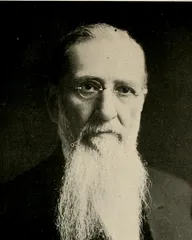
By President Joseph F. Smith
My Brethren and Sisters: I am very pleased to meet with you in this new building. I hope you will continue your efforts without ceasing until you have it completed and fully paid for, that it may be dedicated as a house of worship, where you may assemble and be instructed in the principles of the gospel. We are making this journey through the South, and meeting with the people in the settlements along our way for the purpose of preaching the gospel unto them. We want to visit with you and look into your faces that we may become better acquainted with you, and to have you look at us that you may know what manner of men we are, and that it is our mission to serve you, and do what good we can for you, and to labor in the interest of your welfare, to give you instruction and advice such as we feel that you need, and which will be beneficial, that you may be strengthened in your faith and determination to serve the Lord, keeping all his commandments. We desire to preach the gospel unto you. Your president, Brother Wilford Day, called on the First Presidency a short time ago. He had some conversation with us, and made some few complaints becaues of indifference on the part of some of the members of the Church, and the lack of support given by some to those who have been chosen to hold positions of re- sponsibility in the stake and in the wards. We told him we would have to come to his stake and preach the gospel to the people, for evidently, from his report to us, that is what is needed here. Now I see before me men and women of long experience in the Church, men and women who ought to be,
*An address to the Saints of Parowan Stake, delivered September 13, 1917,on the occasion of the recent missionary journey South, of President Smith and party.
—
4 IMPROVEMENT ERA
and I suppose should be without question, acknowledged to be thoroughly grounded in the faith and in the knowledge of the principles of the gospel of Christ; men and women who thor- oughly understand the order of the priesthood, the rights of the priesthood, the right of presidency, and the responsibilities that rest upon those who are chosen and set apart and endowed with authority to preside in the midst of the House of Israel. I pre- sume there are those here who could teach me a great deal — perhaps more than I know in relation to these things. I do not profess to be able to teach you anything that the Lord has not revealed. I have nothing that is not found written in the word of the Lord as it has come to us through the instrumental- ity of the chosen of God, Joseph the Prophet, and his associates who have succeeded in the presiding authority of the Church since the day of the Prophet Joseph Smith. What they have done, the rules they have inaugurated and established, the cus- toms and manners by which they have directed the affairs of the Church are open before us. Every man has a right to look at them and see for himself. So has every woman, because women are responsible for their acts just as much as men are responsible for theirs, although the man, holding the authority of the priesthood, is regarded as the head, as the leader; there is, therefore, a greater responsibility resting upon him than upon- the woman. Furthermore, when we speak of the men, we speak of the women, too, for the women are included with the men and are an inseparable part of mankind. When blessings come to men, they are shared by the women.
Order of the Priesthood in Church Government Now, what is our duty, in relation to the organization of the Church? If I live in a ward and have my standing there, as a member of that ward, what is my duty in that ward with reference to the direction, and counsel, and guidance, and judg- ment, and decision of the bishop and his counselors in that ward? What is my duty? Can you tell me what my duty is with reference to the authority of the bishopric of the ward in which I live? I can tell you in one moment.
The Bishopric It is my duty to honor the bishopric of my ward. It is my duty to hold in reverence the authority of the bishopric of the ward in which I live; and if the bishopric in that ward have any business with me and my neighbor, and they render a decision with respect to the differences between me and my neighbor, though their decision be against my will and my thought, it is my business and my duty to observe and obey the decision of
PRINCIPLES OF GOVERNMENT IN THE CHURCH 5
my bishopric, unless I have reason and good evidence that the judgment has been rendered partially and without due con- sideration.
The Stake Presidency and High Council
In the event that the bishop's decision is perhaps partial in my opinion, there is another course for me to obtain what I be- lieve to be justice and righteousness in my case. What is that? Shall I go over the heads of the presidency and the high council of the stake, and make my appeal? Shall I ignore them, and lay my complaint before the presiding authorities of the Church, in order to have the decision of the bishop amended or reviewed? No, that is not my business. What shall I do, if they have not dealt justly with me? I have a right to appeal to the president of the stake and his counselors, and the high council of that stake, and they possess power and authority to deal with me to the full extent of my fellowship in the Church — they have a perfect right to do it. We hold that the presidency of a stake of Zion will be required to exercise that authority and not throw it on to us. We have enough to do without carrying their burdens, or taking from them responsibilities which rightly devolve upon them. We have concluded not to do that. So, therefore, if I am not satisfied with the decision of my bishop and his counselors, after they have heard the evidence in my case and rendered a decision, and I have reasonable cause for believing that the decision is not just, not what it ought to be, then I have the liberty and the right of appeal to the presidency of the stake and high council, and they will take it up. Instead of three high priests listening to the evidence, there will be the three high priests in the presidency of the stake, twelve high priests in the council, and these fifteen high priests in the Church of Jesus Christ of Latter-day Saints will certainly weigh my complaint and my case, consider it thoroughly, from every angle and point of view, and in ninety-nine times out of a hundred they will render a just and impartial judgment. Therefore, ninety-nine times out of a hundred it becomes my bounden duty to receive the judgment of the high council and not appeal it.
The First Presidency of the Church and the Twelve
But even then, after the presidency of the stake and high council have decided my case, if I feel that still I have evidence that they have not properly considered, or properly weighed the evidence produced, or that I can bring forth at another trial, review, or rehearing, if permitted to do so by the First Presi- dency of the Church of Christ, then I can appeal my case from
6 IMPROVEMENT ERA
the decision of the high council to the Presidency of the Church of Jesus Christ of Latter-day Saints. If it is a case of sufficient importance, and the Presidency of the Church are not really satisfied with reference to the decision of the high council, they may, if they desire, call to their assistance the Twelve Apostles. They may sit in council and decide the case, and from their decision there is no appeal. Now, that is the order of the Priesthood.
The Proper Order of Settling Difficulties
There have been complaints sent to the First Presidency of the Church over the decisions of bishops in cases that have come to us before they were heard in the proper way in the stakes where the difficulties have occurred. The case is not heard by the high council. It is heard by the bishopric, and then the parties aggrieved have, in some cases, gone over the heads of local authorities and asked that one or two of the apostles or that somebody else should be sent there to take up the case and try it, after it has been decided by the bishop. For a number of years there have been a few cases of this character that have been responded to without reference to the proper procedure in such matters. Apostles have been sent all the way from Salt Lake to consider local difficulties. I have known apostles to be sent away over to a stake in Colorado to settle difficulties that should have been settled by the bishopric and left there. Or if not left there, they should never have gone beyond the high council. But, in order to do justice, in order to show mercy, in order to be lenient, in order to yield to the appeals of those who were aggrieved, and because they were aggrieved, the Presidency of the Church have sent the apostles or others to settle difficulties entirely out of order; and we are going to stop that. We will not do it any more. The local authorities of the Church are now held, by the Presidency of the Church, and by the Twelve Apostles, as authorized and qualified and amply empowered with authority to decide all matters that per- tain to membership in the stake in which they reside. We will recruire them to handle all such difficulties, and we will not listen to any complaints, from any individual, that do not come in the regular order of appeal as it is designated in the law of God. Now, this is the proper order of settling difficulties among the Latter-day Saints.
Examples of Men Who Offend
An adulterer, when proved beyond doubt, who will not re- pent of his sins, should be called up before the bishop's council
PRINCIPLES OF GOVERNMENT IN THE CHURCH 7
in the ward, and there he should be disfellowshiped, and that action of the bishopric should be reported up to the high coun- cil, who hold the higher authority of the priesthood, and when they consider the action or the matter and find that the decision of the bishopric is just and right, then it becomes the duty of the high council and presidency of the stake to cut the offender off from the Church ; because an adulterer, if he will not repent, is not entitled to a membership in the Church of Jesus Christ of Latter-day Saints. He is a pest-breeder; he is a nuisance. He is not worthy of a standing in the Church, and he ought to be disfellowshiped, and he ought to be excommunicated from the Church, inasmuch as he persists in his unrepentance and the pursuit of his wickedness. Now, all manner of crime may be — dealt with upon the same basis I mean crimes that would justly bar membership in the Church. A man who says he does not believe in the atoning blood of Jesus Christ, who professes to be a member of the Church of Jesus Christ of Latter-day Saints, but who ignores and repudiates the doctrine of the atonement, and the fact, revealed to us and which is a part of our religion, that God our heavenly Father is — the Father of Jesus Christ the man who denies that truth and who persists in his unbelief is not worthy of membership in the Church. He may be considered harmless and of no great dan- ger to others, particularly, as long as he keeps his mouth shut and does not advocate his pernicious doctrines, and be permitted to remain a member of the Church; but the moment you find — him trying to poison the minds of somebody else the innocent, — the unsuspecting, the unwary trying to sow the seeds of death and apostasy and unbelief and infidelity in the minds of inno- cent people, that moment it becomes the duty of the bishop of the ward where the man resides to take him up and try him, arid if he is unrepentant and will not confess his sins, disfellow- ship him and refer him to the high council to be finally dealt with for his membership in the Church. Let him be cut off; let him go his wav; but let it be understood that it is because of his unbelief, his unrepentance, his unwillingness to hearken to the law of God, and to the right of the presidency in the Holy Priesthood of the Church. Now, there are manv other things. These are only inci- dents. Here is a man who savs: "I do not have any faith in the bishop. I do not like the bishop. I do not believe in him, he is incompetent; he is partial; he is unjust: and I will not sustain him in his position in the Church." What will you do with such a member? Well, he may be a pestiferous sort of a person; he mav sav and do a great manv bad or fooli«h things for himself. For that alone, you can't very well cut him off from the Church, but you can hold him in disfellowship be-
;
8 IMPROVEMENT ERA
cause of his unwillingness to recognize divine authority; for the bishop and his counselors, when they are appointed there by divine authority, have this right. Don't you forget it; they are there, not because we of our own will put them there. They are there because the Lord has designated that as the order of presi- dency in a ward, by divine authority, and the bishop holds authority there from God, not from man. Therefore, the man who says, "I will not fellowship the bishop," and who is obstrep- erous, and will not yield, may be held in suspense as to the rights and privileges of the Holy Priesthood. He may not go to the temple to get his endowments, or be sealed; he may be barred. He may not be permitted to be baptized for the dead because he is in disobedience to the Holy Priesthood; and he may be held in suspense or be disfellowshiped, although he may not be cut off from the Church. But if he gets to preach- ing about it, or sowing the seeds of dissension and of disobe- dience and rebellion in the hearts of others, he becomes a dan- gerous person, poisoning the minds of the innocent, misleading those who are unwary, stirring up dissension and discontent in the hearts of those who ought to be in harmony with the bishop and with the ward, and thereby sowing the seeds of disunion, disorganization and disintegration. Such a man becomes dan- gerous, although he may be moral and virtuous, and a strictly temperate man, so far as his life is concerned. At the same time he is persisting in a wrong course. He is persisting in that which is in opposition to the Priesthood and to the organizations of the Church. Therefore, he is in opposition to divine authority; he is sowing the seeds of dissension in the hearts of others; and if he carries that to the extreme, like the murderer or the adulterer, or like the thief and the robber, he may be dealt with for his fellowship in the Church and for his membership, and be cut off from the Church, just for his rebellion. I don't care how much he professes to believe in the gospel. What! A man profess to believe in the gospel of Jesus Christ and yet rebel against the very principle that the Lord has instituted to secure the rightful government of his people, the rightful conduct of the Church of Jesus Christ of Latter-day Saints? He profess to be a Latter-day Saint and to understand the principles of the gospel? Why, it is nonsense! When a man says: "I am a Latter-day Saint; I am a member of the Church, in good stand- ing, because I know what the principles of the gospel are, and I know what the principles of government are in the Church," for than man to say, "I oppose the bishop because I don't like him" or "because I haven't faith in him," is proof by that very act, that he does not understand the principle of government and submission to divine authority. He therefore becomes
:;
PRINCIPLES OF GOVERNMENT IN THE CHURCH 9
obstreperous, unyielding, ungovernable, undesirable, and worthy to be dealt with according to his merits or demerits.
Offenders Must be Proved Guilty
Now, these are some of the things that belong to the gov- ernment of the Church, the Priesthood of the Son of God. I know whereof I speak, and no man can dispute what I say from the law of God. I have been led to these remarks by the thought that perhaps some people may be called up for their misconduct and be tried. They should be given every chance, of course, to rebut the accusations made against them, although we do not expect a man to prove his innocence. If a man is accused we do not expect him to prove his innocence in the Church any more than he would be expected to prove his inno- cence under the laws of the land. We expect the evidence to be brought to prove his guilt beyond all question, if he is guilty and when we receive that evidence we must deal with it accord- ing to righteous principles, exercising all the mercy and charity we can, looking always for the salvation of men and not for their destruction.
Blessings and Counsel for the Local Assembly
I do not think it would be fair for me to occupy all the time this morning. I want to say to you, however, that we have come here, my brethren and sisters, to look at you. I have been look- ing at these young men and these boys in the choir. I am proud of you boys. I look around here at these young ladies, and I hear them sing, and I am pleased with them. From the depths of my soul I bless them, and I bless these boys. They come here to give their voices, their time, to be in submission to those who teach them to sing. Music is a part of the worship of God, and it is essential to our happiness and joy; and I bless you, boys and girls. I remember, one time, being in a great confer- ence in Sanpete when there was not a boy in the choir. I asked "Where are the boys?" The whole choir was composed of young ladies, and even the leader was a young lady. I was very pleased with the ladies to be not only singing but leading the choir; so I asked the bishop about it. "0," he said, "the boys would rather go fishing or hunting than sing." I pity them; they have my pity if not my contempt. Singing Why, thought they, that !
is a girl's business ; and to sing in a choir, above all things, is the most insignificant thing to a man who could go fishing and hunt- ing on Sunday, and riding wild horses. Now, what would that condition of mind bring us to? If a boy can sing, it is more honorable, it is more manly, and saint-like, to come here and sing than to go anywhere he pleases without regard to the wishes
10 IMPROVEMENT ERA
of anybody else on the Sabbath day. Yet there are some boys who feel humiliated if they sing in the choir. What a depraved condition of mind a boy must have who feels that way. I am happy you do not feel that way, and I bless you, because you are on the right track. Keep it up. Learn to sing, and by and by some of you good singers, with rare voices, can have them trained so you will stand at the head of the choir and sing before the hosts of angels. But if you go riding horses on Sunday, and fishing and hunting, and neglect your duties in life, you will not even get inside, when you go there, let alone being in the choir. You will not know how to sing, unless you try, while you are here, to do the best you can. I am looking at you, my brethren and sisters, and what do I see? I see the faces of men and women here who are worthy of all honor. I look at these mothers here, whose heads are as white as snow, and who have borne the burdens in the heat of the day, mothers and fathers who have stood the test of trial, poverty, distress, danger and exposure, and every other experi- ence that they have been called to pass through. They are here today to worship God and to honor the presence of their brethren who are working for the upbuilding of Zion, with all their heart, might, mind and strength. I bless you for it, and I am glad to see you; and if any of you have felt a little rebel- lious, or a little careless, or a little indifferent toward the au- thorities, the presidency of the stake, the high council, your bishops, in the past, I bespeak for you repentance of that feeling and an abandonment of it; that you may become united in the fellowship of the council of Jesus Christ, as members of the wards in which you live, as members of the stake to which you belong, and as members of the Church of Jesus Christ of Latter- day Saints. We cannot afford to be at loggerheads with one another. We cannot afford to be contending with one another, finding fault with one another, disputing against the authority of the Holy Priesthood. Those few who have ever been guilty of such a thing as that ought to think of it now, and repent of it, and never do it again while they live. I tell you the Lord is taking account of us. We are individually in His presence; we are individually a unit of the Kingdom of God, of the household of faith; and the Lord has cognizance of us, and will take note of us, and will record our works and our deeds. Thank God for that noble, that just, that godlike principle of the gospel of Jesus Christ, that every one of us will have to give an account for the deeds we do in the flesh, and that every man will be rewarded according to his works, whether they be good or evil. Thank God for that principle; for it is a just principle; it is Godlike. For such a principle to be miitted from the work of