For Time Only or for Eternity?
Improvement Era, vol. 20, no. 10, August 1917, pp. 875 to 877
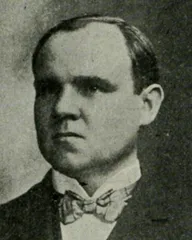
For Time Only or for Eternity? Human Institutions and Divine Authority By James E. Talmage, of the Council of the Twelve We believe that a man must be called of God, by prophecy, and by the laying on of hands, by those who are in authority, to preach the Gospel and administer in the ordinances thereof (Articles of Faith No. 5). Organization is essential to human advancement. The Di- vine affirmation that it is not good for man to be alone may be applied not only to the union of the sexes in honorable mar- riage, upon which the perpetuity of the race depends, but also to the association of humankind in community life, without which co-operation is impossible and the achievements of united purpose would be unknown. It is therefore natural and necessary that men shall estab- lish and maintain institutions for community betterment. The constitution of every liberal government recognizes the right of individuals to associate themselves in any organization having worthy purpose, in harmony with the spirit of law and order, and not interfering with the rights and privileges of non-mem- bers. Thus, men may institute societies, associations, and clubs, guilds, fraternities, and orders. They may designate their or- ganization as a church if they choose, and may enact rules prescribing conditions of admission, and providing for the ad- ministration of the institution's affairs. They may go so far as to say that no man shall be admitted to the church thus created except he be baptized by immersion in water by one of the of- ficials, and that the seal of membership shall be the pronouncing of a formula accompanied by the laying on of hands. But who of us would hazard his reputation as a rational being by asserting or even believing that such baptism, ad- ministered by an authority created by man, can be of effect in assuring remission of sins, or that it shall be recognized as ef- ficacious by the powers of Heaven? Churches, societies, or other associations, established on *This is one of a series of short articles, dealing with the doctrines of the Church of Jesus Christ of Latter-day Saints, now being published in the Sunda yissues of several prominent papers throughout the country. — Editors.
876 IMPROVEMENT ERA purely human initiative are institutions of men; they can never be aught else. It is in line with consistency that such organ- izations bear the names of men, or that they be known by some appellation expressive of their origin, their constitution, their peculiarities of government, their location, or some other dis- tinguishing feature. Could it be counted less than sacrilege to attach the name of Deity to a church called into being in the manner we have assumed? The Church of the apostolic epoch was the organization that Christ had established. He very expressively called it My Church (Matt. 16:18) ; and after His departure, every ordinance therein was administered in the name of Jesus Christ. By Di- vine assurance those ordinances were of effect, not only on earth but in Heaven, not alone for time, but for eternity. Of man-made institutions, of artificial growths though bearing the titles of churchly cults, the Lord emphatically declared: "Every plant, which my heavenly Father hath not planted, shall be rooted up" (Matt. 15:13). In the course of His ministrations on the Western Con- tinent, Jesus Christ established His Church, and thus answered certain inquiries as to the name by which that Church should be called: "Whatsoever ye shall do, ye shall do it in my name; there- fore ye shall call the church in my name; and ye shall call upon the Father in my name, that he will bless the church for my sake. And how be it my church, save it be called in my name? For if a church be called in Moses' name then it be Moses' church; or if it be called in the name of man, then it be the church of a man; but if it be called in my name, then it is my church, if it so be that they are built upon my gospel. * * * And if it so be that the church is built upon my gospel, then ivill the Father show forth his own works in it. But if it be not built upon my gospel, and is built upon the works of men, or upon the works of the devil, verily I say unto you, they have joy in their works for a season, and by and by the end cometh, and they are hewn down and cast into the fire, from whence there is no return' (Book of Mormon, 3 Nephi 27:7-11). The acts of a public official, whether of local or national status, are effective only within the limits of the jurisdiction he represents. City ordinances can be enforced within the bound- aries of the municipality, but not beyond. State legislatures are powerless to enact laws for interstate regulation. Congress is limited in specific jurisdiction to the national domain. Yet, in the face of these fundamental facts, there ar6 men who assume that it is within their province to legislate in spiritual affairs, and to alter, annul, or supersede by their own enactments, the
FOR TIME ONLY OR FOR ETERNITY? 877 laws established by Divine authority relating to membership in the Kingdom of God. In the current age the Lord has established His Church vipon the earth, and has made plain the portentous fact that while honorable obligations, agreements, and contracts among men may be valid under human laws, He is in no way bound by such exercise of mortal agency as conditioning the future of the soul after death. Ponder these declarations of Jesus Christ, given to His Church in 1843: "All covenants, contracts, bonds, obligations, oaths, vows, performances, connections, associations, or expectations, that are not made, and entered into, and sealed, by the Holy Spirit of promise, of him who is anointed, both as well for time and for all eternity, * » * are of no efficacy, virtue or force, in and after the resurrection from the dead; for all contracts that are not made unto this end, have an end when men are dead. Behold! mine house is a house of order, saith the Lord God, and not a house of confusion. Will I accept of an offer- ing, saith the Lord, that is not made in my name? Or, will 1 receive at your hands that which I have not appointed? And will I appoint unto you, saith the Lord, except it be by law, even as I and my Father ordained unto you, before the world was? I am the Lord thy God, and I give unto you this com- mandment, that no man shall come unto the Father but by me, or by my word, which is my law, saith the Lord. And every- thing that is in the world, whether it be ordained of men, by thrones, or principalities, or powers, or things of name, whatso- ever they may be, that are not by me, or by my word, saith the Lord, shall be thrown down, and shall not remain after men are dead, neither in nor after the resurrection, saith the Lord your God" (Doctrine and Covenants 132:5-13).