Mary Magdalene
Improvement Era, vol. 20, no. 9, July 1917, pp. 775 to 776
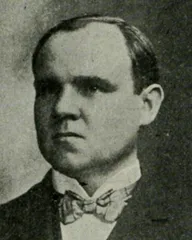
Mary Magdalene (Written for and at the request of the Newspaper Enterprise Association, San Francisco) By Elder James E. Talmage of the Council of the Twelve There is but a step between fanciful tradition and false history. A cleverly coined lie circulates readily, and soon comes to be accepted at its face inscription as a sterling medal struck in the mint of truth. This applies both to events and persons of historic prominence. Consider the case of a certain woman, whose reputation has been increasingly blackened through the centuries, and that by professed teachers and preachers of the Christ, without a vestige of justifying fact. Mary Magdalene was one of our Lord's adoring followers during His ministry in the flesh; and she stands forever dis- tinguished among women and preeminent amidst humankind in being the first mortal to look upon the face of the Risen Lord, and to hear the voice of a Res- urrected Soul. Yet we are told that Mary of Magdala, for such is the accepted sig- nification of her surname, was a re- formed courtesan; and her privileged association with the Lord Jesus has been made much of in text and homily to show that a sinner, even such as she is said to have been, could be pardoned and received into special and particular companionship with the Son of God. That man cannot measure the bounds of Divine mercy and for- giveness is granted without discus- sion. But that the Scriptures warrant the foul aspersions cast upon the character of Mary Magdalene is unreservedly denied. She is a victim of misrepresentation, and stands as one of the most piti- lessly maligned women of history. To our shame be it said that her name has been made com- mon as the appellation of women who sin as only women can, Dr. James E. Talmage
776 IMPROVEMENT ERA and who later profess penitence. Look in your dictionaries ; what find you there under "Magdalene?" This: "A reformed prosti- tute; a repentant harlot". Even our adjective "maudlin" is a corrupted spelling of Magdalen or Magdalene, and has reference to the tearful state in which conventional art has represented the figure of this blessed and highly favored woman. A partial explanation of such gross villification of a noble woman's character — one cannot reasonably speak of an excuse therefor — is found in the unsupported assumption that Mary Magdalene was that once sinful but thoroughly repentant woman who entered the house of Simon the Pharisee, while Jesus was a guest at table there, and who in her contrite grief let her upwell- ing tears fall upon the Master's feet, which she then dried with her untressed hair, and anointed with ointment from an alabaster box. That woman, whose repentance drew forth from the Teacher one of His most incisive lessons, and who heard from the lips of the Lord the benign assurance "Thy sins are forgiven" and "Thy faith hath saved thee; go in peace", is not named in the narrative (Luke 7:36-50). She is nowhere else referred to with identifying certainty in the Gospel pages. To assume that she and Mary Magdalene are one is to substitute fancy for recorded fact. Equally unwarranted is the inference that the woman last ref erred to, she who anointed the feet of Christ in the house of Simon the Pharisee in Galilee, was Mary the sister of Lazarus who, shortly before our Lord's betrayal, anointed with costly spikenard His head and feet in the house of Simon the leper, at Bethany in Judea (John 12:1-8). The two anointings are dis- tinct in circumstance of time and place. The effect of these gratuitous assumptions persists in spite of disavowals by able commentators and discriminating scholars. Unfortunately the chapter captions of our English Bible, as also marginal references and appendices to the Holy Scriptures, class Mary Magdalene and the woman "which was a sinner" as the same person; but this is an error based on the mistaken opinions of men, and is in no sense scriptural. The confused identity of Mary Magdalene and that other woman has been perpetuated by tradition in the Western or Roman Church, particularly since the fifth century, though it is discountenanced by the Greek Church of the East. The first mention of Mary Magdalene by name presents her in association with other honorable women, among whom was the wife of the royal steward. They accompanied Jesus and the Twelve and "ministered unto Him of their substance". (Luke 8:1-3). These women of station were beneficiaries of the Lord's heal-