Christ in the Traditions of American Native Races, II
Improvement Era, vol. 20, no. 7, May 1917, pp. 571 to 597
Improvement Era Vol. XX MAY, 1917 No. 7 Christ in the Traditions of American Native Races By B. H. Roberts II VII — Signs of Messiah's Birth in Native American Traditions Taking up the line of investigation proposed in the closing paragraph of the former chapter of this writing, I consider first the signs of Messiah's birth as they are to be found in the tradi- tions of the native American races. But first a word in relation to traditions in general. It often happens that they are some- what like the images reflected by a mirror shattered into a thou- sand fragments, whose broken parts distort into fantastic shapes the objects they reflect. Still there is always a basis of truth in them if one only has the patience to run it down to last analysis. On this theme Mr. H. H. Bancroft in his Native Races remarks:0 "Every trace of the circumstances that give rise to a tradition is soon lost, although the tradition itself in curiously modified forms is long pre- served. Natural convulsions, like floods and earthquakes, famines, wars, tribal migrations, naturally leave an impression on the savage mind which is not easily effaced, but the fable in which the record is embodied may have assumed a form so changed and childish that we pass over it today as having no historical value, seeking information only in an apparently more consistent tale, which may have originated only at a recent date from some very trivial circumstance. * * * But the traditions of savages, valueless by themselves for a time more remote than one or two generations, begin to assume importance when the events narrated have been otherwise ascertained by the records of some contemporary nation, throwing indirectly much light on history which they were powerless to reveal." Accepting as reasonable these reflections, I wish to add that having the Old and New Testaments, — the records of contempo- rary nations — to throw light upon the source of many of these "Vol. V, pp. 137-8.
572 IMPROVEMENT ERA American traditions, we are in possession of that which makes them assume the importance to which Bancroft alludes. With reference to native American traditions in general, as reflecting some knowledge of Biblical truths, Von Humboldt says: 'T'he cosmogony of the Mexicans; their traditions of the mother of mankind fallen from her state of happiness and innocence; the idea of a great inundation, in which a single family escaped on a raft; the history of a pyramidical edifice raised by the pride of men, and destroyed by the anger of the gods; the ceremonies of absolution practiced at the birth of children; those idols made with the flour of kneaded maize, and distributed in morsels to the people assembled in the temples; the confession of sins made by the penitents; those religious associations, similar to our convents, of men and women; the universal belief that white men, with long beards and sanctity of manners, had changed the religion and political systems of nations; — all these circumstances had led the priests who had accompanied the Spanish army [into Mexico] at the time of the conquest [under Cortez] to the belief that at some very distant epoch Christianity had been preached in the new continent. Some learned Mexicans have imagined that the Apos- tle St. Thomas was the mysterious personage, high priest of Tula, whom the Cholulans acknowledged under the name of Quetzalcohuatl [kate-sal- qua-tl]."& The high authority of Humboldt for the existence of these traditions among the native peoples of America, which so clearly link up with many incidents of the Bible narrative, should be kept in mind/ His summary of these traditions, however, sug- gests a larger view of the subject than is intended to be investi- gated here. It is my purpose to confine this present inquiry to those things only which are immediately related to the visit of Messiah to the western hemisphere. And first as to the sign of his birth, the three days of continuous light and the appearance of a new star. As already suggested in the previous chap- ter, the phenomenon of a day and a night and a day of continuous light would be a fact so unusual that it would not likely be forgotten by a people, or fail of perpetuation in their traditions. Neither has it. Fuentes Y. Guzman, (fwen- tes-goose-man), compiler of native documents, and followed by Juarrors, tells of a certain Quiche prince who made a division {'Travels in America, (Humboldt), Vol. I, pp. 196-7. cLet it be remembered how many of these incidents are in this one passage: The fall of man, through the loss of the innocence of the mother of mankind; the flood; the escape of a single family; the tower destroyed by the anger of the gods; the custom of absolution attending on child birth, so nearly resembling a like custom among the Hebrews; the ceremonies that suggest the holy Eucharist of the Christian faith; the confession of sins; the advent of white men with beards, and sanctity of manners who reformed the native religion and governments — all tending to lead the Spanish invaders to conclude that in some way or other the native races of America had been in contact with Bible knowledge, and the main truths of the Christian re- ligion. The manner of this contact with Bible knowledge and with the gos- pel is of course given in the Book of Mormon.
CHRIST IN TRADITIONS OF AMERICAN NATIVE RACES 573 of his kingdom into three parts. One part he retained himself, one he gave to his oldest son, and the third to his second son. "This division was made on a day when three suns were seen, which has caused some to think," remarks Juarrors, "that it took place on the day of the birth of the Redeemer, a day on which it is commonly believed that such a meteor was observed."** The "day when three suns were seen" easily accords with the two days and a night of continuous light spoken of in the Book of Mormon. Another allusion to this same event is mentioned by the Mexican native writer Ixtlilxochitl (east-leel-ho-che'etl), quoted by Bancroft, who in giving an account of the second Nahua age
- —the "sun of air" age, as distinguished from the first age, known as the "sun of water" age, for the reason that it ended in a flood, "which covered even the most lofty mountains;" while the second ended in "a great hurricane which swept away trees, rocks, houses, and people, although many men and women escaped, chiefly such as took refuge in caves which the hurri- cane could not reach" — speaking of this second age, I say, Ixtlilxochitl, declares that there was a stoppage of the sun "for a whole day in his course, as at the command of Joshua, as re- corded in the Old Testament.' v Bancroft also calls attention to the fact that Veytia (vay-tee'a), a native Mexican writer of high standing — 1718-1780 — author of Antiquities of Mexico, refers to this same native tradition of the sun stopping for a whole day in his course, and he places the incident as occurring previous to the tempest and a period of darkness/ which, of course, places the events in the order required by the Book of Mormon narrative — first the three days of light as one day, then later the period of tempest, earthquakes and darkness. The "apparent stopping of the sun for a whole day," would give the period of uninterrupted light required by the Book of Mormon's sign of Messiah's birth; and the "stopping of the sun for one whole day," could easily be the imperfect statement of the native tra- dition For the strange phenomenon of three days of continuous light. The noted Prussian ethnologist, Adolf Bastian, traveler in Mexico, and a writer upon its antiquities, relates that at the dis- appearance of Topiltzin (to-pil-seen') or Quetzalcohuatl (kate- sal-qua'-tl) a native culture hero of Mexico most nearly resem- bling the character of the Christ, "both sun and moon were rfJuarros' History of Guatemala, 1857, pp. 7-9, quoted by Bancroft, see Native Races, Vol. V, p. 566. ^Quoted by Bancroft, Native Races, Vol. V, pp. 209, 210. flbid. For brief statement respecting Veytia, see the writer's New Wit- ness for God, Vol. Ill, p. 6, foot note.
574 IMPROVEMENT ERA covered in darkness, while a single star appeared in the heav- ens."£ It will be observed here, of course, that the order of events is the reverse of that given in the Book of Mormon; and also the reverse of that given by Veytia. In these the appearance of the star precedes the three days of darkness; in the tradition mentioned by Bastian, it follows. May that result from the faulty statement of the traditions? And if so, if the appearing of the star preceded the darkness, the latter being the sign of Messiah's death, then we have found in this statement the other sign of Messiah's birth mentioned in the Book of Mormon — "a new star did appear."'1 VIII — Signs of Messiah's Death in Native American Traditions As the signs attendant upon the death of Messiah, as given in the Book of Mormon, are more impressive than the signs of his birth, so is it reaeonable to expect that the traces of those signs of his death will be more prominent in the traditions of the native American races than the signs of his birth. And in this our expectation is not disappointed. It will be recalled that the signs of Messiah's death, as set forth in the Book of Mor- mon, were terrible tempests, storms and whirlwinds upon all the face of the land of the western world, attended by awful convulsions of nature — mountains sinking, valleys transformed to mountains by great upheavals and earthquakes; many cities were set on fire, and others were sunk into the depths of the sea, and some were buried under mountainous heaps of earth. This storm period lasted for the space of three hours, and greatly changed the face of the land — the coast lines and mountainous landscapes. And after these terrible convlusions of nature had ceased they were followed by three days of vaporous darkness. No light was seen; sun, moon, and stars were veiled, and no light could be made. Neither torch nor other form of combusti- ble material could be kindled by man's ingenuity. So dense were the vapors of darkness that the people who survived the period of tempest and earthquake, could feel them. Dreadful indeed was the impression made by this event upon the minds of the people of that generation. All this, so awe-inspiring, can be easily traced in the traditions of the native American races. It is true that the exact order of the happenings as set forth in the Book of Mormon are not always followed in the traditions. Sometimes the signs of Messiah's birth follow the account of ^Bastian quoted at length by P. De Roo, History of America before Columbus. De Roo associates the darkness of the period with the death of the Savior. Mil Nephi 1.
CHRIST IN TRADITIONS OF AMERICAN NATIVE RACES 575 physical disturbances that attended upon his death, and some- times they follow the true order, and sometimes they are con- fused or mixed; but the fact of them is so universally attested that there can be no question but what- the native traditions re- fer to the facts as set forth in the Book of Mormon. Both the native writer Ixtlilxochitl (east-leel-ho-che'-etl) and Veytia, (vay-tee'-a) in a passage already quoted, described the second Nahua age, the age of the "sun and air," as having terminated with a great hurricane which swept away trees, rocks, houses and people, although many men and women escaped, chiefly such as took refuge in caves which the hurricane could not reach.* Bancroft gives a Toltec tradition directly bearing upon this subject as follows: "The sun and moon were eclipsed, the earth shook, and the rocks were rent asunder, and many other things and signs happened, though there was no loss of life. This was in the year Ce Calli, which, the chronology being reduced to our system, proves to be the same date when Christ our Lord suffered, 33, A. D."/ Kingsborough, quoting Bouturini (bo-too-ree'nee), says: "Bouturini, commending the exact chronology of the ancient Mexicans, says: 'No pagan nation refers primitive events to fixed dates like the In- dians. They recount to us the history of the creation of the world, of their ancestors long travel in Asia, with the years precisely distinguished by their corresponding characters. They record in the year of "Seven Rabbits" the great eclipse which happened at the crucirixion of Christ our Lord.' "* The date assigned for this eclipse of sun and moon (darkness), and the fact of attendant earthquakes in the foregoing quotations, is corroborated in a very remarkable manner by the native Peru- vian historian Montesinos (mon-tay-see'-nos), quoted by Rivero and Tschudi.. In giving a list of the Peruvian monarchs, when reaching the sixtieth, Monco-Capac III, our authors say: "Ac- cording to the Amautas [Peruvian 'wise men,' or philosophers] this prince reigned in the year two thousand nine hundred and fifty after the deluge, and consequently at the birth of Jesus Christ, an epoch when Peru [may not the remark have been in- tended to apply to the whole ancient American people and con- tinent?] had reached her highest elevation and extension."' Fol- lowing this sixtieth monarch came Cyo-Manco-Capac III, (kah/- Wative Races, Bancroft, Vol. V, pp. 209-210. ilbid. p. 210. ''Kingsborough's Mexican Antiquities, Vol. VI, p. 176, note. Bouturini is an authority frequently quoted by Prescott, who has an extended note upon the valuable collection of native memorials of primitive civilization of America made by him. (See Conquest of Mexico, Vol. I, p. 126.) Peruvian Antiquities, Tschudi, p. 59.
576 IMPROVEMENT ERA yo-manco-kah-pac), who reigned twenty years. He, by Huaman- taco Amauta (nawa-man-ta-coama-oo'-ta), who reigned five years; which brings ns to about"' the year thirty-two A. D., and then follows this statement of our author's which corroborates the date cited by Bancroft for the cataclysm under considera- tion,, viz: "During his reign [thirty-two or thirty-three A. D.], they experienced earthquakes that lasted several months."" Brasseur de Bourbourg (brah-sieur de boor boor), to whom Brancroft gives high praise as an authority on the lan- guages and traditions of Central America, speaks of physical cataclysms which, according to the native traditions, took place in Central America, and which are undoubtedly the imperfect accounts of those cataclysms which occurred at the death of Messiah, as recorded in the Book of Mormon. Brasseur became infatuated with the Atlantis theory, and regarded the native American traditions concerning the physical convulsions in na- ture as describing the submergence of the ancient Atlantis. With the theory of the learned Frenchman I have nothing to do. He may have made a wrong application of the facts of the native traditions. I think he did. But what I am interested in is the fact that so highly commended an authority draws from native sources the tradition of physical cataclysms which so nearly ac- cord with the statements of fact in the Book of Mormon." After relating Brasseur's connection with the Atlantis theory, Baldwin says: "In the first place, Brasseur de Bourbourg claims that there is in the Old Central American books a constant tradition of an immense catastrophe of the character supposed [i. e., the convulsions which submerged Atlantis ] ; that this tradition existed everywhere among the people when they first became known to Europeans; and that recollections of the catastrophe were preserved in some of their festivals, especially in one celebrated in the month of Izcalli, [eas-ca-yee], which was instituted to commemorate this frightful destruction of land and people, and in which 'princes and people humbled themselves before the divinity, and besought him to withhold a return of Mich terrible calamities.' This tradition affirms that a part of the continent extending into the Atlantic was destroyed in the manner supposed [sub- merged], and appears to indicate that the destruction was accomplished by a succession of frightful convulsions. Three are constantly mentioned, and sometimes there is mention of one or two others. 'The land was shaken by frightful earthquakes, and the waves of the sea combined with volcanic ^Peruvian Antiquities, Tschudi, p. 60. Compare III Nephi, chap. VIII. "I say "about" the year A. D., 32, for the reason that we do not know how long the reign of Manco-Capac III — who is represented in the forego- ing quotation as reigning "at the time of the birth of Christ" — continued after the birth of Messiah; not long, evidently; but sufficiently long to make up the difference between A. D., 32, and the time of Messiah's death. Bald- win also refers to the same event, Ancient America, p. 266. "Native Races, Vol. V, pp. 127, 129.
CHRIST IN TRADITIONS OF AMERICAN NATIVE RACES 577 fires to overwhelm and ingulf it.' Each convulsion swept away portions of the land, until the whole disappeared, leaving the line of the coast as it is now. Most of the inhabitants, overtaken amid their regular employments, were destroyed; but some escaped in ships, and some fled for safety to the summits of high mountains, or to portions of the land which, for the time, escaped immediate destruction. Quotations are made from the old books in which this tradition is recorded which appear to verify his report of what is found in them. To criticise intelligently his interpretation of their sig- nificance, one needs to have a knowledge of those books and tradition equal at least to his own."/' Nadaillac (nah-day-lac') also refers to the native traditions collected by Brasseur on this subject and quotes him as follows: "If I may judge from allusions in the documents that I have been fortunate enough to collect, there were in these regions, at that remote date, convulsions of nature, deluges, terrible inundations, followed by the up- heaval of mountains, accompanied by volcanic eruptions. These traditions are also met with in Mexico, Central America, Peru, and Bolivia."1/ Treating of a number of old Central American traditions on his own account, Nadaillac says: "Other traditions allude to convulsions of nature, to inundations, and profound disturbances, to terrible deluges, in the midst of which mountains and volcanoes suddenly rose up."r Nothing, perhaps, connected with the signs of Messiah's death would be more impressive than the awful fact of the three days' darkness, and nothing would be more likely to be preserved in the traditions of the people than this singular fact. From generation to generation it would be remembered with terror. It is beyond question the traditional remembrance of that event which so terrorized the native Americans at every recurrence of an eclipse of the sun. Of this fact Bancroft remarks: "The Mexicans were much troubled and distressed by an eclipse of the sun. They thought that he was much disturbed and tossed about by some- thing, and that he was becoming seriously jaundiced. This was the occasion of a general panic, women weeping aloud, and men howling and shouting and striking the hand upon the mouth. There was an immediate search for men with white hair and white faces, and these were sacrificed to the sun, amid the din and tumult of singing and musical instruments. It was thought that should the eclipse become once total, there would be an end of the light, and that in the darkness the demons would come down to the de- vouring of the people."^ PAncient America, pp. 176, 177. <iPre-Historic America, pp. 16, 17. rPre-Historic America, p. 527. sNative Races, Vol. Ill, p. 110.
578 IMPROVEMENT ERA It was also the traditional remembrance of the terror of darkness, connected with the death of Messiah, which undoubt- edly created the anxiety concerning the renewal of fire at the con- clusion of each cycle of fifty-two years, recognized by the Mex- ican chronology. The Mexicans, as represented in some of the notes I have already quoted from different authors, hold the tradition of the destruction of the world at four successive epochs. And now Prescott: "They looked forward confidently to another such catastrophe, to take place, like the preceding, at the close of a cycle, when the sun was to be effaced from the heavens, the human race from the earth, and when the darkness of chaos was to settle on the habitable globe. The cycle would end in the latter part of December, and, as the dreary season of the winter solstice approached, and the diminished light of day gave melancholy presage of its speedy extinction, their apprehensions increased; and on the arrival of the five unlucky days which close the year, they abandoned them- selves to despair. They broke in pieces the little images of their household gods, in whom they no longer trusted. The holy fires were suffered to go out in the temples, and none were lighted in their own dwellings. Their furniture and domestic utensils were destroyed; their garments torn in pieces; and everything was thrown into disorder, for the coming of the evil genii who were to descend on the desolate earth. On the evening of the last day, a procession of priests, assuming the dress and ornaments of their gods, moved from the capital towards a lofty mountain, about two leagues distant, they carried with them a noble victim, the flower of their captives, snd an apparatus for kindling the new fire, the success of which was an augury of the renewal of the cycle. On reaching the summit of the moun- tain, the procession paused till midnight; when, as the constellation of the Pleiades approached the zenith, the new fire was kindled by the friction of the sticks placed on the wounded breast of the victim. The flame was soon communicated to a funeral pile, on which the body of the slaughtered cap- tive was thrown. As the light streamed up towards heaven, shouts of joy and triumph burst forth from the countless multitudes who covered the hills, the terraces of the temples and the housetops, with eyes anxiously bent on the mount of sacrifice. Couriers, with torches lighted at the blazing beacon, rapidly bore them over every part of the country; and the cheering ele- ment was seen brightening on altar and hearthstone, for the circuit of many a league, long before the sun, rising on his accustomed track, gave assur- ance that a new cycle had commenced its march, and that the laws of nature were not to be reversed for the Aztecs. The following thirteen days were given up to festivity."' Whence this terror of the darkness? Whence this rejoic- ing at the assurance of continued light? unless back of both terror and rejoicing, somewhere in the history of the people, there was some such circumstances as described in the Book of Mormon, which gave cause for this terror of darkness on the one hand, and the rejoicing at the assurance of a continuation of li"ht on the other? fConquest of Mexico, Vol. I, pp. 105-6.
CHRIST IN TRADITIONS OF AMERICAN NATIVE RACES 579 IX — The Messiah in Native American Traditions If the signs of Messiah's birth and death would find lodge- ment in native American traditions, still more would his re- markable advent among the people of the western world find a permanent place in their traditions. And this is found to be the fact; but the reader must not be surprised if he finds the native traditions on the subject much confused. All such tradi- tions, as I have before remarked, are so confused. Besides, it must be remembered that there were several great characters among the inhabitants of the western world, according to the Book of Mormon, who would likely be confounded with Mes- siah at some point of their experiences in the native traditions; such as Moriancumer and Coriantumr among the Jaredites, the first and the last great leaders, respectively, of that ancient peo- ple. Then there is the first Nephi, Mulek, the first Mosiah, and several of the Lord's apostles chosen from among the Nephites that are likely to be confounded with Messiah, and their mission with his ministry among the pople. But notwithstanding this confusion, I think evidences of the advent of Messiah in the western world are traceable in the native traditions. Speaking of American "culture-heroes" in general, Ban- croft says: "Although bearing various names and appearing in different countries, the American culture-heroes all present the same general characteristics. Thev are all described as white, bearded men, generally clad in long robes; appearing suddenly and mysteriously upon the scene of their labors, they at once set about improving the people by instructing them in useful and ornamental arts, giving them laws, exhorting them to practice brotherly love and other Christian virtues, and introducing a* milder and better form of religion; having accomplished their mission, they disappear as mys- teriously and unexpectedly as they came; and finally, they are apotheosized and held in great reverence by a grateful posterity. In such guise or on such mission did Quetzalcohuatl appear in Cholula, [cho-lu'-la], Votan in Chiapas [chee-ah'-pass], Wixepecocha [week-see-pa-co'-cha], in Oajaca [oah-ha'-ca], Zamna [Sam'na], and Cukulcan [koo-kool-can], with his ninetheen disciples, in Yucatan, Gucumatz [goo-koo-matzr], in Guatemala [gwa-teh-mab/-la], Yiracocha [ver-ra-co-cha], in Peru, Sume and Paye-Tome [pah-ye-to'-me], in Brazil, the mysterious apostles mentioned by Roasales [ro-sah'-les], in Chili, and Bochica [bo-chee'-kah], in Columbia. Peruvian legends speak of a nation of giants who came by sea, waged war with the natives, and erected splendid edifices, the ruins of many of which still remain. Besides these, there are numerous vague traditions of settlements of nations of white men, who lived apart from the other people of the country, and were possessed of an advanced civilization."" I suggest, in passing, that the part of the tradition which re- lates to the existence "of settlements or nations of white men "Native Races, Bancroft, Vol. V, pp. 23, 24.
580 IMPROVEMENT ERA who lived apart from the other people of the country, and were possessed of an advanced civilization," refers to those conditions that prevailed when the Nephites and Lamanites occupied the land; the former an industrious, civilized race, the latter an idle, savage race, conditions frequently referred to in the Book of Mormon, in describing the status of the Nephites and Lamanites, respectively. Observe also that Bancroft, in the foregoing statement, says of some of the characters that, having accomplished their mis- sion, they mysteriously disappeared. There are several such characters spoken of in the Book of Mormon. Such was the case with the second Alma, a noted Nephite character of the first half of the century immediately preceding the advent of Messiah. He was the first president or "judge" of the Nephite republic, also high priest of the church, uniting in his person the two offices — a thing not unusual among the Nephites,1' nor among the native Americans, if their annals may be trusted.1" After completing his life's mission, and making a remarkable prediction concerning the destruction of the Nephite people, Alma departed out of the land, "and it came to pass that he was never heard of more; as to his death or burial we know not oF. Behold, this we know, that he was a righteous man; and the saying went abroad in the church, that he was taken by the Spirit, or buried by the hand of the Lord.* In a similar manner, Nephi, the father of Nephi, the apostle, a very noted Nephite leader and prophet, departed out of the land in the srime mysterious manner.^' While the culture heroes of the native races of the western world are numerous and interesting, I am concerned only with those who bear the most striking resemblance to the Christ while on the western hemisphere. The natives of Chili have the following tradition concern- ing one of their culture-heroes, who, both in character and ac- tion, closely resembles Messiah as he was known to the Nephites: Rosales, in his inedited (i. e., unpublished but quoted by Kingsborough) History of Chili, declares that the inhabitants of that extremely southern rNative Races, Bancroft, Vol. V, pp. 23, 24. Such was the case with I Nephi and also Mosiah II. (Omni 5:12-22). Also King Benjamin. (Mosiah 1:2). In fact all the Nephite kings seem to have performed priestly func- tions; while under the republic Alma was made president of the state and high priest of the church, (Mosiah 29:42) and in the fifty-third year of the republic, Nephi, the son of Helaman, was, for a time, both president of the republic and high priest of the Church. (Helaman 3:37 and chap 4.) ™The Mexicans believed that Quetzalcohuatl united in his own person the character of king, priest, and prophet. (Kingsborough, Vol. VI, p. 213). *Alma 45:18, 19. 3 III Nephi 1:1-3.
CHRIST IN TRADITIONS OF AMERICAN NATIVE RACES 581 portion of America, situated at the distance of so many thousand miles from New Spain, and who did not employ paintings to record events, accounted for their knowledge of some of the doctrines of Christianity by saying, "that in former times, as they had heard their fathers say, a wonderful man had come to that country, wearing a long beard, with shoes, and a mantle such as the Indians carry on their shoulders, who performed many miracles, cured the sick with water, caused it to rain, and their crops and grain to grow, kindled fire at a breath, and wrought other marvels, healing at once the hick, and giving sight to the blind; and that he spoke with as much pro- priety and elegance in the language of their country as if he had always resided in it, addressing them in words very sweet and new to them, telling them that the Creator of the universe resided in the highest place of heaven, and that many men and women who were resplendent as the sun dwelt with him They say that he shortly afterwards went to Peru, and that many in imitation of the habit and shoes which that man used, introduced among themselves the fashion of wearing shoes, and the loose mantle over the shoulders, either fastened with a clasp at the breast, or knotted at the corners."^ The points of comparison between the character referred to in the foregoing quotation and the Messiah in his ministry among the Nephites, are: First: In personal appearance, if due allowance he made for the imperfect description in the tradition. Second: In the character of the work performed, espe- cially in the matter of healing the sick. While in their midst Jesus is represented by the Book of Mormon as saying to the Nephites : "Have ye any that are sick among you, bring them hither. Have ye any that are lame, or blind, or halt, or maimed, or leprous, or that are withered, or that are deaf, or that are afflicted in any manner? Bring them hither and I will heal them, for I have compassion upon you ; my bowels are filled with mercy. * * * And it came to pass that when he had thus spoken, all the multitude, with one accord, did go forth with their sick, and their afflicted, and their lame, and with their blind, and with their dumb, and with all them that were afflicted in any manner; and he did heal them every* one as they were brougnt forth unto him."0 « * * * And1 the things which he prayed cannot be written, and the multitude did bear record who heard him. And after this manner did they bear record: The eye hath never seen, neither hath the ear heard before, so great and marvelous things as we saw and heard Jesus speak unto the Father, and no tongue can speak, neither can there be written by any man, neither can the heart of man conceive so great and marvelous things as we both saw and heard Jesus speak; and no one can conceive of the joy which filled our souls at the time we heard him pray for us unto the Father.''^ Fourth: Relative to teaching the people that many men and women were resplendent in their glory and were already dwelling with God, the Book of Mormon mentions the circum- stance of Jesus taking very great pains to have recorded in the ^Mexican Antiquities, Kingsborough, Vol. VI, p. 419. «III Nephi 17:7, 9. &IIINephi 17:15-17.
582 IMPROVEMENT ERA Nephite annals the fact that many of the ancient Saints arose from the dead and appeared unto many and ministered unto them;'7 and from the whole tenor of his instructions to the Nephites, as found in III Nephi, it is clear that there was ever present in his thought the fact of redeemed and glorified im- mortals dwelling with God in his Father's Kingdom. Fifth: The reference in the quotation to the departure of the man-God for another land is paralleled in the Book of Mormon account of Jesus, where he is represented as declaring the existence of the lost tribes of the house of Israel, and the declaration of his intention to visit them. "Now," said he, "I go unto the Father, and also to show myself unto the lost tribes of Israel, for they are not lost unto the Father, for he knoweth whither he hath taken them."d X — Quetzalcohuatl Of all the culture heroes of native American traditions, the character known among the Mexicans as Quetzalcohuatl (kate- sal-qua-tl) most nearly resembled the Christ in his mission to the western world. Lord Kingsborough, it is well known, is the foremost among those who have identified this traditionary per- sonage with the Hebrew Messiah; and to this subject he de- voted an incredible amount of labor and research/ Those who seek to identify Quetzalcohuatl with the Apostle St. Thomas, chiefly Roman Catholic writers, may be dismissed with the re- mark that native American traditions assign too many of the qualities of Deity to Quetzalcohuatl to regard him merely as a man; and while many things are ascribed to him that are not in harmony with the character and mission of Messiah as set forth in the Book of Mormon, still one may trace the outlines of Messiah's advent and labors among the Nephites in the career of Quetzalcohuatl, as also the qualities of his divinity in what tradition ascribes to the Aztec deity. As for those adventures and human qualities found in Quetzalcohuatl not properly a^cribable to Messiah, they arise, doubtless, out of the fact that the native traditions have confounded some of the exploits and characteristics of other great personages who have figured in their history with those of Messiah. fill Nephi 18. ^III Nephi 17:4, see also chapter 16:1-3. ^Those who desire to follow the researches of the noble author on this point can do so by consulting Vol. 8, of his elaborate work, pp. 5-51; also his explanations of plates 3, 10, 41 of the Vatican Codex with accompanying notes, Vol. VI. This is by no means all that his lordship writes upon the subject, but from these passages one may learn the substance of his theory, and the argument by which he sustains it.
CHRIST IN TRADITIONS OF AMERICAN NATIVE RACES 583 As to the personal appearance of Quetzalcohuatl the follow- ing may be regarded as a fair summary: "He was a white man, of portly person, broad brow, great eyes, loug, black hair, and large round head, of exceedingly chaste, and quiet life, and of great moderation in all things. * * * Quetzalcohuatl is said to be a white man [some descriptions give him a bright, red face], with a strong formation of body, broad forehead, large eyes, black hair, and a heavy beard. He always wore a long, white robe; which, according to Gomara, was deco- rated with crosses."/1 In the Book of Mormon account of the advent of Messiah among the Nephites there is no description given of his features or person. This, upon first thought, may seem singular; and yet it is in strictest harmony with human conduct in the presence of such an event. Over-awed by the fact of the presence of a heavenly personage, men are liable to take no note of details of personal appearance. It is not until men are removed from the awe-inspiring circumstance itself that they begin to think of de- tails connected with a heavenly apparition. I think it probable, therefore, that not until after the Nephite accounts were writ- ten of the personal ministrations of Jesus did those who beheld him begin to think out the details of his personal appearance; hence we have no description of him in their written annals, but we find it preserved — perhaps with more or less of error as to details — in the traditions of the people. As to Quetzalcohuatl's general character while among the Mexicans, the following from Bancroft is of importance: "This Quetzalcohuatl was god of the air, and as such had his temple, of a round shape and very magnificent. He was made god of the air for the mildness and gentleness of all his ways, not liking the sharp and harsh measures to which the other gods were so strongly inclined. It is to be said further that his life on earth was marked by intensely religious char- acteristics; not only was he devoted to the careful observance of all the old customary forms of worship, but he himself ordained and appointed many new rites,£ ceremonies, and festivals for the adoration of the gods:" and it is held for certain that he made the calendar.* He had priests who were called Quequetzalcohua, that is to say 'priests of the order of Quetzal- cohuatl.'/ The memory of him was engraved deeply upon the minds of the fT G. Muller quoted by Bancroft, Native Races, Vol. Ill, pp. 273, 274. sSee II Nephi 15:2, 10. fcSee III Nephi 11:21, 28, also III Nephi 18: 1, 25. Compare these several passages from Nephi with the statement in the text. *This may simply be the traditional remembrance of the fact that the sign of the birth of Jesus was made an epoch from which the Nephites thenceforward reckoned their time. See III Nephi 11:4-8. i"Priests after the order of Quetzalcohuatl." The Book of Mormon teaches that the Nephites had the higher or Melchizedek priesthood among them. That is to say, the priesthood of their high priests was after the same order of priesthood as that held by the Son of God. Hence we have Alma saying: "I am called to speak after this manner [he was preaching obedience to the people] according to the holy order of God, which is in
584 IMPROVEMENT ERA people, and it said that when barren women prayed and made sacrifices to him, children were given to them.* He was, as we have said, god of the winds, and the power of causing them to blow was attributed to him as well as the power of calming or causing their fury to cease. * * * He also arranged the calendar, and taught his subjects fit religious ceremonies; preaching specially against human sacrifices, and ordering offerings of fruits and flowers only. He would have nothing to do with the wars, even cover- ing his ears when the subject was mentioned. His was a veritable golden age, as in the time of Saturn; animals and even men lived in peace, the soil produced the richest harvests without cultivation, and the grain grew so large that a man found it trouble enough to carry one ear; no cotton was dyed, as it grew of all colors, and fruits of all kinds abounded.™ The "golden age" referred to in the closing sentence of the above quotation, doubtless has reference to those "three gener- ations," or centuries following the advent of Messiah in the Western world, when there was practically a universal accept- ance of the gospel, and a reign of righteousness, with peace and plenty following.™ Relative to Quetzalcohuatl in his capacity of Deity I shall quote the following passage from Lord Kingsborough's great work as representing the sum of his extensive research upon the subject and its elaborate presentation: "How truly surprising it is to find the Mexicans * * * should have believed in the incarnation of the only son of their supreme god Tonacate- cutli. For Mexican mythology speaking of no other son of that God except Quetzalcohuatl, who was born of Chimalman, the virgin of Tula, without connection with man, and by his breath alone, [by which may be signified his word or his will, announced to Chimalman by word of mouth of the celestial messenger, whom he dispatched to inform her that she should conceive a son], it must be presumed that Quetzalcohuatl was his only son. Other arguments might be adduced to show, that the Mexicans believed that Quetzalcohuatl was both god and man; that he had previously to his incar- nation, exsited from all eternity; that he had created both the world and man; that he descended from heaven to reform the world by penance; that Christ Jesus. * * * And now I say unto you that this is the order after which I am called, yea to preach unto my beloved brethren." (Alma 5:44, 49). "I would that ye should remember that the Lord God ordained priests after his holy order, which was after the order of his Son, to teach these things unto the people." (Alma 12:1.) ''Compare this statement with the following passage: "Behold, verily, verily, I say unto you, ye must watch and pray always, lest ye enter into temptation. * * * Therefore ye must always pray unto the Father in my name ; and whatsoever ye shall ask the Father in my name, which is right, believing that ye shall receive, behold it shall be given unto you. Pray in your families unto the Father, always in my name, that your wives and your children may be blessed." (Ill Nephi 18:12, 21). "'Native Races, Bancroft, Vol. Ill, pp. 259, 260, 274. For a description of the Nephite "golden age," whence comes this "golden age" of the tradi- tion, see III Nephi, chapter 24, 28. "For reference to the Nephite "golden age" of the tradition see III Nephi chapter 26, 27, 28. c. f. I Nephi 12.
CHRIST IN TRADITIONS OF AMERICAN NATIVE RACES 585 he was born with the perfect use of reason; that he preached a new law, and, being king of Tula, was crucified for the sins of mankind, as is obscurely insinuated by the interpreter of the Vatican Codex, plainly declared in the traditions of Yucatan, and mysteriously represented in the Mexican paint- ings. * * * The reflection must have suggested itself to those who have perused the New Testament, that Christ is as frequently distinguished there by the appellation of the 'Son of Man,' as by that of the 'Son of God,' in reference no doubt to his humanity, and to the famous prophecy contained in the ninth verse of the ninth chapter of Isaiah: 'For unto us a child is born, unto us a son is given:' which Christians, on the authority of many passages in the four gospels, apply to Christ, although the Jews sometimes interpret it of the Messiah, and sometimes of King Hezekiah. The Mexicans bestowed the appellation of Topilitzin on Quetzalcohuatl; * * * and it may not be unreasonably assumed — since analogies, which are numerous and not isolated, as their number increases, increase also their ratio of probability — not only that the Mexicans were acquainted with Isaiah's famous prophecy, but to mark their belief of the accomplishment of that prophecy, in the person of Quetzalcohuatl, that they named him Topilitzin; no less on account of his having been born from a virgin of the daughters of men, than because another equally celebrated prediction of the same prophet declared that he should receive a name from that very circum- stance: 'Therefore the Lord himself shall give you a sign, Behold a virgin shall conceive and bear a son, and shall call his name Immanuel.' And the proper name Topilitzin does in fact bear a signification corresponding, if not literally, yet entirely in substance with that of Immanuel: since 'God with us,' which is the interpretation of the Hebrew name, means God domiciled amongst men; and the full force of the expression is preserved in the term Topilitzin, which might be interpreted the Son of Man, or God on a level with men: for the Mexicans believed that Quetzalcohuatl took human na- ture upon him, partaking of all infirmities of man, was not exempt from sorrow, pain, or death, and that he suffered voluntarily to atone for the sins of mankind."0 As already remarked, there is much attributed to this Deity of native American tradition that seems incompatible with the character of Messiah, and with his labors while in the western hemisphere; but for all that one may see in outline here the leading truths respecting the Son of God as made known to the Nephites through prophecies and the Christ's personal ad- vent among them, all of which is set forth in the Book of Mor- mon; while that which is not congruous to Messiah and his mis- sion to the Nephites, results — as already pointed out — from the confusion of a number of traditions concerning several other great characters who have figured in native American history, and of whom the Book of Mormon speaks. But, in the forego- ing excerpts from the works of those skilled in the lore of ancient America, we have the account of "The great or the glor- ious Man of the country,"^ that can be no other than the He- brew Messiah — the Jesus Christ of the Book of Mormon. There are the signs of his death ; his sudden advent among the people ; "Kingsborough'B Mexican Antiquities, Vol. VI, p. 507. PThe happy suggestion of title is De Roo's.
586 IMPROVEMENT ERA his personal appearance — not incompatible with the personal appearance of Messiah, but rather in harmony with it; his birth of a virgin; his being the only Son of God; his name signifying "God with man;" his being the creator of heaven and earth; his crucifixion for the sins of the world; his being peculiarly "the Lord" to whom men prayed; his love of peace, his hatred of war; his respect for existing religion, yet his enlargement of it and the addition of religious rites and ceremonies; his teach- ing the people perfectly in their own tongue, yet also "in new and honied words;" his compassion for the sick, and healing them; his choosing special disciples to teach his religion and making them priests of the same order as himself; the beauty and gentleness of his religion that stands in such marked con- trast to the subsequent harsh and sanguinary superstition that darkened the lives of the natives; his instructions as to historical records; his taking with him on his departure from the country four of the principal and most virtuous youths of the city of Cholula to the sea where he separated from them and sent back messages to his followers by them, promising to return ;? his prediction of other and white races to come and occupy the western world and rule it; his mysterious departure from the land, and his promise to return. All this, which so perfectly agrees both with the character and the ministry of Messiah among the Nephites, as described in the Book of Mormon, is set forth in such clearness that it cannot be discredited because of some evident fantasies and incongruities in other parts of the traditions. XI — Modern Visits of the Christ in America (a) The appearing of Jesus the Christ to Joseph Smith: In modern times also, as well as in ancient times, the Christ has visited the western world. Joseph Smith records such a visitation to him in the opening of the New Dispensation of the gospel, which the world has called "Mormonism." Moved thereto by the conflict of existing opinions in the vicinity where his boyhood was spent, western New York — and by the admoni-
CHRIST IN TRADITIONS OF AMERICAN NATIVE RACES 587 tion of St. James, that if any man lacked wisdom let him ask of God, "that giveth to all men liberally and upbraideth not," he sought and found God in a most remarkable visitation of both God the Father, and his Son, Jesus the Christ. The ac- count of that visitation will never be told in a more illuminating manner than in his own words. Seeking for the wisdom he felt he needed, and in the manner prescribed by James — asking for it through prayer — he was first seized upon by the powers of darkness who seemed bent upon his destruction, and by whom, it would appear, he was about to be overwhelmed — "Just at this moment of great alarm," runs his narrative, "I saw a pillar of light exactly over my head, above the brightness of the sun, which descended gradually until it fell upon me. It no sooner ap- peared than I found myself delivered from the enemy which held me bound. When the light rested upon me I saw two personages, whose brightness and glory defy all description, standing above me in the air. One of them spake unto me, calling me by name, and said, pointing to the other — "'This is My Beloved Son, Hear Him!' "My object in going to inquire of the Lord was to know which of all the sects was right, that I might know which to join. No sooner, therefore, did I get possession of myself, so as to be able to speak, than I asked the personages who stood above me in the light, which of all the sects was right — and which I should join. I was answered that I must join none of them, for they were all wrong, and the personage who addressed me said that all their creeds were an abomination in his sight: that those professors were all corrupt; that 'they draw near to me with their lips, but their hearts are far from me; they teach for doctrine the commandments of men: having a form of godliness, but they deny the power thereof.' He again forbade me to join with any of them: and many other things did he say unto me, which I cannot write at this time."r Elsewhere, however, when giving an account of this wonder- ful visitation, the Prophet adds to the above narrative, that he received a promise that the fulness of the gospel would at some future time be made known unto him. Also that he was chosen to be an instrument in the hands of God to bring about some of his purposes in the New Dispensation.5 This was the opening revelation of the New Dispensation of the gospel in the Fulness of Times, in which God has prom- ised to gather "together in one all things in Christ, both which are in heaven, and which are on earth; even in him."' When the solemn judgment of God against the modern religious world, — comunicated in this revelation to Joseph Smith — is taken into account, and what has come of it, — the restoration to earth of the gospel of Jesus Christ, and the re-establishment of the Church of Jesus Christ among men, and what is yet to come of 'Joseph Smith's Journal History of the Church, Vol. I, pp. 5, 6. •sSee Letter to John Wentworth, published in full in Joseph Smith's Journal History of the Church, Vol. IV, pp. 536-7. 'Ephesians 1:9, 10.
588 IMPROVEMENT ERA it in the gathering of Israel, in the building of Zion, the coming of the Lord Jesus to reign on the earth, the complete redemp- tion of the earth and the salvation of man — it must be admitted that the occasion was worthy of such a visitation, which in its brilliancy and glory and the effects produced surpasses all other accounts of the revelations that God the Father, and the Son have granted to man from the beginning. (b) The Appearing of Jesus Christ to Joseph Smith and Sidney Rigdon, in a Vision: Twelve years after the first ap- pearing of Jesus the Christ to Joseph Smith there was granted to this modern prophet and his companion in the ministry, Sid- ney Rigdon, a vision of the Lord Jesus in his glory, in heaven, upon the right hand of the Father. The description of the event as given by the Prophet is in an exalted strain; and the introduction of it, especially, is worthy of the old Hebrew Prophets : "Hear, 0 ye heavens, and give ear, 0 earth, and rejoice ye inhabitants thereof, for the Lord is God, and beside him there is no Savior: "Great is his wisdom, marvelous are his ways, and the extent of his doings none can find out; his purposes fail not, neither are there any who can stay his hand; "From eternity to eternity he is the same, and his years never fail. "For thus saith the Lord, I, the Lord, am merciful and gracious unto those who fear me, and delight to honor those who serve me in righteous- ness and in truth unto the end; "Great shall be their reward and eternal shall be their glory; "And to them will I reveal all mysteries, yea all the hidden mysteries of my Kingdom from days of old, and for ages to come will I make known unto them the good pleasure of my will concerning all things pertaining to my Kingdom; "Yea, even the wonders of eternity shall they know, and things to come will I show them, even the things of many generations; "And their wisdom shall be great, and their understanding reach to heaven: and before them the wisdom of the wise shall perish, and the un- derstanding of the prudent shall come to nought; "For by my Spirit will I enlighten them, and by my power will I make known unto them the secrets of my will; yea, even those things which eye has not seen, nor ear heard, nor entered into the heart of man. "We, Joseph Smith, Jun., and Sidney Rigdon, being in the Spirit on the sixteenth of February, in the year of our Lord, one thousand eight hundred and thirty-two, "By the power of the Spirit our eyes were opened and our understand- ings were enlightened, so as to see and understand the things of God — "Even those things which were from the beginning before the world was, which were ordained of the Father, through his Only Begotten Son, who was in the bosom of the Father, even from the beginning. "Of whom we bear record, and the record which we bear is the fullness of the gospel of Jesus Christ who is the Son, whom we saw and with whom we conversed in the heavenly vision; "For while we were doing the work of translation, which the Lord had appointed unto us, we came to the twenty-ninth verse of the fifth chapter of St. John which was given unto us as follows.
CHRIST IN TRADITIONS OF AMERICAN NATIVE RACES 589 "Speaking of the resurrection of the dead, concerning those who shall hear the voice of the Son of Man, and shall come forth ; "They who have done good in the resurrection of the just, and they who have done evil in the resurrection of the unjust. "Now this caused us to marvel, for it was given unto us of the Spirit; "And while we meditated upon these things, the Lord touched the eyes of our understandings and they were opened, and the glory of the Lord shone round about; "And we beheld the glory of the Son on the right hand of the Father, and received of his fullness; And saw the holy angels, and they who are sanctified before his throne, worshiping God, and the Lamb, who worship him for ever and ever. "And now, after the many testimonies which have been given of him, this is the testimony last of all, which we give of him, that he lives; "For we saw him, even on the right hand of God, and we heard the ^oice bearing record that he is the Only Begotten of the Father — "That by him and through him, and of him the worlds are and were created, and the inhabitants thereof are begotten sons and daughters unto God."" Then follows a revelation on the future state of man in the several kingdoms of glory he will inherit according to the vary- ing degrees of his worthiness before God; which is but another way of saying, according to the status of his development in the things that make for righteousness and exaltation of char- acter. It is indeed a noble revelation and worthy of careful and extended consideration; but here I am interested only in that part of it which sets forth the vision of the Christ to these men of the western world — the revelation of the Christ to men in America. Surely the testimony they bear adds something to the Christology of the world, since the vision glimpses the glory of the Christ in the heavenly kingdom, on his throne, at the right hand of the Father, and as being worshiped by the heav- enly hosts. And what came of the vision, the revelation of the glories to be inherited in the future by man, according as his work woven into character shall be, makes the vision worthy to be given of God. (c) The appearing of Jesus the Christ to Joseph Smith at the Kirtland Temple, Ohio, 1836: Four years later a vision of Jesus, the Christ, was again given to Joseph Smith, and to another associate in the ministry of the New Dispensation — Oliver Cowdery. The Temple at Kirtland, Ohio, in the interim had been erected by the Latter-day Saints at great sacrifice to them, and completed amid threatening portents from their ene- mies. Its solemn dedication — the services having extended through several days, from the 27th of March to Sunday the 3rd of April, inclusive — was completed, the assembly of the Saints, more than a thousand in number, had just partaken of the holy "Doc. & Coc, Sec. 76:1-24.
590 IMPROVEMENT ERA sacrament, the Lord's supper, and then Joseph Smith and Oliver Cowdery retired to the pulpit, and the veils which separated the pulpits — three of them — from the auditorium were dropped, and the two prophets bowed themselves in silent prayer; after which they rose and to both of them the following vision was opened: Joseph Simth describes it: "The veil was taken from our minds, and the eyes of our understanding were opened. "We saw the Lord standing upon the breast work of the pulpit, before us, and under his feet was a paved work of pure gold in color like amber. "His eyes were a flame of fire, the hair of his head was white, like the pure snow, his countenance shone above the brightness of the 6un, and his voice was as the sound of the rushing of great waters, even the voice of Jehovah, saying — "I am the First and the Last, I am he who liveth, I am he who was slain, I am your advocate with the Father, "Behold, your sins are forgiven you, you are clean before me, therefore lift up your heads and rejoice. "Let the hearts of your brethren rejoice, and let the hearts of all my people rejoice, who have, with their might, built this house to my name. "For behold, I have accepted this house, and my name shall be here, and I will manifest myself to my people in mercy in this house, "Yea, I will appear unto my . servants, and speak unto them with mine own voice, if my people will keep my commandments, and do not pollute this holy house. "Yea, the hearts of thousands and tens of thousands shall greatly rejoice in consequence of the blessings which shall be poured out, and the endow- ment with which my servants have been endowed in this house; "And the fame of this house shall spread to foreign lands, and this ii the beginning of the blessing which shall be poured out upon the heads of my people. Even so. Amen."1' After this vision closed others followed on the same oc- casion, and they were of a very high order and mightily affected the development of the New Dispensation; but I remind myself and the reader that I am confined in this writing to setting forth the appearances of the Christ to men in America. And how splendid are these appearances of the Christ in the western world! How worthy of him, of his lofty character, of the dignity of his nature! These visits were not designed to gratify idle curiosity, but to serve mighty purposes that concern the salvation of men and the justice and mercy of God. Those visitations that took place in ancient times, were necessary to the knowledge and salvation of the races and nations of men in the western world, who for long periods of time were isolated from contact with those in the eastern world who had become enlightened concerning God and his purposes with reference to man and his earth life. These visitations that have occurred in America, in modern times, opened a new dispensation of the *Doc. & Cov. Sec. 110:1-10.
CHRIST IN TRADITIONS OF AMERICAN NATIVE RACES 591 gospel and were needful for the perfect knowledge and salvation of all men, of all generations. For they opened a new era, the era of the "Dispensation of the Fulness of Times," in which God's work with reference to the complete redemption of the earth and the salvation of man will be consummated. The era in which all former dispensations of God's words, and works, and purposes, and means of salvation for man, together with all keys of authority necessary to the accomplishment of the same, shall be gathered into one whole and complete dispensation. As all streams of earth ultimately find their way to the oceans — at once their source and end, — so shall the new era, the "Dispen- sation of the Fulness of Times," receive and become the comple- ment of all former dispensations, uniting end and source in one completed circle. Since there is such a dispensation in God's economy to men-ward, how fitting are these modern appear- ances of the Christ to introduce such a work and to continue its development! XII — The Relation of Latter-day Saints Temples to the Appear- ance of the Christ in thr Western World "And the Lord whom ye seek, shall suddenly come to his Temple. * * * Behold, he shall come, saith the Lord of hosts." And then, as if seeking to fix the time of that coming by describing the conditions that should prevail at the time of if, the prophet adds : "But who may abide the day of his coming? and who shall stand when he appeareth? for he is like a refiner's fire, and like fuller's soap: "And he shall sit as a refiner and purifier of silver: and he shall purify the sons of Levi, and purge them as gold and silver, that they may offer unto the Lord an offering in righteousness. "Then shall the offering of Judah and Jerusalem be pleasant unto the Lord, as in the days of old, and as in former years."1" The coming of the Lord to his Temple here described has certainly not yet taken place, since none of the conditions de- scribed as attendant upon it have obtained, such as the difficulty of standing when he shall appear; the purifying of the sons of Levi; their offering being an offering in righteousness unto the Lord; the offering of Judah and Jerusalem being pleasant unto the Lord, as in the days of old. But surely such a coming will take place. He will come, and such coming will be attended by the results described by Malachi. This passage is one of a num- ber from the Old Testament quoted by Moroni to Joseph Smith when revealing to him the existence of the Book of Mormon, and other things respecting the devlopment of the work of the «'Mal. 3:24.
592 IMPROVEMENT ERA Lord in these last days, so that it has a relationship to the New Dispensation — it is one of the things to be realized in experience in that Dispensation — the Lord will come to his Temple. From the beginning of the New Dispensation the matter of building temples in the western hemisphere — America, the land of Zion — has been a prominent and ever present activity of the Church of the Latter-day Saints. It grew out of the revealed knowledge in the Book of Mormon that the western hemisphere, after the waters of the flood in the days of Noah had receded from off the face of the land, that it "became a choice land above all other lands, a chosen land of the Lord;" also it was early decreed that it should be the land of the New Jerusalem, a city to be "built unto the house of Israel — unto the remnant of the seed of Joseph." "For which thing," continues the sacred historian, "there has been a type. For as Joseph brought his father down into the land of Egypt, even so he died there; wherefore the Lord brought a remnant of the seed of Joseph out of the land of Jerusalem, that he might be merciful unto the seed of Joseph, that they should perish not, even as he was merciful unto the father of Joseph, that he should perish not. Wherefore the remnant of the house of Joseph shall be built upon this land; and it shall be a land of their inheritance; and they shall build up a holy city unto the Lord, like unto the Jeru- salem of old; and they shall no more be confounded, until the end come, when the earth shall pass away."A Blessed are they to be who build this city, the New Jeru- salem, the Zion of God in the western world; and "blessed are they to be who dwell therein," for their garments are to be made white through the blood of the Lamb; "and they are they who are numbered among the remnant of the seed of Joseph [son of Jacob], who are of the house of Israel." Meanwhile, and awaiting the time for the building of the center place or city of Zion, with its temple, on which the glory of God shall visibly rest in a cloud by day and a pillar of fire by night — the Saints under the commandments of God have builded many cities of Zion and some temples. A temple was built in Kirtland, Ohio, and is still standing. Another was built in Nauvoo, which was destroyed by fire and tempest. In the settlements of the Rocky mountains the Saints have builded the following temples in the order named: St. George, in southern Utah; another at Logan, in northern Utah; another at Manti, in central Utah; and one — and the most notable of all — in Salt Lake City. One is building and is approaching completion at Cardston, in the province of Alberta, Canada; and another, as 'Book of Ether, 13:1-8.
CHRIST IN TRADITIONS OF AMERICAN NATIVE RACES 593 already stated in this writing, is now built in Hawaii, and is soon to be dedicated. These temples are, in the highest conception of the term, monuments to the Christ in America. Holy Christian sanctu- aries wherein the most sacred ordinances pertaining to the holy priesthood of God, and of the gospel are administered; and this for the dead of past ages as also for the living. In contempla- ing the relationship of these temples to the native races of America and their ancestry, it is well to remember that in the early revelations of the New Dispensation, both the holy city of Zion and its temple were to be built at Independence, Missouri — "on the borders by the Lamanites," the tribes of Indians form- erly inhabiting the eastern and central parts of the United States, having been gathered and located by the national government in large bodies in the Indian Territory immediately west of Mis- souri. The first temple built in Utah was located in an Indian country, in St. George, where many tribes of Indians were within easy reach of it, and the great Navajo and other resrvations of Indians are not far removed. Many members of these wild tribes have received the holy ordinances of this temple. The temple in the province of Alberta is erected near the line of the United States of America and Canada, between two great Indian reservations. The south boundary line of the gi-eat Blood Indian reservation is within a stone's throw of the temple in Canada; and just over the national boundary line to the south of it, in the United States, is the great Crow Indian reservation. The temple in Hawaii, as already stated, is also in the midst of what are believed to be descendants of the ancient peoples of the west-world continents; so that these sanctuaries of the Lord Jesus Christ, these holy temples where sacred things are made known, where divine powers and heavenly knowledge are dispensed, are chiefly, so far, erected in the midst of the descendants of ancient America, who were of the House of Israel, and, in the main, descendants of Joseph, son of Jacob, to whom pertain many and great promises from the Lord, including the rights of the first born.^ alt 6hould be remembered tbat to Joseph, the son of Jacob, a double portion of honor was granted in Israel. While no tribe is especially called by Joseph's name, yet two tribes are his through his sons, viz.: the tribes of Manasseh and Ephraim. This came about in the following manner: Reuben, the first born of Jacob, defiled his father's wife, Bilhah; for which awful crime he lost his place as a prince in the house of Israel, which place was given indirectly to Joseph. Why I say indirectly, is because Ephraim, Joseph's younger son, was the one who received the blessing of the first born, and was placed as the first of the tribes of Israel. It is for this reason that the Lord was wont to say, "I am a Father to Israel, and Ehpraim is my first born." (Jeremiah 31:3.) In proof of the things here set forth I quote the
594 IMPROVEMENT ERA Into these things, however, I may not enter further in this writing, because of the limits I have imposed upon myself. I have merely desired to present the great truth that not only in the eastern hemisphere did the Christ appear and minister to men, manifest God in the flesh, and make known the means of man's salvation, but in the western hemisphere also; that not only in ancient times did the Christ appear to men in the west- ern world and instruct them, but also in modern times ; that not only is Jesus the God of Israel, the Jehovah of the Jews, but the God of the whole earth, and the Redeemer of all men; that not only may we be assured that he really lived with men on the earth and appeared unto them upon both its hemispheres, in ancient times, but that he will come again to dwell with men, in a glorified and exalted state — that he "will suddenly come to his temple" — "even so, come, Lord Jesus." And let the proph- ecy of the great voices heard in heaven be fulfilled, when they said, "The kingdoms of this world are become the kingdom of our Lord and of his Christ; and he shall reign for ever and ever."- XIII — President Smith and the Temple in Hawaii The completion and probable dedication of the temple in Hawaii, in this year of grace, 1917, must be a source of extreme gratification to President Joseph F. Smith, and will doubtless be regarded as one of the most wonderful experiences of his event- ful life, as it will also rank as one of the most splendid achieve- ments of the Church of Jesus Christ in the New Dispensation. The Hawaiian Island mission was opened in 1850-51, by a group of ten elders, among whom was the late President Georgg Q. Cannon. They landed at Honolulu on the 12th of December, 1850, and immediately began their labors. The first branch of ihe Church was organized at Kula, on the Island of Maui, on the 6th of August, 1851. It was in 1854 that President Joseph F. Smith, then but fifteen years of age, arrived in the Hawaiian mission to serve as a traveling Elder among the natives. In a following: "Now the sons of Reuben the first born of Israel, (for he was '.he firstborn; but, forasmuch as he defiled his father's bed, his birthright was given unto the sons of Joseph the son of Israel: and the genealogy is not to be reckoned after the birthright. For Judah prevailed above his brethren, and of him came the chief ruler; but the birthright was Joseph's)" (I Chronicles 5:1, 2). That is, the genealogy is not to be reckoned after the natural birthright, but after the birthright appointment made by the patriarch Jacob to Eph- raim. Ephraim, then, will take the place of Reuben — the place of the first- born. But there was also a tribe of Manasseh in Israel, as well as of Ephraim; and Manasseh was the son of Joseph, and thus was a double portion given unto Joseph in that from him are two tribes in Israel; and also the rights of the firstborn are his, through Ephraim (New Witnesses for God, Vol. II, pp. 94, 95). -Revelation 11:15.
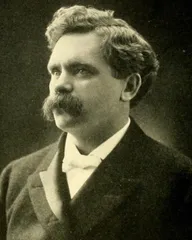
■ PRESIDENT JOSEPH F. SMITH Photo taken May 26, 1874, by Lauritz Olsen & Co., Copen- ^= hagen, Denmark [g
surprisingly short time he ac- quired sufficient knowledge of the language to speak it with ease to the natives. For three years and nine months he con- tinued his labors as traveling elder, and also acted as Presi- dent of three of the conferences in succession, the conference of Maui, Kohalo, and Hilo, respec- tively. In his labors upon the Islands he passed through a great illness, experienced fam- ine among the people, and was upon the Island of Hawaii at the great eruption of the volcano Mauna Loa, in 1855, when "the "area covered by lava from this eruption exceeded three hundred square miles, or about one- thirteenth of the area of the island of Hawaii." And now, after sixty-three years since he landed at Honolulu, a mission- ary fifteen years of age, and after many thousands of the na- tive islanders have embraced the gospel of Jesus Christ — many of whom have died in the faith, and faithful to their member- ship in the Church, — this man, now the honored and venerable President of the Church of Jesus Christ, has lived to see a holy temple erected in those islands, a temple it was his priv- ilege under the inspiration of the Lord to direct should be built there; and now, as we trust, and believe, and pray, he will soon dedicate it unto the Most High with becoming and acceptable ceremonies. In what light must our President appear in the eyes of the native Ha- waiians? and in the eyes of all who stop to contemplate his work, and the wonderful achievement of the Church of
CHRIST IN TRADITIONS OF AMERICAN NATIVE RACES 597 Jesus Christ in the New Dispensation in relation to the natives of these Islands? How greatly has President Smith been blessed to see the successful termination of so great a work among a people he has always loved since that first mission among them, and who have loved and do now greatly love him ! Long may he live to love and be loved by them, and the whole household of faith. Long may the temple in Hawaii stand a blessing to the house of Israel on the islands of the sea, and to those who shall visit them. Long may it stand a monument in the western world to Jesus the Christ. And while it will be, from the nature of it, a monument to the Christ, it will also be more fruitful of in- spiration, and of blessing, and of salvation to men both living and dead than the "Christ of the Andes," or any other man- conceived form of monument, be it church, or cathedral, or peace-palace, or statue, however beautiful in design, or nobly executed; for in this Hawaiian temple, as in all temples of the New Dispensation, the living Christ shall be. Here his present altars are to be found, where God and man communion hold. Here baptisms for the dead are performed, and the sealing ordi- nances administered that link together the families of men, and unite generations and tribes of men together, according to their order. Here knowledge of the fulness of the holy Priesthood is re- stored, and man endowed with its powers. In these holy temples will be held the solemn assemblies, the memorials for the sac- rifices by the sons of Levi, and the oracles given in the most holy places wherein are received conversations and statutes and judg- ments "for the beginning of the revelations and foundations of Zion, and for the glory, honor, and endowment of all her muni- cipals."0 These considerations make the temples of the New Dis- pensation monuments to the Christ, wherein the presence and power and salvation of God are made manifest. Doc. & Cov. Sec. 124:39, see also context from verse 25-50.