Original Sin and Preexistence
Improvement Era, vol. 20, no. 5, March 1917, pp. 401 to 404
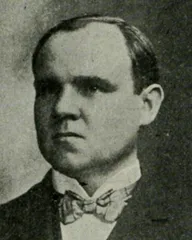
Original Sin and Preexistence
By Elder James E. Talmage
Are all to Suffer from Original Sin Eternally?
We believe that men will be punished for their own sins, and not for Adam's transgression. Belief in original sin, and its dread incubus as a burden from which none can escape, has for ages cast its depressing shadow over the human heart and mind. Accepting as fact the account outlined in Genesis concerning the transgression of the parents of the race, every thoughtful reader must have wondered as to whether he is to suffer throughout this life and beyond for a deed in which he had no part, and for which, according to his natural conception of justice and right, he was not even indirectly responsible. If he assumes an affirmative answer to his honest query, he must have stood aghast at the seeming injustice of it all. The Scriptures proclaim in definite terms the fact of individual responsibility, and as an indispensable consequence, the Free Agency of Man. Freedom to choose or reject and account- .
ability for the choice go hand in hand. The word of Divine revelation made the matter plain very early in the history of humankind. To evil-hearted Cain the Lord said: "// thou doest well, shalt thou not be accepted? And if thou doest not well, sin lieth at the door" (Gen. 4:7). A knowledge of good and evil is essential to progress, and the school of experience in mortality has been provided for the acquirement of such knowledge. The Divine purpose was thus enunciated by an ancient Hebrew prophet:
"Wherefore, the Lord God gave unto man that he should act for himself. Wherefore man could not act for himself, save it should be that he was enticed by the one or the other. * * * Wherefore, men are free according to the flesh; and all things are given them which are expedient unto man. And they are free to choose liberty and eternal life, through the great mediation of all men, or to choose captivity and death, according to the captivity and power of the devil; for he seeketh that all men might be miserable like unto himself" (Book of Mormon, 2 Nephi 2:16 and 27.)
*Articles of this class are appearing in a number of leading daily papers of the Nation. Readers of the Era will appreciate these selections. Editors.
402 IMPROVEMENT ERA
And a later prophet voiced the eternal truth as addressed to his wayward fellows:
"And now remember, remember, my brethren, that whosoever perisheth, perisheth unto himself; and whosoever doeth iniquity, doeth it unto himself; for behold, ye are free; ye are permitted to act for yourselves; for behold, God hath given unto you a knowledge, and he hath made you free; He hath given unto you that ye might know good from evil, and he hath given unto you that ye might choose life or death" (Book of Mormon, Helaman 14:30, 31).
But, many have asked how can man be regarded as free to choose right or wrong when he is predisposed to evil through the heritage of original sin bequeathed to him by Adam? Heredity at most is but a tendency, not compulsion; and we have no warrant for doubt in the light of revealed truth concerning the inherent justice and mercy of God that every element of cause or inflicted tendency will be taken into righteous account in the judgment of each and every soul. The man who can intelligently ask or consider the question framed above shows his capability of distinguishing between good and evil, and can not consistently excuse himself for wilful wrongdoing. Our first parents disobeyed the command of God by indulging in food unsuited to their condition; and, as a natural consequence, they suffered physical degeneracy, whereby bodily weakness, disease, and death came into the world. Their posterity have inherited the resultant ills, to all of which we now say flesh is heir; and it is true that these human imperfections came through disobedience, and are therefore the fruits of sin. But as to accountability for Adam's transgression, in all justice Adam alone must answer. The present fallen status of mankind, as expressed in our mortal condition, was inaugurated by Adam and Eve; but Divine justice forbids that we be accounted sinners solely because our parents transgressed. Though the privations, the vicissitudes, and the unrelenting toiJ enforced by the state of mortal existence be part of our heritage from Adam, we are enriched thereby; for in just such conditions do we find opportunity to develop the powers of soul that shall enable us to overcome evil, to choose the good, and to win salvation and exaltation in the mansions of our lather. If the expression "original sin" has any definite signification it must be taken to mean the transgression of our parents in
Eden. We were not participators in that offense. We are not inheritors of original sin, though we be subjects of the consequences. The millions who have been slaughtered and are today falling on the battlefields of the greatest war in history, and
ORIGINAL SIN AND PREEXISTENCE 403
those other and more millions of helpless dependents who have endured such agonies as to make of death a blessed relief, are all involved in the frightful results of the precipitation of war by their respective rulers; yet who can doubt that when a just accounting is called, those who brought about the carnage and the suffering shall be made to answer, not the irresponsible victims? And to everyone who has suffered blamelessly, He who notes even the sparrow's fall shall give full meed of recompense. Why waste time and effort in bewailing what Adam did? Better is it to face like men the actual conditions of our existence and to meet the requirements of righteous living. From the effects of Adam's transgression full redemption is assured through the atonement wrought by Jesus Christ our Lord. "For as in Adam all die, even so in Christ shall all be made alive" (I Cor. 15:22).
WE LIVED BEFORE WE WERE BORN Our Primeval Childhood. The Preexistence of the Christ and of all Mankind
It is a grievous error to assume that mortal birth marks the beginning of one's individual existence. Quite as reasonable is it that death means annihilation of the soul. The preexistent or antemortal state of man is as plainly affirmed by Scripture as is the fact of life beyond the grave. We are too prone to regard the body as the man, and this mistake breeds the thought that life in the flesh is all there is to existence. There is in man an immortal spirit that existed as an intelligent being before the body was begotten, and that shall continue to exist as the same immortal individual after the body has gone to decay. Divine revelation attests the solemn truth that man is eternal. No one who accepts the Holy Bible as the word of God can consistently deny the preexistence of the Lord Jesus Christ. In the first chapter of the Gospel written by John, Christ is designated as the Word, and the Savior's preexistence and primeval Godship are thus set forth: "In the beginning was the Word, and the Word was with God, and the Word was God." We read further: "And the Word was made flesh, and dwelt among its" (John 1:1 and 14). Our Lord's personal testimony is to the same effect. Of the disciples He asked: "What and if ye shall see the Son of Man ascend up where he was before?" (John 6:62). And on another occasion He averred: "I came forth from the Father, and am come into the world: again, I leave the world, and go to the Father" (John 16:28). In solemn prayer He implored, "And
404 IMPROVEMENT ERA
now, O Father, glorify thou me with thine own self with the glory which Ibad with Thee hefore the world was" (John 17:5). Nevertheless, as to earthly birth Christ was born a Child and lived to maturity as a Man among men. Even as His bodily birth was the union of a preexistent spirit with a tabernacle of flesh and bones, such also is the birth of every human being. Everyone of us was known by name and character to the Father, who is "the God of the spirits of all flesh" (Numbers 16:22; 27:16), in our antemortal or primeval childhood; and from among the hosts of His unembodied children God chose for special service on earth such as were best suited to the accomplishment of His purposes. In illustration consider the Lord's definite revelation to Jeremiah the prophet: "Before I formed thee in the belly I knew thee; and before thou earnest forth out of the womb I sanctified thee, and I ordained thee a prophet unto the nations" (Jer. 1:5). More than twelve centuries before Jeremiah's time God revealed unto Abraham the fact of the preexistence of the spirits of mankind, as also the diverse capacities of those spirits, and the Divine purpose in preparing the earth for their habitation. Thus runs the record:
"Now the Lord had shown unto me, Abraham, the intelligences that were organized before the world was; and among all these there were many of the noble and great ones; And God saw these souls that they were good, and he stood in the midst of them, and he said : These I will make my rulers; for he stood among those that were spirits, and he saw that they were good; and he said unto me: Abraham, thou art one of them; thou wast chosen before thou wast born. And there stood one among them that was like unto God, and he said unto those who were with him: We will go down, for there is space there, and we will take of these materials, and we will make an earth whereon these may dwell; And we will prove them herewith, to see if they will do all things whatsoever the Lord their God shall command them; And they who keep their first estate shall be added upon; and they who keep not their first estate shall not have glory in the same kingdom with those who keep their first estate; and they who keep their second estate shall have glory added upon their heads forever and ever" (Pearl of Great Price, Abraham 3:22-26).
Our life in the flesh is but one stage in the course of- the soul's eternal progress, a link connecting the eternities past with the eternities yet to come. The purpose of our mortal probation is that of education, training, trial, and test, whereby we demonstrate whether we will obey the commandments of the Lord our God and so lay hold on the boundless opportunities of advancement in the eternal worlds, or elect to do evil and forfeit the boon of citizenship in the Kingdom of Heaven. The condition upon which mankind may have place in that Kingdom is compliance with the requirements laid down by