The Parable of the Broken Flask
Improvement Era, vol. 19, no. 11, September 1916, pp. 959 to 960
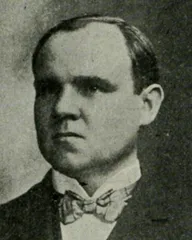
— The Parable oi the Broken Flask TOLD BY JAMES E. TALMAGE When a youth I left my Utah home and journeyed to the far East to attend college. I matriculated at Lehigh University in Pennsylvania, an institution known then and since for the thoroughness of its courses. For years I had worked, and for a shorter period had taught, with inadequate facilities in an improvised and poorly equipped laboratory. At Lehigh I found myself for the first time in a splendid environment, with all needed accessories of apparatus and material at hand. Every student was required to make a cash deposit sufficient to cover probable costs of breakage and consumption in the laboratory and he was then free to call for such instruments and ; reagents as his appointed work required, with the proviso that all he returned in good condition would be credited to his account and such as he failed to return would be duly charged. I had no money to spare. With close exactitude I had calculated on probable expenses and I was conscious of a deter- ; mination to make a good record both as to scholarship and to promptness and honesty in meeting all pecuniary obligations. I was the first "Mormon" boy to go from our Latter-day Saint schools to the colleges of the East and in some way I felt ; — humbly, not egotistically that I had to maintain and if possible to enhance, certainly not to degrade, the reputation of my people. During the first week of my laboratory experience in college I had the misfortune to break a large Florence flask — a vessel of thin glass such as is used in many chemical operations, and in that day a more costly utensil than at present. By reference to the price list I ascertained that my carelessness — or perhaps I — should say my unskilfulness, for I had tried to be careful would cost me a dollar. And I would have you know that a dollar looked very big to me in those times. I was disheartened at the accident. Moreover it had caught me in a state of depression, for I was suffering acutely from a combined attack of two specific maladies, the symptoms of which I have since learned to diagnose with certainty in the case of — students who have come under my care homesickness and lovesickness. Disconsolately I gazed at the fragments of the flask, and then went off to indulge for a brief period in self-communion. In that hour of weakness and sorrow the evil one tempted me sorely. Through my troubled mind surged thoughts of dire
960 IMPROVEMENT ERA possibilities. What if should break a dollar flask every week, I or possibly oftener? My little store of money might be gone before the school year was half finished. Then I would have to give up, with work uncompleted and hopes defeated. Would it not be better to abandon my plan of laboratory training, and follow instead some minor courses in which only pencil, paper, and library books were needed ? Or, better still, why not give up college work altogether? Surely, there were many other fields in which opportunity for service could be found. Returning to the laboratory I looked ruefully at the broken glass still on my table. Just then one of the graduate students came to my side. I had heard the professors refer to him as a man to whom we could apply for help in their absence. Already T had come to admire his ability and technique. In the hearty way of college men he slapped me upon the back and said "Cheer up, old fellow. Don't mind a little mishap like this. I broke many a flask, and more costly apparatus too, before I learned to do things in the right way". His words inspired encouragement and determination. If he, a graduate, now engaged in research and original investigation, he, the model worker whose ways we were told to emulate, if he, to whom the instructors pointed as their able substitute, broke expensive glassware and yet succeeded, why could not I go on? I went on, and in time felt fairly secure in manipulating the most fragile apparatus with a minimum of breakage. The custom of flaunting coats of arms and family insignia has happily passed. But, had I to select a device to be emblazoned on shield or door, on carriage panel or book mark, supposedly expressive of some determining circumstance in my life, I should be inclined to choose a broken flask for the recollection ; of that grievous breakage in the college laboratory has been a means of heartening and uplift in many a crisis of despondency So mav the storv be to those who read.