The Philosophical Basis of "Mormonism"
Improvement Era, vol. 18, no. 11, September 1915, pp. 947 to 964
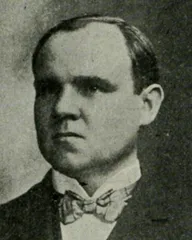
Improvement Era Vol. XVIII SEPTEMBER, 1915 No. 11 The Philosophical Basis of "Mor monism"' BY ELDER JAMES E. TALMAGE, OF THE COUNCIL OF THE TWELVE Permit me to explain that the term "Mormon" with its sev- eral derivatives, is no part of the name of the Church with which it is usually associated. It was first applied to the Church as a convenient nick-name, and had reference to an early publication, "The Book of Mormon" ; but the appellative is now so generally current that Church and people answer readily to its call. The proper designation of the so-called "Mormon" Church is The Church of Jesus Christ of Latter-day Saints. The philosophy of its religious system is largely expressed in its name. The philosophical foundation of "Mormonism" is constructed upon the following outline of facts and premises : 1. The eternal existence of a living personal God; and the pre- existence and eternal duration of mankind as His literal offspring. 2. The placing of man upon the earth as an embodied spirit to undergo the experiences of an intermediate probation. 3. The transgression and fall of the first parents of the race, by which man became mortal, or in other words was doomed to suffer a separation of spirit and body through death. 4. The absolute need of a Redeemer empowered to overcome death and thereby provide for a reunion of the spirits and bodies of mankind through a material resurrection from death to immortality. 5. The providing of a definite plan of salvation, by obedience to which man may obtain remission of his sins, and be enabled to ad- vance by effort and righteous achievement throughout eternity. 6. The establishment of the Church of Jesus Christ in the "merid- ian of time", by the personal ministry and atoning death of the fore- ordained Redeemer and Savior of mankind, and the proclamation of His saving Gospel through the ministry of the Holy Priesthood dur- ing the apostolic period and for a season thereafter. *An address delivered by invitation before the Congress of Re- ligious Philosophies, held in connection with the Panama-Pacific Inter- national Exposition, San Francisco, California, July 29, 1915.
- The general "falling away" from the Gospel of Jesus Christ, by which the world degenerated into a state of apostasy, and the Holy Priesthood ceased to be operative in the organizations of sects and churches designed and effected by the authority of man. 8. The restoration of the Gospel in the current age, and the re- establishment of the Church of Jesus Christ by the bestowal of the Holy Priesthood through Divine revelation. 9. The appointed mission of the restored Church of Jesus Christ to preach the Gospel and administer in the ordinances thereof amongst all nations, in preparation for the near advent of our Savior Jesus Christ, who shall reign on earth as Lord and King. 1. As its principal cornerstone "Mormonism" affirms the existence of the true and the living God ; the Supreme Being, in whose image and likeness man has been created in the flesh. We hold it to be reasonable, scriptural, and true, that man's period of earth-life is but one stage in the general plan of the soul's progression ; and that birth is no more the beginning than is death the close of individual existence. God created all things spiritually before they were created temporally upon the earth ; and the spirits of all men lived as intelligent beings, endowed with the capacity of choice and the rights of free agency, before they were born in flesh. They were the spirit children of God. It was their Divine Father's purpose to provide a means by which they could be trained and developed, with opportunity to meet, combat, and overcome evil, and thus gain strength, power and skill, as means of yet further development through the eternities of the endless future. For this purpose was the earth created, whereon, as on other worlds, spirits might take upon themselves bodies, living in probation as candidates for a higher and more glorious future. These unembodied spirits were of varied qualifications, some of them noble and great, fit for leadership and emprise of the highest order, others suited rather to be followers, but all capaci- tated to advance in righteous achievement if they would. No one professing a belief in Christianity can consistently accept the Holy Scriptures as genuine and deny the preexistence of the Christ, or doubt that before the birth of the Holy One as Mary's Babe in Bethlehem of Judea, He had lived with the Father as an unembodied spirit, the Firstborn of the Father's children. So lived or live the hosts of spirits who have taken or yet shall take bodies of flesh and bones. Christ, while a man among men, repeatedly affirmed the fact of His antemortal life — that He came forth from the Father, and would return to the Father on the com- pletion of His mission in mortality. John the Revelator was shown in vision some of the scenes that had occurred in the world of unembodied spirits even before the beginning of human history. He saw the spirits that rebelled against God, under the leadership of Lucifer, a son of the morn-
THE PHILOSOPHICAL BASIS OF "MORMONISM" 949 ing, later known as Satan, the dragon ; and he witnessed the strug- gle between those rebellious hosts and the army of loyal and obe- dient spirits who fought under the banner of Michael the arch- angel. We read : "And there was war in heaven ; Michael and his angels fought, and the devil fought, and his angels." The vic- tory was with Michael and his hosts, who by their allegiance and valor made good their title as victors in their "first estate", re- ferred to by Jude, while Satan and his defeated followers, who "kept not their first estate", were cast out upon the earth and be- came the devil and his angels, forever denied the privileges of mortal existence with its possibilities of eternal advancement. The cause of the great antemortal "war in heaven" was the rebellion of Lucifer following the rejection of his plan whereby it was proposed that mankind be saved from the dangers and sins of their future mortality, not through the merit of struggle and endeavor against evil, but by compulsion. Satan sought to de- stroy the free agency of man ; and in the primeval council of the angels and the Gods he was discredited ; while the offer of the Well Beloved Son, Jehovah, afterward Jesus the Christ, to insure the free agency of man in the mortal state, and to give Himself a sacrifice and propitiation for the sins of the race, was accepted, and was made the basis of the plan of salvation. The spirits who kept their first estate were to be advanced to the second, or mortal estate, to be further tested and proved, withal, and to demonstrate whether they would observe and keep the commandments which the Lord their God should give them, with the assurance and promise that all who fill the measure of their second estate, "shall have glory added upon their heads for- ever and ever." 2. The advancement of the spirit-children of God from their first to their second estate was inaugurated by the creation of man upon the earth, whereby the individual spirit was clothed in a body of flesh and bones, consisting of the elements of earth, or as stated in Genesis, made of the dust of the earth. With the ways and means by which this creation was wrought we are not especially concerned at this point. The spirit of the first man, Adam, was tabernacled in a body of earthly material ; and his remembrance of an earlier existence and of his former place amongst the unembodied was suspended, so that a thick veil of forgetfulness fell between his earth-life and his past. Man and woman thus became tenants of earth, and received from their Creator power and dominion over all inferior creations. They were given commandment and law, with freedom of ac- tion and agency of choice. In a measure, they were left to them- selves to choose the good or the evil, to be obedient or disobedient to the laws governing their second estate, or embodied condition.
Experiences unknown in the preexistent state crowded upon the first parents of the race in their changed condition and new en- vironment; and they were subjected to test and trial. Such was the purpose of their existence on earth. To them as also to their unnumbered posterity — the entire race of mankind — this present life is a connecting link, an intermediate and probationary state, uniting the eternity of the past with that of the future. We, the human family, literally the sons and daughters of divine Parents, the spiritual progeny of God our Eternal Father, and of our God Mother, are away from home for a season, studying and working as pupils duly matriculated in the University of Mortality, hon- orable graduation from which great institution means an exalted and enlarged sphere of activity and endeavor beyond. 3. Prominent among the commandments given to the par- ents of the race in Eden was that forbidding their eating of food unsuited to their condition. The natural and inevitable result of disobedience in this particular was set before them as a penalty — that, should they incorporate into their bodies the foreign sub- stances of earth contained in the food against which they were sol- emnly cautioned, they would surely die. True, they could not fail by violation of this restriction to gain experience and knowl- edge ; and the forbidden food is expressively designated as the fruit "of the tree of the knowledge of good and evil." They disobeyed the commandment of God, and thus was brought about the Fall of Man. The bodies of both woman and man, which when created were perfect in form and function, now became degenerate, liable to the physical ailments and weaknesses to which flesh has ever since been heir, and subjects for eventual dissolution or death. The arch-tempter through whose sophistries, half-truths, and infamous falsehoods Eve had been beguiled, was none other than Satan, or Lucifer, that rebellious and fallen "son of the morning", whose proposal involving the destruction of man's liberty had been rejected in the council of the heavens, and who had been "cast out into the earth", he and all his angels as unembodied spirits, never to be tabernacled in bodies of their own. As an act of diabolic reprisal following his rejection, his defeat by Michael and the heavenly hosts, and his ignominious expulsion from heaven, Satan planned to destroy the bodies in which the faithful spirits — those who had kept their first estate — would be born ; and his beguilement of Eve was but an early stage of that in- fernal scheme. Death has come to be the universal heritage ; it may claim its victim in infancy or youth, in the period of life's prime, or its summons may be deferred until the snows of age have gathered upon the hoary head ; it may befall as the result of accident or
THE PHILOSOPHICAL BASIS OF "MORMONISM" 951 disease, by violence, or as we say, through natural causes ; but come it must, as Satan well knows ; and in this knowledge is his present though but temporary triumph. But the purposes of God, as they ever have been and ever shall be, are infinitely su- perior to the deepest designs of men or devils ; and the Satanic machinations to make death inevitable, perpetual and supreme were provided against even before the first man had been created in the flesh, The atonement to be wrought by Jesus the Christ was ordained to overcome death and to provide a means of ran- som from the power of Satan. 4. From what has been said it is evident that "Mormonism" accepts the scriptural account of the creation of man and that of the Fall. We hold that the Fall was a process of physical de- generacy, whereby the body of man lost its power to withstand malady and death, and that with sin death entered into the world. We hold that the Fall was foreseen of God, and that it was by Divine wisdom turned to account as the means by which His em- bodied children would be subjected to the foreappointed test and trial through which the way to advancement, otherwise impossi ble, would be opened to them. Let it not be assumed, however, that the fact of God's fore- knowledge as to what zvould be under any given conditions, is a determining cause that such must be. Omnipotent though He be. He permits much that is contrary to His will. We cannot believe that vice and crime, injustice, intolerance, and unrighteous dom- ination of the weak by the strong, the oppression of the poor by the rich, exist by the will and determination of God. It is not His design or wish that even one soul be lost ; on the contrary it was and is His work and glory "to bring to pass the immortality and eternal life of man." So also, it is not God's purpose to inter- fere with, far less to annul, the free agency of His children, even though those children prostitute their Divine birthright of free- dom to the accomplishment of evil, and the condemnation of their souls. Before man was created in the flesh the Eternal Father fore- saw that in the school of life some of His children would suc- ceed and others fail ; some would be faithful and others false ; some would elect to tread the path of righteousness while others would follow the road to destruction. He further foresaw that death would enter the world, and that the possession of bodies by His children would be of but brief individual duration. He saw that His commandments would be disobeyed and His law vio- lated ; and that men, shut out from His presence and left to them- selves, would sink rather than rise, would retrograde rather than advance, and would be lost to the heavens. It was necessary that a means of redemption be provided, whereby erring man might
make amends, and by compliance with established law achieve salvation and eventual exaltation in the eternal worlds. The power of death was to be overcome, so that, though men would of neces- sity die, they would live anew, their spirits clothed with immor- talized bodies over which death could not again prevail. While recognizing the transgression of Adam as an event by which the race has been brought under the penalty of death, we hold that none but Adam shall be held accountable for his disobe- dience. True, the penalty incident to that transgression is oper- ative upon all flesh, and upon the earth and all the elements there- of ; but in the great reckoning, which men call the judgment, the environment and determining conditions under which each soul has lived, the handicap in the race of mortal strife and endeavor will be taken into due account. "Wherefore, as by one man sin entered into the world, and death by sin ; and so death passed upon all men, for that all have sinned : * * * Therefore as by the offense of one judgment came upon all men to condemna- tion ; even so by the righteousness of one the free gift came upon all men unto justification of life." (Romans 5:12, 18.) We affirm that man stands in absolute need of a Redeemer, for by self-effort alone he is utterly incapable of lifting himself from the lower to a higher plane. Even as lifeless mineral particles can be incorporated into the tissues of plants only as the plant reaches down into the lower world and through its own life pro- cesses raises the mineral to its own plane, or as vegetable sub- stance may be woven into the body of the animal only as the animal by the exercise of its own vital functions assimilates the vegetable, so man may be lifted from his fallen earthly state char- acterized by human weaknesses, bodily frailties, and a persistent tendencv to sink into the quagmire of sin, only as a power above that of humanity reaches down and helps him to rise. We affirm as a fundamental principle of Christian philosophy the Atonement wrought by Jesus Christ; and we accept in its literal simplicity the scriptural doctrine thereof. Through the Atonement the bonds of death are broken, and a way is provided for the annul- ment of the effects of individual sin. We hold that Jesus Christ was the one and only Being fitted to become the Savior and Re- deemer of the world, for the following reasons : (1) He is the only sinless man who has ever walked the earth. (2) He is the Only Begotten of the Eternal Father in the flesh, and therefore the only Being born to earth possessing in their fulness the attributes and powers of both Godhood and man- hood. (3) He is the One who had been chosen in the primeval council of the Gods and foreordained to this service. No other man has lived without sin and therefore wholly free
THE PHILOSOPHICAL BASIS OF "MORMONISM" 953 from the dominion of Satan. Jesus Christ was the one Being to whom death, the natural wage of sin, was not due. Christ's sin- lessness rendered Him eligible as the subject of the atoning sac- rifice whereby propitiation could be made for the sins of all men. No other man has possessed the power to hold death in abey- ance, and to die only as he willed so to do. We accept in their literalness and simplicity the scriptural declarations to the effect that Jesus Christ possessed within Himself power over death. "For as the Father hath life in himself; so hath he given to the Son to have life in himself" we read (John 5:26) ; and again: "Therefore doth my Father love me, because I lay down my life that I may take it again. No man taketh it from me, but I lay it down of myself. I have power to lay it down, and I have power to take it again." (John 10:17, 18.) This unique attribute was the natural heritage of Jesus the Christ, He being in His embodied state the Son of a mortal mother and of an immortal Sire. No mortal man was His father. From Mary He inherited the attributes of a mortal being, includ- ing the capacity to die ; from His immortal Father He derived the power to live in the flesh indefinitely, immune to death except as He submitted voluntarily thereto. No other being has been born to earth with such investiture of preappointment and fore- ordination to lay down his life as a propitiatory atonement for the race. Prominent among the teachings of Jesus Christ in the course of His earthly ministry was the reiterated avowal that He had come down from heaven not to do His own will but the will of Him by whom He was sent. The atonement accomplished by the Savior was a vicarious service for mankind, all of whom had become estranged from God through sin ; and through that sacrifice of propitiation, a way has been opened for reconciliation whereby man may be brought again into communion with God, and be made able to live and advance as a resurrected being in the eternal worlds. This fundamental conception is strikingly expressed in our Eng- lish word atonement, which, as its syllables indicate is at-one- ment, "denoting reconciliation, or the bringing into agreement of those who had been estranged." As already indicated the effect of the atonement is two- fold: ( 1 ) The universal redemption of the human race from death, which was invoked by the transgression of our first earthly par- ents ; and (2) Salvation, whereby relief is offered from the effects of individual sin. The victory over death was inaugurated by the resurrection of Jesus Christ, who had been crucified and slain. He was the first to rise from death to immortality and is therefore rightly
called "the firstfruits of them that slept" (1 Cor. 15:20) ; "the firstborn from the dead" (Col. 1 :18) ; "the first begotten of the dead" (Rev. 1:5). Instances of the raising of the dead to life are of record as antedating the death and resurrection of Christ ; but such were cases of restoration to mortal existence ; and that the subjects of such miraculous reanimation had to die again is certain. Immediately following the resurrection of Jesus Christ, many of the righteous dead were resurrected, and appeared in their ma- terial bodies of tangible flesh and-bones. The Holy Bible affirms such instances on the eastern hemisphere, and the Book of Mor- mon records analogous occurrences in the western world. The res- urrection of the dead is to be universal, extending alike to all who have tabernacled in flesh upon the earth, irrespective of their state, whether of righteousness or of sin ; but all shall be called from the state of death in order, according to their condition. So taught the Master, when He said, following His avouchment that the Gospel should be preached even to those already dead: "Mar- vel not at this : for the hour is coming, in the which all that are in the graves shall hear his voice, And shall come forth ; they that have done good, unto the resurrection of life ; and they that have done evil, unto the resurrection of damnation." (John 5:28,29.) As part of a Divine revelation given in modern times we read : "They who have done good in the resurrection of the just ; and they who have done evil in the resurrection of the unjust." (Doc- trine and Covenants 76:17.) The assured resurrection of all who have lived and died on earth is a foundation stone in the structure of "Mormon" philos- ophy. "Blessed and holy is he that hath part in the first resurrec- tion : on such the second death hath no power, but they shall be priests of God and of Christ, and shall reign with him a thousand years." (Rev. 20:6.) 5. In addition to the inestimable boon of redemption from death and the grave, the Atonement effected by Jesus Christ is universally operative in bringing a measure of salvation — what may be called general salvation — to the entire posterity of Adam. in that all men are thereby exonerated from the direct effects of the Fall in so far as such effects have been the cause of evil in their lives. Man is individually answerable for his own transgres- sions alone, — the sins for which he, as a free agent, capacitated and empowered to choose for himself, commits culpably and on his own account or volition. As an essential corollary of this fundamental principle, it fol- lows that all children who die before they reach the age of ac- countability are not alone redeemed from death through resur- rection to an endless life, with spirits and bodies inseparably
THE PHILOSOPHICAL BASIS OF "MOPMONISM" 955 united, but also from any possible effect of inherited tendency to sin. It will be admitted, without disputation, I take it, that chil- dren are born heirs to the inescapable birthright of heredity. Ten- dencies either good or evil, blessings and curses are transmitted from generation to generation. While heredity is to be regarded as tendency or capability only, and not as assurance and absolute predestination, nevertheless all children are born subject to the algebraic sum of the traits and tendencies of their ancestors, com- bined with their own specific and personal characteristics by which they were distinguished while yet unembodied spirits. From this heritage of sinward tendency all children are redeemed through the Atonement of Christ; and justly so, for the debt came to them as a legacy and is paid for them. They require no baptismal cleansing nor other ordinance of admittance into the kingdom of God, for being incapable of repentance, and not having attained unto the condition of accountability, they are innocent in the sight of God, and will be counted among the redeemed and the sanctified. But there is a special or individual effect of the Atonement, by which every soul that has lived in the flesh to the age and con- dition of responsibility and accountability may place himself with- in the reach of Divine mercy and obtain absolution for personal sin by compliance with the laws and ordinances of the Gospel as prescribed and decreed by the Author of this plan of salvation. The indispensable conditions of individual salvation are : ( 1 ) Faith in the Lord Jesus Christ ; that is, acceptance of His Gospel and allegiance to His commandments, and to Him as the one and only Savior of men. (2) Repentance, embracing genuine contri- tion for the sins of the past and a resolute turning away therefrom with a determination to avoid, by all possible effort, future sin. (3) Baptism by immersion in water, for the remission of sins ; the ordinance to be administered by one having the authority of the Priesthood, that is to say the right and commission to thus offi- ciate in the name of Deity. (4) The higher baptism of the Spirit or bestowal of the Holy Ghost by the authorized imposition of hands by one holding the requisite authority — that of the higher or Melchizedek Priesthood. To insure the salvation to which compliance with these fundamental principles of the Gospel of Christ makes the repentant believer eligible, a life of continued resistance to sin and observance of the laws of righteousness is requisite. We hold that salvation from sin is obtainable only through obedience, and that while the door to the kingdom of God has been opened by the sacrificial death and by the resurrection of our Lord the Christ, no man may enter there except by his personal and voluntary application expressed in terms of obedience to the prescribed laws and ordinances of the Gospel. Christ "became the
author of eternal salvation to all them that obey him" (Heb. 5 :9). And further: God "will render to every man according to his deeds ; To them who by patient continuance in well doing seek for glory and honour and immortality, eternal life : But unto them that are contentious, and do not obey the truth, but obey un- righteousness, indignation and wrath, tribulation and anguish, upon every soul of man that doeth evil, * * * * For there is no respect of persons with God." (Romans 2:6-11.) "Mormon" philosophy holds that salvation, thus made acces- sible to all through faith and works, implies no uniformity of condition as to future happiness and glory, any more than does condemnation of the soul mean the same state of disappointment, remorse and misery to all who incur that dread but natural pen- alty. We reject the unscriptural dogma that for resurrected souls there are but two places or states of eternal existence — heaven and hell — to the one or the other of which each shall be assigned according to the record of his deeds, whether good or bad, and however narrow the margin may appear on the balance sheet of his mortal life. "In my Father's house are many mansions," said the embodied Christ to His apostles, and "if it were not so, I would have told you. I go to prepare a place for you." (John 14:1-4.) The life we are to experience hereafter will be in righteous strictness the result of the life we lead in this world ; and as here men exhibit infinite gradations of faithful adherence to the truth, and of servility to sin, so in the world beyond the grave shall gradations exist. Salvation grades into exaltation, and every soul shall find place and condition as befits him. "Mormonism" af- firms, on the basis of direct revelation from God, that graded degrees of glory are prepared for the souls of men, and that these comprise in decreasing order the Celestial, the Terrestrial, and the Telestial kingdoms of glory, within each of which are orders or grades innumerable. These several glories — Celestial, Terres- trial, and Telestial — are comparable to the sun,, the moon and the stars, in their beauty, worth, and splendor. Such a condition was revealed to an apostle of olden time : "There are also celestial bodies, and bodies terrestrial : but the glory of the celestial is one, and the glory of the terrestrial is another. There is one glory of the sun, and another glory of the moon, and another glory of the stars: for one star differeth from another star in glory. So also is the resurrection of the dead." (1 Cor. 15:40-42.) Thus is it provided in the economy of God, that to progression there is no end. As a necessary consequence, man may advance by effort and by obedience to higher and yet higher laws as he may learn them through the eternities to come, until he attains the rank and status of Godship. "Mormonism" is so bold as to declare that such is
THE PHILOSOPHICAL BASIS OF "MORMONISM" 957 the possible destiny of the human soul. And why not? Is this possibility unreasonable? Would not the contrary be opposed to what we recognize as natural law ? Man is of the lineage of the Gods. He is the spirit offspring of the Eternal One, and by the inviolable law that living beings perpetuate after their kind, the children of God may become like unto their Parents in kind if not in degree. The human soul is a God in embryo; even as the crawling caterpillar or the corpse-like chrysalis embodies the po- tential possibilities of the matured and glorified imago. We assert that there was more than figurative simile, and instead thereof the assured possibility of actual attainment in the Master's words : "Be ye therefore perfect, even as your Father which is in heaven is perfect" (Matt. 5:48). The fact of man's eternal progression in nowise indicates a state of eventual equality on however exalted a plane ; nor does it imply that the progressive soul must in the eternal eons overtake those once far ahead of him in achievement. Advancement is not a characteristic of inferior status alone ; indeed, the increment of progress may be vastly greater in the higher spheres of activity. This conception leads to the inevitable deduction that God Him- self, Elohim, the Very Eternal Father, is a progressive Being, eternally advancing from one perfection to another, possessed as He is of that distinguishing attribute, which shall be the endow- ment of all who attain celestial exaltation — the power of eternal increase. 6. "Mormonism" incorporates as an essential part of its philosophy the scriptural account of the earthlv birth, life, minis- try, and death of Jesus Christ ; and affirms the fulfilment of proph- ecy in all the events of the Savior's earthlv existence and works. The time of His birth has been made a dividing line in the his- torv of the ages ; it was veritably the "meridian of time". Early in His ministry on earth He declared, and throughout His subse- quent vears repeatedly declared, that He had come in pursu- ance of foreordained plan and purpose — not to do His own will but that of the Father who sent Him. From the days of Moses down to the advent of Christ the people of Israel, who constituted the only nation professing to know and worship the true and the living God — "Jehovah wor- shipers" as they were distinctively called — had lived under the law of carnal commandments comprised in the Mosaic code. To Israel the law and the prophets were the scriptures of life, how- ever much the people may have departed therefrom through tra- ditional alterations and misconstruction. Christ came not to de- stroy the Law — for it was He who gave the Law — amidst the awful glory of Sinai — but to fulfil and supersede the Law by the Gospel. Aside from the transcendent work of atonement, Jesus
Christ taught the principles of the Gospel, and laid down in plainness the laws and ordinances essential to the salvation of mankind. He made clear the fact that the Law of Moses had been given as a preparation for the Gospel which He gave to Israel. He chose men for the work of the ministry ; in a special sense He chose twelve, whom He ordained and called Apostles. To them he committed power and authority not alone to preach and teach, to heal the sick, rebuke and cast out demons, but to build up the Church as a divinely established institution. These men were assured that through the Holy Ghost even after the Lord's ascension they would be kept in communion and communication with Christ and the Father ; and that upon the foundation of such close relationship, viz., direct revelation from God to man, would the Church of Jesus Christ be reared. That the apostles realized the actuality of their authority, and that of the responsibility resting upon them by virtue of their ordination to the Holy Priesthood, is evidenced by their prompt action following the As- cension, in filling the vacancy existing in the body as a conse- quence of Iscariot's apostasy and suicide, and in other administra- tive acts. When the Holy Ghost was given unto the Twelve, at the memorable time of Pentecost, the gifts, graces and powers of the Holy Priesthood were manifested through those men as never had been before ; and the proof of their wondrous investiture of actual power and inherent authority continued throughout their lives. The apostles carried the Gospel of Jesus Christ to every known nation, establishing church communities or branches of the Church wherever possible. For each of these branches, the re- quisite officers were chosen and ordained, such as high priests, elders, bishops, priests, teachers, and deacons ; while for more general supervision evangelists and pastors were commissioned with the powers of priesthood. So zealous and efficient were the apostles in their particular ministry, that the Gospel -of salvation was known to Jew and Gentile. Paul, writing approximately thirty years after the Ascension, declared that then the Gospel had been "preached to every creature under heaven" (Col. 1:23), which assertion we may reasonably construe as meaning that the Gospel message had been proclaimed so widely that all who desired might learn of it. The purpose of establishing the several graded offices of authority in the Church, and of installing therein men duly or- dained to the requisite order of priesthood, has been impressively stated as "for the perfecting of the Saints, for the work of the min- istry, for the edifying of the body of Christ" (Eph. 4:12). So necessary were the several offices to the proper administration of the affairs of the Church, that they were aptly compared to the several organs of a perfect human body (see 1 Cor. 12), all essen-
THE PHILOSOPHICAL BASIS OF "MORMONISM" 959 tial to a fulness of efficiency, and no one justified in saying to the other "I have no need of thee." 7. The apostolic ministry continued in the Primitive Church for about sixty years after the death of Christ, or nearly to the end of the first century of the Christian era. For some time there- after the Church existed as a unified body, officered by men duly invested by ordination in the authority of the Holy Priesthood ; though, even during the lifetime of some of the apostles, the leaven of apostasy and disintegration had been working. Indeed, hardly had the Gospel seed been sown when the enemy of all righteousness had started assiduously to sow tares in the field ; and so closely intimate was the growth of the two that any forc- ible attempt to extirpate the tares would have imperiled the wheat. The evidences of spiritual decline were observed with anguish by the apostles who, however, recognized the ful- filment of earlier prophecy in the declension, and added their own inspired testimony to the effect that even a greater falling away was impending. The apostasy progressed rapidly, in consequence of a co-oo- eration of disrupting forces without and within the Church. The dreadful persecution to which the earlv Christians were subjected, particularly from the reign of Nero to that of Diocletian, both inclusive, drove great numbers of Christians to renounce their allegiance to Christianity, thus causing a widespread apostasy from the Church. But far more destructive was the contagion of evil that spread within the body, manifesting its effects mainly in the following developments : () The corrupting of the simple principles of the Gospel of Christ bv admixture with the so-called philosophical systems of the times. (2) Unauthorized additions to the rites of the Church, and the introduction of vital changes in essential ordinances. (3) Unauthorized changes in Church organization and gov ernment. The result of the degeneracy so produced was to bring about an actual apostasy of the entire Church. Tn the earlv part of the fourth centurv, Constantine cast about the Church the mantle of state recognition and governmental pro- tection. Thou eh unbnntized and therefore no member of the Church, he proclaimed himself the head of the Church of Christ, and distributed at his pleasure the titles of office in the Holv Priesthood. Churchlv dignity was more soueht after than mili- tary distinction or honors of state. A bishop was more esteemed than a eeneral, and an archbishop than a prince. Soon the Church laid claim to temporal power, and in the course of the centuries became the supreme potentate over all earthly governments.
Revolt was inevitable, and early in the sixteenth century the Reformation was begun. One notable effect of this epoch-making movement was the establishment of the Church of England as an immediate result of a disagreement between Henry VIII and the Tope. By Act of Parliament the king was proclaimed the supreme head of the Church within his realm. The Church as an organiza- tion, whether Papal or Protestant, had become an institution of men. Of the Holy Priesthood, to which men were of old called of God and ordained thereto by those having authority through prior ordination, no longer existed among men. The name but not the authority of priesthood and priestly office remained. Bish- ops, priests, and deacons — so-called — were made or unmade at the will of kings. The awful fact of the universal apostasy, and the absence of Divine authority from the earth was observed and frankly admitted by many earnest and conscientious theologians. The Church of England, in her "Homily on Perils of Idolatry" officially affirmed the state of general degeneracy as follows : ''So that laity and clergy, learned and unlearned, all ages, sects, and degrees of men, women, and children of whole Christendom — an horrible and most dreadful thing to think — have been at once drowned in abominable idolatry ; of all other vices most detested cf God, and most demnable to man ; and that by the space of eight hundred years and more." The Book of Homilies dates from about the middle of the sixteenth century, and in it is thus officially set forth, that the so-called Church and in fact the entire religious world had been utterly apostate for eight centuries or more prior to the establishment of the Church of England. The apostasy had been divinely predicted ; its actuality is at- tested by a reasonable interpretation of history. 8. From the time of the Reformation, sects and churches have multiplied apace. On every side has been heard the cry, "Lo, here is Christ", or, "Lo, there". As the present speaker has written elsewhere : There are churches named from the circum- stances of their origin — as the Church of England ; others after their famous founders or promoters — as Lutheran, Calvinist, Wesleyan ; some are known by peculiarities of doctrine or plan of administration — as Methodist, Presbyterian, Baptist, Congre-v gationalist ; but down to the third decade of the nineteenth cen- tury there was no church on earth affirming name or title as the Church of Jesus Christ. The only organization called a church existing at that time and venturing to assert claim to authority by succession was the Catholic Church, which for centuries had been aoostate, and wholly bereft of divine authority or recogni- tion. If the 'Mother Church' be without a valid priesthood, and devoid of spiritual power, how can her offspring derive from her the rio-ht to officiate in the things of God? Who would dare to
THE PHILOSOPHICAL BASIS OF "MORMONISM" 961 affirm that man can originate a priesthood which God is bound to honor and acknowledge? Granted that men may and do create among themselves societies, associations, sects, and even 'churches' if they choose so to designate their religious organizations ; granted that they may prescribe rules, formulate laws, and devise plans of operation, discipline, and government, and that all such laws, rules, and schemes of administration are binding upon those who assume membership — granted all these rights and powers — whence can such human institutions derive the authority of the Holy Priesthood, without which there can be no Church of Christ? But the world was not to be forever bereft of the Church of Jesus Christ, nor of the authority of the Holy Priesthood. As surely as had been predicted the birth of the Messiah, and the great falling away from the Church of His founding, was the res- toration of the Gospel foretold as a characteristic feature of the last days, the dispensation of the fulness of times. John, apost1~ and revelator, saw in vision the foreappointed reopening of the windows of heaven in the last days, and thus affirmed : "And I saw another angel fly in the midst of heaven, having the everlast- ing gospel to preach unto them that dwell on the earth, and to every nation, and kindred, and tongue, and people, saying with a loud voice, Fear God and give glory to him ; for the hour of his judgment is come: and worship him that made heaven, and earth, and the sea, ani the fountains of water." (Rev. 14:6,7.) The Church of Jesus Christ of Latter-day Saints is founded upon the literal fulfilment of this prediction, — for prophecy it was, though worded as a record of what the prophet and revelator saw, — an event of a then future but now past time. "Mormonism" as a religious system would be incomplete, in- consistent, and consequently without philosophical basis, but for its solemn avouchment that the Gospel has been restored to earth and that the Church of Jesus Christ has been reestablished among men. The Church todav affirms to the world, that in 1820, there was manifested to Joseph Smith a theophany such as never before had been vouchsafed to man. He was but a youth at the time, liv- ing with his parents in the State of New York. Being confused and nuzzled by the "war of words and tumult of opinions" by which the many contending sects were divided, and realizing that not all could be right, he acted upon the admonition of James : "If any of you lack wisdom, let him ask of God, that giveth to all men liberally, and upbraideth not ; and it shall be given him" (James 1 :5.) In answer to the young man's earnest prayer as to which, if anv, of the discordant sects of the day was the Church of Christ, as he Folemnlv avows, both the Eternal Father and His Son Jesus Christ appeared to him in visible form, as distinct and glorified
Personages ; and the One, pointing- to the Other, said : "This is my Beloved Son. Hear Him." The Son of God, Jesus Christ, directed the young man to ally himself with none of the sects o~ churches of the day, for all of them were wrong and their creeps were an abomination in His sight, in that they drew near to Him with their lips while their hearts were far from Him, and because they taught for doctrines the commandments of men, having a form of godliness but denying the power thereof. Thus wi^ broken, by the voices of Eternal Beings, the long silence that had lain between the heavens and the earth incident to the apostasy of mankind. In 1820 there stood upon this globe one person who knew beyond doubt or peradventure, that the "orthodox" concep- tion of Deity as an incorporeal essence devoid of definite shape and tangible substance, was utterly false. Joseph Smith knew that both the Eternal Father and His glorified Son, Jesus Christ, were in form and stature like unto perfect men ; and that in their phys- ical image and likeness mankind had been created in the flesh. He knew further that Father and Son were individual Personages, — a fact abundantly averred by the Lord Jesus during His life on earth, but which had been obscured by the sophistries of men. Somewhat more than three years after the glorious appearing of the Father and the Son to Joseph Smith, the young revelator was visited by a heavenly personage, who revealed to him the place where lay the ancient record which since has been trans- lated through the gift and power of God and published to the world as the Book of Mormon. This volume contains a history of a division of the House of Israel, which had been led to the western continent centuries before the time of Christ. It is the an- cient scripture of the western continent, as the Holy Bible is the record of the dealings of God with His people on the eastern hemi- sphere. The Book of Mormon contains the Gospel of Christ in its fulness as given to the ancient inhabitants of this continent ; and in its restoration through the personal ministry of an angel sent from the presence of God, was fulfilled in part the vision- prophecy of John the Revelator of old. The Holy Priesthood, having been lost to mankind through the universal apostasy, could be made again operative and valid only by a restoration or rebestowal from the heavens. We affirm that the lesser or Aaronic Priesthood, including the Levitical order, was conferred upon Joseph Smith and his companion in the ministry, Oliver Cowdery, through personal ordination under the hands of John, known of old as the Baptist, who appeared to the two men as a resurrected being, and trans- mitted to them the authority by which he had ministered while in mortality. That order of Priesthood — the Aaronic — as John th" Baptist declared, holds the kevs of the Gospel of repentance and of baptism for the remission of sins.
THE PHILOSOPHICAL BASIS OF "MORMONISM" 963 We affirm that the higher or Melchizedek Priesthood was conferred upon Joseph Smith and Oliver Cowdery by ordination under the hands of those who, in the ancient apostolic period, held the keys of the Holy Apostleship, viz., Peter, James and John Under the authority so bestowed, the Church of Jesus Chris, has been reestablished upon the earth. To distinguish it from the Church as it existed in ancient apostolic days it has been named, and this also through direct revelation, The Church of Jesus Christ of Latter-day Saints. As an institution among men, as a body-corporate, it dates from April 6, 1830, on which day the Church was legally organ- ized at Fayette, Seneca county, New York, under the laws of the State. Only six persons figured as actual participants in the for- mal procedure of organization and incorporation, that number be- ing the minimum required by law in such an undertaking. Whatever may be the opinions of individuals, or the consen- sus of belief respecting the genuineness and validity of the claims set forth by the restored Church as to the source of the Priesthood it professes to hold, none can reasonably prefer the charge of in- congruity or inconsistency on scriptural grounds. It is axiomatic to say that no man can give or transmit an authority he does not himself possess. The authority of the Priesthood of Aaron was restored to earth by the being who held the keys of that power in the earlier dispensation — John the Baptist. The Holy Apos- tleship, comprising all the powers inherent in the Priesthood after the order of Melchizedek, was restored by those who held the presidency of that Priesthood prior to the apostasy, viz., Peter, James, and John. We further affirm, that in 1836 there appeared to Joseph Smith and Oliver Cowdery in the Temple at Kirtland, Ohio, other ancient prophets, each of whom authoritatively bestowed upon the two mortal prophets, seers, and revelators, the keys of the power by which he had ministered in the long past dispensation in which he had officiated. Thus came Moses and committed to the modern prophets the keys of the gathering of Israel after their long dispersion. Elias came, and gave the authority that had been operative in the dispensation of the Gospel of Abraham. Elijah followed, in literal fulfilment of Malachi's portentous prediction, and committed the authority of vicarious labor for the dead by which the hearts of the departed fathers shall be turned toward their yet living descendants, and the hearts of the children be turned toward the fathers, which labor, as affirmed by Mala- chi, was a necessary antecedent to the dawn of the great and dreadful day of the Lord, as otherwise the earth would be smitten with a curse at His coming. 9. The Church of Jesus Christ of Latter-day Saints, claim-
ing to be all that its name expresses or logically implies, holds that its special mission in the world today is to officiate in the author- ity of the Holy Priesthood by proclaiming the Gospel and admin- istering in the ordinances thereof amongst all nations, and this in preparation for the advent of the Lord Jesus Christ, who shall soon appear and assume His rightful place as King of kings and Lord of lords. Besides its missionary labor among the living, the Church, true to the commission laid upon it by Elijah, is continuously en- gaged in vicarious service for the dead, administering the ordin- ances of salvation to the living in behalf of their departed pro- genitors. Largely for this purpose the Church constructs Tem- ples, and maintains therein the requisite ministry in behalf of the dead. In the carrying out of the work committed to it, the Church is tolerant of all sects and parties, claiming for itself no right or privilege which it would deny to individuals or other organiza- tions. It affirms itself to be The Church of old established anew. Its message to the world is that of peace and goodwill — the mes- sage to come and partake of the blessings incident to the new and everlasting covenant between God and His children. Its warn- ing voice is heard in all lands and climes: Repent ye! Repent! for the Kingdom of Heaven is at hand. Such in scant outline is the philosophical basis of "Mormon- ism." The Sunken Isle No voice upleaps in a vibrant note To cleave the hush of the brooding glooms; Only a muffled whisper's rote Ebbs and flows in the dead-still rooms. Nor sound, nor light, nor motion rives The iron links of the isle-chained lives. Oh, brave young mariners, sailing bold With the main all blue, and the sun a-smile — Steer wide thy ships from the yawning hold Of the deep, dim caves of the sunken isle! For few come out of their depths to bring A crowning chord when the victors sing. Gird up thy ships with the strong white steel Of a Purity from its gales immune: No sunken caverns may draw the keel Of a bark with the currents of Truth attune. Their strength shall hold though the Hell-winds blow, And thy boats sail safe from the Isles of Woe! Josephine Spencer