“Prove Thy Faith by Thy Works”
Improvement Era, vol. 17, no. 10, August 1914, pp. 940 to 947
;
"Prove thy Faith by thy Works"
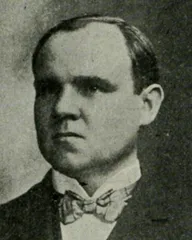
BY ELDER JAMES E. TALMAGE, OF THE COUNCIL OF THE TWELVE
Faith is a little word, a simple monosyllable with few letters.
Its derivation is beyond question. Its meaning in early English
is plain. Yet it is a word that is ofttimes misused, and which I
am sure is not infrequently misunderstood. It comes to us through
the Anglo-Saxon from the Latin, and is derived from the same
original as our word "fidelity." Faith, therefore, implies fidelity,
includes fidelity, is fidelity.
Much question has arisen as to the relation between faith
and belief, and there are many who claim that the two are es-
sentially the same. It is true that in some modern languages we
find but one word to express what in our rich tongue is expressed
by the two, faith and belief, the reader or the hearer being left to
the context to determine just which is meant. But to hold that
because of that fact our two words have the same meaning, is
to violate recognized laws of philology and rules of the right use
of English. It were as reasonable to say that because in French
there are no two words to express the essential difference between
a house and a home, that therefore there is no difference. Houses
are built of wood, of iron and stone and other materials of earth
homes are built of loving deeds and kind affection and sacrifice
and service, and yet in some of our modern tongues there are
not distinctive terms for the two.
I want to cite you to our best dictionary authority on that
matter, in view of the fact that not all are agreed as to just what
faith as a term really means. In its general use and sense it
has more than a theological application. We may have faith in
the undertakings of men. We may have faith in men themselves,
as well as in their words and their testimony. The most recent
and most reliable authority that I could cite, The New Standard
Dictionary, gives the definition of faith as follows:
—
Faith a firm conviction of the truth of what is declared by an-
other by way either of testimony or authority, without other evi-
dence; belief in what another states, affirms or testifies simply on
the ground of his truth or veracity, especially (as distinguished from
mere belief) practical dependence on a person, statement or thing as
trustworthy; fiducial as opposed to merely intellectual belief; trust,
*Sermon delivered at the afternoon session of the M. I. A. Con-
ference, Sunday, June 14, 1914. Reported for the Era by F. E. Barker.
:
"PROVE THY FAITH BY THY WORKS." 941
as faith in a friend (as sincere and true), faith in his advice (as with
and good), faith in his efforts (as likely to be efficacious)."
In the more restricted and theological usage, the word is
thus defined by the same authority.
"In theology faith means the assent of the mind or understand-
ing to the truth of what God has revealed; belief in the testimony of
God as contained in the Scriptures; a divinely wrought, loving and
hearty reliance upon God and his promise of salvation through Christ,
or upon the Christian religion as revealing the grace of God in
Christ, sometimes called justifying or saving faith, as, we are saved
by faith."
Concerning this justifying faith, I quote from the New
S chaff-Herzog Encyclopedia, wherein we read
"In general it may be said that there exists in modern Protestant
theology an agreement on the following points: 1. Faith does
not originate from logical processes but from an immediate inner
experience. 2. It is not a human achievement, and not the ac-
knowledgment of a human authority, but an effect of God through
his revelation."
It is admitted that in early English, belief was the equivalent
of what is now commonly called faith but in middle and modern
;
English, the term belief has been confined mainly to the purely
intellectual process, excluding the moral element of trust or con-
fidence embraced in faith. By way of illustration, faith in Jesus
Christ is belief in Jesus Christ, plus absolute confidence and trust
in him. It is admitted that a man may exercise a mental assent,
or give mental consent, to any proposition, and he may justly say
he believes it but if that be all, the man has belief only and not
;
faith. Belief is the mechanism, like a locomotive standing with
tank empty and fire-box cold upon the track faith is the fire and
;
the resulting steam that gives it power and makes it work such
miracles as had never been dreamed of in days of yore. Faith is
vitalized, energized, dynamic belief. What doth it profit a man
to sit down and say to himself that he believes a thing, or even
to profess aloud that he believes it? Is there such force in his _
mental assent as to accomplish anything? Strange, is it not,
that there are yet those who hold that the use of the term belief
in the Holy Scriptures means empty, intellectual, negative
be-
lief, and that alone? Because of the fact, already cited, that in
early English the term belief was used as a synonym of faith,
we
find it occurring and recurring in our translation of the
Scriptures
given to us as the Holy Bible, when by the context it is absolutely
plain, and. bv derivation beyond all question, that living belief,
or actual faith, was intended, and that the term meaning
this did
occur in the original.
This use of the term faith as a synonym of belief has led to
;
942 IMPROVEMENT ERA
the development of the dogma that the scriptures teach that man
may be justified before God by belief alone. This conception has
been developed into the doctrine of justification by faith. But
such faith as is referred to and proclaimed by the advocates and
defenders of that dogma, is faith that is inactive and dead. It is
nothing more than unproductive belief. The scriptures are ex-
plicit in telling us that faith is requisite to our proper service be-
fore God. Can we hold that that should be or could be meant
to imply that belief alone is the requisite which God demands of
those who profess his name? The Saints of old, in the exercise
of their belief, became at times very intolerant. They knew
they had the truth, and the truth, I believe you will find, if you
analyze the question carefully, is essentially intolerant. When
one knows he has the truth, it is difficult for him to treat with
patience and toleration that which he knows to be untrue. James,
an Apostle of the Lord Jesus Christ, found it necessary to warn
the people against belief as a saving principle if left to stand
alone. He spoke to them in this wise, in this spirit and to this
effect "You profess a belief in the Christ. You do well. You are
:
distinguished from all the pagans by whom you are surrounded,
for they believe not in Christ; they worship the unknown god.
You have a knowledge and a conviction that Christ is the Re-
deemer, the fore-ordained Savior of mankind. But this is not
enough; the devils have as much belief as you in that sense." A
very bold statement, yet one that is fully substantiated by scrip-
tures that were earlier than the writings of James.
You will remember that when the Master went into the land
of the Gadarenes he met there" one possessed of an evil spirit, one
who was a terror to all who knew him. He could not be bound
he could not be confined. The people were all afraid of him.
And when he saw the Christ he approached, and the evil spirit
within him cried out for mercy, calling our Lord, "Jesus, Son of
the Most High God." On another occasion, when Jesus was
followed by a great multitude from Jerusalem, and from Idumea,
and from Tyre and Sidon, there were many amongst the crowd
likewise possessed, and those evil spirits testified before them
all, and said: "Thou art the Son of God." If you would have
further instance, consider that of the unclean spirit that pos-
sessed the man in the synagogue, who before being rebuked by
the Christ, cried out: "I know thee, who thou art; thou art the
Holy One of God." Think you that any of those to whom James
uttered his word of warning could bear a stronger testimony than
that? But yet, did the belief benefit those evil spirits, or did it
but serve to condemn them the more? How different that from
the testimony of Peter, who when put to the test, after citing
what other people said of the Lord, when asked, "Whom say
ye that I am?" answered, from his heart which was running over
"PROVE THY FAITH BY THY WORKS." 943
with the spirit of worship, "Thou art the Christ, the Son of the
living God" —
almost the same words in which those devils had
testified. And yet that belief in the heart of Peter led to sacri-
fice, to works, to effort. It was a saving faith, absolutely distinct
from the mere belief of the mind.
The Apostle Paul is often cited as one who taught that faith
alone would save, and the dogma, the false doctrine, the teach-
ing that is an abomination in the eyes of God, if we may judge
his acceptance by his own word, is founded very largely upon
what modern theologians have come to call Paulinism. It is true
that Paul warned against the thought that men could be justified
and made acceptable unto the Lord by mere outward acts em-
braced in the law of Moses, for the law had found its fulfilment in
the gosrel, and he tried to make the people understand, that
though they complied with the law in everv particular, in making
good their tithes of mint, anise and cummin, in their sacrificing,
in their saving their pravers, in their alms ostentatiously given,
that though they did all these things they we^e not acceptable
unto God without an abiding faith in the Lord Tesus Christ. He
did so teach them but I venture to affirm, and I may safely chal-
;
lenge contradiction, that the spirit of all of Paul's writings is to
the effect that when he thus spoke of a savins: faith he meant
faith he did not mean mere belief, but belief plus the works
;
which that belief comprises and postulates, and such combina-
tion is faith.
I do not realize that we need to speak of faith and works as
distinct from each other. There is no true faith without works.
It is only belief if the works be left out. And in that sense, the
sense in which Paul, the scholar, the student of language, the
master of philosophv of his dav, used the term, he meant bv the
use of the term faith, faith as God understands it, faith as it has
been declared in the divine word, which means work, effort, sac-
rifice, service. Yet belief in the dogma of justification by faith
alone was carried to such an extreme as to lead to blasphemy.
By way of illustration: Martin Luther, taking issue with the
Roman Catholic church, proclaimed that man was not to be
justified by his works, and could not be saved by works, but
could be saved whollv through the profession of faith in the
Lord Jesus Christ. His language reads: "The excellent, infal-
lible and sole preparation the eternal election and
for grace is
predestination of God." This would rob us of agency and of
free will and indeed, he declared on another occasion that since
:
the fall of man free will is but an idle word. And again "A :
man who imagines to arrive at grace by doing all that he is able
to do adds sin to sin. and is doublv guilty." Much as Luther
accomplished for good — and he was a servant of God—he mixed
his truth with error, and the most glaring of his errors is that
!H4 IMPROVEMENT ERA
declaration that works are not requisite to service in the cause
of truth. On one occasion, according to the historian D'Aubigne,
Luther became so full of the spirit of pride in the proclamation of
his false doctrine that he delivered himself as follows, referring
to the fact that there were many doctors of the law and doctors
of divinity who taught that man must work to obtain salvation:
"I. Doctor Martin Luther, unworthy herald of the gospel of our
Lord Jesus Christ, confess this article, that faith alone without works
justifies before God. And I declare that it shall stand and remain
forever, in despite of the emperor of the Romans, the emperor of
the Turks, the emperor of the Persians, in spite of the pope and all
the cardinals, with the bishops, priests, monks and nuns, in spite of
kings, princes and nobles, and in spite of all the world, and of the
devils themselves; and if they endeavor to fight against this truth
they will draw the fires of hell upon their heads. This is the true
and holy gospel, and the declaration of me, Doctor Martin Luther,
according to the teachings of the Holy Ghost."
In reference to the oft repeated statement that Paul justifies
the doctrine, and that he positively taught that faith was not neces-
sarily associated with works, need only refer to his epistles,
I
particularly to those written to the Romans and the Ephesians.
Time will not permit me to read them to you, but the 11th chapter
of the Epistle to the Hebrews is particularly explicit. Paul be-
gins that chapter with a definition of faith :
"Now faithis the substance of things hoped for, the evidence
of things not seen. For by it the elders obtained a good report.
Through faith we understand that the worlds were framed by the
word of God, so that things which are seen were not made of things
which do appear."
Evidently there was work there, effort, achievement, con-
structive work. No mere operation of a mind, human or divine,
without application and action would produce any such effect as
that. He c; f es instances of work accomplished by Abel, by Enoch,
by Abraham, by Isaac, Jacob, Moses, and then, lacking time, he
says:
"And what shall T more say? for the time would fail me to tell of
Gideon, and of Barak, and of Samson, and of Japhthae, of David
also, and Samuel, and of the prophets; who through faith subdued
kingdoms, wrought righteousness, obtained promises, stopped the
mouths of lions, cmenched the violence of fire, escaped the edge of
the sword, out of weakness were made strong, waxed valiant in
fight, turned to flight the armies of the aliens. Women received their
dead raised to life again: and others were tortured, not accepting de-
liverance; that they might obtain a better resurrection. And others
had trial of cruel mockings and scourgings, yea, moreover of
bonds and imprisonment. They were stoned, they were sawn asunder,
were tempted, were slain with the sword; they wandered about in
sheepskins and goatskins; being: destitute, afflicted, tormented; (of
whom the world was not worthy); they wandered in deserts, and in
mountains, and in dens and caves of the earth."
"PROVE THY FAITH BY THY WORKS" 945
Compare with that the declaration of James already referred
to asone who decried the efficacy of mere belief, though it were
founded upon actual knowledge. In the second chapter of the
Epistle of James, we read :
"What doth it profit, my brethren, though a man say that he hath
faith, and have not works? Can faith save him? If a brother or
sister be naked, and destitute of daily food, and one of you say unto
them, Depart in peace, be ye warmed and filled; notwithstanding ye
give them not those things which are needful to the body, what doth
it profit? Even so faith, if it hath not works, is dead, being alone.
Yea, a man may say, Thou hast faith, and I have works; show me
thy faith without thy works, and I will show thee my faith by my
works * * * For as the body without the spirit is dead, so faith
without works is dead also."
In many of the commentaries upon that scripture we find
special attention given to the fact that in the first verse read we
find this expression : "What doth it profit, my brethren, that a
man say that he hath faith," it being made to appear that in re-
ality he had not faith but only said he had, and so falsified. I
take it that that is a proper commentarv. What doth it profit a
man though he say, "I have faith." if he does nothing to make
good that profession of his faith? He might have an empty form
of belief, certainly not faith, for faith. I repeat, includes, and nec-
essarily implies, work, action and service. Many of you may re-
member, that the great city of Hamburg was once smitten with
pestilence. The people were dying in such numbers that a reg-
ular system of collecting the dead was inaugurated. It was re-
quired that at any house in which there lay a corpse a red cloth
should be hung out of the window, and the officers making their
n°xt rounds would call at that house and carry away the dead to be
buried in the common field. A man of science, working in his
laboratory, sought the cause of the deadly disease, and he found
;
t. He discovered that by far the greater number of fatalities
were limited to a certain district, and that district was supplied
with water from the old water-works. The other part of the c'tv
obtained its supply of water from a new plant, and was not so
sorely smitten, and in the few cases of death occurring in the more
favored oortion of the citv. it was found that the victims had
visited the other section and had drunk of the wat^r there. He
examined the water chemicallv. rm'crosconicallv, and actuallv saw
for himself, through the wonderful lens, the eerms of cholera in
the water, living organisms, that bad can c ed tb- destruction °f °
c
many human lives. Tt was no matter of belief with him. it was
a matter of actual knowledge, superior to mere belief. He pro-
claimed the fact that the water was the cause of the pestilence, and
warned the people against drinking anv but freshly boiled water,
the boiling process being- effective in destroying the death-dealing
germs. Thousands within that citv not onlv believed him, but
946 IMPROVEMENT ERA
had faith in him they boiled the water used in their households,
;
and escaped the pestilence. Others, who had not faith, whatever
their state of belief may have been, drank and died. But, mark
you, this tragic incident: Complete as was his knowledge, that
knowledge of itself could not save him. On one occasion, either
through forgetful.ness or mistake, or through some other cause
not known to us, he, the savior of so many, drank unboiled water,
and his body was taken with the rest to the common grave.
I want to put the question to you, my brethren and sisters,
vou of the Mutual Improvement organizations, you who profess
by the very name you have assumed to be working for betterment,
your own betterment and the betterment of your fellows :What
are you doing to prove your faith? Have you anything better
than empty belief? Anything that shall stand you in better stead
than a mere thought can do ? Do you believe in God ? Have you
faith in him ? Is your belief that of fear, knowing him to be a
God who can call you to account, and therefore you fear him?
Or is it the belief coupled with the allegiance that will make of
that belief saving faith.If you have faith in him, you believe
his words, and you know that you are his sons and daughters.
That faith should make you strong in the doing of his will, the
keeping of his commandments, the working out of his plans and
purposes, else it profiteth you not at all. Are you following the
examples of your fathers and your mothers, who gave to the
world one of the most sublime examples of faith the world has
ever seen, in their iourney from the civilization of the east, across
the plains, across the deserts, across the mountains, because they
had faith in God and those who represented him?
Can vou ever surpass the achievement of that memorable
day in July, 1847, when the vanguard of the pioneer band came
down into this valley? They had with them a little grain, a few
ootitoes, a little handful, as it were, of seed for crops. Well
might they have said :We are sure of these few bushels let us ;
ct. But no, they went out and cast the seed into the desert soil,
all thev had. because of their abiding faith in God that
he would
give them the increase. I commend unto you the reasonableness
of the course. This eospel of the kingdom is a gospel of com-
mon sense, and ther- N no sense nor reason in saying that a man
can believe in God and have faith in him, and do not what is re-
quired of him by the Lord God. Show me vour faith by your
works, whether those works be positive, as of actual labor and
actual struggle in the cause of good, or whether you be called
upon
toperform that negative labor of forbearance and endurance and
whereby vou testify your acceptance of the words of
suffering,
God and of his saving gospel. I thank the Lord this gospel is
reasonable, based upon the principles of human common
sense,
demanding at our hands sacrifice and effort. We need a Re-
"PROVE THY FAITH BY THY WORKS" 947
deemer. Without Christ man cannot be saved. He shall be re-
deemed whether he be good or evil, whether his life has been one
of righteousness or unrighteousness he shall be redeemed from
;
death and brought to a resurrection but he shall not be saved, far
;
less exalted, unless he combines his efforts with his reliance upon
the saving sacrifice of the Lord Jesus Christ.
Brethren and sisters, peace be with you. Be ye faithful, and
show your faith by your works, in the name of Jesus. Amen.
THIRD WARD, BRIGHAM CITY, L. D. S. MEETING HOUSE
This building was erected in 1911-12, and was dedicated May 19,
1912, by President Joseph F. Smith. It is built of brick, with cement
foundation, and cost $35,000, including furniture and grounds. The
main building measures 50 by 80 feet, and the annex 20 by 24 feet— 30
feet to the square, and contains fifteen rooms. The main hall with the
gallery seats one thousand people, and the main room of the base-
ment, four hundred. Shreeve & Madsen, architects. The eight by
ten rods of land in connection with the building, is being improved by
the planting of lawns and shrubs. The building is steam-heated and
electric-lighted, and is considered one of the handsomest churches in
tiie state.