The Parable of the Owl Express
Improvement Era, vol. 17, no. 9, July 1914, pp. 807 to 808
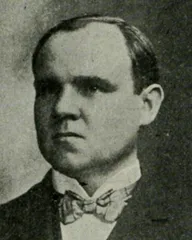
—
Improvement Era
Vol. XVII JULY, 1914 No. 9
The Parable of the Owl Express
A Recollection of Student Days
BY DR. JAMES E. TALMAGE
During my college days, now more than a quarter of a
century past, I was one of a class of students appointed to field-
—
work as a part of our prescribed courses in geology, the science
that deals with the earth in all of its varied aspects and phases,
but more particularly with its component rocks, the structural
features they present, the changes they have undergone and are
undergoing —the science of worlds.
A certain assignment had kept us in the field many days. We
had traversed, examined, and charted, miles of lowlands and up-
lands, valleys and hills, mountain heights and canyon defiles. As
the time allotted to the investigation drew near its close, we were
overtaken by a violent wind-storm, followed by a heavy snow,
unseasonable and unexpected, but which, nevertheless, increased
in intensity so that we were in danger of being snow-bound in the
hills. The storm reached its height while we were descending
a long and steep mountain-side, several miles from the little rail-
way station, at which we had hoped to take train that night for
home. With great effort we reached the station late at night, while
the storm was yet raging. We were suffering from, the intense
cold incident to biting wind and driving snow and, to add to our
;
discomfiture, we learned that the expected train had been stopped
by snow-drifts a few miles from the little station at which we
waited.
The station was but an isolated telegraph-post; the station-
house comprised but one small room, a mile away from the near-
est village. The reason for the maintenance of a telegraph-post
at this point was found in the dangerous nature of the road in
the vicinity, and the convenient establishment of a water-tank to
supply the engines. The train for which we so expectantly and
808 IMPROVEMENT ERA
—
hopefully waited, was the Owl Express a fast night train con-
necting large cities. Its time-schedule permitted stops at but
few and these the most important stations but, as we knew, it
;
had to stop at this out-of-the-way post, to replenish the water-
supply of the locomotive.
Long after midnight the train arrived, in a terrific whirl of
wind and snow. I lingered behind my companions, as they hur-
riedly clambered aboard, for I was attracted by the engineer, who,
during the brief stop, while his assistant was attending to the
water replenishment, bustled about the engine, oiling some parts,
adjusting others, and generally overhauling the panting locomo-
tive. I ventured to speak to him, busy though he was. I asked
—
how he felt on such a night, wild, weird, and furious, when the
powers of destruction seemed to be let loose, abroad and uncon-
trolled, when the storm was howling and when danger threatened
—
from every side. I thought of the possibility the probability
—
even of snow-drifts or slides on the track; of bridges and high
trestles, which may have been loosened by the storm of rock- ;
masses dislodged from the mountain-side —
of these and other
;
possible obstacles. I realized that in the event of accident through
obstruction on or disruption of the track, the engineer and the
fireman would be the ones most exposed to danger a violent ;
collision would most likely cost them their lives. All of these
thoughts and others I expressed in hasty questioning of the bustl-
ing, impatient, engineer.
His answer was a lesson not yet forgotten. In effect he said,
though in jerky and disjointed sentences: "Look at the engine
head-light. Doesn't that light up the track for a hundred yards
or more? Well, all I try to do is to cover that hundred yards of
lighted track. That I can see, and for that distance I know the
road-bed is open and safe. And," he added, with what, through
the swirl and the dim lamp-lighted darkness of the roaring night,
I saw was a humorous smile on his lips, and a merry twinkle of
his eye, "believe me, I have never been able to drive this old en-
gine of mine, God bless her! so fast as to outstrip that hundred
yards of lighted track. The light of the engine is always ahead
of me!"
As he climbed to his place in the cab, I hastened to board the
first passenger coach ; and, as I sank into the cushioned seat, in
blissful enjoyment of the warmth and general comfort, offering
strong contrast to the wildness of the night without, I thought
deeply of the words of the grimy, oil-stained engineer. They were
—
full of faith the faith that accomplishes great things, the faith
that gives courage and determination, the faith that leads to
works. What if the engineer had failed had yielded to fright and
;
fear; had refused to go on because of the threatening dangers?
Who knows what work may have been hindered what great ;