The Utah Pioneers
Improvement Era, vol. 16, no. 8, June 1913, pp. 752 to 763
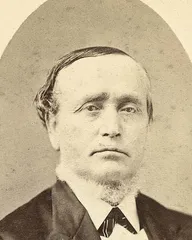
Improvement Era Vol. XVI MAY, 1913 No. 7. The Utah Pioneers BY ELDER ERASTUS SNOW, ONE OF THE TWO MEN WHO FIRST ENTERED SALT LAKE VALLEY [Sixty-six years ago in July of this year, the Pioneers entered the Salt Lake Valley. Apostle Erastus Snow uttered the words here recorded thirty-three years ago, standing midway between the Pioneers and our day. Doubtless thousands of our readers may look back to the conditions that surrounded him and count the mile posts of toil and achievement in the intervening years, even as he looked back over the time to the day when the Pioneers entered the valley. Those who can thus take a view into the past must in all humility and with thankful hearts praise the Lord, our God for giving us such increase in faith and numbers as we now enjoy, for his blessings and mercy, and for the growth, spiritual and material, so abundantly witnessed upon every hand. If the people shall remain true to the faith and valiant in the work of God, the progress that shall result in the coming third of a century may scarcely be estimated. — The Editors.] I am requested to occupy some time this afternoon in speaking to the people. I generally feel a little awkward in this place, perhaps from the fact that I seldom occupy this position. The scenes before me [referring to the decorations around the Tabernacle from the day before] are fruitful in thought, carrying the mind back through the past history of the Latter-day Saints. And the events of yesterday were full of intense interest to the Latter-day Saints but perhaps none could appreciate the sight better than the Pioneers themselves. Most of that body of men had grown up almost from childhood in the Church, and those that are spared *Discourse delivered in the Tabernacle, Salt Lake City, Sunday afternoon, July 25, 1880. Reported by George F. Gibbs.
752 IMPROVEMENT ERA are in their old age, and look back with peculiar feelings to the scenes of the past, and they are not without profitable reflection. HOME OF THE SAINTS Many of the mottoes exhibited yesterday in our grand procession, and some I see around the gallery — for instance, "God bless our Mountain Home" — carry with them all that is associated with home — all the happiness, the comforts, the pleasures, the hope and the anxieties of home, and that, too, of such a home as God has provided for his people in the valleys of the Rocky Mountains. It is the home of the Saints, and when the Pioneers found it, it was well nigh purified by the lapse of time and the desolation of ages, and the wickedness of its ancient inhabitants well nigh obliterated, though the curse of barrenness and desolation still existed. THE CRICKETS AND THE GULLS I remarked yesterday, on looking at the decorations of this building, that to make the work complete that part which so truthfully represents this desert land in 1847,the sagebrush and the other growth of the desert should be besprinkled with black crickets, and perched in some prominent position, some gulls looking down eagerly upon them ; which would remind us of those early days when the Pioneers and early settlers grappled with the difficulties of the desert land ; when the untamed savage was scarcely an enemy or a hindrance in our pathway compared with the destructive winged insects, the crickets and the grasshoppers which would come in myriads to devour the tender crops. For the first two seasons it seemed as though the crickets and grasshoppers would consume every green thing, and after they had commenced their depredations to such an extent that to all human appearance the last vestige of the products of the field and garden would be eaten up, large flocks of gulls came to the relief of the farmer, lighting down upon the fields and covering them as with a white sheet, and they fell to devouring the insects ; and when they had filled and gorged their stomachs, they would vomit them up and then fill themselves again, and again vomit, and thus they ate and devoured until the fields were cleared of those destructive insects, and the crops saved. And these white birds became almost as sacred in the feelings of the people, for the first two or three years, as the white elephant to the people of India ; and I do not know but what, if they had continued their annual visits, some of our people would have been almost ready to revere them as the people of the East do the white elephant. But such a thing was not permitted in the economy of divine Providence ; it was not necessary that these birds should come yearly : they came in an
THE UTAH PIONEERS 753 opportune time to save the crops and to preserve the early colonists from starvation; and since that time comparatively few of them have been seen in the country. But the assistance of this fowl in those early years was as remarkable, nay miraculous,, to us as it was for the Lord to send the armies of quails to the Israelitish camp ; dropping them down in their midst in sufficient quantities to suit the cravings of the home-camp of a million people. THE GRASSHOPPERS Since that time, in various parts of the land, the insects commonly known as the "ironclads," more properly, flying grasshoppers, have visited certain sections of this country, doing much damage ; yet the people have been in a condition to endure such visitations without serious alarm, because of our widespread settlements and the great abundance that has been produced in the country, so that if one section of the country suffered from the ravages of the insects, other sections of the country could come to their relief, and there was no imminent danger to the colon' sts. Not so in those early years when there was no friendly hand within a thousand miles to extend relief, and no railroads by which supplies could be transported to us, and time would not permit to send our teams a thousand miles across the plains to bring the necessaries of life ; our wives and children would have been left as utterly desolate as the savages, who, by-the-by, had learned in their destitution to profit by those visitations ; for when the insects would devour all the green things, they would turn in and devour the insects. And on this ground, on this city plot, the first company of savages who visited the Pioneer camp, after the exchange of salutations, retired to prepare their evening repast, and they emptied out of their sacks bushels of dried grasshoppers, on which they made their suppers. Our people had not learned to do this yet, but had it not been for the providential appearance of the gulls, we would have been brought to the same necessity — to gather up the crickets and salt and dry them to subsist upon. FAITH OF THE PIONEERS It was an experiment which many doubted, as to whether we could subsist our colonies in this country at all, and whether grain would mature. And James Bridger, the well-known mountaineer, who had inter-married with the Snakes, and who had a trading post which still bears his name, Fort Bridger, when he met President Brigham Young at the Pioneer camp on the Big Sandy, about the last of June, and learned our destination to be the valley of the Great Salt Lake, he gave us a general outline and description of this country, over which he had roamed with the Indians in his
754 IMPROVEMENT ERA hunting and trapping excursions, and expressed grave doubts whether corn could be produced at all in these mountains, he haying made experiments in many places with a few seeds, which had failed to mature; and so sanguine was he that it could not be done, that he proffered to give a thousand dollars for the first ear of corn raised in the valley of the Great Salt Lake, or the valley of the Utah outlet, as he termed it, meaning the valley between Utah Lake and Salt Lake. President Young replied to him : "Wait a little, and we will show you." It was this confident hope, and this faith animating the bosom of President Brigham Young, and the Pioneers led by him, that carried this people through, and that has impelled them upon their onward course from that day to this. True, the country was unknown to us, and being unacquainted with the climate and soil, it was an experiment ; but there was an assurance, a faith planted in the hearts of the Pioneer company by the Father whom we serve, that he was abundantly able to sanctify the elements for the good of his people to sustain them in this interior desert. What inspired the Pioneers with this hope and faith was, that God had pointed out the way hither ; he had moved upon the Prophet Joseph before his death, to predict that this people would yet be driven from Illinois and the western States, and have to flee into the Rocky Mountains, where they would become a great and strong people. And it was under the inspiration upon this subject that he was prompted to organize an exploring party, consisting of twelve picked men, for the purpose of exploring this land and bring back an account of its facilities, in view of what God had revealed unto him. But he was slain by his enemies without being permitted to realize these expectations and without being permitted to lead his people hither. But the mantle that was upon him fell upon his successor, Brigham Young, who had the same spirit of inspiration and faith. And when that band of Pioneers left the Missouri river, on the 7th day of April, 1847, they journeyed as Abraham journeyed from Ur of the Chaldees, from whence, we are told, he journeyed according to the command of God, seeking a country which God had promised him. Abraham had not seen it, neither did he know where it was, but God having commanded him to go out from the land of his fathers to a land which he should show him, he started out not knowing whither he went. FOOD PROVIDENTIALLY PROVIDED So did the Pioneers go without knowing whither they went. For the first five hundred miles of the journey from Winter Quarters, or the camp on the Missouri river, to Fort Laramie, on the North Platte, the country was stripped of vegetation ; there was nothing for our animals to eat. There was plenty of buffalo.
THE UTAH PIONEERS 755 antelope and deer ; indeed the buffaloes were so plentiful that they had consumed everything eatable along the river, until all the Platte bottoms were as bare as a sheep yard. The vast heeds of buffalo were ofttimes in our way, and we were under the necessity of putting strong guards around our animals least they should stampede } and we had to feed out what grain we had started with — for we had taken a moderate supply of grain to feed as well as for seed, and this we dealt out sparingly unto them, and indeed some began to feed out their crackers and flour and breadstuff before we reached Fort Laramie, to keep our animals from perishing, and the grass did not begin to grow to relieve our animals until we struck the Black Hills, early in June. And here we were obliged to tarry to recruit our animals, and for two or three days we rested on the North Platte while we built ferryboats on which to cross the river. And when this was done, and we had crossed the Platte and were ready to start, we found ourselves very destitute of provisions on account of having been obliged to deal out part of our supplies to save our animals. As we were about to tie up our ferryboat and take our departure, a gentleman came riding up on horseback who had struck our trail at Laramie, and he told us that a large company was a short distance behind on their way to Oregon, and they wished that we would stop and ferry them over the river. We consented to do so if they would replenish our larder, furnishing us the necessary supplies that would justify our detention. This, he said, they were more than willing to do, and offered to pay us the usual fee for ferrying over the Missouri river, and pay us in flour, and sugar, and bacon and coffee, at prices ruling on the Missouri. We stopped and ferried them over, and collected the toll in provisions; and by the time we had done this, another company hove in sight, and we ferried them over on the same terms ; and then a third, until our stores and supplies were replenished so that we could prosecute our journey ; and leaving a few picked men to tend the ferry, with a few empty wagons and teams to follow, the company proceeded on our way. The ferry-men remained and took over a few other companies, received their pay in provision, and then followed after us*. Thus we realized another interposition of divine Providence in timely supplying our needs, after a severe trial of our faith and patience while passing through this buffalo country. Having thus rested our teams and replenished our stores, we continued our journey. I mention these things as some reasons why the Pioneers were from the 7th of April to the 24th of Juy in reaching this valley. We made the best time we could under the circumstances, and preserve ourselves and animals fit for use. The Pioneers were faithful in attending to their prayers. So far as fresh meat was concerned, their hunters killed what game
756 IMPROVEMENT ERA was sufficient to supply them, and they dried considerable and brought with them, which together with the flour and groceries obtained from these emigrant companies, served us until we had finished our mission. TRAVELED UNDER DIRECTION OF THE SPIRIT OF THE LORD When President Young was questioned by any of the Pioneers as to the definite point of our destination, all he could say to them was, that he would know it when he should see it, and that we should continue to travel the way the Spirit of the Lord should direct us. At the Pacific Springs, fourteen miles from the last crossing of the Sweetwater, and the first waters on this side of the Divide, we were met by an Indian trader and mountaineer known as "Pegleg" Smith, who had his trading post somewhere above the Soda Springs, on Bear River. He described to us the region of Bear River, and Soda Springs, and Bear Lake Valley, and Cache Valley, and Marsh Valley, which he had visited in the course of his hunting, and trapping and trading with the Indians. He earnestly advised us to direct our course northwestward from Bridger, and make our way into Cache Valley ; and he so far made an impression upon the camp, that we were induced to enter into an engagement with him to meet us at a certain time and place some two weeks afterwards to pilot our company into that country. But for some reason, which to this day has never to my knowledge been explained, he failed to meet us ; and I have ever recognized his failure to do it as a providence of the Allwise God. The impressions of the Spirit signified that we should bear rather to the south of west from Bridger than to the north of west. DISCOURAGED BY GOODYEAR As we journeyed from Bridger on to the Muddy, and up the Muddy to Quaking-asp Hill, and from Quaking-asp Hill on tc Sulphur Creek, and while we were camping in the vicinity of what is known as Tar Springs, we were met by a mountaineer by the name of Goodyear, who had spent the previous year in the valley of the Great Salt Lake, having come in from the west with a bana of horses, and wintered where the city of Ogden is now located — having come here the previous spring, and had fenced a small patch, and had tried the experiment of sowing grain and vegetables in a small wav. But he, too, was unable to give us anv hope ; on the contrary, he told of hard frosts, cold climate, difficult to produce grain and vegetables in any of this mountain region. The same answer was given to him as to Mr. Bridger — "Give us time, and we will show you."
THE UTAH PIONEERS 757 PRESIDENT YOUNG'S IMPRESSIONS CONTROLLED As we made our way on from that point — I think it was the following day or the day after that — that the mountain fever, which was beginning to make inroads into our camp, seized President Young ; and so many of our camp were affected with it that we had to stop for a season on Yellow Creek, and again at the head of Echo canyon, stopping and traveling as the sick were able to endure the journey, until we reached the Weber, at the mouth of Echo canyon, and struck our camp a few miles below the present railroad station, where we spent several days. Meantime, while in Echo canyon, President Young being unable to travel, and atthe season was advancing, he felt moved upon to direct Elder Orson Pratt to take that portion of the camp, or most of them, that were able to travel and labor with their axes, picks and shovels to make roads and bridges, to commence the work of cutting their way through the mountains and canyons into this valley. And by the time they had succeeded in reaching what is called the Big Mountain, most of the rest of the company started in their trail, still leaving President Young and a few to nurse and care for him, and also a few feeble individuals to follow as soon as they were able. I well remember as we called at the wagon to bid the President good-bye, Brother Willard Richards, who had charge of those about to leave, asking if he had any counsel to give to guide our movements after we should emerge from the mountains into the open country on the west. He was barely able to support his head with his elbow resting on the pillow, and his head in his hand while he spoke feebly, in a low tone: "My impressions are," said he, "that when you emerge from the mountains into the open country, you bear to the northward and stop at the first convenient place for putting in your seeds." Some of the seeds we had brought with us should by this time have been put in the ground, such as the potatoes and other vegetables. This last suggestion from President Young controlled our movements. FIRST TO ENTER THE VALLEY It fell to the lot of Elder Orson Pratt and myself to penetrate through the thickets and emerge into this valley and get a view of the Great Salt Lake, as was said yesterday by Brother Woodruff, on the 21st day of July. The thicket down through the Narrows, at the mouth of the canyon, was so dense that we could not penetrate through it. I crawled for some distance on my hands and knees through this thicket, until I was compelled to return, admonished, too, by the rattle of a snake which lay coiled up a little under my nose, having almost put my hand on him ; but as
758 IMPROVEMENT ERA he gave me the friendly warning, I thanked him and retreated. And I will here say that from that day to this, I have never waged war upon the serpent when he has kindly given me notice of his presence. We raised on to a high point south of the Narrows, where we got a view of the Great Salt Lake and this valley, and each of us, without saying a word to the other, instictively as if by inspiration, raised our hats from our heads and then swinging our hats shouted, Hosanna to God and the Lamb ! THE FIRST ENCAMPMENT — THE LAND DEDICATED We could see the canes down in the valley on what is now called Mill Creek, south of the lower grist mill, which looked like inviting grain ; and thitherward we directed our course. But when we reached it and ascertained what it really was, and remembering then the injunction of President Young, we turned northward and crossed Mill Creek on to City Creek, which appeared to us the point of our destination as indicated by the President. From this point we turned back and crossed the bench on the north side of Canyon Creek, going in on the side of the mountains, and made our way back to our working party, who by this time — 10 o'clock at night — had come over the Little Mountain and formed camp near its western base. The next day our working party cut their way through the underbrush down through the Narrows from whence I had retreated, and came down to Mill Creek, south of the present mill, and camped at night. At noon on the 23rd we made our camp on Emigration Street, or the street where the street railroad runs east from the Clift House, and just below that on the old channel of the creek ; the creek divided just below this Temple Block, one branch running west and the other south. It was on the south branch of the creek we formed our camp on the noon of the 23rd ; and here we bowed ourselves down in humble prayer to Almighty God with hearts full of thanksgiving to him, and dedicated this land unto Him for the dwelling place of his people. THE FIRST PLANTING AND IRRIGATING And then we organized various working parties to get out the plows and other implements and tools, appointing some to go and plow the lands, and others to turn the water on the land to irrigate it. We found the land so dry that to plow it was impossible, and in attempting to do so some of the plows were broken. We therefore had to distribute the water over the land before it could be worked ; this being done, the ground was got ready by the following day, when President Young arrived, and, as Brother Woodruff told you yesterday, he was able to plant the potatoes h? had in his wagon. The 24th of July of that year was on a
THE UTAH PIONEERS 759 Saturday, and President Youngarrived at about 2 p. rri. of that day; and on that Saturday night we had about six acres of potatoes and other vegetables planted, the field extending southward from about where the City Hall now stands. This was thirty-three years ago, yesterday. THE SABBATH OBSERVED On the Sunday all work was suspended as usual, for we always observed the Sabbath day in all our journeyings. We held our meeting and offered up our thanksgiving and prayers and sacraments before the Lord ; and President Young for the first time was. able to get out of his wagon, and sit in his rocking chair and listen and direct, and he spoke to us a little from his chair, and requested that we organize ourselves into exploring parties and explore the country north, south and west ; "for," said he, "it is necessary that we should learn the facilities of the country and be able to report to our brethren whose eyes are turned toward us." "But," he said, "I can tell you," this was after we had organized three exploring parties and made every necessary preparation to start out on the morning following, "but I can tell you before you start, you will find many good places and many facilities for settlement all around us, and you will all return feeling satisfied that this is the most suitable place and THE place for us to make our commencement. And here is the place to build our city." And I may add. that from that time not only did these three exploring parties bring back the word confirming what the President had said with regard to this place, but I believe it has been the universal judgment of all the people of the mountains that this was the place, and that around here were the greatest facilities, when climate. soil, timber, water and evervthing are taken into consideration, that it was the most suitable for our central location. "here is the place" Brother -Woodruff informed the people yesterday how President Young, as he emerged from the mouth of Emigration Canyon, lifted himself up in his bed and peered out of his wagon, which overlooked the valley, the cottonwoods on the creek, and the camp on the east side of the creek in fair view, and as Brother Woodruff told you yesterdav, that President Young said then, and afterwards to all the camp, that this was the place he had seen long since in vision ; it was here he had seen the tent settling down from heaven and resting, and a voice said unto him. "Here is the place where mv nennle Israel shall pitch their tents." The same Providence that directed the Pioneers, led by our late honored Presi-
760 IMPROVEMENT ERA dent, has encouraged and directed the labors of the people from that time to the present. MEANS FOR GATHERING THE POOR The covenant which we made in the Temple at Nauvoo, when the vote was taken to journey westward and flee before our persecutors in the western states, the covenant we made in that Temple that we would never cease our efforts until we had gathered the poor who were unable to go with us, and bring them to the place n hicli should be selected for the gathering of the Saints, was the first thing to come up before us when we had raised the first crop and demonstrated the fact that grain and vegetables could be produced here, and that there were facilities here for sustaining a population — the covenant we had made came up before us, and we commenced our operations of gathering from the people contributions of their scanty means, which we sent back for the poor who were left by the wayside between Nauvoo and Council Bluffs and Winter Quarters, and on the Missouri river, and others who were scattered up and down the river and in northern Missouri, who were venerable and unable to proceed, and Bishop Edward Hunter was the individual to whom this sacred trust was confided, and the one who led the camp of the poor that were gathered in the year 1850. Our funds were collected in the fall of '49; and Bishop Hunter took the means and with others crossed the plains that year, and in the summer of '50 brought the first company of poor Saints by what is known as the Perpetual Emigration Fund Company, which has been in operation now thirty years, and has gathered its thousands annually. The fund was gotten up on the principle of perpetual succession, to continue increasing on condition of the people acting honestly and in accordance with their covenants, repaying the amount, as fast as they could do so, which had been advanced to them. But I very much regret to have to say that many who have been the recipients of the contributions of the poor have seemed to forget the pit from which they were digged, and the hole of the rock from which they were hewn, and have neglected their duty in this respect. However, we have abundant reason for thanksgiving for all the good that has resulted from the efforts of the early settlers and of those of later years, in contributing for the gathering of the poor in the many thousands that have been brought to this land — first those that were left behind in Missouri and Iowa and on the eastern borders of what is now Nebraska, and next the poor of the old world. THE CHANGE IN ONE GENERATION A generation may be said to have passed away since the Pioneers arrived in this valley, thirty-three years being deemed the
THE UTAH PIONEERS 761 average duration of a generation at the present time. And the change, how great ! The careful observer of the scenes presented to us yesterday — the representation of the trades and industries, manufactures and commerce, and the associations for the education and improvement of the youth, the great increase among the people, the comforts, not to say luxuries, of life which surround and bless the people on every hand today, present such a contrast that the heart is full to overflowing with thanksgiving and praise to our God, and ought to inspire the rising generation with great faith, courage and perseverance, knowing what has been accomplished in the past generation, and should lead them to reflect and consider what lies before us in the future. THIRTY-THREE YEARS LATER There is one feature, however, which contrasts unfavorably today ; it is this : that among the rising generation, and even among some of the former generation still remaining, some seem unmindful of the providence of God that has led us and planted us here, and the purposes and designs of Jehovah in thus leading us here, and the great work which God requires at our hands ; and some of them seem befogged ; the cares of the world, the deceitfulness of riches and the pride of life turn the heads and hearts of some, and who make it possible for a certain class to thrive in our midst whose object and aim is to thwart the purposes of God ana the works of the Saints. True, there is a class among us, and perhaps a large portion of that class called outsiders, or those who have not yet been able to see and understand the spirit and inspiration that moves the Latter-day Saints, there may be many of this class who are able to appreciate the industry, and the union, and the faithfulness and virtue of the Latter-day Saints, and their exertions in converting the desert into a fruitful field, and opening up this great interior country to civilization, and are inclined to award them reasonable credit for their efforts and labors. But there is another portion who are among us, not entirely for filthy lucre's sake, not entirely for matters of business, not entirely for the purposes of procuring homes as people generally are, but they are here for another purpose, some as missionaries, some professional, some like the ancient Pharisees who Jesus said compassed sea and land to make one proselyte, and when they had done so, they made him tenfold more a child of the devil than he was before. Then there are political missionaries, and sometimes missionary judges and Federal officials who, instead of faithfully performing their duty, go out of their way to cast odium upon the Saints, and draw a veil over their virtues : and who take pleasure in exhibiting their faults and greatlv magnifying them. These latter classes, instead of adopting that noble sentiment of the poet, "Speak of all the best
762 IMPROVEMENT ERA you can," do the opposite, and try to conceal what good they mighi speak of; their hearts seem to be a fountain of bitterness which, instead of sending forth sweet waters, are only bitter continually. That Spirit which the Latter-day Saints have received by faith, repentance and baptism and the laying on of hands, and by continuing constant in prayer, is like the fountain in the center of this building, springing up a well of water unto everlasting life, reviving all around. But the spirit which the missionaries referred to seem to have imbibed, sends forth bitter water, producing nausea and vomiting. I say the unpleasant feature of today is the fact that there are a sufficient number among our own people, who have become stupid, befogged and benumbed in their sensibilities and blinded by the cares of the world and deceitfulness of riches so that they are ready to strike hands with any whom they think can in anywise contribute to gratify their vanity, their pride, their lustful and covetous desires. Were it not for this, the existence of this class of missionaries referred to would not be possible among us. There would be nothing to encourage it, nothing for that element to feed upon. But so long as we are ready and willing, in addition to that charity which the gospel promotes in us, to let this charity overflow to such an extent that we are ready to receive into our fellowship and into our arms the serpent as well as the dove, without being able to discern between them, and perhaps fondle the serpent in our bosom until he stings us ; this is an evil among us which is to be deplored. god's providence in opposition Although taking the broad view of the providence and dealing of God with the children of men, we must admit that even in this, too, there is an overruling providence, and that it is not without its good result and grand design ; for one of the important truths in the ecenomoy of heaven with regard to the dealings of God with men, is that they must all be exposed to temptation, all must be tried and proven by their own works as to whether they love the truth, virtue and goodness ; whether they will plant the good seed in the soil of their hearts, or the evil seed ; whether they will nourish and cherish the good seed, giving it a chance to grow, or whether they will allow it to be choked down by the growth of evil. Each and every one must work out his own salvation with fear and trembling, and without thus being tempted and proven, and having an opportunity of being tempted and proven none could enter into glory. And in the economy of heaven the tempter seems but to perform his part of the work. The evil one, whom we call that old serpent, Satan, or the devil, is but performing the part of the work which he has chosen — I will not say the part that has been assigned to him, but the part he has chosen. And so with
THE UTAH PIONEERS 763 all those who choose evil instead of good, who receive and cherish error instead of truth, who roll falsehood as a sweet morsel under their tongue, and when the truth is presented before them and is within their reach, if they are willing to receive it, they with all those who delight in evil speaking and in evil surrounding, and in misrepresentations, indulging in envy and in everything that is evil, have their choice, they take their choice, they labor in the sphere which they choose for themselves, they walk the road and path which they themselves elect, they sow the seed and they themselves nourish the seed in the soil of their own hearts, and they reap the fruit of their own labors, whether bitter or sweet, whether lovely, pure and holy, or whether it be envy, jealousy, vituperation, wrath, malice and death ; for the one road leads to death and down to damnation ; the other to peace, fellowship, union and love, with all the attendant joys, glory and exaltation with the gods. May heaven inspire us to know and understand the truth as it is in Christ Jesus, and to magnify our high calling before him, in the name of Jesus. Amen. THE FIRST HOUSE IN NEVADA George C. Parkinson, writing from Los Angeles, April 25, encloses this photograph obtained from Mr. David L. Aldridge. The cabin was built by his father, William Aldridge, in Genoa, Nevada, in June, 1850, being the first house in the state of Nevada, and was known as the "Mormon" station. It has since been destroyed by fire. Mr. David L. Aldridge is a native of Clay County, Mo., is now seventy-seven years of age, hale and hearty, and a very interesting character. He was born in the Church, but claims now that he does not believe in any "church" religion. His wife i^ dead and all his children are married, so he lives alone in a comfortabJchome at No. 242 F Street, San Bernardino, Cal.