Department of Vocations and Industries VIII
Improvement Era, vol. 16, no. 6, April 1913, pp. 632 to 634
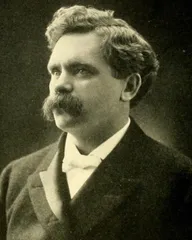
Department of Vocations and Industries BY B. II. ROBERTS
VIII — What Boys Should Suggest Last month our heading was "What to Suggest to Boys." This month we reverse the thought to "What Boys Should Suggest," meaning, of course, what boys should suggest to teachers, parents, or M. 1. A. committeemen, on Vocations and Industries. In other words, the boy should be encouraged to express himself, tell what he likes to do, and why he likes to do it. His attention should be called to the important fact that those who seek are the ones who find; that those who desire things ardently are the ones who obtain them; and if in their experience there comes a desire for help, they can generally obtain it by seeking for it.One of the sentences emphasized by italics in last month's Era, under this title, "If I Were a Boy Again * * —
- — iffound that I zvas capable of some one thing in any especial I
degree, I zvould ask counsel on that point of some judicious friend; and if advised to pursue it I would devote myself to that praticular matter to the exclusion of much that is foolishly allozved in boyhood." Now this is — what is urged here getting the boy to express himself with reference to his likes and dislikes, in the matter of doing things, and to ask counsel as to what he ought to attempt; and so shall you get at a catalogue of things that the boys are capable of doing, and can succeed in doing, which will materially aid in giving suggestions as to what he shall choose as his calling in life. Our committeemen, teachers, and parents, then, have before them the task of finding out something of the boy's aptitudes, and hence the importance of getting him to reveal himself to those who are to counsel him in selecting a vocation. More than half the task of discovering the boy is accomplished when he is brought where he will ask for help in these things. Teaching and guidance become easy when once the one to be taught will so rely upon the teacher that he will ask, "What shall I do?" or "What would be best for me to do?" This mental attitude, however, must be induced not by thinking for the boy, but by teaching him to think, and leading him to form a conclusion that shall be his own. Committeemen, teachers, and parents, should not approach their work in counseling our youth in respect to vocations and industries, with the idea that our youth cannot think, and that, therefore, some one else must think for them. The desirable thing is merely to aid them in thinking for themselves upon these subjects. This help cannot be effectively given until they are brought to feel the necessity of seeking help, and this can only follow from the establishment of confidence in those to whom they shall make their appeal. Therefore, addressing ourselves now to our committee-
DEPARTMENT OF VOCATIONS AND INDUSTRIES 633
men in the stakes and the wards, we say that the immediate task before them is that of obtaining the confidence of our youth. This must be won, since it cannot be demanded; and the winning of confidence is an art of itself, the details of which may not be considered,
here beyond saying, that primarily the art rests upon profound sympathy with the youth, and a knowledge of their problems, and a desire to help them, that springs from love of them, and a desire to see them succeed. If our committeemen have these elements as their equipment, then they are well on their way to success in winning the confidence of the youth, and will be able to induce the youth in their immediate circles of activity to confide in them, and say to them the things which shall be needed to bring forth wise and helpful counsels. Getting your boys to talk to you, committeemen, is of quite as much importance, as that you should talk to them, nay more.
From the few reports that we have received of stake committeemen, and association committeemen in this department of M. I. A. work, we are led to believe that there has been a great deal of neglect in the carrying out of instructions to provide this simple organization for carrying on our department; and we ask that stake superintendents and presidents of ward associations shall be admonished in this thing, and make this department a matter of special attention until it is completely organized. Doubtless reports, as to what has been done in these respects in the various stakes will be an item in the reports at our June M. I. A. conference; and the committee in charge of this department would like to see complete reports in respect to organization and work done under its auspices. We earnestly call the attention of both the stake and ward officers to this matter, and urge compliance with this request.
Elder Daniel Perkins writes from Charleston, South Caro- lina, December 31: "The people are very anxious to learn the truth about 'Mormonism' and are beginning to discover that the stories circulated about our people are not true. We have spent an enjoyable Christmas with Saints and friends, and feel like entering on the new year determined to deliver the mes- sage of salvation in this historical city, the place where the first guns of the Civil War were fired. The population is about 61,000. Elders,, left to right: Daniel Perkins, Bluff, Utah; Jesse J. Remington, Parker, Idaho; William Ruesch, Hurricane, Utah; S. C. Hall, Bennington, Idaho."
Boys' and Girls' Industrial Clubs
BY PROF. J. C. HOGENSON, OF THE STATE AGRICULTURAL COLLEGE
In many of the states of the Union, there have been few developments in recent years that have given greater educational stimulus than has the work done by clubs of boys and girls in agriculture and domestic affairs. A potato-growing club is an association of boys who enter into competition to determine which can grow the most or best potatoes on a certain area of ground under definite rules, as to kind of seed, planting, cultivation, irrigation, and exhibit of their product. For girls, these clubs usually take the form of bread-making, sewing, or in helping the boys in gardening or poultry contests. In our state, where perhaps seven-tenths of the children who attend the public schools will either take up some branch of agriculture or become wives in the homes of our state, it seems essential that they begin to learn in a systematic way the problems which they must meet later in life, while they are in the public schools. This is emphasized more when we realize that of the children of the rural communities, 95 per cent of them get their only education so far as books are concerned in the public school, and only 5 per cent of them go away from home for more schooling. These young men and women usually grow up with no regard for the farm. They look upon it as a place to be shunned, and as soon as enough money can be raked together they leave for the city where their lives usually become swallowed in the great commercialism of the day. That this can be remedied, I firmly believe, so that the young man and the young women will learn and appreciate, to the bottom of their hearts, the fact that they are living in God's free air and sunshine, where the waving breezes blow, where the silent river flows through the green meadows, and where the cows "knee deep in June " bask in the shade of the trees. 1
There is no place in the world that has bluer skies, brighter stars, more sunshine, greener verdure, richer lands, clearer and more sparkling water, more pleasant and healthful climate, and brighter boys and girls than Utah. Why then, should not some of these glorious truths be brought forth in our school-work, so that the boys and the girls of Utah will grow up with a liking in their hearts for the farm and the home. The result to be secured from such chilis may be thus summarized :
(1) Individually the members are led to observe more closely, to recognize good and bad qualities in the products they have grown.