Department of Vocations and Industries
Improvement Era, vol. 16, no. 5, March 1913, pp. 504 to 508
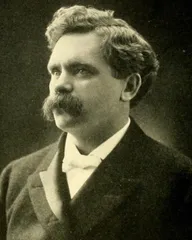
Department of Vocations and Industries BY B. II ROBERTS .
— VII What to Suggest to Boys Our association committeemen are at a loss to know what to suggest to the boys, either directly on the subject of vocations, or on those topics related to that theme. As matter of the latter sort, we recently picked up a book containing the article herewith quoted, by James Thompson Fields, an American author of New Hampshire and Massachusetts, which suggests many themes for conversation that have more or less relation to better general preparation for vocations and general industrial life and suggest ;
that our association committeemen take up the several topics in direct conversation with their individual members, and get them to adopt one or more of these suggestions of Mr. Fields and if ;
one member can be induced to undertake to carry out in practice one thing, and another some other thing in the list of things suggested, an association might be engaged in carrying into effect nearly all the suggestions made. In any event, we submit to the committeemen the several suggestions of Mr. Fields
IF I WERE A BOY AGAIN
When we are no longer young we look back and see where we might have done better and learned more; and the thigs we have neglected rise up and mortify us every day of our lives. May I enumerate some of the more important matters, large and small, that, if I were a boy again, I would be more particular about? I think I would learn to use my left hand just as freely as my
right one, so that if anything happened to lame either of them the other would be all ready to write and handle things, just as if nothing had occurred. There is no reason in the world why both hands should not be educated alike. A little practice would render one set of fingers just as expert as the other; and I have known people who never thought, when a thing was to be done, which particular hand ought to do it, but the hand nearest the object took hold of it, and
I would learn the art of using tools of various sorts. I think I
would insist on learning some trade, even if I knew there would be no occasion to follow it when I grew up. What a pleasure it is in after life to be able to "make something," as the saying is —to construct a neat box to hold one's pen and paper; or a pretty cabinet for
DEPARTMENT OF VOCATIONS AND INDUSTRIES 505
a sister's library; or to frame a favorite engraving for a Christmas present to a dear, kind mother. What a loss not to know how to mend a chair that refuses to stand up strong only because it needs a few tacks and a bit of leather here and there! Some of us cannot even drive a nail straight; and should we attempt to saw off an obtrusive piece of wood, ten to one we should lose a finger in the operation. It
is from books and study to work an hour every a pleasant relaxation day in a tool-shop; and my friend, the learned and lovable Professor Oliver Wendell Holmes, finds such a comfort in "mending things," when his active brain needs repose, that he sometimes breaks a piece of furniture on purpose that he may have the relief of putting it together again much better than it was before. He is as good a mechanic as he is a poet. * * * * I think I would ask permission, if I happened to be born in a city,
to have the opportunity of passing all my vacations in the country, that I might learn the names of trees and flowers and birds. We are, knowledge. We guess as a people, sadly ignorant of all accurate rural at many country things, but we are certain of very few. It is inexcusable in a grown-up person, like my amiable neighbor Simpkins, who lives from May to November on a farm of sixty acres, in a beautiful wooded country, not to know a maple from a beech, or a bobolink from a cat-bird. He once handed me a bunch of pansies, and called them violets; and on another occasion he mistook sweetpeas for geraniums. What right has a human being, while the air is full of bird-music, to be wholly ignorant of the performer's name? When we go to opera, we are fully posted with regard to all the principal singers; and why should we know nothing of the owners of voices that far transcend the vocal powers of Jenny Lind and Christine Nilsson? * * * * were a boy again I would have a blank-book in which I could If I record, before going to bed, every day's events just as they happened to me personally. If I began by writing only two lines a day in my <
diary, I could start my little book, and faithfully put down what happened to interest me. On its pages I would note down the habits of birds and animals as I saw them; and if the horse fell ill, down should go the malady in my book; and what cured him should go there, too. If the cat or dog showed any peculiar traits, they should all be chronicled in my diary; and nothing worth recording should escape me. * * * * were a boy again, one of the first things I would strive to do If I would be this: I would, as soon as possible, try hard to become acquainted with, and then deal honestly with, myself; to study up my own deficiencies and capabilities: and I would begin early enough, before faults had time to become habits. I would seek out earnestly all
the weak spots in my character, and then go to work speedily and mend them with better material. If I found that I zvas capable of some one thing in a special degree, I would ask counsel on that point of some
506 IMPROVEMENT ERA
judicious friend; and if advised to pursue it, I would devote myself to that particular matter, to the exclusion of much that is foolishly allowed in
boyhood. * * * *
If were a boy again, I would school myself into a habit of atten- I
tion oftener; I would let nothing come between me and the subject
in hand. I would remember that an expert on the ice never tries to
skate in two directions at once. One of our great mistakes while we are young is that we do not attend strictly to what we are about just — then at that particular moment. We do not bend our energies close enough to what we are doing or learning. We wander into a halfinterest only, and so never acquire fully what is needful for us to become master of. The practice of being habitually attentive is one easily attained, if we begin early enough. I often hear grown-up
people say, "I couldn't fix my attention on the sermon, or the book, although I wished to do so." And the reason is that a habit of attention was never formed in youth. * * * *
If I were a boy again, I would know more about the history of my own country than is usual, I am sorry to say, with young Americans. When in England I have always been impressed with the minute and accurate knowledge constantly observable in young English lads of average intelligence and culture concerning the history of Great Britain. They not only have a clear and available store of historical dates at hand for use on any occasion, but they have a wonderfully good idea of the policy of government adopted by all the prom- * inent statesmen in different eras down to the present time. * * *
If the history of any country is worth an earnest study, it is surely the history of our own land; and we cannot begin too early in our lives to master it fully and completely. What a confused notion of distinguished Americans a boy must have to reply, as one did not long ago when asked by his teacher, "Who was Washington Irving?" "A General in the Revolutionary War, sir." (!)**** If were a boy again, I would strive to become a fearless person. I
I would cultivate courage as one of the highest achievements of life.
"Nothing is so mild and gentle as courage, nothing is so cruel and vindictive as cowardice," says the wise author of a late essay on "Conduct." Too many of us nowadays are overcome by fancied lions in the way that have never existed out of our own brains. Nothing is so credulous as fear. Some weak minded horses are forever looking around for white stones to shy at; and if we are hunting for terrors, they will be sure to turn up in some shape or other. We are too prone to borrow trouble, and anticipate evils that may never appear. "The fear of ill exceeds the ill we fear." Abraham Lincoln once said that he never crossed Fox River, no matter how high the stream was, "until he came to it." Dangers will arise in any career, but presence of mind will often conquer the worst of them. Be prepared for any fate, and there is no harm to be feared. * * * * If I were a boy again, I would look on the cheerful side of every-
DEPARTMENT OF VOCATIONS AND INDUSTRIES 507
thing; for everything, almost, has a cheerful side. Life is very much like a mirror; if you smile upon it, it smiles back again on you; but if you frown and look doubtful upon it, you will be sure to get a similar look in return. I once heard it said of a grumbling, unthankful person, "He would have made an uncommonly fine sour apple, if he had happened to be born in that station of life." Inner sunshine warms not only the heart of the owner, but all who come in contact with it. Indifference begets indifference. "Who shuts love out, in turn will be shut out of love." * * * * If I were a boy again, I would demand of myself more courtesy towards my companions and friends. Indeed I would rigorously exact it of myself towards strangers as well. The smallest courtesies, interspersed along the rough roads of life, are like the little English sparrows now singing to us all winter long, and making that season of ice and snow more endurable to everybody. But I have talked long enough, and this shall be my parting paragraph: Instead of trying so hard to be happy, as if that were the sole purpose of life, I would, if I were a boy again, try still harder to deserve happiness.
THE MAPUSAGA L. D. S. SCHOOL BAND, Which made the journey to Upolu and Savaii. Elder M. V. Coombs, the leader, is standing in the rear.
Editors' Table
The Resurrection
At this season of the year when nature is about to awaken to renewed life from winter's sleep, one's thoughts naturally turn to the resurrection. Some have thought that a comparison of the resurrection of the body of man, and his return to* life after death, with the revival of the plants and nature at the return of spring, is objectionable, and not pertinent as an illustration of the resurrection. To some extent, of course, this is true. Such persons argue that human research fails to find any comparison, between the awakening of nature and the resurrection of the body. They declare that in no instance in nature has there been an actual death. If
the trees, or the grass, or the pupa within the chrysalis, die, there will be no resumption of leafage, no butterfly, with the return of spring. Life sleeps with the apparently dead in nature. The comparison so often made that as each returning spring brings life to the slumbering acorn, and the tree stripped of its leaves, so
also shall renewed life be given to the body in the resurrection, is a statement untrue in analogy, they argue ; for this reason, that life slumbers with the buried acorn, and in the tree stripped of its foliage, but this is not so with the body, for that is dead even as the killed tree or the lifeless acorn, neither of which would revive. But it is no greater mystery, to my mind, for God who has all power, to re-unite the essential elements of the dead body of man with the living, eternal spirit, thus forming the resurrected soul, than for him to re-clothe with a new plant, each returning spring, the mysterious life of the slumbering seed ; or the stripped and naked tree, with a new covering of foliage. In the New Testament the resurrection of man is not only taken for granted but it forms a part of Christ's doctrinal system "He that heareth my word, and believeth on Him that sent me, hath everlasting life, and shall not come into condemnation, but is passed from death unto life, ***** for as the Father