Reasons for Opposition. I
Improvement Era, vol. 15, no. 1, November 1911, pp. 70 to 76
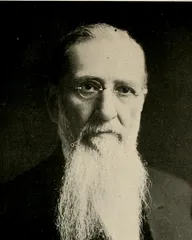
Reasons for Opposition to the Latter-Day Saints.* BY PRESIDENT JOSEPH F. SMITH. I desire to express our feeling of welcome and good cheer to all the Latter-day Saints who have assembled here this morning for the opening session of our Conference. We are glad to see you, and we thank you for your presence here, for we feel that your presence is an evidence of the interest that you feel in our Confer- ence, and in the great work of human redemption, in which you and we all are and should be earnestly engaged. It is a matter of congratulation, I think, to the Latter-day Saints that they are led by a spirit that inclines their thoughts, their minds and hearts towards the performance and accomplishment of the duties and responsibilities that rest upon them, and I take it as an evi- dence of your good faith, and of your fervent belief and feeling in the cause in which we are engaged, that you are present here today. I hope and pray that the Spirit of the Lord, the spirit of wisdom and of eternal truth, may pervade all the sessions of this Conference, including the meetings or gatherings of the various organizations which will hold their conventions during the time of the Conference. I hope that those who shall address the people may be led by the Spirit of God in their remarks, that they may speak words of comfort, of instruction, of wisdom and testimony to the Latter-day Saints regarding the great work of God that has been established in the latter days in the earth. Whatever may be the feeling of those opposed to the work of the Lord, whatever may be the feeling of the unbelieving and scornful, and those that are contemptuous toward the work of the Lord, let the spirit of wisdom, of good judgment, of intelligence govern and direct all the acts and labors, and all the thoughts and desires of the Latter- day Saints. It matters but very little to me what men may think of me, or what they may say about me, so long as I can maintain a consciousness of having righteousness in view, of having an earnest ^Opening sermon at the General Conference, Oct. 6, 1911.
REASONS FOR OPPOSITION 71 desire to do good and not evil : and so long as I am conscious that I am, to the best of my knowledge and understanding, following the dictates of my conscience, and the prompting of the Spirit of the Lord to me in the line of my duty. Yet we often wonder why people are led by such a spirit of bitterness, of animosity and opposition to any people or to any individual whose record in life has been, barring the common weakenesses of common mortality, absolutely above reproach. It is surprising how men can become so vile as to publish and declare slanderous things, falsehoods and misrepresentations with regard to men and people who have never in their lives done any man or woman, or any community of people in the world, any harm; who have never injured a soul, and whose whole life and mission, hopes, labors, and earnest desires have been to benefit the world, and to bless and ameliorate the condition of mankind. It is surprising that such is the case. Such has been the case from the beginning of this work until now, and such will continue to be the case so long as we abide in the truth, and are guided by the spirit of revelation, and bave an earnest desire to do good to the children of men, and there are men who are full of wickedness and sin. It was said away back in the early days, in the State of Mis- souri, by the leaders of the persecution against the Saints there, that all they desired was that the "Mormons," or the Latter-day Saints, should discard their idea of revelation from God in this dispensation; that they should renounce their faith in Prophets and their claim to the Apostleship, and to the restoration of the Koly Priesthood; that they should scatter abroad, cease to organ- ize, and to maintain their organization, and become "like the rest of us." That was all that they demanded in that early day, and it is a very true and correct index to the feelings of our enemies that has existed ever since, to the present time. Men are moved by some influence, some spirit — judge ye what the nature of that spirit or influence is — to try with all their power to demoralize, debase and sow the seeds of unbelief, the seeds of corruption, error, lack of faith, and desire to do good; to sow the seeds of disruption in the hearts of the people called Latter-day Saints, in order that their desire might be accomplished, that they should become "like the rest of them," like the rest of the world, and what is the differ- ence? The difference is simply this: We believe just as the best Christians, or so-called believers in Christ in the world believe, that
72 IMPROVEMENT ERA Jesus is the Christ, the Son of the Living God; that He is the Saviour of the world; that He is the Redeemer of men from sin and from death unto life; and there is no people, whatever their pro- fession may be, that believe in Christ more firmly, more perfectly, more confidingly, than do the Latter-day Saints, but where is the difference? The difference, so far as that belief is concerned, is this; that the world say all that is necessary is to believe and you will be saved, but the Latter-day Saints declare that it is simply a mockery for men to say they believe in Christ, and refuse to do the works that He did; it is simply folly; it is unChristian; it is incon- sistent for men to say that all that is necessary for men is to believe in Christ and they shall be saved, when Christ Himself declared that He required all men to do the works that He did, and to keep the commandments that He gave unto them. This is the differ- ence. We believe that it is necessary to do the work that He did. We believe it is necessary to implicitly obey His commands and to follow in His footsteps, to emulate His example to the best of our ability, that we may become more and more like unto Him. Now, so far as that is concerned, wherein is man injured? Who is hurt? Who in any sense of the word sustains any wrong at the hands of a people who believe in doing the works that were commanded of the Lord, and in following in His footsteps? Who is wronged by it? But the trouble is just as the Savior said: "If the light had not come, then would ye have been without condemnation." But this is the condemnation of the world, the light has come into the world, and the world loves darkness more than it does the light. That is the condemnation, and there is where the shoe pinches. And what is the difference? We believe in the Prophet Joseph Smith;] we believe that the Lord God Almighty raised up that boy and made him a Prophet, a Seer and a Revelator, and that through him, or that instrumentality, the Lord Almighty has restored to men the fulness of the Gospel of Jesus Christ, which is indeed the power of God unto salvation. The world don't believe it. They are welcome to their belief, whether it bebelief or unbelief. We are not here as censors upon the judgment or belief of the children of men We are not here to bring any rail- ing accusations against men for their belief. Let them believe and worship how, where and what they may. That is their preroga- tive. But we object to their bringing railing accusations against our belief and our faith.
REASONS FOR OPPOSITION 73 We think that we should have the same privilege and liberty to believe as we please, that the world has, and that we accede to the world; and because we believe in Joseph Smith as a Prophet of God, the world is in no wise injured by it, but on the contrary, it is vastly benefited by that belief, at least to the extent that that belief takes hold upon honest men, and brings them to a knowledge of that great truth. What did Joseph reveal? He revealed God in His own person. He revealed, or has been the instrument in the hands of God of revealing to the world, Jesus, the Son of God, in His own person. He has been the instrument in the hands of the Lord of bringing the light to the inhabitants of the world that God lives, that Christ lives, whom to know is life eternal, and whom the world have ignorantly worshipped as a myth, as some- thing that fills the immensity of space, but is indescribable; as something that is almighty and all-powerful and all-present, but without personal existence. Joseph has revealed to the world that Jesus Christ who was crucified and rose again from the dead, is a personal being, in whose likeness and image man is made, or is begotten in the world, and that the Father is a person in exact similitude to the Son. We have the history of the Son, given us by His disciples who sojourned with Him while He was in the mortal flesh; that He was born of His mother, Mary; that He was called the carpenter's son; that He grew to manhood; that He taught the Gospel of Jesus Christ, and illustrated the example of righteousness, that is the true type for all mankind to imitate and follow; that He possessed power over death, and though they put Him to death, He rose again, and that while His body lay in the tomb, He proclaimed the same Gospel that He preached to the living, to those that were confined in darkness, and banishment from the presence of the Lord, in outer darkness, because of their wickedness while they were in the flesh; and quickened by the Spirit, He went and preached the Gospel to them as He had preach- ed it to the living; and that when he rose and identified Himself beyond the possibility of any doubt to the minds of those who witnessed and saw Him, and knew Him, and afterwards testified of Him to the world, that He was the same that was crucified, bearing the marks of the nails and of the spear in His body; that He was not a spirit; that He was flesh and bone as tangible as man, and that a spirit had not this flesh and bone as He had. He declared this to the world. This same physical, tangible entity
74 IMPROVEMENT ERA called Jesus of Nazareth, the son of Mary and the Son of God, in His resurrected body, came to Joseph Smith, revealed Himself to Joseph Smith, the same God, the same Christ, the same Redeemer of the world that was crucified on Calvary, and that God the Father, is like His Son; that it would be inconsistent and impossible for a spirit to beget a man like Christ, and therefore the Father and the Son are the exact resemblance of each other. Joseph revealed this to the world. Who is hurt by it? Who is injured by this fact and by this revelation to the children of men? In what respect is the world worse off for having received this knowledge? I tell you that the world would be better off, a thousand times better off, if they would but consider this truth and receive it in their hearts, and then be guided by the doctrine that Joseph Smith was the instrument in the hands of God of revealing anew to the world. This, then, is the difference, but wherein are you injuring anybody by it? What wrong are you doing? None whatever. Why should men be embittered against you because of this, because of your belief in Joseph Smith? Why should they become your enemies because you declare your faith in a new revelation from the Father and from the Son to mankind for their guidance? Why should they? Let me tell you why; for the very same reason precisely that the embittered and unbelieving Pharisees and hypo- crites of the Savior's time persecuted the Redeemer of earth, for the very reason that they later put to death the disciple of Jesus Christ, whom He ordained as Apostles and as special wit- nesses of Himself, who bore testimony of Him and of the Gospel to all the nations of the earth. They put them to death one by one, some of them in the most cruel manner, simply because they preached Jesus Christ, and Him crucified and risen from the dead, and ascended into Heaven, and sitting with all glory and power and majesty and might at the right hand of His Father, God. The world felt injured by it. Why? Because it laid the ax at the root of the tree of error, of superstition and of tradition, of lack of faith, and unbelief. It laid the ax at the root of the tree of wicked- ness in the world, and of ignorance of God and His principles, and the plan of life and salvation, and the world hated the disciples because of it, and they hated the Son of God because of it, and they crucified Him. They hated the disciples because of it, and they put them to death. That is why they hate you, for the same
REASONS FOR OPPOSITION 75 reason, that is those that do hate you, those that have exercised their power, their will and their thoughts or minds sufficiently to be imbued with the spirit of persecution and hatred against the light and the truth. What else did Joseph reveal, or did the Lord, rather, reveal through him? He revealed the identical Gospel precept for precept, principle for principle, doctrine for doctrine, ordinance for ordinance, the exact Gospel of Jesus Christ that He taught Himself, and in no way did Joseph Smith vary in the least degree from the doctrines taught by the Son of God, even to the doctrine in which the Lord Himself declared that if the Jews who were finding fault with him were the seed of Abraham, they would do the works of Abraham. So that I stand here without any fear of rational or reasonable or justifiable contradiction, to say that the Prophet Joseph Smith revealed no principle to man, that was not taught, believed in, accepted and approved by the Son of God when He was on the earth, not one thing, and we can prove it — prove it by Scriptures, and from history. But we need not enter into that. What did he reveal? He revealed the Father and Son, and the Holy Ghost which is a personage of spirit, and not a person- age of flesh and bone as God is, and as Jesus is. He revealed the doctrine that you must believe in God, that you must believe in Jesus Christ, and in his power of redemption; that you must believe and, believing, you must repent of your sins, Now, that is a terrible crime in the eyes of some people, to be required to repent of their sins. If some men in the world, that have taken up arms against the Latter-day Saints, were to repent of their sins, God knows there would be nothing left of them. (Laughter). Conse- quently it is an awful crime to ask men to repent of their sins, but that is what the Lord taught through Joseph Smith; repentance of sin, then baptism by immersion with Christ, being buried with Him in the water, in the liquid grave, and coming forth again out of the liquid grave in likeness of His resurrection from death to life, baptism by immersion, and the baptism of the Holy Ghost, by the laying on of hands; these are necessary for the salvation of the children of men. Joseph taught this. Who else taught it? Jesus taught it. Paul taught it. Peter taught it. James taught it. John taught it. Mathew and Luke and all the Apostles anciently taught this same doctrine, and left their testimony on record, and it has been handed down to all subsequent generations to the present and we have it to look at today. But some people
76 IMPROVEMENT ERA think it is a crime, for Latter-day Saints to hold to such doctrines as these now, in these latter days. They say it is presumption and assumption for man to say he possesses authority to baptize for the remission of sins, and to confer the Holy Ghost by the laying on of hands. It was not an assumption in the days of Christ, nor was it a presumption on their part. Authority was given them, and they were sent out in the world to preach these doctrines, and baptize those who would believe; and those who should believe and should be baptized should be saved, as the Apostles have said. And yet Christ Himself has said, "And they that believe not shall be damned." That was His word; that was His decree and His law, and who will question the right of the Redeemer of men to say the way in which they shall be saved, and the way in which they cannot be saved? Who shall question His right to say that? Joseph repeated it. We believe it; we have accepted it, and in this respect we differ from the generality of mankind, and they are wroth about it, angry about it. (To be concluded in next number,) War Between Italy and Turkey was precipitated on September 28, by Italy delivering to the Porte an ultimatum, announcing its inten- tion of occupying Tripoli and Cyrene, in Northern Africa, and demanding within twenty-four hours a reply indicating compliance. Italy gives as a reason for the war that Turkey had permitted a state of disorder in Tripoli and Cyrene which necessitated the action, because these regions "should be admitted to the benefits of the progress realized by other parts of the Mediterranean and Africa." For a long series of years, furthermore, Italy has called Turkey's attention to the absolute need of correcting the state of disorder. The moderation and patience of Italy has been sorely tried, and its view badly received by Turkey. The Italians, it is further- more, charged, have been systematically opposed and unjustifiably crushed by the Turkish government;' and so, "to protect its interests and its dignity," the Italian government decided to proceed to the military occupation of Tripoli and Cyrene. The Turkish government replied that the conditions in Tripoli were absolutely normal and that the Italian subjects were amply protected, and that Italian interests were in no danger. Any cause for complaint would be immediately investigated and reme- died. The hope was expressed that Italy would desist from the proposed action. The government also sent a protest to the Powers which, how- ever, declined to intervene. On September 29, a formal declaration of was was presented by Italy, whereupon the Duke of Abruzzi, in command of a torpedo squadron of the harbor of Prevesa, near the Greek boundary, attacked Turkish gun boats, and the war began. Italy invaded and took Tripoli by a powerful fleet of battleships within five hours after the declaration was sent by wireless, by the Italian minister of Marine, to the commander of the blockading squadron off Tripoli.