Industry and Optimism
Improvement Era, vol. 14, no. 8, June 1911, pp. 725 to 730
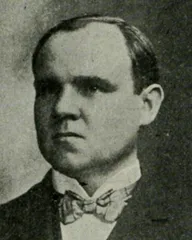
Industry and Optimism. BY DR. JAMES E. TALMAGE, F. R. S. E. [The members of the 1911 graduating class of the University of Utah put on their caps and gowns for the first time on April 7, and held their Senior Chapel Assembly at eleven o'clock that day. The large assembly hall was packed with invited guests, the faculty, and students. After the march, the class president, Hugo B. Anderson, delivered a thoughtful address on the significance of the cap and gown. There was prayer and sweet vocal and instrumental music, among the songs being the old favorite, "Hard Times, Come Again no More." But the address of the occasion was delivered by Dr. Talmage, and one of the editors who heard it was fortunate enough to get the speaker's permission to print this synopsis in the Improvement Era.—Editors.] I understand this to be a function having specific application to and significance for the Seniors—the oldest and most mature of the University undergraduate family,—those who are soon to leave the parental roof and go forth to face the problems of life independently and in a measure alone. My Senior friends, today for the first time you don officially the gown betokening your scholastic rank, the toga of collegiate maturity. May the robe prove to be in truth, for each of you, a garment of truer and purer manhood, or of broader and nobler womanhood. But a few weeks remain to you of home life on the campus, that must have endeared itself to every heart. Looking from this splendid site of your University home, over city, valley and lake, to the majestic Oquirrhs on the west, turning to gaze upon the mighty Wasatch ramparts to the east, or peering away through the vista of distance either north
726 IMPROVEMENT ERA. or south, one surely feels that he is in a land choice above most lands, and in a region beautiful in the truest sense of the term. I rejoice with you in the splendid opportunity offered by city, state and nation for the education of citizens in this great republic. I congratulate you on the fact that your training has been of the kind you desire and need,—modern, up to date, down to date, in harmony with the spirit of present progress, in accordance with the manifestations of the Zeitgeist—the spirit of the times. I do not join with those who decry the culture of the past, who have come to speak contemptuously of the humanities in college curricula; on the contrary I am a believer in, and an advocate of, the study of the classics and the investigation of the history of the past. What indeed is current history but the outgrowth from, and the consummation of, the history of by gone times? Today, in very truth, is the sum of all the yesterdays; and we can best understand the significance of sum or product by a due acquaintance with the component factors. Nevertheless, the past is past. Where now the Roman, Greek? They stalk in empty name, Though half our learning is their epitaph. We are living in the present; and the education of greatest worth today is the education that places man in fullest harmony with the progressive spirit of the times. If I were asked to specify in fewest words my conception of the characteristic manifestations of the ruling Zeitgeist—the spirit of the present times—I would answer—Industry, Conservation, Altruism, Optimism. I speak first of industry. Your achievements and present status show that you have been thoroughly converted to the gospel of work; or perhaps, better still, that you have been confirmed in the faith of that eternal gospel without the need of conversion. I do but tell you what you know when I say that in activity alone is there progress. The lazy man is out of harmony, out of place, and forever out of sorts, in the world today. He is the grumbler, the sufferer, the pessimist, to whom a day of sunshine is but a saddening prophecy and a dread assurance of clouds and storm to
INDUSTRY AND OPTIMISM. 727 come. He gropes his way through the world, half asphyxiated by the foul emanations of his bodily sluggishness—a chronic invalid from the dread ravages of that tired feeling, coupled with the sleeping sickness—too enfeebled to expand his lungs and draw in the invigorating air of heaven. True,he is the victim of a dire affliction, and it may seem that therefore he is entitled to our sympathy; but, unfortunately, his is the one affliction upon which the world has come to look rather with contempt than commiseration. Moreover, his disease is both infectious and contagious. I would there were a law requiring that the yellow flag of quarantine should be attached to every lazy man, so that others might be warned against too close an approach. Like the leper, he is unclean, and should be so regarded wherever he is met. But lest I be too severe in my strictures, let me say that the lazy man excels in some traits. I know none more skilled than he in the fabricating of reasons and the making of excuses. He is the champion self-justifier. One of the class was brought to my notice recently. He had come into possession of a farm, which under the management of his predecessor had been productive and profitable. Two or three years under the lazy man's management reduced its value and gave it an aspect of desolation. His ready mind found a reason. About the time he came into possession, the stream from which the farm was irrigated had been put to use far up in the canyon for the operation of an electric plant. After the water passed the electric station it was returned to its old channel, and the canal which supplied the farm in question was fed as before. The supply was undiminished in quantity and unaffected in quality. But the lazy man insisted that there was no use in trying to raise crops with such water, for, as he put it, "Of what use is water for crops when all the electricity is taken out of it?" I submit that none but one far advanced in the stages of this dread disease could have found such an excuse. Like Satan himself, the lazy man mav quote scripture as an excuse for his condition. I have in mind one such selfish scriptorian. During a certain summer I had occasion to pass his farm almost daily. There were three trees on the place. If I failed to find him slumbering under the first, I was pretty sure to find
728 IMPROVEMENT ERA. him under one of the other two, any day. When once I inquired why he didn't cultivate his farm, and build something better than the log cabin in which his family lived in squalor, he reverently turned his eyes toward heaven and misquoted: "Blessed are the i" poor Be it remembered that there are different kinds of poor. The poor are to be classified according to their merits and deserts. One of our local philosophers has presented a simple and comprehensive classification; he says there are three classes of poor people:—(1) The Lord's poor. (2) The devil's poor. (3) The poor devils. If we be poor, let us belong to the worthy and respectable class of the poor. A pleasing characteristic of modern education—the education of which you are the privileged partakers, the education of which I doubt not you will be worthy exemplars—is that it recognizes the sanctity of labor and the dignity of work. Under the influence of the inspiration of the glorious present, the kitchen has been transformed into a laboratory of intelligent service, in which the joy of work is one of the most potent reagents. Under the same influence the farm is no longer a field of drudgery, but a garden of knowledge. The fact that our agriculturists have learned to use the microscope and the test tube, has but fitted them the better to use the hoe and the plow. Next in order I mentioned conservation. In general terms conservation means the avoidance of waste, the utilization of the good-for-nothing—the using of that which has so long been considered worthless, both in the realm of matter and in the domain of force. Energy, to be of service, must be rightly directed. It is one thing to be good, and another thing to be good for something. There are many good people in the world, but it requires a power of discernment above that of man to know what some of them are good for. There are busy, fussy people whose fussiness is of little service. A few days ago I was experimenting with electric cells in my laboratory. I needed a combination of cells to form a battery of considerable power. I found some of the cells active beyond expectation. One in particular frothed and foamed and literally boiled with energy, but all its power was consumed in overcoming its own internal resistance. The jar was
INDUSTRY AND OPTIMISM. 729 a scene of fuss, froth and fury, but it evolved no force for effective work. Another worked quietly with scarcely an escaping bubble to indicate its power; nevertheless, it evolved a force ample to transmit a message from continent to continent, though oceans roll and roar between. So it is with the human mind. The mind of the madman is active, intensely, abnormally active in fact; but of what use, of what service to his kind is such activity? Of all the forces of nature, the greatest, the grandest, the most powerful is the force of the human mind. The ruling Zeitgeist of the present seeks to utilize and apply to the best possible advantage this supreme force of mind, of spirit, of soul. We are learning to use our mental powers intelligently, conservatively, economically. As has been said, tremendous f jrces are about us, they need only to be directed rightly to accomplish miracles. I quote: "The combustion of a single pound of coal, supposing it to take place in a minute, is equivalent to the work of three hundred horses; and the force set free in the burning of three hundred pounds of coal is equivalent to the work of an able-bodied man for a lifetime." The yield of metals in the future will not be from phenomenal discoveries of rich bonanzas, but from the more economical treatment of low-grade ores. Conservation of material and force is proving and will yet more effectively prove to be the moving power of the world. I speak next of altruism, a comprehensive term; perhaps I should restrict it to the narrower designation—benevolence. Notwithstanding the wails of the pessimist, the present is an age of good will, of benevolence, of altruism. By such characteristics the present is distinguished from the past. Many of you have delved into the history of ancient Egypt, of Greece, of Rome. Have you found there a single record of charity? Have our archeologists, digging into the accumulated dust of by-gone ages, found the ruins of a public hospital? Have they found even the crumbling walls of an asylum for the afflicted? Verily no. In the days gone by, disease, affliction, adversity were regarded as just deserts, and the victims were treated as outcasts to be neglected and ignored. But today is a brighter day, in spite of grasping trusts and soulless corporations. A very considerable part of
730 IMPROVEMENT ERA. the wealth of the world is being used for the alleviation of distress, for the betterment of mankind, for the uplifting of the race. After all is said, we belong to a pretty good family—this human family of which we are all members and heirs. Last, but not least, in my specifications of the characteristics of the reigning, ruling, controling spirit of the times, is optimism. The busy man, the economical man, the benevolent man, is necessarily hopeful, cheerful, optimistic. He wastes no hours in bewailing the good times past, nor does he while away the present in dreaming of the good time3 to come. He believes, as I believe, that the best of the ages is the present. The results of all the good of the yesterdays is concentrated in the brightness of today. He is happy, and his happiness is as contagious as is the dread malady of the pessimist. The rale of his life is to be up and doing. He works, and by his work he incites his fellows to labor, to achieve. Cheerfulness, happiness, optimism, are among the first principles of the gospel of right living. I repeat, the distinguishing characteristics of the Zeitgeist— the ruling spirit of the times, are industry, conservation, altruism, optimism, and of these the more important, the greatest are industry and optimism. Each is related to the other, and the two are associated with the minor characteristics I have named, —conservative action and altruistic living. The man of intelligent action, that is, the earnest, busy man who works to a purpose, is necessarily happy in a great degree; he lives in the world's sunshine,and sheds the uplifting influence of his bright life among his fellows. And now, my friends, to each of you let me apply the adjuration of the wise man of old—"Be up and doing, and the Lord be with thee."