Joseph Smith’s Doctrines Vindicated. I: Men the Avatars of God
Improvement Era, vol. 13, no. 5, March 1910, pp. 432 to 440
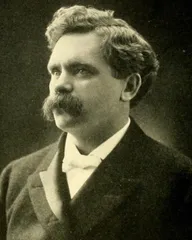
Joseph Smith's Doctrines Vindicated. BY B. H. ROBERTS.
I.
Men the Avatars of God.* Early in the month of August, I had the pleasure of address- ing a congregation from the Tabernacle stand in Salt Lake City; and when the remarks I made on that occasion were published,
those who had the publication in charge entitled them, "The Mes- sage of 'Mormonism.' " In part the remarks covered a review of a series of articles publishedthe Cosmopolitan Magazine during in
the early summer months, which Mr. Harold Bolce gave the in
result of a two years' itinerary through the universities of the United States, pointing out the trend of religious and philo- sophical thought among the professors of these universities. On that occasion I called attention to the fact that the first great mes- sage that Joseph Smith delivered to the world: namely, that all
the churches were wrong, and their creeds an abomination unto the Lord, received wonderful confirmation from the utterances of these professors quoted in the articles I name. That occasion in August did not warrant a complete or exhaustive review of these articles, nor did it afford the opportunity, for sheer lack of time, to indicate all the points at which modern educated thought sustained utter- ances of the great modern prophet. It is this theme which I desire to renew and discuss on the present occasion.
*The word avatar comes from the Sanskrit word avatara, and in
Hindu mythology meant an incarnation; a manifestation of Deity.
JOSEPH SMITH'S DOCTRINES VINDICATED. 433
The question which I now propose to take up fjg$L prove to :
you, I think, that it is useless for the world to decry some of the fundamental doctrines announced by the Prophet Joseph Smith, on the ground that they were the utterances of an uneducated, obscure and ignorant youth— since, I believe, I shall be able to show you that from some of the highest seats of learning in the land there comes pronounced confirmation of the things our prophet taught; and hence that his utterances on the doctrine to be considered were not born of ignorance, but of inspiration from God. In the Cosmopolitan for July, 1909, in the editorial review of Mr. Bolce's article, is this utterance:
Many university teachers, while subscribing to doctrines akin to those of Christian Science, New Thought, and the Emanuel movement, are in favor of studying the forces of the spiritual world in a cold, scien- tific manner. Orthodox Christian dogma is regarded as at variance with its own principles and is interpreted in a new and revolutionary light. The professors' philosophy is purged of mysticism and blind faith. By moving their young students, they believe they will move the world, and so they are directing their energies to the scientific interpretation of those forces which are marvelously transforming our contemporary age.
Mr. Bolce himself, in further explanation of the attitude of many of the educators in the universities, represents Professor James C. Monaghan, recently of Notre Dame University, and form- erly of the University of Wisconsin, as telling his classes, in regard to the adage that "there is room at the top," that there is no top, "that progress — particularly spiritual progress— is eternal." The Latter-day Saints will readily recognize that statement as in har- mony with "Mormon" doctrine. Continuing, Mr. Bolce says:
Friends of the college philosophers insist that if there is a gulf between them and the people, it is because the masses have not yet crossed over into the life of progress and spiritual liberty. It is simply
that the professors from the standpoint of their followers, are inviting mankind again into the fields to which the prophets beckoned the world centuries ago. The choice, it is declared, is either backward to the brute, or forward to the superman.
I think that the Latter=dav Saints w ill also recognize in that a
434 1MPR0 VEMENT ERA .
note of — "Mormonism" because they believe that whatever man may be today, whatever his excellence may be even the excellence — of the most highly developed men — we believe that there are heights beyond those which he has now attained, to which it is possible for him to mount. I merely wanted to read those two paragraphs for the pur- pose of presenting the attitude of the professors, in a general way, in regard to the creeds of men and the existing Christian Churches. I now call your attention to some few doctrines that our prophet taught in respect of man. Of course, you who are familiar with Christian teaching of three-quarters of a century ago, will recall the fact that it was quite customary to represent man as a quite inferior, insignificant, poor worm of the dust; and the phrase- ology applied to him was that he was a creature "conceived in sin and shapen in iniquity. " Referring to these ideas as something engrafted upon Christianity, yet foreign to its genius, Professor G. H. Howison of the University of California, in his contribution to the book Conceptions of God (1902), and speaking of those who hold and taught such views, says:
Their monotonous theme was the inevitable greatness of the Supreme Being and the utter littleness of man. Their tradition lay like a pall upon the human spirit— nay, it lies upon it to this day, and it smothers now, as it smothered then, the voice that answers there to the call of Jesus." (p. 96.)
When the prophet proceeded with the deliverance of his mes- sage to the world, he departed from this view as to the essential baseness of the nature of man, and proceeded to proclaim him to be a son of God, not only through some means of adoption, but by the very nature of him. He proclaimed him to be an eternal intelligence as to his spirit, and that after the experience of the resurrection from the dead, he would be an immortal personage, a prince of heaven, an heir to all that God possesses, and a joint heir with Jesus Christ, capable of infinite progress and of amazing possibilities. On one occasion — to be more specific, in 1844 while discoursing upon the subject of man and his spirit, he pro- pounded this quest on:
The mind of man, the immortal spirit — where did it come from?
JOSEPH SMITH'S DOCTRINES VINDICATED. 435
All learned men and doctors of divinity say that God created it in the beginning, but it is not so. The very idea lessens man in my estimation. I do not believe the doctrine; I know better. Hear it, all ye ends of the world! for God has told me so. If you don't believe me, it will not make the truth without effect We say that God himself is a self-existent being. Who told you so? It is correct enough, but who told you that man did not exist in like m inner, upon the same principle? God made a tabernacle and put man's spirit in it, and it became a living soul It does not say in the Hebrew that God created the
spirit of man; it says God made man out of the earth and put in him
Adam's spirit, and so became a living soul. The mind or the intelli- gence which man possesses is co-eternal with God himself God himself does not create himself. Intelligence is eternal, and exists upon a self-existenc principle; it is a spirit from age to age, and there is no creation about it. The spirit of man is not a created being, it
existed from eternity, and will exist to eternity.
Such was the prophet's teaching upon this subject. I might, however, supplement the above statement by quoting one of the revelations that also bears upon this theme. The Christian world are ready to accord to the Christ, the Son of God, an existence co-eternal with God; and indeed would consider it unorthodox to hold any other view than the co-eternity of the Son with the Father; and they quote in support of this view the very beautiful preface to John's gospel; namely, "In the beginning was the Word, and the Word was with God. The same was in the begin- ning with God In him was life, and the life was the light of men." And then later it is explained that this "Word'' "became flesh and dwelt among us, and we beheld his glory; the glory as of the Only Begotten of the Father, full of grace and of truth." All orthodox Christians believe that this passage estab- lishes the co-eternity of the Christ with the Father. Now, that is a very great doctrine; but I desire to show you that, excellent as it is, the Lord in our dispensation has added another truth to that one by what is said in the revelation from which I now read. Jesus Christ is represented as speaking:
Verily, I say unto you, I was in the beginning with the Father, and am the first-born. [Now, mark you — addressing the several brethren
436 IMPROVEMENT ERA. who were present when this revelation was received] — Ye were also in the beginning with the Father; that which is spirit, even the spirit of truth.
Meaning that part of man that is spirit, that intelligence, that thing within man that is conscious of its own existence, and of other existences; that has power to will and to direct and to do things, that thing within man that reasons and reflects and has memory, that being who, most emphatically, is you, yourself, and not the house, merely, in which youlive; that, too, was in the
beginning with the Father. And now the revelation broadens the truth beyond those to whom the Christ directly spoke at the time the revelation was given; for in a subsequent verse it says: ''Man,'' undoubtedly meaning the race
Man was also in the beginning with God. Intelligence, or the light of truth, was not created or made, neither indeed can be. All truth is independent in that sphere in which God has placed it, to act for itself, as all intelligence also, otherwise there is no existence. Behold, here is the agency of man, and here is the condemnation of man, because that which was from the beginning is plainly manifest unto them, and they receive not the light. And every man whose spirit receiveth not the light is under con- demnation, For man is spirit. The elements are eternal, and spirit and element, inseparably connected, receiveth a fulness of joy; And when separated, man cannot receive a fulness of joy. The elements are the tabernacle of God; yea, man is the tabernacle of God, even temples.
That is bold doctrine. When our prophet came with this
splendid message to the world, he was met with the cry of "Blas- phemy, blasphemy!" Three-quarters of a century have now passed away since these utterances were first given to the world; and I want to show you what men in the highest seats of learning have to say with respect to principles that are either identical with these, or closely analogous with them, though, of course, the learned men whom I quote may not be aware even of the existence of these revealed truths given to the world by Joseph Smith. Tbey are not, of course, consciously bearing any testi- mony to the doctrines announced by our prophet; but they are
JOSEPH SMITH'S DOCTRINES VINDICATED. 437
bearing unconscious testimony to the truth; and I am glad to see the truth grow, whether by direct or indirect means. Sometimes I think that the indirect means that God is using for disseminating his truths are more potent and far-reaching, perhaps, than the directmeans which we are seeking to use, and that God is using through his Church. But now to this record and what our learned men are saying on principles identical or analogous to these, Profes- sor Howison, whom I before quoted, says:
Son of man, thou art the son of God. Rouse heart! put on the gar- ments of thy majesty, and realize thy equal, thy free, thy immortal membership in the Eternal Order!" (Conceptions of God, p. 96.)
Professor Robert Kennedy Duncan, in the concluding pages of his The New Knowledge, (1905) says:
Still another conception of the new knowledge is that of the vast stores of inter-elemental energy of which we live but on the fringe a store of energy so great that every breath we draw has within it suffi- cient power to drive the workshops of the world. Man will tap this energy some day, somehow But now that we know, or think we know, of this infinite treasure-house of inter-elemental energy lying latent for the hand of the future man to use, it is neither difficult nor fanatical to believe that beings who are now latent in our thoughts and hidden in our loins shall stand upon this earth as one stands upon a footstool, and shall laugh and reach out their hands amidst the stars. "In the beginning God created," and in the midst of his creation he down man with a little spark of the Godhead in him to set — make him to strive to know and in the striving to grow and to progress to some great, worthy, unknown end in this world. He gave him hands to do, a will to drive, and senses to apprehend — just a working equipment; and so he has won his way, so far, out of the horrible con- ditions of pre-history.
I have been presenting to you the words of our prophet. Mr. Bolce represents the professors, of our American universities, as saying: The professors see in man, and in man alone, the consciousness and power destined to sway the affairs of the world. Professor Munsterberg insists that the world we will is the reality, and that the least creature of all mortals ''has more dignity and value than even an Almighty God," as that being is popularly conceived It is declared by the
438 IMPROVEMENT ERA.
professors that if divine energy is divisible and man's spirit inferior to God's, the eternal future of the soul is unalluring. Christianity so teaches, they say, and is of all philosophies the most pessimistic. For- ever in its scheme man is to be an underling. Not only that, but un- countable billions of souls — worms of the dust — are created doomed to perpetual despair; while a fortunate remnant's highest felicity is to gather around the throne of a superior and august God and chant his praises.
Then follows this contrast with the above view:
Opposed to this conception is the new psychology that teaches that the spirit of man is the highest conscious expression of the infinite, and that by invoking the powers — the divine forces — resident in the human, all that humanity desires may be accomplished.
Thus complete does the divinity of man's spirit appear to these philosophers. Continuing, these views are expressed:
The colleges in teaching this faith take ground with those who believe that in the emancipation and fruition of modern thought greater works than Christ did will be performed. It is, therefore, to rid the modern mind of this deadening effect of what they deem to be paralyz- ing superstitions that the professors attack orthodox dogmas. Far from deriding the forces of the spirit, the colleges proclaim that the laws of divine energy are the most important study confronting modern man. The professors take their stand with Professor Slater of Chicago University whom I heard emphasize with marked sincerity that the "name of Jesus is not written but plowed into the history of the world." Yet in their determination to approach the God- idea as scien- tists, they consider themselves more reverent than the great body of church people who, they believe, are indulging in idolatrous prostration and ritual.
In still stronger confirmation of Joseph Smith's doctrine, in language more direct, is the following utterance from Professor Herrick, of Dennison University, who says:
Focused in the mind of man, therefore, are the dynamic forces of the universe. Beyond and above our most daring calculation is the potency of thought! And in the following allegorical words, the scien- tist explained how the mind of man, assuming and asserting its power
may absorb the fire of creative energy. "The wood disappears in the grate, but the genial warmth pervades the room, invades our blood,
JOSEPH SMITH'S DOCTRINES. VINDICATED. 439
quickens our pulse, wakens vital action, and finally is wrought into the history of our life." we keep in mind this picture of an element be- If
coming transfused by natural processes into human life and happiness, it is not difficult to understand the scientific interpretation of prayer, of New Thought, of Christian Science, of the Emmanuel Movement, and simi- lar forces marvelously transforming our contemporary age. As scien- tists, not as communicants at old altars, many scholars have allied them-
selves with the forces of spiritual health and healing.
And yet when the Prophet Joseph and the first elders of the Church taught that the world today was entitled to the enjoyment of the same "spiritual gifts," of forces that characterized the Church of Christ in the early Christian centuries, by which the sick were healed, the lame made to walk, and the power of proph- ecy and revelation enjoyed, — they were classed as presumptuous persons, and generally discredited; indeed one of the complaints against the Saintswhen settling in Jackson county, Missouri 1831-1833— was that These pretended to communications and revelations direct from heaven, to heal the sick by the laying on of hands, and, in short, to per- form all the wonder-working miracles wrought by the inspired apostles and prophets of old. ..... They openly blaspheme the most high God, and cast contempt on his holy religion by pretending to receive revelations direct from heaven, by pretending to speak in unknown tongues, by direct inspiration, and by diverse pretenses derogatory of God and religion, and to the utter subversion of human reason.
This is from a document put into circulation by the Jackson county anti-"Mormon" mob, in the summer of 1833 (Evening and Morning Star for December, 1833). But now we find, according to Mr. Bolce's representation, professors in universities asserting their faith in the possibility of this spiritual force operating at present among the children of men, and, incidentally, our author remarks, "These men are not dreamers; they are of solid mental mould." As a result of man awakening to the consciousness of these indwelling forces, our author says:
"Human society, for the first time in history, is coming to itself," says Professor Edmund J. James, "and is becoming conscious of definite ends and purposes toward which it is striving; of the possibility of set-
440 IMPRO VEMENT ERA .
ting up certain ideals toward which it can ever struggle. '' And now that man has discovered that there resides in his nature a spirit of energy that is divine, the colleges say, and that he can summon it to work his will, the potency and future operation of this psychic force no man can com- pute. Science having found a way through psychology to God, the opportunities for the race, through invoking in the human consciousness the brooding spirit that fills all space, are absolutely infinite. Science, therefore, is demonstrating along new lines, or at least is claiming to demonstrate, that man is God made manifest.
More than seventy-five years before this utterance of the scientist, however, there went ringing down the corridors of time these words of our prophet:
The elements are the tabernacle of God; yea, man is the tabernacle of God, even temples!
Continuing, Mr. Bolce concludes his article on this theme in the following terms:
And modern philosophy, as set forth in American universities, holds this incarnation not as a fanciful and merely beautiful ideal, but as a working and understandable principle in the soul of humanity. The pro- fessors, who are digging what they believe to be graves for therefore, dead dogmas, stand as exponents of the teaching that man is the embodi- ment and conscious expression of the force that guides all life and holds all matter in its course. Man has begun the cycle of that triumphal daring prophesied by ancient seers, and which appealed so potently to the imagination of Poe. Not merely in religious rhetoric but in reality, the schoolmen say, is man the avatar of God.
That is to say, man is the incarnation of God, the incarnation of a divine spirit; his spirit is one with the Infinite Spirit, even the spirit and essence of God. Let no one hereafter say, when viewing the teachings of Joseph Smith in reference to the divinity of man's spirit, that- his doctrines are merely the utterance of an ignorant, unlettered man, since the doctrines he taught three-quarters of a century ago, now receive this splendid, though unconscious vindi- cation, through the utterances of the most learned men of our country and age. [to be concluded.]