Editor’s Table: A Mother’s Love, If Thy Brother Offend Thee
Improvement Era, vol. 13, no. 3, January 1910, pp. 276 to 282
Editor's Table.
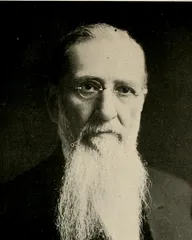
The Love of Mother. The Granite stake of Zion has set aside Tuesday evening of each week for a "Home Evening." Every family in the stake is asked to be at home, and the time is to be spent for the use and benefit of the home. The parents are to teach their children the gospel, there are to be songs, hymns, music, scripture readings, instructions, games, refreshments and counsel — a getting nearer together, in the family circle.The movement was 'started by a large meeting of parents in the stake tabernacle recently. At this meeting President Joseph F. Smith delivered a stirring ser- mon on "Family Government," and from his remarks on this occa- sion are selected these beautiful and instructive sentiments on "The Love of Mother:" I learned in my childhood, as most children, probably, have learned, more or less at least, that no love in all the world can equal the love of a true mother. I did not think in those days and still I am at a loss to know how it would be possible for anyone to love her children more truly than did my mother. I have felt sometimes how could even the Father love his children more than my mother loved her children? It was life to me; it was strength; it was encourage- ment; it was love that begot love or likeness in myself. I knew
she loved me with all her heart. She loved her children with all her soul. She would toil and labor and sacrifice herself day and night, for the temporal comforts and blessings that she could meagerly give, through the results of her own labors, to her children. There was no sacrifice of self — of her own time, of her leisure, or pleasure, or opportunities for rest — that was considered for a moment, when it came in comparison with her duty and her love to her children.
,
EDITOR'S TABLE. 277
When I was fifteen years of age, and called to go to a foreign country to preach the gospel — or to learn how, and to learn it for myself — the strongest anchor that was fixed in my life and that helped to hold my ambition and my desire steady, to bring me upon a level and keep me straight, was that love which I knew she had for me, who bore me into the world. Only a little boy, not matured at all in judgment, without the advantage of education, thrown in the midst of the greatest allurements and temptations that it was possible for any boy or any man to be subjected to, — and yet, whenever those temptations became most alluring and most tempting to me, the first thought that rose in my soul was this: "Remember the love of your mother. Remember how she strove for your welfare. Remember how wil- ing she was to sacrifice her life for your good. Remember what she taught you in your childhood, and how she insisted upon your read- ing the New Testament — the only book, except a few little school books, that we had in the family, or that was within reach of us at that time. This feeling toward my mother became a defense, a barrier between me and temptation, so that I could turn aside from temptation and sin by the help of the Lord and the love begotten in my soul, toward her whom I knew loved me more than anybody else in all the world, and more than any other living being could love me.
A wife may love her husband, but it is different to that of the love of mother to her child. The true mother, the mother who has the fear of God and the love of truth in her soul, would never hide from danger or evil and leave her child exposed to it. But as natural as it is for the sparks to fly upward, as natural as it is to breathe the breath of life, if there were danger coming to her child, t he would step between the child and that danger; she would defend her child to the uttermost. Her life would be nothing in the balance, in comparison with the life of her child. That is the love of true motherhood —for children. Her love for her husband would be different, for if danger should come to him, as natural as it would be for her to step between her child and danger, instead her disposition would be to step behind her husband for protection; and that is the differ- ence between the love of mother for children and the love of wife for husband — there is a great difference between the two.
278 IMPROVEMENT ERA.
I have learned to place a high estimate upon the love of mother. I have often said, and will repeat it, that the love of a true mother comes nearer being like the love of God than any other kind of love. The father may love his children, too; and next to the love that the mother feels for her child, unquestion- ably and rightfully, too, comes the love that the father feels for his child. But, as it has been illustrated here by Brother Ander- son, the love of the father is of a different character, or degree, to the love of the mother for her child: illustrated by the fact he related here of having the privilege of working with his boy, having him in his presence, becoming more intimate with him, learning his characteristics more clearly; becoming more familiar and more closely related to him; the result of which was that his love for his boy increased, and the love of the boy increased for his father, for thesame reason, merely because of that closer association. So the child learns to love its mother best, as a rule, when the mother is good, wise, prudent, and intelligent, because the child is with her more, they are more familiar with each other and understand each other better. Now, this is the thought that I desire to express: Fathers, if you wish your children to be taught in the principles of the gospel, if you wish them to love the truth and understand it, if you wish them to be obedient to and united with you, love them! and prove to them that you do love them, by your every word or act to them. For your own sake, for the love that should exist between you and your boys— however wayward they might be, or one or the other might be, when you speak or talk to them, do it not in anger; do it not harshly, in a condemning spirit. Speak to them kindly: get down and weep with them, if necessary, and get them to shed tears with you if possible. Soften their hearts; get them to feel tenderly towards you. Use no lash and no violence, but argue, or rather reason — approach them with reason, with persuasion and love unfeigned. With these means, if you cannot gain your boys and your girls, they will prove to be reprobate to you; and there will be no means left in the world by which you can win them to yourselves. But, get them to feel as you feel, have interest in the things in which you take interest, to love the gospel as you love it, to love one another as you love them; to love their parents as
—
EDITOR'S TABLE. 279
the parents love the children. You can't do it any other way. You can't do it by unkindness; you cannot do it by driving our — children are like we are: we couldn't be driven; we can't be driven now. We are like some other animals that we know of in the world: You can coax them; you can lead them, by holding out in- ducements to them and by speaking kindly to them, but you can't drive them; they won't be driven. We won't be driven. Men are not in the habit of being driven; they are not made that way. That is not the way that God intended, in the beginning, to
deal with his children— by force. It is all free love, free grace.
The poet expressed it in these words: "Know this that every soul is free, To choose his course and what he'll be; For this eternal truth is given, That God will force no man to heaven."
You can't force your boys, nor your girls into heaven. You may force them to hell — by using harsh means in the efforts to make them good, when you yourselves are not as good as you should be. The man that will be angry at his boy, and try to cor- rect him while he is in anger, is in the greatest fault; he is more to be pitied and more to be condemned than the child who has done wrong. You can only correct your children in love, in kindness by love unfeigned, by persuasion and reason. When I was a child, sometimes a wayward, disobedient little boy — not that was wilfully disobedient, but I I would forget what I ought to do; I would go off with playful boys and be absent when I should have been at home, and I would forget to do things I was asked to do. Then I would go home, feel guilty, know that I was guilty, that I had neglected my duty and that I deserved punishment. On one occasion I had done something that was not just right, and my mother said to me: "Now, Joseph, if you do that again I shall have to whip you." Well, time went on, and by and by I forgot it, and I did something similar again; and this is the one thing that I admired more, perhaps, than any secondary thing in her; it was that when she made a promise she kept it. She never made a promise, that I know of, that she did not keep. Well, I was called to account. She said: "Now, I told you. You knew that if you did this I would have to whip you, for I said
280 IMPROVEMENT ERA.
I would. I must do it. I do not want to do it. It hurts me worse than it does you, but I must whip you." Well, she had a little rawhide, already there, and while she was talking or reasoning with me, showing me how much I de- served it and how painful it was to her to inflict the punishment I — deserved I had only one thought and that was: "For goodness sake, whip me; do not reason with me;" for I felt the lash of her just criticism and admonition a thousand fold worse than I did the switch. I when she laid the lash on me, I had at least felt as if,
partly paid my debt and had answered for my wrong doing. Her reasoning cut me down into the quick; it made me feel sorry to the very core. I could have endured a hundred lashes with the rawhide bet- ter than I could endure a ten minutes talk in which I felt and was
made to feel that the punishment inflicted upon me was painful to — her that I loved punishment upon my own mother! (During the time the President was relating these incidents, he spoke with great feeling, and at this point was obliged to stop his discourse for a time, to calm his feelings; then he continued:) You must excuse me. There are two divine personages that I can scarcely think or talk about without it softens my spirit and brings me down to the similitude of a little child; and those two beings are my mother and my Redeemer! My Redeemer, the Savior of my soul, my Redeemer from sin — Jesus of Nazareth, the Son of the living God, he who restored the fulness of his gospel and the plan of life and salvation, through the Prophet Joseph Smith, in the dispensation in which we live. I cannot read the New Testament about the Lord but it softens my soul. When I think of him and of the humiliation that he passed through, the death that he suffered for the redemption of man, I am captured and captivated, and I can't help myself. I thank the Lord that this is so.
If Thy Brother Offend Thee.
You are reconciled to your brother? You have done well. For much difficulty could be avoided if brethren would observe this law
EDITOR'S TABLE. 281
of the Lord. And by this means, too, the kindly and upbuilding spirit of the community would be largely increased and spread abroad. In questions of public policy men may differ. In the debates of political campaigns that precede and follow elections there is
often much ill temper displayed. Some brethren are so unwise as to get over-excited, and work themselves up to believing that un- less their policies prevail, ruin will corns upon land and people. Those who think otherwise are sometimes abused, and called bad names. They are even pictured in public prints in the vilest terms. Men call each other liars, deceivers and reprobates, and impugn each other's motives in every action. Enmities are thus formed that last between brethren through life, and that mar the success of their public services, and make their private lives un- happy. Others take umbrage at the actions of their brethren who are in the public service, and without understanding their motives, ignorantly condemn their policies. They often work themselves up into a fever of excitement that would be as ridiculous and un- praiseworthy in their own eyes as it is in the eyes of their breth- ren, if they themselves would only approach and look at the sub- ject from the viewpoint of justice and right. A man has no right to unjustly condemn tha actions of his brother, or to abuse him; and, if in the heat of excitement he unwisely and foolishly shall say things that are evil, unjust, and that traduce the character of his brother, he should be man enough when he learns better, and finds that he has actually sinned against his brother, to ask his brother's forgiveness. He should go in humility, recognizing the requirements of the law of reconciliation which the Lord has revealed to his people, and ask the pardon and forgiveness of his offended brother. He sins grievously in the sight of his Father in heaven as well as before the Saints in con- tinuing to bear enmity and to cherish evil in his heart. The simple law requires that, if thy brother offend thee, take him between him and thee alone, and if he confess, thou shalt be reconciled. If he confess not, thou shalt deliver him up to the elders of the Church. But one says, "I am right, and my brother should therefore
282 IMPROVEMENT ERA.
come to me." And the other, of course, declares he also is right, and that his brother should come to him. Who shall begin the reconciliation? Both; it is as much one's duty as the other's to have the difficulty settled. Then, if they cannot adjust the differences between themselves, they should agree to call the elders of the Church, and never rest until the hour of reconciliation comes. Any other course, and especially one that harbors continued ill feelings without effort or desire towards reconciliation, is wrong in the sight of the Lord. It is detrimental not only to the indi- viduals concerned, in that it stifles the feelings of brotherhood that should exist between members of the Church, but it is a hindrance to the progress and growth of the Church, and a grievous stum- bling block to its members. In case the offending brethren cannot become reconciled to each other, the officers of the Church should be called to aid, and when an offender persists in slander, lies, and in vituperating his
brother or brethren, and refuses to listen to reason or to become reconciled, he should be dealt with for his fellowship. The Church should be freed from such as wilfully refuse to obey the law of the Lord in these matters. But, as prevention is better than cure, would it not be best, by the exercise of a little forethought, to forestall the evil by not flying into a passion at the least provocation; and to seriously con- sider the fact that there are few if any reasons that are of inter- est and value enough to warrant the setting of friends and brethren at enmity? And political differences figure as the most insignificant of these. Let every man seek to hold his temper in subjection to rea- son and justice, and before he passes judgment upon his brother weigh carefully the facts. If then it is necessary to pass re- strictions or utter contrary views, let that be done in reason, calmly, with deliberate judgment, and with a desire for the best good of all concerned. If your views are not finally adopted, it is
neither sensible nor right to abuse and slander brethren who differ from you in matters of public policy. He who persists in it after due warning should answer for his folly before the elders of the Church. Joseph F. Smith.