Seventy’s Council Table
Improvement Era, vol. 12, no. 1, November 1908, pp. 72 to 76
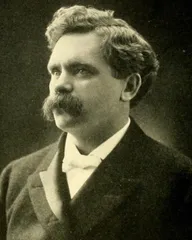
SEVENTY'S COUNCIL TABLE. BY B. H. ROBERTS, MEMBER OF THE FIRST COUNCIL. "Seventy's Day" — First Sunday in November. — We have before called attention to the fact that a number of circumstances converge to make the first Sunday in November pre-eminently Seventy's Day in the Church. On that lay one year ago, the New Movement began. With tne first of November, one year ago, the Improvement Era enlarged its field and was issued as the organ of the Seventies as well as of the Young Men's Improvement Associations. On that day also the quorums began their lessons in the Seventy's Course in Theology; and on that day they are required to make preparations to begin the second Year Book in that same course. The quorums have also been advised that the first Sunday in November has been set apart as a day on which all the quorums will sustain their Presidents and such other members of the quorum as are assigned special duties, such as their secretary, class teachers, musical director, etc., etc. It is a'day that is to be given up to the consideration of the affairs of the respective quorums in general. This should include a review of the past year's achievements: not only in regard to the studies that have been pursued, but the labors that have been performed by respective members of the quorums in auxiliary organizations; in home mission work, and in labors performed in the ward as local teachers, and the foreign mission work of the quorum. The status of members with reference to paying the annual fund to the general council and the funds necessary to conduct the quorum should be ascertained. Time should be found also for expression of mutual appreciation for services rendered between the officers of the quorum — including presidents, class teachers, and musical directors — and the members; it should, as far as possible, take on the spirit of a general fellowship meeting, closing perhaps with a preview of the proposed incoming year's work, and the assignment of lessons in the new Year Book for the following Sunday. The first Sunday in November is the time for the closing of the past year's work, and the begin, ning of the new year's work. In a word, it is Seventy's Day. Make it a day
SEVENTY'S COUNCIL TABLE. 73 •worthy of the quorums and of the work the quorums are seeking to do. Following is a suggested program for the day. seventy's day program. (First Sunday in November, 1908, 10 a. m.) I. Opening exercises. Prayer and singing. II. \n outline of the manner of the day's exercises by the senior president in attendance, and greeting. III. Review of the past year's work. IV. Singing. V. Report of the status of the quorum with reference to class work, quorum finances, and reports of special work by members, foreign missions, home missions , ward labors and labors in auxiliary organizations. VI. Free and mutual expression of appreciation between officers of the quorum and the quorum members. VII. Presentation of the officers of the quorum and members as assigned to special duties. VIII. Singing. IX. Pre-view of incoming year's work and assignment of lessons. X. Testimonies and closing exercises. The Late Seventy's Conference.— Saturday evening, October 3rd, the second general conference of the Seventies quorums since the Church removed from Nauvoo, was held in Barratt Hall, President Seymour B. Young presiding. Six members of the council of the Twelve were present, including President Francis M. Lyman. Six of the First Council were present, ninety-one quorums reported to the general secretary, that they had representatives present. There were four hundred and eighty-six, all told, in attendance upon the meeting. The singing was furnished by a chorus of male voices, conducted by Prof. Charles Kent. Thirty minutes of the precious time was devoted to hearing reports from quorums selected from various parts of the wide territory occupied by the Church, from Canada to Mexico. Elder Rulon S- Wells reviewed the achievements of the past year. President Francis M. Lyman occupied a portion of the time in admonition and counsel to the quorums relative to their duties and the necessity of being prepared to discharge them. Elder J. G. Kimball called attention to sundry matters respecting reports and communications, with the general secretary's office, and Elder B. H. Roberts gave a brief pre-view of the second Year Book. The meeting was spirited and undoubtedly beneficial to the cause represented in the Seventies' work. Much encouragement will doubtless be imparted to all the quorums to whom a report of this conference will be made. While not all that was desired by the First Council may have been achieved owing to lack of time, yet a larger view of the work of the Seventies will doubtless result from the conference. All in all the First Council feel encouraged by what was accomplished and are determined that more shall be accomplished by the next annual conference. It takes time for leaven to work, especially in large bodies, but
74 IMPR 0 VEMENT ERA . there is this to encourage us, that when large bodies do acquire movement, there is a majesty and irresistible force in them that makes it worth while. Our quorums of Seventy, representing between eight and ten thousand men, is a large bodv into which to infuse zeal and energy and spiritual life, but the leaven is working. Progress is being made. Success is assured. Neither revolutions nor evolutions go backward, and this movement of all movements will not retrograded The Seventies are out for progress. They are determined that the foreign ministry of the Church shall be improved. Millions in the world are waiting upon their ministry. The gospel must be preached efficiently. The Church would be untrue to the great commission given to her by the Master if she fails in that. An ignorant ministry cannot succeed in this age. We must carry the ministry God has given to us to the men of our times, in the language of our times, and in formulas suitable to the scientific age in which we live; and the chief reliance of the Church for discharging these high offices must be upon the quorums of the Seventy. The Twelve Apostles are directed by the word of God to rely upon our quorums of Seventies for the foreign ministry. The Seventies are to be chosen not merely in preference to others, but the language of the revelation is— ' 'It is the duty of the traveling High Council, [the Twelve Apostles] to call upon the Seventy when they need assistance to fill the several calls for preaching and administering the gospel, instead of any others' , (Doc. and Cov. Sec. 107: 38). And it is the duty of the Seventies of course to put themselves in a state of preparedness to discharge this high duty — a state of preparedness by being spiritually, morally, financially, physically, and by mental training, ready for this call to their special duty This is the message of the late Seventy's conference to all the quorums of the Seventy. Brethren, give heed to the message. Seventy's Council Report for the Year 1908.— The general secretary of the first council has mailed blank forms of reports to every quorum in the Church, and requested that these blanks be carefully and accurately filled out and returned to him not later than December 31, 1908. There should be prompt action in filling out these reports, and the Presidents of the quorum should remember that the First Council holds them responsible for this work. They should supervise the work of their secretaries and see to it that this business is promptly and thoroughly attended to. Indeed these blanks should be taken up for consideration by the respective councils at their meetings and consider them in connection with the quorum secretary, giving him such instructions in relation to matters therein presented as will enable him to faithfully respond to this request. Special attention should be given at this time to the collection of the general fund, that there may be a full report made to the general secretary at the appointed time. If proper effort is put forth there is no reason why the general fund for 1908 should not be collected and forwarded to the council with the annual report of the quorum. Give this matter your attention, Presidents, and let us do our business not only decently and in order, but promptly. Second Year Book Errata. — In the introduction of the second Year Book chapter V, under the heading, "Text Books and Authorities," in referring to the
SEVENTY'S COUNCIL TABLE. 75 "Student's Ecclesiastical History," written by Dr. Philip Smith, Mr. Smith, it is stated, is the author of the Old Testament and New Testament History, frequently quoted in the Seventy's Year Book No. 1. This is an error. While Dr. Philip Smith is the author of a "Student's Old Testament History," and "Student's New Testament History," it is not his works that are cited under this title in the Seventy's Year Book No. I; but Dr. William Smith, LL. D., classical examiner in the University of London, whose Old and New Testament Histories are so frequently quoted, and students should indicate the change in their Year Books. In the analysis of lesson V., chapter 28, the first subdivision of the subject "Preparation of the Earth for the Abode of Man — " said subdivision reads, "Matter — External Existence and Extension of;" it should read, "Eternal Existence and Extension of." The first foot-note at page 33 marked * is out of place. It was written for the note at page 42, but being lost, the present note at page 42 was substituted. These are the only serious errors so far that our attention has been called to. We would say, however, that the method of making books by type-setting machines renders it next to impossible to exclude typograph- 'cal errors, since if anything is wroDg with the line and the correction has to be made, such as the insertion of a comma, or the taking out of a comma, however slight the correction may be, it requires the resetting of the whole line, and it sometimes happens that a greater mistake is made in resetting the line than the error that was indicated in the proof sheet; and so we bespeak a little charity for this kind of errors that may appear. As remarked recently in the table by one of our presidents, our students should remember that it is the substance we are after, and too much should not be made of slight mechanical errors. What Think Ye of Year Book Number II? — By the way, speaking of the second Year Book, how do you like it? Is it too formidable for the year's work? Is the range of subjects too large? Is the sweep through the ages, like the one of last year, through the books of scripture, too much for a year's mental labor? We think not. It is but another survey of the field we have just passed over. It will come easier for you this year than it did last. Meantime we have but one great purpose to achieve in the forty four lessons of the present Year Book, and that is to impress upon the minds of our Seventies the greatness and the unity of God's plan for human salvation and progress, of which the several dispensations treated in Year Book No. II, are but the several manifestations. Do not be alarmed at the largeness of the theme nor the abundance of the matter presented There is but one way to become acquainted with the gospel and that is by thorough study of it, not in its fragments alone, but as a whole. At the end of the present year's work, on which we are now starting, you will confess a broader knowledge of the gospel of Jesus Christ by studying it in the manner presented in the second Year Book than you have before realized, and so year by year, as one year's work is added to another, our Seventies will find themselves growing in the knowledge of the things of God.
76 IMPROVEMENT ERA. A Word as to Delinquents. — From various quorums complaints come that notwithstanding the very favorable time which our quorums now hold their meetings, and notwithstanding presidents, and in some instances fellow members, have urged them to faithfulness, and have especially urged them to attendance upon quorum meetings, there are Seventies who choose to ignore all these admonitions of their brethren, and absent themselves from the meetings without any just excuse for their non-attendance. Their absence is not only a matter of months, but in some cases extends over a year, and in some cases they have not attended their meetings in two or three years. The question is repeatedly asked, what shall the course of the quorum be towards such delinquents. In answer to that inquiry we submit the following suggestions to quorum presidents. It is not the desire of the First Council that in the administration of the affairs or your quorum local presidents should in any sense be harsh in the treatment of indifferent and careless brethren. But now, assuming that they have labored with said delinquent members in all faith and patience and brotherly love until just forbearance is exhausted— assuming, we say, that this is the case, then the following course should be pursued. Let those persistently delinquent brethren be notified that all in the way of forbearance and mercy has been done that can be done; that by their persistently ignoring the counsel and the urging of their presidents and the quorum to be in attendance upon the regular quorum meetings, they are treating the quorums with contempt, a thing which cannot be tolerated. The efficiency of the quorums, and the maintenance of respect for the priesthood require that there shall be compliance with the appointments and orders of the quorums, and that heed must be given to the instructions of the presidents thereof. Therefore unless these delinquents will repent and come forward in a proper spirit and attend upon their duties as Seventies, it will be the proper thing for each quorum to take action upon such delinquents and drop them from the quorums for contempt of said quorums of the holy priesthood; and such action of the quorum should be reported to the High Council. This may sound harsh, but it is time that the quorums insisted upon being respected by the membership of said quorums. Our Seventies are not children, but, as a rule, are men of understanding who ought to know that the priesthood to which they belong and the quorum of which they are member's cannot be trifled with continually in such matters. The First Council will justify local presidents in taking a firm stand in relation to these things. Of course, as stated in the beginning, such action is to be taken when the presidents feel that they have done their full duty in the matter of persuasion and the holding out of inducements and encouragement to our delinquent brethren to attend to their duties. We trust that these suggestions will be regarded as final in the matter, and that we shall not be under th« necessity of referring to so unpleasant a subject again. The work year of the quorums is just drawing to its close, and a new work year is beginning. This first Sunday in November, therefore, would be a good time to take up the execution of the above suggestions, that the quorums may be put in order, and our delinquent brethren brought into the work, or dropped from the quorum; for it is not proposed that delinquent brethren shall continue in a state of contempt towards the quorums and still retain a standing in said quorums.