Seventy’s Council Table
Improvement Era, vol. 11, no. 12, October 1908, pp. 965 to 969
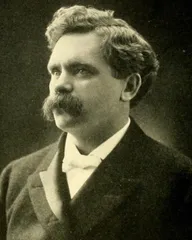
SEVENTY'S COUNCIL TABLE. BY B. H. ROBERTS, MEMBER OF THE FIRST COUNCIL. Seventies Conference.— There will be a General Seventies Conference convened in Barratt Hall, L. D. S. University Building, on Saturday evening, October 3, 1908. A general attendance is desired, and every quorum should seek to have representatives present who will be prepared to report the work of their quorum if called upon, and to participate generally in the spirit and subjects of the occasion. During Saturday, representatives of the quorums are requested to call at the Seventies office, 313 Templeton Building, and report the probable number of their presidents and members who will be in attendance, as from this information the attendance will be noted. Giving notice of this conference reminds us that one year has passed since the inauguration of the "New Movement" among the Seventies. Have our anticipations of improvement been realized? Has the work accomplished justified the efforts that have been put forth? Has a wider knowledge of the scriptures been imparted by our course of study? Have conceptions of the greatness of God's Latterday Work been enlarged? Are quorums in a better condition than one year ago — better organized? Has the attendance increased? Has there been growth in mental activity, intellectual development, and in the attainment of spiritual power? Let each quorum answer these review questions for itself on the first Sunday in November, which is to be a day set apart by the Seventies for such review, for fellowship,for the presentation of the officers of the respective quorums, for a vote of confidence (see Council Table in July Era) and preparation made for the inauguration of the work in the coming year. For ourselves, and speaking for the quorums generally, the First Council would answer all these questions in the affirmative. It may be that here and there a quorum has disappointed our expectations, but speaking for the whole body of the priesthood represented in the quorums of the Seventy, we believe' that substantial growth over any other preceding year has been made; and, what is better, conditions have been secured that will make our second year under the "New Movement'' more fruitful in results than the past year has been. In every way we are encouraged, and it is the intention of the First Council to give such service to our quorums that larger growth may result in this second year than in the first; and so year after year do we expect our quorums to increase their efficiency until they will take on an academic character and be real institu-
966 IMPRO VEMENT ERA . tions of learning in the Church of Christ. Are you with us, brethren, in our good intentions? Year Book Number II. — The new Year Book, "Outline History of the Dispensation of the Gospel," will be ready for distribution at the Seventy's Conference, October 3, 1908. Representatives of the quorums should come authorized by the quorums to take back with them from the conference the necessary supply of Year Books for the respective quorums, and thus save the expense of expressage or postage ; and it should be remembered that every Seventy in the quorum needs the Year Book. The subject of which the second Year Book treats is one of intense interest, and we believe in this respect will not fall behind last year's work. The object of the treatise is to give a broad general knowledge of the history of the various dispensations, striking a cord of unity through them all from the councils in heaven, where the plan of that "eternal life which God that cannot lie promised before the world began," was considered, down to the beginning at least of the opening of the Dispensation of the Fulness of Times in which it is our joy and glory to work. As the first Year Book was planned to impart a general knowledge of the scriptures, so the second Year Book is planned to give a general knowledge of these dispensations and so unify them in the minds of our student Seventies as to make them conscious of the great truth that the gospel in all ages is one — ' 'the power of God unto salvation to every one who believes and obeys it; to the Greek and the Jew; to the ancient and the modern; the power of God unto salvation in the past and in the present, as also it will be in the future." It is a great theme, worthy of the body of priesthood that is to dwell upon it, and we both hope and believe that our brethren will not be disappointed, either in the subject or its treatment. Let every preparation be made for each quorum to begin work upon the new Year Book the first Sunday in November. If any quorum by that time has not completed the present year's course of study, let them admonish the individual members to complete the study personally, and let all quorums commence their work together on the new Year Book. There must be no failure in this. We do not want one quorum lagging behind the others. It is the intention to have the quorums keep in line in this course of study. Otherwise confusion will result, confusion that will result in the chaos of the past, out of which at great cost of labor we have emerged. Lat us have no sinking back into that chaotic condition, but march orderly in line from one year's end to another, and from one subject to another, until in very deed all Israel shall know that to be a Seventy means mental activity, intellectual development, and the attainment oj spiritual power, through earnest, orderly study and right living. Commendation of the Seventy's Course of Study.— One of the presidents of a quorum in Salt Lake City writes us the following in relation to the Seventy's course of study during che past year: Our quorum of Seventy has almost completed the first Year Book, and I want to tell you that never in my life before have I enjoyed studying the gospel as I have this past season. I like the outline, and I know if it is properly handled
SEVENTY'S COUNCIL TABLb. 967 that it is going to result in much good. There are some typographical errors, but they are not faults of any importance. It is the substance that we want, and I think we have it. The trouble with many of the brethren is, that they cannot act or think independently of a book or outline, but in time I look for an originality of thought among the' 'Mormon" boys that will surprise the world. I hope that the second outline will be as interesting and suggestive as the first. I intend sending all the courses of study to the library at Harvard University. Our quorum is progressing I believe. * * * * Speaking very seriously, the movement in having the quorums of Seventy meet every Sunday is one of the most important movements in the history of the Church. It is going to result in teaching more "Mormonism" than anything else I knovv of. Sunday should be the ■day of the Priesthood, the day when the priesthood is learning and talking "Mormonism." I am heart and soul for the Seventy's work. May it prosper. Let us have the new outline. We need it. Success to you always in your work. On the Matter of Possessing Books of Reference.— One of our presidents writing the editor of the "Table" says: I have just visited some outlying quorums in recent short trips from the city, and, for the most part, I find the excuse pretty generally made that they do not have very many of the books you refer to in the Year Book. It never occurred to the Seventies there, I suppose, that they ought to get them. Generally speaking, the Seventies in our farming communities are much better off then those in our cities. They have more money usually to spare for whatever conveniences the country affords than we have for city cenveniences, and are more able to buy books. And yet how they begrudge a dollar spent for literature! What think our brethren in the country of this? Is it not worthy of consideration? In this connection we would add that no one need be discouraged because for the first year's work so many books were referred to. It was explained in the Year Book itself that "it is not expected, of course, that all our Seventies will be able to secure the entire collection suggested, but it would be well for our members to purchase so many of them as they can afford to buy as the beginning •of a small, personal library. The books recommended will not only be useful for the present year's lessons, but are standard books that will be useful in all the courses of study yet to be prescribed. Inasmuch as individuals may not be able to purchase these books, we suggest that it would be well for each quorum to take under consideration the propriety of the quorum as a body obtaining this complete list as the foundation of a quorum reference library, that might be available to all for preparation." Again it was explained that the references in the lesson analysis were made so numerous and varied purposely; "so that if the members do not happen to have access to one of the dictionaries, or helps or other works of reference, they might possibly have another — one at least out of the many." So brethren, you who are making excuses for no preparation because of the lack of reference books, think over the suggestion of our correspondent about purchasing books. If you cannot obtain the whole list now, at least get one or two books -as a commencement of that personal collection of reference books indispensable to the student Seventy. The Educational Value of the Seventy's Course in Theology.— From
968 IMPROVEMENT ERA. Elder John H. Evans, the "Table" has received the following valuable paper on the subject of this heading: During the progress of this year's work in the Seventy's class, the thought has occurred to me again and again that we have a singularly fine opportunity to get the education wnich many of us lament we have had to go without. In the first place, the work, having been systematically laid out, offers a good chance for the orderly thinking which our schools aim to give. We do not have a dab here and a dab there, but a series of methodical lessons forming a connected whole. Now, to follow these lessons carefully one after another is bound not only to give us the information they contain, but to induce certain mental habits which, together with the knowledge gained, constitute an educated person, whether these essentials have bean gained in or out of school. In such a course one ought to gain discrimination of thought, accuracy of statement, an enlarged memory, a wider outlook upon the world of ideas, some power of correct address, and most of all a habit of reflection and study. This Seventy's course, so far as time is concerned, is equivalent to a twohour course at a college. Now, since a college study requires two hours of preparation for every hour spent in class recitation, the Seventy's course should need four hours spent by each man in preparing the lessons. Hence, so far as the student is concerned, the course ought in a great many cases to be equivalent to a college course. Then in at least some of the classes, college-bred men and professional teachers conduct the recitations. In some cases, therefore, practically all the conditions obtain that you find in the schools. This fact should be a source of great inspiration and encouragement to all who feel that they have had insufficient opportunities for gaining an education at institutions of learning. To be sure, the good effects sought, depend upon the individual exertions of the student- Seventy. But is not this the case at school? Hard work counts everywhere, no less in our religious organizations than at educational institutions. If one is to make a good recitation, to gain the knowledge desired, or to found an intellectual habit, the way to do so is to work hard. There is no other way— any more than there is to earn one's daily wage. Plenty of men and women pass through the schools without getting what they were sent there to obtain. Everything everywhere depends upon individual exertion. It is often objected, however, when a larger preparation is called for, that we of the Seventy's quorum are men who have to earn our bread by the sweat of our face, and that, therefore, we have very little time to devote to study. Well, the preparation of the average lesson in our Year Book requires only a "little time" daily. Four hours for every lesson would make a trifle more than half an hour for each day. Who is there that does not absolutely throw away an hour a day? Thomas A. Edison, the great inventor, when asked how it was that he could spend sixteen hours a day on any given piece of work, replied to his questioner : "You do something all day long, don't you? Every one does. If you get up at seven o'clock and go to bed at eleven, you have put in sixteen good hours, and it is certain with most men that they have been doing something all the time. They have been either walking, or reading, or writing, or thinking. The only trouble is that they do it about a great many things and I do it about one." Not time, then, so much as something else is lacking. Another objection is that we have to work so hard at manual labor that we cannot without great effort bring our minds to the book. This certainly has the virtue of plausioility — it looks genuine. And I am of the opinion that in most cases where it is urged, it is really true. But, granting that it is true in every case, what then? Are we to deny ourselves the greater power, the wider influence, the increased joy that comes from the cultivation of the mind? Surely, we cannot give up without a manly struggle! Gladstone, when he grew tired of mental labor, took the ax and cut down trees, thus finding, not additional toil, but relaxation. Would not a change of work from the physical to the mental be equally restful?
SEVENTTS COUNCIL TABLE. 969 Energetic young men who are struggling for an education often secure one by attending school, and doing the equivalent of a day's work between hours and in the evening. I venture the suggestion, therefore, that some of us find mental work hard after manual labor, not so much because we are tired bodily as because our minds, from too little exercise in study, have become stiffened. If this be true, the remedy lies in compelling the intellect to limber up. What we do often, be comes easy to do. Devoting, patiently and persistently every day, half an hour or an hour to a careful preparation of the lessons would so oil the joints of the understanding that we should no longer have to urge the plea that physical weariness prevents mental application. And what would be the reward of this daily toil, thus faithfully performed for, say, ten years? In college it would be forty hours' credit — more than onethird of the credit necessary for graduation with a bachelor's degree. Out of school it ought to mean as much work, and, therefore, as much information and mental discipline. For, after all, the teacher counts for a good deal less everywhere than most people imagine. All he does is t) guide the line of work; the pupil toils; and work, fortunately, can be done out as well as in school, and will bring the same fruit wherever it is carried on conscientiously and with intelligence. Any one who has done his full duty this year will, by the time it is over, have in mind a pretty good general view of the world's history, sacred and profane — a back ground on which may be projected whatever figures or scenes there may be given us in future Year Books. And by the time this has gone on, say ten years, any one who has done his part will have gained the rewards of a really good education — knowledge of men and things, and, best of all, a trained mind capable of sustained attention. The Era. — This number of the Era closes Volume XI, the first volume during which it has filled the office of "Organ of the Seventies," as well as of the Young Men's Mutual Improvement Associations. Presidents of Seventies should call the attention of their members to the fact that their subscription expires with this number, and should be at once renewed. Remember the Era is the Organ of the Seventy, and really should be patronized by all Seventies. How valuable it has been to the presidents and members of our quorums as a means of communication between the First Council and our members cannot, of course, be estimated. It is not for us to pronounce upon the value of our own work— the Seventy's Council Table — but we feel sure, whatever may have been the present success or failure of this department, it certainly can be made a valuable adjunct to our work, and doubtless will be increasingly so as the years pass by. But apart from this, the literature of our magazine is worthy of all commendation, and no subscriber to the Era who has read its productions can doubt having obtained full value for his outlay in money. It is for the Seventies as well as the Young Men to work earnestly in the interest of this publication. From partial reports we learn that more than two thousand of our Seventies subscribed for the magazine. With our membership, this number should be doubled, at least, and we call upon our presidents to make mention of this subject to their members, and in the quorum meetings, especially having it put forward as one of the special items to be considered on "Seventy's Day," the first Sunday in November. Let an earnest effort be made in every quorum to enlarge the subscription list, that the influence of the magazine may thereby be increased and more people blessed by its ministrations of thought among them.