Seventy’s Council Table
Improvement Era, vol. 11, no. 11, September 1908, pp. 891 to 894
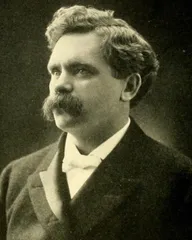
SEVENTY'S COUNCIL TABLE. BY B. H. ROBERTS, MEMBER OF THE FIRST COUNCIL. The Scripture Reading Exercise. —From observation when present at quorum classes, we are inclined to think that the scripture reading exercise is allowed to occupy too much time. The rule seems to be that after the reading is given and comments made by the reader, the class teachers then throw open the reading for general discussion, occupying sometimes fifteen or twenty minutes or even longer. This was not the intent when the exercise was instituted. It was designed as an individual exercise, the reading and commenting to be done by one person, granting to all the members equal opportunity for participation in turn, but it should not take up more than five and at the outside ten minutes of time ; with no other comment than that made by the reader, except some error should appear, in which case the teacher or one of the presidents might make the necessary correction. The exercise is designed as a drill rather than as a medium through which to introduce doctrinal discussion. As to Adjournments of Quorum Meetings. — Much to our surprise, the First Council learn that here and there a quorum has discontinued the Sunday morning class meetings, chiefly because of the hot season This certainly was not down on the program, and is not approved by the First Council . There is no arrangement made in the plans outlined for this year's work for any vacation or summer adjournment. One of the main reasons that was urged why Sunday morning should be given to our quorums was that we might have a meeting once every week throughout the year, except for the necessary adjournment to attend the Stake conferences and the Ward confereuces in the respective quorum districts. But it is all wrong to adjourn these quorum meetings on account of hot weather, or because a few of the members may be so fortunately situated as to take a summer vacation and go to the sea-coast or to the mountains. To adjourn through the hot months would bespeak a lack of interest in the work outlined for our quorums, which, if well done, will require all the meetings that can be crowded into the fifty-two weeks of the year. No adjournment, then, of quorum meetings, brethren. You need every Sunday available to accomplish the labors laid out for you in the first Year Book.
892 IMPRO VEMENT ERA . Hold on to Sunday.— From various quarters there come suggestions to the First Council, and sometimes even from our quorums, suggesting a change in the time of meeting. In one or two cases it is suggested that our quorums meet on a week night, and in one or two other cases that we meet at some other time on Sunday, at two o'clock or at nine o'clock. The reply of the First Council has invariably been in such cases, hold to the appointment on Sunday at ten o'clock. All things considered, it is the very best time that could be appointed, and when we think of all the advantages that the meeting on Sunday morning brings to our quorums we can scarcely have patience with those who would agitate any change being made. The success of our work depends upon our holding on to this time of meeting. If we begin varying from it because of little local inconveniences that in time will pass away we will soon throw our quorums into that state of chaos from which they are just now emerging so successfully. Let us have no talk of changing. It was with much difficulty that the privilege of meeting on Sunday morning was secured for the quorums of Seventy, much sacrifice was made by other organizations, and now we want to vindicate the wisdom of the Presidency of the Church in granting to us this high privilege. Let us have no agitation, therefore, in relation to changes; nor yet any manifestation of the lack of interest in, or appreciation of our privilege, by adjourning our quorum meetings through the {hot season. Seventies are supposed to be earnest men, anxious to equip themselves for the service required of them in the holy ministry of the Church; and should not be deterred by little difficulties or inconveniences that after a little will pass away as our work becomes established. Preparation of Lessons. — What is meant by the preparation of the Year Book Lessons? Does it mean simply looking over what is set forth in the Year Book lesson analysis and notes? We fear that such is the idea 01 preparation entertained by "seme of the Seventies, for that is all the preparation they make, and that is even done in a hasty, and therefore imperfect, manner. Preparation — real preparation — would mean a careful study of the analysis, observing the relation of the parts^to the whole, presented by the lesson; and each separate reference to the 'scripture or other authorities, so far as the members are in possession of the books should^be looked up and read in connection with their context, and the exact bearingjthe passages have on the subject should be rightly apprehended and enlarged upon. The notes of the lesson are not to be considered as exhaustive treatment^ the subject. They are given just to help the student enlarge upon the'scriptures which he himself should study in connection with each lesson. The full value of the lesson can only be obtained by thorough preparation, and this will take a good deal of the leisure time of each student throughout the week. No lesson in our Year Book can be?mastered by a hasty reading of the notes. The references accompanying the lesson analysis is the real literature upon the subject, and not the notes. Class teachers cannot too much emphasize this fact, and frequent attention should be called to it. Thorough preparation means present interest in the lesson, and future profit in the hived knowledge that such preparation will insure.
SEVENTY'S COUNCIL TABLE. 893 Misapprehension. — In a letter recently received from a Presidency of one of the Stakes of Zion the following passage occurs : "Since the movement inaugurated last November in conducting Seventy's meetings, we have had but little active service from the Quorum in a public way. That they have taken greater interest in their Quorum meetings, we are free to admit ; but their usefulness in a general way has ceased almost entirely at that point. But few of them attend sacrament meetings on Sunday afternoon, excusing themselves on the ground that they have attended to their quorum meeting. We have been unable to use them as home missionaries to any extent, for the reason that they do not care to fill appointments that would take them away from their quorum meetings, and we do not feel that it is doing justice to other home missionaries to require them to fulfil all appointments in the most distant wards, and leave the near-by wards to the Seventies." This certainly is very astonishing, since there is nothing in the instructions of the First Council that justifies our quorums in taking any such ground as this ; and we must needs think that there is a misapprehension on the part of the stake presidency in this instance. But lest there should be any quorums in the Church who have this view of their labors, we publish this excerpt together with the rest of this paragraph in order that all may understand that Seventies are not justified in any such attitude. The stake presidency in question further says: "Since the quorum has discovered from articles that have appeared of lale in the Era, advising that the quorum of Seventy are not a stake organization, and that they are entirely absolved from duties that in any manner interfere with their quorum meetings, they have taken 'high ground' and become a power unto themselves' so to speak." Relative to this passage we would say, that while it is true that the Seventy's quorums are not any part of a stake organization, but are general Church quorums devoted to the foreign ministry of the Church, and have a local presidency in the seven presidents of the respective quorums, and a general presidency in the First Council of the Seventy, it does not follow that they cannot be of service and helpful in the home ministry, and everywhere and by every member of the First Council our Seventies have been urged to be the most helpful and the most staunch supporters of our brethren in the home ministry, to the bishops in the wards, and to the presidency of the stakes in which their quorums are located. And while we have desired and do now desire that the Church labors of our Seventies should be so adjusted as to leave them free on Sunday forenoon to devote themselves to preparation for their ministry, they have in no way been absolved from other Church duties and labors, nor have they any right to absent themselves from the sacrament or other general meetings appointed by the Church. Nor do we think that any such desire prevails to any great extent, but wherever it appears we desire to correct it and call upon our presidents to correct it. So far as suggestions have appeared in the Seventy's Council Table affecting these matters, they havebeengiveninthisspirit. And not at all in the spirit suggested in the passages quoted from the aforesaid letter. In the Era for March under the heading Use of Seventies as Ward Teachers," this passage occurs:
894 IMPROVEMENT ERA. ' 'We hope the members of our quorums will cheerfully respond to any appointments made for them by the bishops as ward teachers. We urge this on two accounts, just as we do in saying a word for the use of our Seventies as home missionaries; namely, first, we desire our Seventies to be useful in the ministry at home, as both the bishops and the people have need of their labors in this calling ; and, secondly, the Seventies need just the kind of training that is possible to acquire in acting as ward teachers. ' ' And in relation to our Seventies being used as home missionaries, the following passage occurs in the same number of the Era : ' 'The question has come up in some quorums as to whether our Seventies should be used by the local authorities, presidents of stakes, for home missionaries, as sometimes home mission appointments would call them away from attendance upon their class meetings on Sunday mornings. In reply to inquiries made upon the subject, the First Council calls attention to the fact that in most cases where home mission service is required of the members of our quorums, the place of appointment can be reached after the close of the quorum meeting on Sunday morning, and only in comparatively few cases would it be necessary to miss the class meeting to fill home mission appointments. And where that becomes really necessary, we suggest to our quorums that they regard as a legitimate excuse for non-attendance at any quorum meeting, the fact that a member was filling a home mission appointment. Work as home missionaries is the very best kind of training for our Seventies. It gives them an opportunity to exercise themselves in the art of teaching the gospel, and is therefore desirable, not only because we wish our members to render these services in the home ministry of the Church, and for the good of the people to whom they minister, but also it is desirable on their own account for the training that it affords them." We think there must be some misapprehension on the part of the presidency of the stake in question when they refer to the Seventy's Council Table as giving any encouragement to the idea that members of our quorums are "entirely absolved" from duties in the Church other than those immediately connected with their quorum meetings.