Seventy’s Council Table
Improvement Era, vol. 11, no. 10, August 1908, pp. 814 to 817
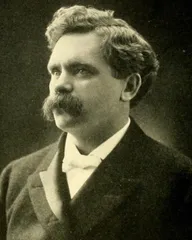
SEVENTY'S COUNCIL TABLE. BY B. H. ROBERTS, MEMBER OF THE FIRST COQNCIL. The Following Questions Are Asked by the Sixty-Eighth Quorum of Seventy. 1. "Is it necessary to have witnesses to baptisms, if so, why?'' Answer. We know of nothing in the written word that positively asserts that it is necessary to have witnesses to ordinary baptisms of the living. Certainly there were no witnesses to the baptism of the officer of Queen Candace's Court, except Philip who was on this occasion the administrator (See Acts, 8); and it may fre- quently occur with traveling elders that baptism without witnesses will take place. In the organized wards and stakes of Zion, however, baptism should only be per. formed with the knowledge and approval of the local, presiding authorities, and usually others will be present; but, as already stated, we know of no rule that ab- solutely requires witnesses to be present. 2. "If witnesses are necessary, why are they not recorded?" Answer. The fact that there is no absolute requirement for witnesses to be present in baptisms for the living, is doubtless the reason why no record of witnesses present is kept. 3. "Who may be witnesses as to priesthood," etc.? Answer. No provision is made for witnesses of any grade of priesthood. 4. "Is it proper that the place where the ordinance of baptism is to be per- formed should be dedicated before the baptism takes place?" Answer. There is nothing in the written word so far as we know that positively requires that the place where baptisms are performed for the living should be dedicated ; but a beautiful custom has grown up in the Church, from the practice of the elders, of dedicating the place of baptism for the sacred rite to be enacted there, and we think it is worthy of all acceptation, and should be followed as a beautiful and appropriate custom in the Church. A Series of Questions. — The one hundred and thirteenth quorum submits the following series of questions 1. "Can a man be a president of a quorum of Seventy of which he is not a member?" Answer. No. ^ 2. "Are not the seven presidents of the first quorum of Seventy also the local presidents of quorum number one?" Answer. Yes; only quorum number one is not a "local quorum." 3. "If the first seven presidents of Seventy are local presidents of quorum number tne, why are they not selected from within that quorum's district? Or do the First (Seven) Presidents who live outside of the geographical limits of quorum number one become by some due process enrolled members in it, and con- tinue to reside in some other quorum's district?" This question is based on a misapprehension of the status of the first quonim
SEVENTY'S COUNCIL TABLE. 815 of Seventy. The first quorum may be said to have a double capacity. It is, of course, one of the numerous quorums of the Seventy, and in most respects re- sembles these quorums in its organization and in its duties ; but it is also one of the three general presiding councils of the Church, having equal power and author- ity with the quorums of the Twelve, and in this respect it differs from the other quorums cf the Seventy. Being one of the three general councils of the Church it is not a local quorum, and has no local quorum district. Its district is coexten- sive with the territory occupied by the Church. (See current Seventy's Year Book, p. 9. Letter of the First Presidency, paragraph 2.) At present the membership of the first quorum and presidency is made up of the senior presidents of the first sixty-three quorums, and the First Council of Seventy, who preside over the first quorum, and besides that have a general pres- idency over all the other quorums of Seventy in the Church. If these facts, rel. ative to the first quorum, are kept in mind, the apparent inconsistency suggested in the above questions will disappear. Important Suggestions. — We call attention of presidents of quorum? and of class teachers to the following suggestions made by Elder John Henry Evans of Salt Lake City and one of the quorum of Seventy, addressed to the editor of the "Table." — Dear Brother: Will you permit me to commend a feature of the "Seventy's Manual," and to make a suggestion concerning the next year book? One of the best things in our course, it seems to me, is that part which pro- vides for short discourses, together with those few, but helpful, hints about dis- course-making. If properly carried out, this part forms one of the most beneficial exercises that could" be devised for our seventies. I should therefore like to see this part of the Manual, not only continued in the next, but increased in amount. If it is possible, I should like to see the material for the lessons broken up into topics that would be convenient for short discourses and the topical method of instruction encouraged. At present, I think the teachers do too much of the talking. During the course of our present study, I have kept close tab on the manner in which at least one quorum of seventy present the lessons. And my observation leads me to the conclusion that one of the most needful things just now is a course of study in the rudiments of English. The wabbly efforts of many of our good brethren to express their thoughts, their inability to discriminate between what is important and what is not important in a discourse, their bad grammar and pro- nunciation, and similar improper methods of presentation — should not these things have some attention in our manuals? I am strongly of the opinion that for the most part the generality of our seventies need manner as much as matter. Should not the Manual give them more of the former? Now, on this I have a suggestion to make, based on my experience with a missionary class at the L. D. S. University, for three months last year. It is this: Let material be incorporated in the Manual on the grammar and rhetoric of dis- course. First, there could be something on the whole discourse— for example, that it must have a beginning, a middle, and an end — at least an end together ; with some general principles of unity, mass, and coherence. This might be fol- lowed up with some exercises in narration, exposition, and argumentation, taken from general literature, and followed with original oral composition based on the Manual. After this, some attention, probably a good deal, might be given to the structure of the sentence and to usage in the matter of words, synonyms, etc. i am sure that there is nothing which will teach one the importance of work-
816 IMPROVEMENJ ERA. ing up to a point better than an anecdote or a short story. Last year at the Uni- versity I started the class out with a simple narration that would take probably only one minute or two to tell. This was always selected from the classics. The details were pointed out in class and their value on the climax shown. Then longer and more or less complex narratives were assigned. All these were to emphasize form and the ordering of details. Then came exercises in simple and complex narration requiring invention. In the same way we went through exposi- tion and argumentation. There could be gotten out a graded coarse in English suitable for Seventies, which could run through several years if thought necessary, and which would set them on their way towards a really good and useful English education. Fifteen or twenty minutes of a Sunday morning, or at most thirty minutes, would be suf- ficient time in which to conduct the work, and it should be so simple that 'a way- ' faring man" might not "err therein." Comment on the Foregoing Suggestions. — We call attention to the foregoing rocommendations of Elder Evans for other reasons than the intrinsic value contained in the suggestions themselves; namely, we desire to express the wish that our brethren of the Seventy's quorums, instead of contenting themselves with asking questions would do as Elder Evans has done — offer us suggestions in our work; and instead of being mere questioners that more of them would turn in and work on the positive side of things. Give out ideas instead of eternally beg- ging for ideas. Be fountains instead of mere ponds. View the trend of our work as it developes, and make us helpful suggestions as to how we can better things. Put yourselves in an attitude of mind that will make you part of the driving force of our machinery. Be among those who tell us how, rather than among those who ask us why. The Table will gladly give place to helpful suggestions as we do to these contained in the communication here commented upon. Relative to the en- largement of parts of the Manual commended by Elder Evans in our Year Book, we would say that while suggestions on constructing discourses will doubtless be continued for some time in our Year Books, yet we cannot see how we shall be able to enlarge very much on the matter, and think likely that the requirements of the quorums in this respect can be better met by the recommendation of some primary work on Eaglish to be studied on the side, rather than by attempting to carry a graded course in connection with our theological course in the Year Book. The First Council, however, will gladly receive and consider suggestions upon this subject that may be submitted to them by the presidents or class teachers. Let us hear from you, brethren, on these and any other subjects on which you have suggestions to make. Courtesy to other Quorums — "Finally, ***** be courteous." Such the admonition of Peter to the Church in his day, and indeed it is an admonition that will hold good for all time among all sorts and conditions of men, since to be courteous means to manifest well bred kindness and consideration towards others. It is a word representing a natural product of the spirit of the gospel. It should be constantly practiced until it becomes tabitual. It is this quality of character that distinguishes the man of cultivated mind and habiti from the ignorant boor. It measures the distance between the barbarian and civilized man. It is the quality which smooths the rugged path of intercourse between men of different
SEVENTTS COUNCIL TABLE. 817 opinions and pursuits in life — pursuits which so often create different viewpoints on many important affairs in life. Courtesy is born of the spirit that makes for peace rather than war. If it were represented by plants it would be the olive branch instead of the thistle. It is the "open sesame" to all society worth while. No one can long resist the polite approaches of the really courteous man. No wonder, then, that Peter ia summing up the qualities which should characterize a Christian people said: "Finally, * * * * be courteous." Courtesy is a quality of character to be exercised not alone towards those whom we may think deserve it; but to the undeserving as well. "Use every man after his desert and who shall 'scape whipping?" To paraphrase Hamlet, Men should be used not as they deserve, perhaps, but after one's own honor and dignity: the less they deserve the more merit is in the bounty of courtesy extended to them. If this quality of conduct is to be followed, as we think it is, in one's intercourse with all men, how much more ought it to characterize conduct between brethren — men of the household of faith, men having a common end in view— the declaration of the truths God has revealed to the Church, to all the world, and the perfecting of the lives of those who receive thaftruth — to brethren of the same priesthood, albeit following differ- ent callings in that priesthood —to such, how timely the admonition of this, "Finally, be courteous!" We would have our Seventies excel in the possession and exercise of this quality. After love toward God and love for fellow men, we would say, Brethren, be courteous; and, indeed, if the two former laws be even approximately perfected in men, they will lead to the fulfilment of Peter's admonition. For it is not difficult to be courteous to those whom we love. To be more specific, brethren, we would admonish you to the exercise of this quality of character in your associations with the other quorums of the priesthood If you . have a special exercise, for example if there is to be a discourse on some of the sabiects suggested in your Year Book, and for which special preparation has been made, — why not extend an invitation to some of the brethren of the Elders quorum or members of the High Priest's quorum, or the Bishopric of the Ward, members of the High Council, or members of the Priest's quorum —to be present and enjoy that exercise? Let us cultivate the spirit of friendship one with another. Because we are of different callings in the priesthood it does not follow that we should be estranged from our brethren. Closer fellowship is what we seek. Mutual help- fullness between all the quorums. The habitual willingness to share one with an- other the good things we have. Does the bishop visit your quorum? Extend to him a most royal welcome. Does the Stake Presidency call upon you, or members of the High Council? Be glad that it is so, and give them a most courteous wel- come. Do the Presidency of the Elders quorums or some of the members express a desire to visit your class meeting? Make them entirely welcome . Have these visiting brethren suggestions to make? Listen to them attentively and profit by what they offer. Let no body of men in the Church excel you in the matter of courtesy, either as individuals or as an organization. It is most fitting that a body of men upon whom primarily rests the direct responsibility of proclaiming the gospel to the world should cultivate this Christian grace of courtesy. Since they must needs practice it when pursuing their calling, it should become habitual with * * * * be courteous." them. Heed, then, this scripture, brethren, and "Finally,