Seventy’s Council Table
Improvement Era, vol. 11, no. 7, May 1908, pp. 556 to 559
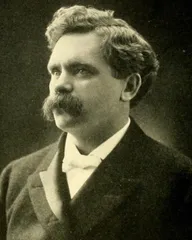
SEVENTY'S COUNCIL TABLE. BY B. H. ROBERTS, MEMBER OF THE FIRST COUNCIL. All Seventies Subject to Mission Calls. —In a letter recently read be- fore the First Council it was discovered that some Seventifts entertain the idea that the members of our quorums at present engaged in Sunday school work were exempt from calls to do missionary labor in the world; and in some instances it ap- pears that the presidents have refrained from considering their names for missions, because of their connection with the Sunday schools. This should not be. Our brethren at present connected with the Sunday schools are just as subject to calls to the mission fields as those not so connected; and it is the wish of the First Council that the councils of the respective quorums should consider the names of these brethren as freely as they canvas the names of brethren not engaged in such work. Because for a time a Seventy's services were needed in the Sunday school it does not follow that he is to be deprived of an opportunity to discharge the special functions of his calling in the priesthood in filling a mission to the nations of the earth. Work in the Sunday school by our Seventies is not to oper- ate as a bar to their enjoyment of the rights and privileges of Seventies, including the right and privilege to go upon missions when able, to pay the annual general fund, such quorum funds as may be determined upon as necessary to meet the quorum expenses, assist missionaries, purchase books for quorum libraries and the like. Indeed, the work in the Sunday schools interferes with the work and privil- eges of the Seventies who are engaged in it only to the extent of keeping them, for the time being, from attendance upon the Seventies class exercises on Sunday morning between the hours of ten and twelve. All the time they are Seventies, and subject to be called upon to do Seventies' work, except for the time on Sun- day morning designated; and we hope to see Seventies now engaged in Sunday school work relieved in the near future. The Seventies and the Sunday Schools. —Apropos to what is said above respecting the Seventies and Sunday school work, we desire to call attention to the fact that six months have passed since the inauguration of the new working conditions for our Seventies quorums. At the time of adjusting matters between the Seventies quorums and the Sunday schools, some of our members were tempor- arily excused from the quorum classes until other men could be found to fill their places. Complaint occasionally reaches the First Council that after the lapse of six months these brethren have not been released from their temporary service in the Sunday school work. The question arises, Has due diligence been exercised to find brethren to take the places of the Seventies in Sunday school work? In some
SEVENTTS COUNCIL TABLE. 557 cases we are patisfied it has not; and we suggest to our local councils that they take the matter up with the proper local officers in behalf of the members of their quorums, detained from participating in our Seventies' class work, and insist upon their release at the earliest possible day. Also we call attention to the fact that after the adjustment of affairs between our quorums and the Sunday schools last October and November, we do not understand that our quorums thereafter are to be invaded and members thereof taken into Sunday school work. Our members are in special training for the foreign ministry of the Church and should be let alone. Emphatically we do say that it is not the prerogative of the auxiliary organizations to interfere with the quorums of the priesthood, and they should be respectfully asked by our local councils to let our quorums of Seventies alone; they are not properly subject to interference from auxiliary organizations. And when some absolutely necessary conditions arise that call for the services of our Seventies outside their quorum labor and appointments, and in conflict with them, common courtesy, to say nothing of the principles of Church government involved, requires that the men who preside over the Seventies should be consulted by the local authorities dealing with said conditions; consultation with the local councils when the members of the quorum are involved in the contemplated changes, and with the First Council if the changes affect the presidents of quorums. Jesus and the Melchizedek Priesthood. — "How, when and by whom did the Savior receive the Melchizedek Priesthood?" This question has been asked a very great many times of late. Six letters from various quarters are now before us, which in various forms ask the above question. In answer we are under the necessity of saying, frankly, we do not know ; and the reason for that absence of knowledge ought to appear on very slight reflection. That authority of God which we call "Melchizedek Priesthood" was anciently called by the Church "The Holy Priesthood After the Order of the Son of God ; but out of respect or reverence to the name of the Supreme Being, to avoid a too frequent repetition of his name, they, the Church in ancient days, called that priesthood after Melchizedek, or the Melchizedek Priesthood." (Doc. and Gov., sec. 107), This passage clearly establishes the fact that the Melchizedek Priesthood existed before the great High Priest Melchizedek, but that it existed under another name, viz — "The Holy Priesthood after the order of the Son of God." That is to say, it was the same kind of priesthood, the same order of priesthood, that the Son of God held. But this was before the days of Melchizedek, before Abraham, and hence hundreds of years before the birth of the Christ into the world. Jesus therefore held a priest- hood in his pre-existent state, and the priesthood like unto it held by men after- wards in this world, in very early days,was called "The Holy Priesthood after the order of the Son of God;" and subsequently the Melchizedek Priesthood, for the reason already given. Jesus, then, held what we call now the Melchizedek Priest- hood before he appeared in this world, and doubtless before the world itself was formed, and it was called by his name, the Holy Priesthood After the Order of the Son of God, but "how, where and by whom" he received it, no man knoweth, ex- cept perhaps as to the last, viz., ' 'by whom." He must, of course, have received it of God.
558 IMPROVEMENT ERA. Of Joseph Smith Seeing God. —Nearly always connected with the ques- tion considered in the preceding paragraph is the further question: "How could Joseph Smith God before he was ordained to the Melchizedek Priesthood, see since the revelations of God say that without possessing this high priesthood "no man can see the face of God and live?" (Doc. and Gov., sec. 84: 22). After reading the preceding paragraph respecting Jesus and the Melchizedek Priest- hood the answer to this present question is obvious; viz., that as Jesus held the Holy Priesthood — afterwards called by his name — in his pre-existent estate, so, too, others who have figured prominently in the development of the purposes of God in this world may have held the Holy Priesthood after the order of the Son of God, or the Melchizedek Priesthood, in their pre-existent estate; and that fact may account for some things that otherwise would appear incongruous, the ques- tionhere considered among others. "Every man, " says the Prophet Joseph, "who has a calling to minister to the inhabitants of the world was ordained to that very purpose in the grand council of heaven before this world was. I suppose that I was ordained to this very office [alluding to his being President of the Church, Prophet, Seer and Revelator of the Church] in that grand council." (The Prophet's remarks on Priesthood, Millennial Star, vol. 23: p. 472). Accepting this as true, all mystery of seeing God without the Melchizedek Priesthood dis- appears. In this same connection the question is also asked 'Did Joseph Smith see : ' God and his Son Jesus Christ in his mortal body, with his mortal eyes?" In an- swer to this we would simply say that the brethren have all the data before them that we have, and each for himself must draw his own conclusion as to what state the Prophet was in when he beheld the Lord. His account of the circumstance is as follows: After his account of being delivered from the powers of darkness, he says — "I saw a pillar of light exactly over my head, above the brightness of the sun, which descended gradually until it fell upon me. It no sooner appeared than I found mvself delivered from the enemy which held me bound. When the light rested upon me I saw two personages, whose brightness and glory defy all descrip- tion, standing above me in the air. One of them spake unto me, calling me by name, and pointing to the other said ^This is my beloved Son, hear him!' " Now, whether the Father and the Son left their abode and came to the earth and stood before the Prophet and said these words, and he saw them just as he would have seen a man who walked into his presence, or whether his natural vision was quick- ened and extended to the personal presence of the Father and the Son, this writer does not know. As before remarked, all the data is before each reader, let him judge for himself. The splendid fact is, and that is and should be our main con- cern, the Prophet did see the Lord. The "how" of it — whether the Lord came within the range of the Prophet's natural vision, or that the Prophet's vision was extended to the presence of the Laid — is of small moment. God revealed himself and his Son Jesus, the Christ, to Joseph Smith and made him a witness for the great truth of the existence of God; of his being, and the kind of being he is, and his relationship to the children of men. Let us rejoice in this great truth, with- out being over anxious as to the "how" of it.
SEVENTY'S COUNCIL TABLE. 559 The New Testament.— By the time the May number of the Era is in the hands of the Seventies the quorum classes will have started upon their study of the "Christian Scriptures — the New Testament." Recently, when visiting a (jilo- rum, and the first lesson in part three of the Year Book was assigned to the quo- rum class — the first lesson on the New Testament— one of the presidents gave a great sigh of relief and expressed his pleasure at being through with the Old Testament. "Now," said he; "we shall have something we know more about, and something that more nearly concerns us." The writer was surprised at the comment; for he has always found the Old Testament quite as interesting as the New, and in some respects more so. As literature, the Old Testament certainly outranks the New, and the wonderful spirit of prophecy which permeates it, as also the nature of the predictions themselves — many of which deal with events yet future and interlock with our own times and the dipensation with which we — and our posterity are and will be connected make the Old Hebrew Scriptures in- tensely interesting. However, as it is natural for men to be most interested in those things of which they have some knowledge, and about which they can still learn more, and as with Christians generally it is supposed that the New Testament is of mor« importance to them than the Old Hebrew Scriptures, and for that reason is given pre-eminence, there may be many who will share the sense of relief expressed by the president here referred to, now that we have entered upon our hasty survey of the New Testament. It is to be hoped that due importance will be attached to the study of this collection of books. They contain the record of the events of the dispensation of the Meridian of Times in the eastern hemisphere; the record of the atonement made by Jesus Christ, the Son of God for a world's sins. They set forth the revelation of God to the world in the person and character of Jesus the Christ. It is quite possi- ble that Latter-day Saints have never fully appreciated the importance either of the dispensation of the Meridian of Time or its record. Absorbed with the con- templation of the greatness of the dispensation of the Fulness of Times, they may have failed to do justice to the dispensation that preceded the one with which we are associated. If so, now is a good time for the seventy elders of the Church to correct that error by learning and then teaching the importance of the Meridian dispensation as it may be learned from the New Testament. That dis- pensation of the gospel which witnessed the actual atonement of the Redeemer; that brings forth and gives to the world the supreme revelation of God in the per- son and character of Jesus, the Christ, the very Son of God; so that henceforth the world need be in no doubt as to the "being" of God, and the kind of "being" he is -for Jesus was not only the brightness of the Father's glory but also the express image of his person and character; for he was God manifested in the flesh: (Heb. i: 3; I Tim. 3: 16, and marginal reading of "manifest" in Oxford Bibles) the dispensation of the gospel we say, that gives this knowledge to the world so that henceforth none need say, "know ye the Lord, "for all may know him through the Christ, is a very great and a very important dispensation We commend the . study of it to the witnesses for the Lord Jesus Christ— the Seventies.