Editor’s Table: Order of the Priesthood
Improvement Era, vol. 11, no. 6, April 1908, pp. 465 to 471
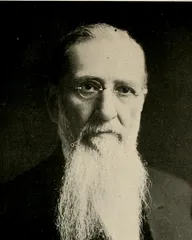
EDITOR'S TABLE. ORDER OF THE PRIESTHOOD. An officer in the Church in one of the stakes of Zion asks whether a man's Priesthood may be taken from him in any other way than by excommunication. In other words, can a man's ordination to the Priesthood be made null and void, and he still be permitted to retain his membership in the Church ; or must he be excommunicated before the Priesthood can be taken from him? The reply must be that only by excommunication in the appointed way can the Priesthood be taken from a person . We know of no other means provided by which a man who has had the Priesthood conferred upon him can be deprived of it. The constituted authorities of the Church may, however, after proper authorized hearing, decide that a man has forfeited his right to act in the Priesthood, and for this cause, he may be silenced, and his certificate of ordination be taken from him, and thus have his right suspended to officiate in the ordinances of the gospel, or to exercise the Priesthood which has been conferred upon him. Then, if he persists in exercising his Priesthood and former calling, he may be taken to account for insubordination and excommunicated. Several examples have occurred in the history of the Church where men through transgression, duly proved and decided upon by the constituted authorities, have been stopped from acting in the Priesthood,which is just as effectual as taking away their Priesthood would be, if it were possible; but this has taken no ordination from them, and if in such cases the transgressors should repent and make complete and satisfactory restitution, they would still hold the same Priesthood which they held before they were silenced, or stopped from acting. A person once ordained a bishop, an elder, or high priest, continues to hold those offices. A bishop is still a bishop though he may remove to another ward, or
466 IMPRO VEMENT ERA . for other reason temporarily lose his calling. But in case he is wanted to act in a new office, or place, and the proper authorities call him to act, it is not necessary to re-ordain him a bishop; he would only need to be set apart for his new calling. So with other officers in the Priesthood, once having received the Priesthood, it cannot be taken from them, except by transgression so serious that they must forfeit their standing in the Church. But, as stated, their right to officiate, may be suspended or stopped. The Lord can take away the power and efficacy of their ordinations, and will do so if they transgress. No endowments or blessings in the House of the Lord, no patriarchal blessings, no ordination to the Priesthood, can be taken away, once given. To prevent a person for cause from exercising the rights and privileges of acting in the offices of the Priesthood, may be and has been done, and the person so silenced still remain a member of the Church, but this does not take away from him any Priesthood that he held. Joseph F. Smith. SOME DANGERS OF INDIVIDUALISM. A recent advocate of Individualism, in our community, was hailed with open-mouthed attention by many ambitious young men who expressed great admiration for his ideas and doctrines, which appear to have struck responsive chords in their hearts. The keynote of his message was the laudation of Individualism— meaning the supremacy of the individual in thought and action, or, in its more extreme form, identical with one phase of anarchism. It is opposed as well to organized church and state as to their interference with the person, in industrial, social, religious, economic, or other relations. Carried to its logical conclusion, Individualism advocates the doctrine that the individual should be his own master, unfettered by the thoughts of others, and free from the restraining influence of organization, civil or religious. It recognizes the right of no authority, custom, tradition or doctrine; and would discard as folly the truth that each man in many ways is bound up in his enjoyments and advantages with the mental and bodily interests of his fellows,— in other words, with public institutions. Public organization, united effort, social_and co-operative action, are not deemed
EDITOR'S TABLE. 467 by Individualism as helps to spread a knowledge of the truth of things, or counted as aids to cultivate the power in the individual to apply that knowledge to his own good and advantage. It would set up as man's standard for advancement his own sagacity and skill, rather than the research and accumulated wisdom of the ages, as expressed in the experiences of great men, or in social and religious organizations. It is folly, declares the advocate of Individualism, to adopt the ideas of dead men. Why should living men follow after the doctrines of the sages, philosophers, poets and prophets dead and gone? As one striking illustration, one class of youths in a leading school was impressed by this example with the absurdity of doing things as they of old did: "Why do we spell plough, tough, through, enough, trough, though, sough, as we do?" The answer was, "Because we follow dead men's ways!" The effect, of course, upon the audience was telling; but the absurdity of the reply, upon second thought, was fully apparent when we consider the worse chaos that would come to our already complicated orthography, if every person were to be a law unto himself and spell in his own way. In this matter, as in all others, it is well to look upon both sides of the question. The individual is at no time absolutely independent. He must depend upon others, upon society. On the other hand, society is composed of the individual, who, to a certain extent, is bound by it. From the self-sacrifice of the parents, often unconscious, springs the possibilities of individual life and growth, and the children in turn are bound by like laws and restraints. Continual dependence and restraint is the lot of man. There is an old story of a boy who determined in his mind, because his father confined the boy's actions within certain bounds, that when he became of age, he would surely be free to do as he pleased, just as he thought his father was. But as years passed on, he learned that he was ever subject to restraint, and that his father had not been as independent as he had thought him to be. The Church and true government are founded on the broad principle that each generation of its members shall yield to the next benefits and advantages equal or greater than those it has received from the last. This places an obligation upon every per-
468 IMPRO VEMENT ERA . son to sustain and care for Church and government, and upon Church and government a responsibility of care for the individual by transmitting to him the accumulated wisdom of the past. Hence the importance of schools, the Church, social organizations, and the sayings and lives of wise men, poets, prophets, sages and philosophers. Only when the individual respects the accumulated truth of the past, and remains within the bounds of truth for the present, is he safe in his individualism. The many have more wisdom than the one . Whatsoever raises the intelligence and moral character of the many concerns the individual, for he must either suffer from their ignorance, folly, and lack of conscience, or profit by their wisdom, discretion and perfect knowledge of right and wrong. The truth is more apt to be found with the Church than with a single person who discards it, and in his own lifetime seeks to set up a code of wisdom on his own account. His undirected individualism is apt to lead him in the stupid way of ignorance, chaos and anarchy. Of course, it is right and necessary to know the truth for himself. The youth of the Latter-day Saints have been taught always to seek to know the truth for themselves, to have a testimony for themselves: so far individualism is a correct doctrine. "Ye shall know the truth and the truth shall make you free." The Church, being in possession of the wisdom of the past, is a help to the person to learn past truth, and to aid him in unfolding new truth. But we have also the Holy Ghost whose special mission it is to testify of Jesus Christ who is the light of truth. Search, therefore, the scriptures, for they are witnesses to the fact that only in one way can communion with the Holy Ghost be established : by obedience to the laws and by compliance with the ordinances of the gospel of Jesus Christ as taught by the Church. These things endure forever; they are not subject to change; they are fundamental verities. "Lord, to whom should we go, thou hast the words of everlasting life." If ye will do the will of the Father, ye shall know for yourselves. What is his will? That the person have faith in him; that he turn away from sinful thoughts and actions; that he accept the ordinance of baptism for the remission of sins; and have conferred upon him, by properly authorized
EDITOR'S TABLE. 469 agents, through the imposition of hands, the Holy Ghost whose mission is to lead to the light of truth, Jesus the Christ. If ye continue in his word (and his word requires of the searcher this order of investigation or search) then are ye his disciples. "If a man love me, he will keep my words: and my Father will love him, and we will come unto him, and make our abode with him. (John 14: 23.) One of the great dangers of Individualism is that it leads away from this path. It does not recognize Christ as the Savior, nor acknowledge his Church organization. It recognizes no inspired servants of God, nor superior wisdom in organization. It tends to make the individual forget that the wisdom of the ages, all that has been revealed for the advantage, benefit and salvation of man, has come through the Savior of the world, and through his servants to whom the Father has revealed his will, in all ages: ''Shall I hide from Abraham that thing which I do?" (Gen. 18: 17.) "Surely the Lord God will do nothing, but he revealeth his secret unto his servants, the prophets." (Amos 3:7.) "I have called you friends," said Jesus to his diciples," for all things that I have heard of my Father I have made known unto you." (John 15: 15.) In these divine messages, and others entrusted to the divine organization, the Church, the eternal truth is found, and that alone remains. All else shall perish. Only in the truth are men free. No person is independent only when within the bounds of truth ; he can not stand for himself only as he abides by the truth. No person should be so presumptuous as to think it possible to learn all truth in one little life time, much less when working independently. But better results follow when the wisdom and experience of the past are taken into account. Wise young men will, therefore, heed the words of Jesus Christ, and regard the valuable experiences of wise men, past and present, first mastering them, rather than adopting the doctrines of Individualism as their sole guide to the domains of truth. Young men should not be so fascinated with their own individualism or independence as to let it lead them to discard the truth as revealed and taught by the Church; and to think their own wisdom superior to that of organized intelligence. This does not prevent them from adding, by superior and earnest struggles,
470 IMPROVEMENT ERA. new truth to the general fund. But it is not true that man can be sufficient unto himself by his own will and powers, that he can rule himself completely, discard the wisdom of the past, the worship of God, and the revealed truths of the Church of Christ. The reader has perhaps heard the well-known story of literature, called "Peter the Wild Boy." He was described by some hunters who were said to have found him about the year 1725, in a wood near Hamelin, Germany. He was a lad about fifteen years of age, naked, ran swiftly on his hands and feet, swung himself from tree to tree like a monkey, and devoured moss and grass. He was caught and brought to England, but he tore off the clothes that were put on him, and preferred to devour his food raw. He was placed by the king under the tuition of a great scholar and wit, Dr. Arbuthnot; but although he lived till he was seventy, he never learned to talk. This hapless solitaire is a striking instance of humanity sunk to the level of the brutes. Can we doubt that such would be the deplorable state of every human being, if left absolutely to himself? Hence, God has wisely arranged that we should enjoy his spirit, and the gifts and graces of those who have gone before, participate in the blessings, and have the benefits of the counsels and admonitions of our relatives, our friends and the great and good men of the Church and the Nation. Thus we inherit the accumulated wisdom of our ancestors and, in a measure, the wisdom of the whole human race . Joseph F. Smith. ORGANIZATION OF THE CHURCH. The Church of Jesus Christ of Latter-day Saints was organized on the 6th day of April, in the year of our Lord one thousand eight hundred and thirty, in Fayette, Seneca County, in the State of New York. Six persons were the original members: Joseph Smith, the prophet, Oliver Cowdery, Hyrum Smith, Peter Whitmer, Jr., Samuel H. Smith and David Whitmer. Each of them [and a few others] had already been baptized by direct authority from heaven. The organization was made on the day, and after the pattern dictated by God in a revelation [Doc and Cov.,sec. 20] given to Joseph Smith. The Church was called after the name of
EDITOR'S TABLE. 471 Jesus Christ, because he so ordered. Jesus accepted the Church, declared it to be his own, and empowered it to minister on earth in his name. — Cannon's Life of Joseph Smith. The sixth of April is an important date ; for, besides being the date of the organization of the Church, it is the probable date of Messiah's birth in the flesh and of his crucifixion. The Church of Jesus Christ of Latter-day Saints is the only Church on earth which testifies that it is organized by direct command of the Lord . MESSAGES FROM THE MISSIONS. For the year 1907, there were 94 baptisms into the Church in Denmark, and 165 in Norway, a total of 259 in the Scandinavian mission. For the same year in Sweden there were 124 baptisms into the Church; in the Netherlands, 279; Swiss and German mission, 453; in Great Britain, 986, a grand total for 1907 of 2,101. President William Armstrong of the Australian mission, writes : ' 'This picture of Samuel Charlton will be familiar to many elders who have labored in the Australian mission duriDg the past thirty-five years. He has done a great deal of good for the cause in Melbourne, where he resides; and although he will be eighty-nine next birthday, his testimony is just as strong and his mind just as bright as when he was young. Age has only affected him physically, and he is now getting quite infirm. He was born in Lancashire, England, in 1819. When he was six months old his father died. He had the experience of many others in the cotton mills, at low wages, and in 1840 heard the elders and received the gospel. In 1854 he left his family in England, and crossed the plains in Gam's company. He was unfortunate in getting employment and money to send for his family and, after some time, he w«nt t0 California with a drover. President George Q. Cannon there advised him to go back to Utah. He did not do so, but went south to the isthmus and then made his way around to New York, and thence to England to his family. Later, when there was much talk in England about the riches of Australia, he came to this country, and it is now nearly forty years ago since he heard Elder Kobert Beauchamp preach in Melbourne. He was shortly afterwards rebaptized and ordained an elder, and he has ever since been instant, in season and out of season, in preaching the word. As a result, the Lord has cared for him in his old age in a way that seems quite remarkable."