Seventy’s Council Table
Improvement Era, vol. 11, no. 5, March 1908, pp. 391 to 393
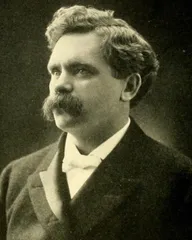
SEVENTY'S COUNCIL TABLE. BY B. H. ROBERTS, MEMBER OF THE FIRST COUNCIL. Of the Name of God not Being Found in the Book of Esther.— By the way, referring to Lesson IX (Year Book, p. 52) and recalling the fact that the name of God is not found in the Book of Esther, brings to mind a thought that came to us while addressing a quorum engaged on this lesson; namely, that while the Book of Esther does not contain the name of Deity, yet I believe God's presence throughout the book is more manifest than in books containing his name. One feels in reading Esther that the existence and presence of God is taken for granted, and in this respect the book is like the great, universal book spread out before the world in the star-lit heavens. Nowhere in those heavens is the name of God writ, but no mind ever contemplated them but what he felt the divine presence; and the glory of God, if not his name, is everywhere proclaimed in them, yea, even "his eternal power and Godhead." Use of Seventies as Ward Teachers. — We hope the members of our quorums will cheerfully respond to any appointments made for them by the bishops as ward teachers. We urge this on two accounts, just as we do in saying a word for the use of our Seventies as home missionaries; namely, first, we desire our Seventies to be useful in the ministry at home, as both the bishops and the people have need of their labors in this calling; and, secondly, the Seventies need just the kind of training that is possible to acquire in acting as ward teachers. It is not from the public platform that the greatest amount of missionary work is done, nor the most effective missionary work. It is at the fireside of the people. It is in personal contact with men and women, that the most effective missionary work is accomplished. And the opportunity of going into the homes of the Saints, and from the commonplaces with which conversation and the work of teaching necessarily begins, to guide the conversation to the consideration and exposition of themes of the gospel worth while, affords a kind of training that every Seventy needs, and of which he should most cheerfully avail himself. And as we say concerning the home missionaries, so we say to our Seventies acting as ward teachers: When you do go into the homes of the people, take something with you. Teach something that will be worth while. Do not content yourselves with mere formalities and commonplaces, but read the Scriptures, expound them, pray, sing, give some manifestation of light and spiritual power within you. Be ambitious to have the people anxious for you to come. Be in this labor twice blessed : bless those to whom you go with your message ; bless yourself in acquiring the power to deliver your message effectively; and God be with you!
392 IMPROVEMENT ERA. A Word About the Year Book Lessons.— Quite generally the First Council hears good words about the Year Book lessons, and the interest taken in them. Much more good is resulting from having an explicit purpose in view than hap-hazard methods or absence of definite purpose. Of course, ideal conditions do not everywhere obtain in conducting the class exercises, but just as he who aims at a star will shoot higher than he who aims at a mole hill, so our quorums aiming high will obtain better results than if their purpose were less exalted. Here and there, however, we hear complaint of the hardness of the lessons and their length. Too much, it is claimed, is given, which leads us to believe that very likely there exists some misapprehension as to the purpose of our present year's course of study. In the Introduction to the Year Book extensive reading in the books of scripture being reviewed is emphasized; but it is also pointed out that the object in our present year's work is not to ponder deeply over texts, or study thoroughly those books, but on the contrary it is urged that we make a rapid survey of them, reading rapidly and with the view of getting the general idea of the various books of the scriptures as books, finding out when, and how, and under what circumstances they were written, and something about the general character of tnem, so that the student will have in mind the nature of the scriptures as books, and this can b« very rapidly acquired. In this connection we would urge that the notes of the lessons are not the important things to read and study, but the references given in connection with the lesson analysis. The notes are intended to be mere side-lights thrown on the subject to help and guide the student, and should by no manner of means be regarded as the chief things of the lesson. If these ideas are strictly adhered to in the work, we think the lessons will not be found difficult or too long. But if after all the task is regarded as a little hard, then devote more energy to its mastery; and by practice, the work of preparation will become easier. Remember also the old motto of the Greeks , "The Hard is the Good." The Assignment of Lessons.— The lessons of the Year Book should be assigned from the lesson analysis, not from the notes. A short time since when visiting ono of the quorums, we found that the lessons were assigned from the notes, each note being given to one member, with the result that he thought his Seventy's work for the week accomplished if he mastered the subject treated in the note! Imagine that being the lesson for a Seventy for a whole week! How much mental activity would be cultivated by that achievement! How much intellectuality would be developed ! How soon would a Seventy attain spiritual power! We do not iesire to say anything harsh, but such ideas of Seventy's work is rather contemptible. The notes are the least important part of the lesson. It is the scriptures we want our Seventies to read, and get their ideas from these original sources. The notes are merely suggestions to help the student, and on some important matters in the lessons there are no notes at all. Moreover, where the assignment method of teaching is followed, we suggest that it is well to give the whole of the larger subdivisions of the lesson to one person, and, not distribute the minor divisions each to a member. One of the purposes to be accomplished in these lessons is to train our members in the combination of ideas leading up to some general conclusion from all premises considered, and if the subject- be too minutely divided, and then these minute subdivisions given to separate persons.
SEVENTTS COUNCIL TABLE. 393 we would mis8 the training that comes from combining many ideas to one general end. Therefore, the teachers should so assign lessons as to require each one who receives an assignment to generalize from his dat-i some conclusion. To be more explicit, take Lesson IX (page 52 of the Year Book) for an example. The general lesson is on the historical books of the Old Testament. Subdivision I, "The Books of Ezra and Nehemiah," should be given to one member and let him treat these books under the subdivisions 1 and 2, with their further subdivisions. Then give the second general division of the lesson, the Book of Esther, to another, allowing his treaties on the subject to cover all the subdivisions following the title, that is, let him treat cf the authorship and historical character of the Book of Esther ; also the Feast of Purim and its value as an historical monument; also let him discuss the omission of the name of God in that book. We further suggest to the teachers the importance of an intelligent pre-view of the lessons when assigning them and pointing out some of the prominent features. Especially will correlating some of the lesson's features with present day questions of interest, and the like, create and intensify interest upon the cnming week's home study and preparation. Do not neglect pre- viewing; it is quite as important as re-viewing. The Use of Seventies as Home Missionaries. — The question has come up in some quorums as to whether our Seventies should be used by the local authorities, Presidents of Stakes, for home missionaries, as sometimes home mission appointments would call them away from attendance upon their class meetings on Sunday mornings. In reply to inquiries made upon the subject, the First Council calls attention to the fact that in most cases where home mission service is required of the members of our quorums, the place of appointment can be reached after the class of the quorum meeting on Sunday morning, and only in comparatively few cases would it be necessary to miss the class meeting to fill home mission appointments. And where that becomes really necessary, we suggest to our quorums that they regard as a legitimate excuse for non-attendance at any quorum meeting, the fact that a member was filling a home mission appointment. Work as home missionaries is the veiy best kind of training for our Seventies. It gives them an opportunity to exercise themselves in the art of teaching the gospel, and is therefore desirable, not only because we wish our members to render these services in the home ministry of tj e Church, and for the good of the people to whom they minister, but also it is desirable on their own account for the training that it affords them. To put it in the form of a pleasantry, it gives tiem a chance to practice on the people at home. A practice, which as a rule, the Seventies very much need, and to which our people — good, patient souls! will submit. And, by the way, when our Seventies fill home mission appointments, we suggest to them that they make it a point to have something to say to the people. Do not go to them with empty hands, (we had almost said empty heads) take something with you, let both mind and heart be full. Let us build up a reputation throughout Israel for the Seventies that will cause the people to say, 'Some of the Seventies will be at meeting as home missionaries today, we shall have a mental and spiritual feast." Take some of the ideas to be gathered from your Seventies lessons and exploit them before the people. You will be astonished how interested the people will be in many of these subjects.