Editor's Table: Origin of Mutual Improvement
Improvement Era, vol. 10, no. 12, October 1907, pp. 985 to 987
EDITOR'S TABLE, ORIGIN OF MUTUAL IMPROVEMENT. From time to time we are reminded that the origin of mutual improvement work does not date from June 10, 1875, when Elder Junius F. Wells, by instruction of President Brigham Young, called a meeting in the 13th ward. Salt Lake City, and organized the first Mutual Improvement Association in the Church. A number of people have written and protested that this, that, and the other organization was the origin, or first, from which grew the Mutual Improvement Associations. It is generally known that in the very early days in Utah, and even in Kirtland and Nauvoo, there were organizations founded by different persons for the entertainment and improvement of its members. In the winter of 1852, the late President Lorenzo Snow founded the "Polysophical -Society," and prior to that, Elder Orson Pratt founded the "Uni- versal Scientific Society," Many others might be .iamed. (See an article in Era, Vol. 2, p. 741.) Later, in the early 70's, there were formed societies for improvement in many of the larger set- tlements: one in Ogden, by Elder Fraaklin D. Richards, one in the 20th ward, Salt Lake City, by Elder John Nicholson and others; and it will be remembered that several years before the organ, ization, in 1875, the Young Ladies' Retrenchment Society had been established by President Young. Many of these organizations in the early 70's degenerated into debating societies, in which much ill feeling was engendered, and while great good was obtained from them, they threatened to create considerable division and ill feeling. It was therefore, no doubt, evident to President Young that there existed a necessity for a general organization of the young people, for their mutual improvement, into associations that should be separate from the Priesthood, and
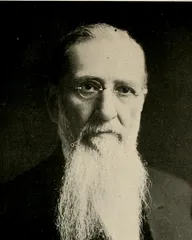
936 IMPROVEMENT ERA. yet so organized that they should be under its guidance, and tend to its strength and aid. Hence the call, in 1875, to organize the improvement associations. (See Era, Vol. 1, p. 1.) This move- ment may very appropriately be called the first general movement to organize mutual improvement associations as we now have them throughout the Church. All these preliminary organizations, as we may term them, were truly forerunners, and their history is inter- esting as pointing the way to the present proficient Young Men's Mutual Improvement Associations. We are favored with a letter from an old friend, giving the history of another of these 'fore- ' runners," established by counsel of President Heber C. Kimball. The letter is printed in full, as many will be interested in its con- tents: Joseph F. Smith. President Joseph F. Smith: — Dear Brother. This morning I took to reading "Early Reminiscencea" from your pen, and while doing so my mind has been carried back to 1853, on Canyon Creek, Salt Lake Valley. I sometimes see matters which I think are placed to the credit of those to whom they do not belong. I propose to write of something that has never yet been published, to my knowledge. I read of the first Female Relief Society being organized in Nauvoo, and then of its being continued in Salt Lake City. I also read of the first Mutual Improvement Society being started in Salt Lake City, the date I do not remember, but I well remember the year when it did really take place, and some of those who took part in it, in the fall of 1853. President Heber C. Kimball called upon a brother by the name of George Gardner, a blacksmith, who lived near Mill Creek, and asked him if the log school house on Canyon Creek was in a condition to be used. He said it was. "Well, then," said President Kimball, "I want you to take the lead, and call to your assistance the best help you can find. Then I want you to hunt up all the young men in and around the Church Farm, Mill Creek and Canyon Creek, and get them together at least once a week, and get them on their feet bearing testimony to the truth of the gospel. We want these young men for the harness. There is young John Smith, and Joseph (F.) Smith, John (R.) Young and his brothers, young Charlie Griffin and the Fisher boys, D. M. Merrick, the Eldredge and Knight boys, Leroy Beebe and Nephi Packard." There were others, the names of whom have gone from me now. "Now," said President Kimball, "get|some who are older, and who are con- firmed in the faith, to set the example in bearing testimony to the gospel, in praying in public, and in singing the songs of Zion." All of the foregoing was attended to. The winter came and passed. The improvement meetings went on, and when April came, in 1854, half a dozen or
EDITOR'S TABLE. 987 more of the boys of that association were called to go on missions, one of whom was yourself. I was called to Nephi to help strengthen up and guard that town against Walker and his braves. Some time in May, 1854, I remember a young man driving up to the front of my cabin in Nephi, the door being a blanket, in a heavy storm, and said, "Brother Samuel, we want to find shelter under your roof, for we think 't is partly through your efforts to make missionaries of us that we are here." I said, "Come in, boys, the more the merrier, you can share the 'ground floor' with us till fair weather gives you a chance to travel, and then you can go on with God's blessings and fill your missions." Now, Broth3r Joseph, I think ours was the first M. I. A. started in these mountains. I do know that Brother Gardner called upon your humble servant to sing, to pray, to bear testimony of the truth, time and time again, to the inspir- ing of the class of some fifteen or twenty boys and girls that gathered on Thurs- day evenings of each week. I well remember telling for the first time in Utah how the Lord made manifest to me that he was ever nigh to those who sought his help in time of need. I told of the scroll rolling down on the wall, and of my reading the answer to the infidel's question which was uttered to confound me, and would have done so had not the Lord intervened. This circumstance has since been published in A String of Pearls, under the heading, "Thou shalt not be confounded." I remember telling of my sight being restored by the ordinance of anoint- ing with and the prayer of faith; also of the man, Reuben Brinkworth, who oil was deaf and dumb five years, two months and six days, and who went into the These with water in that condition and came out with his hearing and speech. many others were talked over during our winter's work. as And I am proud to know that good was the result of our winter's labors, of them still most of that band of young men were valiant and true, and some are bearing record of the truth. am Now, Brother Joseph, look this over,'when you have time, and see if I not about right in my conclusions, that the first M. L A. was organized in the fall organized into Sugar House ward. of 1853, in what was afterwards old man, very respectfully, Ever praying for the right, I am still the same Samuel L. Adams, Sen. St. George, September 1, 1907. AND THE