Editor’s Table: President Joseph F. Smith’s Opening Address at the Annual Conference
Improvement Era, vol. 10, no. 7, May 1907, pp. 539 to 549
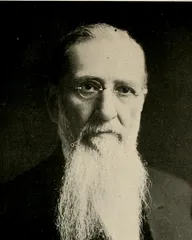
EDITOR'S TABLE. PRESIDENT JOSEPH F. SMITH'S OPENING ADDRESS AT THE ANNUAL CONFERENCE. Both for present consideration and future reference, in the way of doctrine, history, instruction to the priesthood, and ex- hortation to the people, the opening address of President Joseph F. Smith, delivered on Friday morning, April 5, at the 77th an- nual conference of the Church, is of such importance and value that it is given in full, in addition to the address of the First Pres- idency printed in another part, in this issue of the Era. It need only be added that the conference was characterized by a feeling of sympathy, union, and love, rarely, if ever before, witnessed among the people. We believe that this good feeling, exemplified in conference, is general among the Latter-day Saints. It certainly distinguished all the speakers, and was found in all the assemblies of the Saints during the conference: I am delighted to greet you at the opening meeting of our general conference. It is certainly assuring and extremely pleas- ant to see so many assembled at the first meeting. I think it in- dicates an interest in the occasion on the part especially of the presiding authorities of the Church and the leading members. We are delighted to see you here, and we have only congratulations to offer to you and to all the Latter-day Saints for the abundance of the mercies and blessings of the Lord upon His people throughout the land. I do not desire to say anything this morning in a boastful spirit,nor with over-confidence in ourselves, but what I shall say I aincerely hope may be prompted by the Spirit of the Lord, which
540 IMPROVEMENT ERA. isthe spirit of wisdom, that I may not say anything that the Lord would not approve and that would not be acceptable to you in the spirit of truth. I desire to briefly represent before this vast as- sembly, as the Spirit may give me utterance, the present condition of the Church of Jesus Christ of Latter-day Saints, as I see it. I will speak first of the Presidency of the Church and their associ- ates, the council of the Apostles. I them only wish to refer to very briefly; for we are here before you, and it is probable that you will hear from us during this conference individually, and will be able to judge for yourselves of oUr spirit, our faith and our works. I am most happy in saying to you that the Presidency are as united in their spirit, in their faith and in their works, as they have ever been since the organization of this Presidency. We leave it to you to judge whether our spirit is right, and whether our faith is founded in the truth or not. The Presidency and the Apostles are united in their feelings and in their love for one an- other. So far as I am able to discern, there is not a single thought in the mind of any member of the Presidency or the Twelve Apos- tles that would not meet with the signal blessing, approval and sanction of our Great Father and Judge. In saying this much for the brethren who stand at the head, I believe I am only doing them justice and representing briefly but truly the real condition of these two leading councils of the holy priesthood. I am also happy to say that the same goodwill, union, love and confidence exist between these two bodies and the presiding Seventies of the Church. The First Seven Presidents of the Seventies are united with us, and we with them. All these brethren are diligent in the performance of their duty. They are willing, ready, and always on hand to meet every call that is made of them. Yoq know them yourselves, they having visited you and preached in your stakes and wards, so you can judge of their spirit, and that they are n the faith of the gospel, to remain forever, if they will continue to enjoy and cultivate the spirit of the gospel and the love of the truth which pervades their souls today. We expect that; we look for it; and we could not for one moment admit in our thoughts that anything other than that could ever occur with these three leading quorums of the Church. I am sorry to say that the health and vigor of some of the
EDITOR'S TABLE. rA\ members of the Presiding Bishopric is not that which we could desire; but they are united, and they have efficient help in their office. They are men who have been tried for years in their bishopric. They are men of God, men of truth and soberness, men of wisdom and judgment, under the inspiration of the Holy Spirit; and God has been with them, as the presiding quorum over the lesser priesthood of the Church, and they have been wonderfully blessed.They are true men, according to the light and intelligence with which they are endowed. I need not say very much about our Presiding Patriarch. He is before the people. He has not been able to travel among the people and counsel with the patriarchs in the different stakes of Zion as much as we would like him to do, on account of family ill- ness; but we hope that the Presiding Patriarch of the Q.mrch will find himself strengthened and relieved from embarrassments and obligations that tie him down, and be able to exert himself to visit the saints and administer consolation and blessings to them, to strengthen their faith in bearing testimony of the truth to them, and in way magnify and honor his holy and high calling; for this it is his duty. Indeed, it is expected of every man on whom re- sponsibility is placed, and who is called by the voice of the Spirit and sustained by the vote of the people, that he will do his duty to the uttermost, according to his ability and the inspiration that he is entitled to enjoy, in the discharge of the duties of his office and calling. I can speak heartily and warmly of the fidelity, intelligence and wisdom, strength and influence of those who today are acting as presidents of stakes. With exceedingly few exceptions and I — would hardljf desire to admit that there is any exception, but if there are exceptions, they are very, very few —the piesidents of stakes and their counselors are men after God's own heart, true to their cal'ings and their bishoprics, true to the Church of Jesus Christ of Latter-day Saints, true to their office, faithful and united in the discharge of their duty, and diligently looking after the spiritual and temporal welfare of the stakes of Zion over which they preside. They are men in whom we repose the most absolute confidence, men of integrity, of tried faith, of noble character, of pure lives, fathers to the people, whose mission it is to look after
542 IMPROVEMENT ERA. the welfare of Zion and the building up of that portion of the king- dom of God submitted to their care. I speak well of the presidents of stakes and their counselors. The members of the various high councils we cannot speak so comprehensively of, because they are too numerous for us to be individually acquainted with them. But we know the presidents of stakes, and we are more or less familiar with their ccunselors, and we believe that care is being taken in all the stakes pf Zion to have efficient high councilors, men who are exemplary in their lives, men of good influence in the stake in which they are called to be twelve counselors to the Presidency, and twelve judges also, to sit with the Prasidency of the Stake and adjudicate and adjust difficulties and differences that may arise in the stak^^, and to look after the proclamation of the gospel, both by precept and by example. We believe that great care is being taken to select and to maintain efficient high councils throughout Zion. Where there is weakness and any necessity for change, it is our counsel to the presidencies of the stakes of Zion to make such changes, to fill up the high councils, and to be provided with alternates who will be efficient in the discharge of the duty that devolves upon them. The same may be said almost universally of the bishops of the Church and their counselors. Of course, bishoprics are frequently changed. It is often the case that bishops remove to other sec- tions of the country, and it becomes necessary to reorganize the bishoprics. Then wards are frequently divided into two or more, and this calls for more bishops and counselors. Occasionally men become feeble from age, and after serving many years it becomes necessary to relieve them from the great responsibility of their calling, and to call younger and stronger men to fill their places. In this way our bishoprics are more frequently changed probably than any other council of the priesthood. But we do not know of any particular deficiency in this important part of the priesthood. I do not think there is any organization in the Church of greater importance than that of the Bishopric. They are indeed fathers to the people. It is their duty to look after the widow, the father- less, the poor, the needy, the sick and the afflicted. They are ex- pected to not only be temporal fathers of the people, but spiritual fathers also. A double duty rests upon them with mighty force.
EDITORS TABLE. 543 It is their business to look after the erring as well as the feeble, and to feel after those who are inclined to stray from the paths of virtue and honor. It is expected that the bishoprics of wards will be in constant touch with their people, and that the bishop will know every member in his ward, through the agencies that are established in the Church by divine revelation, by means of which every member of the Church can be reached and his or her con- dition, spiritual and temporal, be known. This is a great respons- ibility resting upon our bishops, and as a rale they are faithful men, chosen by inspiration. The choice of cur bishops is not made by the body. Let me say just a word in regard to that principle. There is no officer in the Church of Jesus Christ of Latter-day Saints chosen by the body. The Lord has given us his way to do these things. He has revealed to us that it is the duty of the presiding authorities to appoint and call and then those whom ; they choose for any official position in the Church shall be presented to the body. If the body reject them, they are responsible for that rejection. They have the right to reject, if they will, or to receive them and sustain them by their faith and prayers. That is strictly in accordance with the rule laid down of the Lord. If any officer in the Church has my sympathy, it is the Bishop. If any officer in the Church deserves credit for patience, for longsuf- fering. kindness, charity, and for love unfeigned, it is the bishop who does his duty. And we feel to sustain in our faith and love the bishops and counselors in Zior. We say to the bishoprics of the various wards, Be united; see eye to eye, even if you have to go down on your knees before the Lord and humble yourselves until your spirits will mingle and your hearts will be united one with the other. When you see the truth, you will see eye to eye and you will be united. The truth will never divide councils of the priesthood. It will never divide presidents from their counselors, nor counselors from their presidents, nor members of the Church from one an- other nor from the Church. The truth will unite us and cement us together. It will make us strong, for it is a foundation that can- not be destroyed. Therefore, when bishops and their counselors do not see eye to eye, or when presidents and their counselors have any difference whatever in their sentiments or in their policy,
544 IMPRO VEMENT ERA. it is their duty to get together, to go before the Lord together and humble themselves before him until they get revelation from the Lord and see the truth alike, that they may go before their people unitedly. It is the duty of the presidents of stakes and high councilors to meet often, to pray together, to counsel to- gether, to learn each other's spirit, to understand each other, and unite together, that there may be no dissension nor division among them. The same with the bishops and their counselors. The same may be said of the councils of the priesthood from first to last. Let them get together and become united in their understanding of what is right, just and true, and then go as one man to the ac- complishment of the purpose they have in view. There is an effort being made (it has come more particularly to our notice in the near stakes of Zion) by the presidents of stakes and the presidents of the various quoruns of the priesthood to in- duce the members of these councils to attend to their priestly duties. The high priests' quorums should have their regular meet- ings. They should meet together as often as circumstances will permit or as necessity requires, and grow and unite together. They should establish their schools of instruction and enlighten- ment; for it is the duty of the high priests' quorums to teach the principles of government, of union, of advancement and of growth in the kingdom of God. They are indeed the fathers of the people at large. In our high priests' quorums are numbered the presi- dents of stakes and their counselors, bishops and counselors, patri- archs, and all that have been ordained to the office of high priest in the Melchizedek priesthood. All such belong to the high priests' quorum. They come under its supervision, and they should have a lively union with it, not a dead connection. They should be united with the quorum in such a way that they give it all the force that they can impart for good. They should give it their individual influence, their hearty support, their confidence, and the benefit of their advice and counsel. They should not pull apart nor be dis- interested in these matters. The same may be said of the Seventies' quorums. I bt lieve that the Seven Presidents of Seventies have it in their hearts and minds to establish a better system of growth, advancement and in- struction in these quorums. The seventies are called to be assist-
EDITOR'S TABLE. 545 ants to the twelve apostles; indeed they are apostles of the Lord Jesus Christ subject to the direction of the Twelve, and it is their duty to respond to the call of the Twelve, under the direction of the First Presidency of the Church, to preach the gospel to every creature, to every tongue and people under the heavens to whom they may be sent. Hence, they should understand the gospel, and they should not be wholly dependent upon our auxiliary organiza- tions for instruction, neither should they be wholly dependent upon the missionary classes in our Church schools for their knowledge of the gospel and for their qualifications to preach that gospel to the world. They should take up the study of the gospel, the study of the scriptures and the history of the dealings of God with the peoples of the earth in their own quorums, and make those quorums schools of learning and instruction, wherein they may qualify them- selves for every labor and duty that may be required at their hands. The bishops should take especial charge of the lesser priesthood, and train them in the duties of their callings — the priests, teachers and deacons. Our young men should be looked after. The boys, as soon as it is prudent, should be called to take part in the lesser priesthood. If it were possible to grade them, from the deacon to the priest, and from the priest upward through all the offices that will eventually devolve upon them, it would be one of the best things that could be done. All these things should be looked after by the presiding authorities of the Church, especi- ally those who preside over the quorums. I will repeat what I said before, it is expected that every man on whom responsibility is placed will do his duty faithfully, and be diligent in the perform- ance thereof. Our auxiliary organizations, I believe, are in excellent condi- tion. need only to mention to you that our Sunday Schools I probably have never had a better organization than they have today. There never has been a time in the Church when more attention has been given to imparting instruction and to forming outlines for guidance of teachers in our Sunday Schools than has been given of late; and there is a good, lively spirit and influence felt among the Sunday School workers. 1 will speak of the Relief Society as one great organization in the Church, organized by the Prophet Joseph Smith, whose duty it is to look after the interests
54G IMPROVEMENT ERA. of the women of Zion, and of all the women that may come under their supervision and care, irresuective of religion, color and con- dition. I expect to see the day when this organization will be one of the most perfect, most elRcient and effective organizations for good in the Church; but that day will be when we have women who are not only imbued with the Spirit of the gospel of Jesus Christ, and with the testimony of Christ in their hearts, but also with youth, vigor and intelligence to enable them to discharge the great duties and responsibilities that rest upon them. Today it is too much the case that our young, vigorous, intelligent women feel that only the aged should be connected with the Relief Soci- ety. This is a mistake. We want the young women, the intelligent women of faith, women of courage and of purity, to be associated with the Relief Societies of the varoius stakes and wards of Zion. We want them to take hold of this work wilh vigor, with intelli- gence and unitedly, for the building up of Zion and the instruction of women in their duties — domestic duties, public duties and every duty that may devolve upon them. Our Mutual Improvement Associations are in excellent condition and doing a good work. I think Brother Heber J. Grant, just returned from the mission field, will b^ar me out in the statement that the young men who have had training in the Mutual Improvement Associations make the most effective and successful missionaries in the world. We want this work continued, not only among the young men, but among the young women The Primary Associations are doing a also. vast amount of good, as are our Religion Class workers also. The Religion Class work has been hampered considerably, in conse- quence of the prejudice of some people and a disposition to hedge up the way of the gospel; nevertheless it is accomplishing good. Whatever is most effective of good is most hated and opposed by the enemy of truth. I want to say to ray brethren and sisters here this morning "that in my opinion there never was a time when the members of the Church of Jesus Christ of Latter-day Saints were living better lives, were more faithful and more diligent, than they are today. We have various means of judging of this. One very accurate way of knowing is the fact that the law of tithing is being observed. There never has been a time in the history of the
EDITOR'S TABLE. 547 Church, I believe, when the law of tithing was observed more uni- versally and more honestly than it has been observed by the Latter-day Saints of late. The tithes of the people during the year 1906, have surpassed the tithing of any other year. This is a good indication that the Latter-day Saints are doing their duty, that they have faith in the gospel, that they are willing to keep the commandments of God, and that they are working up to the line more faithfully perhaps than ever before. I want to say another thing to you, and I do so by way of congratulation, and that is, that we have, by the blessing of the L»rd and the faithfulness of the Saints in paying their tithing, been able to pay off our bonded indebtedness. Today the Church of Jesus Christ of Latter-day Saints owes not a dollar that it cannot pay at once. At last we are in a position that we can pay as we go. We do not have to borrow any more, and we won't have to if the Latter- day Saints continue to live their religion and observe this law of tithing. It is the law of revenue to the Church. Furthermore, I want to say to you, we may not b"^ able to reach it right away, but we expect to see the day when we will not have to ask you for one dollar of donation for any purpose, except that which you volunteer to give of your own accord. Because we will have tithes sufficient in the storehouse of the Lord to pay everything that is needful for the advancement of the kingdom of God. I want to live to see that day, if the Lord will spare my life. It does not make any difference, though, so far as that is concerned, whether I live or not. That is the true policy, the true purpose of the LorcLin the management of the affairs of his Church. Before I sit down I would like to make another statement. Our ^•enemies have been publishing to the world that the Presidency of the Church and the leading officers are consuming the tithes of the people. Now, I am going to tell you a little secret, and it is this: there is not one of the general authorities in the Church that draws one dollar from the tithes of the people for his own use. Well, you may say, how do they live? I will give you the key: The Church helped to support in its infancy the sugar industry in this country, and it has some means invested in that enterprise. The Church helped to establish Z. C. M. I., and it has a little inter- est in that, and in some other institutions which pay dividends.
548 IMPROVEMENT ERA. In other words, tithing funds were invested in these institutions, which give employment to many, for whidi the trustee- in-trust holds stock certificates, which are worth more to day than what was given for them; and the dividends from these investments more than pay for the support of the general authorities of the Church. So we do not use one dollar of your tithing. I thought I would like to tell you that much, so that when you hear men talk- ing about Joseph F. Smith and his associates consuming the tithes of the people you can throw it back into their teeth that they do not use a dollar of the tithing for their support. I would like our "friends,'' if I might be permitted to use a vulgar expression, to "put that in their pipe and smoke it." (Laughter.) A word about our Church schools. Our Church schools were never more efficient than they are today. We have good men at their head and good teachers. Latter-day Saints, who are teaching your children principles of righteousness, honor, virtue, truth and uprightness, as well as giving them the benefits of a secular edu- cation. Hitherto we have had sufficient means to take care of our schools, but there is nothing that I have anything to do with in the Church that has grown so fast in so short a time as our Church schools. I do not know but they will outgrow the Church, by and by, if we do not put a little hedge about them. We will have to exercise some judgment and wisdom in their management, for they may grow so big that we will not be able to carry them at all. We may have to curtail them a little, and guage their growth and increase somewhat to correspond with the means available for their support. Many things come to my mind, but one thing more I will speak of. We have seventeen or more missions in the world, and they are mostly young men who are presiding over them.'^ My brethren and me say to you that these young men are sisters, let your sons, and they are men after God's own heart. We have absolute confidence in their integrity. We know they are true- born and true metal. We know they can be trusted with the great responsibilities that devolve upon them. They are noble young men, men of intelligence, virtue, honor and integrity, whose * There are twenty-three missions, all told.
EDITOR'S TABLE. 549 word is as good as any man's bond, I do not care how strong the bond may be. Therefore, I commend these young men, and say in my heart, God bless the presidents of the missions of the Church of Jesus Christ of Latter-day Saints throughout the world. Elder Charles W. Penrose is presiding now over the European mission, where he is using the ability the Lord has given him (which we know is of no mean order) in the proclamation of the gospel, in writing editorials for the Millennial Star, and in exercising his influence and intelligence in the defense of the cause of Zion, and in the advocacy of the principles of the gospel to the world; and he has a large number of most faithful, energetic and worthy young elders seconding his efforts in that mission. I feel that I have really trespassed upon your time. I now wish to announce to you that the Presidency and the Twelve have prepared a document containing our views, our faith and doctrines, and asserting the truth in connection with the up-building of Zion and the purposes of the Church of Jesus Christ of Latter- day Saints, which document we propose to have read to you this morn- ing by Elder Orson F. Whitney, and then we want to present it to you for your acceptance or rejection, as you desire, that it may go forth from this conference, if approved, as an nuthoritative statement of our faith, our purposes and our works, as the Church of Jesus Christ of Latter-day Saints. God bless you, is my prayer, in the name of Jesus. Amen. A LITERARY DISCOVERY. The familiar hymn on page 33 of the Latter-day Saints Hymn Book, beginning, "Softly beams the sacred dawning," was for a long series of years published over the signature of John Jaques. During all this time he was known as the author of the hymn, but was made to discover the in the late revision, in which an effort true authorship of the hymns as far as possible, it was found by searching the Millennial Star, in which many of the early hymns were published, that this particular hymn appeared in that publication over the signature of Harvey L. Birch, and under the