Editor’s Table: Wisdom’s Victory; A Literary Treat
Improvement Era, vol. 10, no. 2, December 1906, pp. 145 to 147
EDITOR'S TABLE.
WISDOM'S VICTORY.
There is a marvelous power in self-control, such a strength as few people realize With an individual, whether a person shall be the victim or the victor of circumstances depends largely upon himself. So it is also with a nation, a community, a city. We have recently had an illustration of this, in a local way. Without just cause, a coterie of evil-inclined and disappointed politicians have sought to obtain political control of Salt Lake City and county, and the state of Utah, by appealing to the prejudices of men who, for various personal reasons, are interested with them, Oj who are ignorant of the good intentions and honesty of the Latterday Saints. They have viciously abused innocent people that they might the more readily, unobserved, do the wrongs they have decried in others. They have appealed to false arguments, party prejudice, threats, misconstructions of mens' utterances, and every other degenerate device, to set neighbor against neighbor, party against party, friend against friend, so that, in the struggle and division which they hoped would ensue, they might lay their withering hands upon the government of the people in city, and county and state, with a view to completely ostracizing one large, in-
dustrious, law-abiding division of the community, loyal to country and state and party, and shutting them out entirely from every advantage accruing to free citizens in a free land. This is the condition which confronted the people in Salt Lake county on the morning of the 6th of November. It is greatly to
the honor and credit of this community that they were blessed with ability individually to analyze the condition which confronted them
—
146 IMPROVEMENT ERA.
— to exercise their power of and lay self-control, to some aside, extent, and temporarily —with great regret that such action should be necessary — party affiliations and preferences, and unitedly combine to do the only wise thing that could be done: frustrate the common enemy of peace and political freedom. And this honor and credit is not due to any one class or party of the people. All classes and parties, composing the better elements of the community, united to complete the overthrow and insure the victory and their action must be commended as wise by every liberty-loving citizen of the state. It is time that the old theological idea of * 1 am a feeble worm of the dust," which is said to prevail with some of our young people in regard to politics, and which gives them the false notion that only the vicious have political rights, and only party leaders can think, shall give way to the vital thought, ' 1 am a strong human soul, with individual rights, and marvelous possibilities; I
may also talk, and think, and dare, and do." When men analyze conditions confronting them, and on their own responsibility, judgment and initiative, unitedly take such a wise, unselfish course as was witnessed in this county during the late election, there is strong hope of such results being achieved, and a possibility of such revival and independent action in the progress and advancement of political conditions as will prevent honorable people from being the victims of circumstances, and as will give them at least an equal chance in the affairs of state with disgruntled demagogues. The passion, personal feeling, prejudice, bitter recrimination aad pettiness of present political conditions in this city, should in all fairness give way to those higher and purer emotions that grow out of common interests and a broad brotherhood. Such a united effort in preventing evil, as we have witnessed, is a good exercise in moral discipline, and will have a wonderful tonic effect in the whole moral atmosphere of the state. The people themselves must have the credit therefor. To gain the desired permanent results, it may be necessary for the better and peaceloving element of all classes and parties, to perform a few acts that are disagreeable to them; but it is certainly worth while, when, by so doing, it will help them to that self-control which
EDITORS TABLE. 147
will enable them to take united and instant action in the hour of
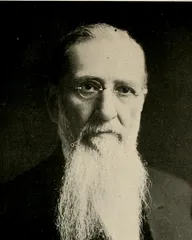
need for their own protection, and for peace, good will, prosperity, and brotherly love. Joseph F. Smith.
A LITERARY TREAT.
The editors are delighted to announce a serial article from the facile pen of our friend and former contributor, Col. R. M. B. Thomas, of London, which will be commence in an early number of the Era, Brother Thomas, having spent a year or more in the Eternal City, has written on "St. Paul in Rome." With pious interest in everything sacred to the Christian, he describes in most pleasing manner the apostle's journey to, and movements, and experiences in, the city of the Csesars. In reading the manuscript, we felt as if we were journeying with St. Paul along the Appian way, witnessing the holy jov he felt in greeting his brethren in Rome, and in turn experiencing as our own the delight and overflowing gratitude of his brethren at being in his company. This fascinating narrative places the reader in the atmosphere of Roman life, and in living touch with the spirit and work of the great apostle to the Gentiles who to the reader must ever after be a nearer and more realistic
person. It makes one's faith sounder, and one's soul more fervent to be a soldier of the Cross; and vividly transports the reader into the living presence of the first Christians. For a few hours' of happy and profitable perusal of this article, we are confident that the readers of the Era, who have this treat in store, will be as greatly thankful and indebted to Elder Thomas, as the editors are. In closing this announcement we employ this means of expressing our sincere thanks to him for his great favor to the Era and its readers. May God's peace attend him and all the honest in heart, until they shall attain to His presence.