The Creation of Enthusiasm and Loyalty
Improvement Era, vol. 9, no. 11, September 1906, pp. 833 to 845
IMPROVEMENT ERA. Vol. IX. SEPTEMBER, 1906. No. 11
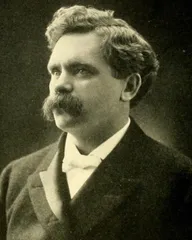
THE CREATION OF ENTHUSIASM AND LOYALTY.* BY ELDER B. H. ROBERTS.
I thank God for music, and for those who make it. The uppermost wish in my heart at this moment is, that I could preach the gospel, and make those who hear feel its power and influence,
as those who make me feel. (Sister Emma Lucy Gates sing it
had just finished singing, "0 Ye Mountains High.") I should then be happy. It has fallen to my lot to speak the final word in one of the most remarkable conferences held by our Improvement organizations. I cannot help, however, entertaining a doubt of my ability to rise to your expectations, but I am willing to attempt the part assigned me, and trust in the Lord for the outcome. I shall con-
fine my remarks to the part of the work which belongs to the Young Men's Improvement Associations in this conference; and indeed it is just as well that I should do so, since our sisters who have spoken in behalf of the young ladies' organizations have said
- Remarks at the evening meeting of the M. I. A. annual conference, Salt Lake Tabernacle, June 10, 1906.
4 IMPROVEMENT ERA.
ali that is necessary to say of their work in this conference, and have said it much better than I could say it. In the officers' meetings of the young men's associations, we have not only considered the prosperous phases of our work, but we have considered also its failures, its defects. We have rejoiced in the large enrolled membership — approaching 30,000 — but we have considered also the fact that there are very many yet not identified with the cause who ought to be supporting it; and the further fact, that of those whom we have reached in times past, we have lost some. We have stood face to face with the fact also, that we owe too much to external pressure for the success of our organizations. They resemble too much the cistern and not enough the fountain. Our process of work resembles too much a pouring in process, rather than the creation of a fountain which is to give out living streams. The greatest defect in the work of our organization consists in the lack of an individual, spiritual interest. Too much of our success his been attained by force of organization, rather than by individual interest in the work, and there seems to be a lack of individual enthusiasm and loyalty to our cause. In the presence of this large and interesting conference, and espe- ,
cially in view of the splendid testimony meeting held in the Assembly Hall this morning, where the atmosphere was vibrant with enthusiasm and interest, one would think my statement difficult to believe; but it must be remembered that this conference, and especially our meeting this morning, was a very exceptional occa-. sion and if you will recall the condition of our several associations ;
throughout the Church territory, and the character of our meetings all through the season that is just closed, and recall the amount of dullness and lack of appreciation of the work attempted, and the absence of enthusiasm, so far as the young men are concerned, 1 think you will hold the conclusion arrived at in our officers meeting, namely, that in the matters indicated — lack of indi-
vidual enthusiasm and loyalty appear to be the defects to which we ought to address our efforts, in the hope of eradicating them. I love enthusiasm ; also the manifestations of loyalty, especially when they are genuine, and when the outward act is but the expression of an inward feeling. And that is what we need in these associations of ours, enthusiasm and loyalty. The question is, how
CREATION OF ENTHUSIASM AND LOYALTY. 835
shall we inspire it? If the recognition of a defect was always equivalent for finding a remedy for it, the matter would be easy enough; but that does not always follow. We need a remedy. We need some method suggested as to how we shall inspire this spirit of enthusiasm in the youth of Zion for our Improvement cause. And I suggest here, that I have in mind a broader cause than Mutual Improvement. I would include interest in the whole Church of
Christ, of which Mutual Improvement Associations are but auxiliary organizations, but so closely united to the Church that they are inseparably connected with it; and enthusiasm for the one will result in enthusiasm and loyalty to the other. In thinking how to inspire this enthusiasm for our Church and Mutual Improvement, I have thought that we could, perhaps arrive at the secret of creating it, by asking the question of those now inspired with ethusiasm, how they came to be made enthusiastic in its support, and loyal to its maintenance. How came you
in possession of that spirit? Doubtless the process by which it was imparted to you would impart it to others. You became interested in God's great latter-day work by learning something about it, about its principles. You became enthusiastic over it because of the hopes it inspired in you, both as to the present and the future. You learned to see in it a profound system of moral and spiritual truth. You found in it a harmonious meaning of the whole history of our race, and the fact of the ultimate redemption of the race from evil through that system of truth — the gospel. You rejoiced in it because of the infinite possi-
bilities it suggested in the development of the powers of man the intellectual, moral and spiritual heights to which it promises to lead him; in brief, your enthusiasm for it grew out of the fact of your learning what it was. To illustrate: During Queen Victoria's Jubilee year, monarchs and princes and men in all kinds of high stations in the governments of the world, some of them ecclesiastical as well as political, came to do her honor. Among those who came was a certain Persian prince. In religion, of course, a Parsee, that is, a worshiper of the element of fire,
chiefly symbolized in the all-glorious sun. He came from the high plateau region of his native country, where the atmosphere is splendidly transparent, and where the sun shines the greater
836 IMPROVEMENT ERA.
number of the 365 days of the year. The murky atmosphere of England, with her dense, periodical fogs, and where the sun sel-
dom shines uninterruptedly for a single day, was in marked contrast to all this. At a social function, given in one of the many mansions of London, one of the ladies present rather ridiculed the faith of our Persian prince, and made some slightly ironical comments upon the Parsee's faith, especially that phase of it that justified the worship of the sun. "Why," said she, "I cannot understand at all how anyone could worship the sun." To which the prince replied: "I can understand very well, my lady, why you find it difficult to see how anyone could worship the sun; you have never seen him!" This is my point. One cannot be enthusiastic about our faith, if he knows not what it is: if he is unacquainted with its glories,
its profound philosophy, its resplendent spiritual light. To become
enthusiastic over it, one must learn it, one must know it. And hence it follows that the chief thing to do in order to create an individual interest in our work, to create enthusiasm for it, is
to make it known to our youth. When they come to some apprehension of its beauty, its greatness, its consistency when what it ;
means to the individual and to the world becomes known to them, enthusiasm and loyalty will follow, as effect follows cause. I hold that in the Church of Christ we have a cause worthy of all acceptation, one that will produce enthusiasm, if only it is
understood. Let us consider for a few moments the objective purposes of the gospel of Jesus Christ and of the Church of Christ, to see if this be not true. The Church in the first place is God's depository of revealed truth, and the authorized teacher of it. Amon^ the objective purposes of the Church is her mission to impart the truth she holds to the children of men; to proclaim the existence or being of God, and the kind of a "Being" he is; to teach man's relationship to God, and his duty to Deity growing out of that relationship; to teach the relationship between man and man, and man's duty growing out of that relationship; to teach man his duty in all the relations of life —the mutual duties of husband and wife, of parent and child, of sister and brother, and man to man; to teach man
CREA TION OF ENTHUSIA SM AND LO YALTY. 837
his duty to society and his country; in a word, it is the objective purpose of the Church, first,
To teach the truth; and second, To perfect the lives of those who receive it. On these two things hang all the objective purposes of the Church. She was brought into existence that she might teach her truths and mould character; her prototype of character being Jesus, the Son of God. Let us consider the subject a little more closely, and give illustrations of the meaning here intended. Recently in The Hibbert Journal, a London publication, Sir Oliver Lodge, a man who stands easily within the first rank of our modern scientists, announced that he had for some time been searching for the vital element in Christianity, the power which enabled Christianity to survive the vicissitudes of many centuries, and now dominate the most civilized peoples of the world. He says: I believe that the most essential element in Christianity is its conception of * human God; of a God, in the first place, not apart from the universe, not outsid'
it and distinct from it, but imminent in it, yet not imminent only but actually incarnate in it, and revealed in the incarnation.
He admits that this great central truth of Christianity has been badly taught by the sects. Sometimes unconsciously taught or neglected, and not always faithfully expounded.
But whatever its unconscious treatment by the sects may have been, this idea —the humanity of God or the divinity of man— conceive to be the truth which I
constituted the chief secret and inspiration of Jesus: "I and the Father are one." "My Father worketh hitherto, and I work. " "The Son of Man," and equally "The Son of God." "Before Abraham was, I am." "I am in the Father and the Father in me." A.nd though admittedly "My Father is greater than I," yet "he
that hath seen me hath seen the Father;" and "he that believeth on me hatb ' everlasting life.
• My point is this: If this principle, named by Sir Oliver Lodge has been a vital element in Christianity, how much more abundantly may we hope it will become a vital principle in our faith in the faith of the Church of Jesus Christ of Latter-day Saints; nay. may we not say it is already, and has been, a vital principle in the faith of the Church? The statement now made by Sir Oliver Lodge
838 IMPROVEMENT ERA.
with such freedom, however, would have been rank heresy a century ago. It is truly encouraging to find men of advanced thought, and recognized as both Christians and scientists, taking up some of these doctrines which the prophet Joseph Smith amid the storms of his career proclaimed to the world three-quarters of a century ago. It indicates that the flashes of inspiration from the
Prophet's mind, derived as they were from the inspiration of the Holy Ghost, and later announced to the world, are being here and there taken up and reflected by those who perhaps may obtain a better hearing for them before the world than representatives of the Church could obtain. The sources of these doctrines may not always be announced ;indeed, they may not always be known; but the doctrines are ours, nevertheless, and it will not be difficult when the time comes to prove that this doctrine of the "humanity of God," or the "divinity of man," that is, the recognition of God and. man as being identical in race, in "essence" or "substance," originated in these modern times in the teachings of the prophet Joseph Smith, and, as I say, a hundred years ago would have been accounted blasphemy. The doctrine was so accounted when taught by Joseph Smith. The most splendid revelation that God the Father ever gave of himself to man was not to Moses at the burning bush nor to ;
the martyr Stephen in his glimpse through the parted heavens, when, for a moment, he saw the Father and the Son revealed; nor to the great apostle of the Gentiles in his vision of Christ; but it occurred when God the Father and his Son Jesus Christ stood revealed full length before the modern prophet Joseph Smith, and conversed
with him respecting the great work of the last days, the dispensation of the fulness of times. Ever after this vision, the Prophet taught that God the Father, revealed to him, was and is "an exalted n^an." "If the veil was rent today," said he, on one occasion, "and the great God who holds the world in his orbit and upholds all
worlds and all things by his power, if you were to see him today, you would see him like a man in form, like yourself in the present image and very form as a man for Adam was created in the very ;
fashion, image, and likeness of God." Such the Prophet's teaching; such the teaching also of the scriptures. In the person and
CREA TION OF ENTHUSIA SM AND LOYALTY. 83y
attributes of the Lord Jesus Christ we see God revealed, for the Christ is God manifested in the flesh. I love to think of that incident in the life of Messiah, after his resurrection from the dead, when he stood full height in that resurrected and immortal body of his, the boJy in which his spirit still lives, in which he lives tonight wherever his abode may be —I love to think of him standing in the presence of his apostles, in Judea, saying, "All power is given unto me in heaven and in earth. Go ye therefore, and teach all nations, baptizing them in the name of the Father, and of the Son, and of the Holy Ghost." There can be no doubt about it, Divinity was incarnate in Jesus Christ. He is as his Father was; he is nov as his Father
is. He is not only divine, but Divinity, Deity, God incarnate in a human form. As we contemplate this revelation of God, all mystery passes away. There is no more uncertainty, no more doubt. We know of the being (i e. existence) of God; and the kind of Being Gcd is. He is as Jesus was, standing there before his disciples in an immortal body of flesh and bone, saying, "All power is given unto me in heave n and in earth." We know God, then — God the Father, and God the Son; "whom to know is eternal life." No marvel that Sir Oliver Lodge accepts this Christ revelation of God as the vital element in Christianity. It is also the vital element in the restored gospel of Jesus Christ — Christianity revealed anew in modern days, this thing that men call "Mormonism." God completely revealed through Jesus and Christ, both as to his person his character, is the highest revelation of God to humanity; and this highest revelation of God, "Mormonism" teaches its following. It commands first allegiance to him; faith in him is the central
truth of the gospel; and the incentive Lo all Christian living truly the vital element in this religion of ours. And this highest truth respecting revealed Deity we may teach our youth. Christian theologians thought they had made a wonderful discovery when they found that the spirit of Jesus was ' 'in the beginning with the Father," and that his spirit was divine; that it was of the Father, tiiat is to say of the same nature or essence with the Father. But the prophet Joseph Smith, through the revelations of God, gave us even larger conceptions respecting Deity and Divine Beings than did the deductions of these theolo-
840 IMPROVEMENT ERA.
gians. For, while he reiterated that Jesus was "in the beginning with the Father," a divine being of the same essence as the Father, he also said: "Ye, too," addressing the brethren who were present when the revelation was received, "were in the beginning with the Father." "Man," said he, having reference to the race "man — was also in the beginning with God. Intelligence, or the Light of Truth, was not created or made, neither indeed can be. All Truth is independent in that sphnre in which God has placed it, to act for
itself, as all Intelligence also. Otherwise there is no existence. Behold here is the agency of man, and here is the condemnation of man, because that which was from the beginning is plainlymanifested unto them, and they receive not the light, and every man whose spirit receiveth not the light is under condemnation, for man is spirit." This revelation teaches the great fact that man has that which is divine in him, and this immortal "intelligence" or "essence" is begotten of God, a spiritual personage, a veritable son of God; and because of this kinskip between man and Deity, the doctrine of the Fatherhood of God and the brotherhood of man, is not with us a mere abstraction more or less pretty, but is a concrete truth. And now a word as to the possibilities for man in the future, under the existence of these truths. Here I shall avail myself again of a word spoken by Sir Oliver Lodge in the article before quoted. In common with nearly all modern scientists, Sir Oliver regards evolution as "God's means of doing a thing," but that subject need not detain us now. Under that supposed method of doing things, he reaches the following conclusions: The universe is struggling upward to a perfection not yet attained. * * * We must try to extend the thought of growth and progress and development up to the height of all that we can realize of the Supernal Being. In some parts of the universe, perhaps already the ideal conception has been attained."
Our Prophet taught that this was a possibility to eternal "Intelligences," to men; and in one of the revelations (Doc. and Cov., sec. 132) he mentions the fact that some of the nobler spirits have even now passed on to their exaltation and glory, and
CREATION OF ENTHUSIASM AND LOYALTY. 841
have entered into the divine state. But to continue quoting our scientist On this planet man is the highest outcome of the process [evolution] so far, and is therefore the highest representation of Deity that here exists. Terribly imperfect as yet, because so recently evolved, he is nevertheless a being which has at length attained to consciousness and free-will, a being unable to be coerced by the whole force of the universe, against his will; a spark of the Divine Spirit, therefore, never to be quenched. Open still to awful horrors, to agonies of own remorse, but to floods of joy also, he persists, and his destiny is largely in his hands; he may proceed up or down, he may advance towards a magnificent ascendency, he may recede towards depths of infamy. He is not coerced: he is guided and influenced, but he is free to choose. The evil and the good are necessary co-relatives: freedom to choose the one involves freedom to choose the other.
This is "Mormon" doctrine as pure and undefiled as was ever preached, and I hope you will be impressed with it. It is ''Mormon" doctrine that man has free-will; it is "Mormon" doctrine that he has in him a divine spirit, which cannot be quenched;it is "Mormon"
doctrine that he may survive, through acceptance of the gospel of Jesus Christ, the horrible mistakes and transgressions he makes in this world. And now a little reflection upon all this. Iadmire men of even temperament, whose blood and judgment are so well commingled that they are not a pipe on which fortune plays what stop she pleases. "Give me the man who is not pas- wear him in my heart of hearts. " I rejoice sion's slave, and I will
that there are so many of such characters. Though some may sneer at them as merely "safe and formal" men, not geniuses at all, and seldom rising to the level of greatness, yet they are men upon whom God can rely, men on whom he can place responsibility and not find himself betrayed or disappointed. I rejoice in their ability to pursue the even tenor of their way, and say again, I am glad there aie so many of them. They constitute the class that gives permanency and steadiness to any cause with which they identify themselves. I sincerely trust that such men will be preserved from the one danger into which they are apt to fall, the danger of self-righteousness. I sincerely trust they will not commit the most serious of all faults, namely, that of being conscious of no faults at all. I sincerely hope their minds will continue to be illuminated, so that they can see beyond the levels on which they
842 IMPROVEMENT ERA.
stand with such ease, to still greater heights to which they may attain. And, indeed, the Lord has quite generally taken care that they shall be preserved in the frame of mind to do all this; for t a the very best he has given such weaknesses that he keeps them humble, and his grace is sufficient for all men who humble themselves before him. I say, I rejoice in these characters. But what of those whose blood and judgment are not so well commingled? What of those who are wayward, and who fall into sin and into transgression, and, like the prodigal son, "spend all their fortune in riotous living"? What of them? Well, in the presence of such facts as these we have considered, one may still remember that the gospel of Jesus Christ is the power of God unto salvation, even for prodigals. Repentance is a reality, and forgiveness is a splendid fact. When you fix in the mind of man this great central truth of religion, the being of God, and a knowledge of the kind of being he is; when you arouse man to consciousness, and to the realization that he possesses the power of free-will; that he is "a being, " to use the language of Sir Oliver Lodge, ' 'unable to be coerced by the whole force of the universe against his will;" that he can be stronger than all inherited tendencies, than all external temptations; that his moral action, leading to his moral status, can be determined by himself — when you put these truths into his possession, you put instrumentalities of salvation into man's hands; instru-
mentalities of salvation that he may use when he will. I know these ideas contravene opinions held by some people — people who are wont to credit all their sin and folly to Satan. In their opinion they do wrong because the devil prompts them, and in some cases compels them. Such ideas prevailed at one time among the Saints at Nauvoo, and the Prophet Joseph, on one occasion very emphatically corrected such notions. ' 'Satan is generally blamed for the follies which we do," said he, "but if he was the cause of all wickedness man could not be condemned. The devil cannot compel mankind to do evil, all is voluntary. Those who resist the Spirit of God are liable to be led into temptation, and then the association of heaven
is withdrawn from those who refuse to be made partakers of such great glory. God will not exert any compulsory means, and the devil cannot."
CREATION OF ENTHUSIASM AND LOYALTY. 843
I believe that doctrine with all my heart. I could not believe, if I would, that God had placed his children at the entire mercy of a malignant spirit, under devil-domination. Of course, I am not to be understood as denying the devil's influence for evil.
Like all ovil associates,we make him one, and invite his spirit if
and influence within the circle of our activities, he may have an influence over us; but if so, it will be because we invite it. But it is also true, that saying of an ancient prophet's — 'Re- '
sist the devil, and he will flee from you." (James 4: 7.) I am admonished by a very worthy and very exalted example (Michael the Archangel, Jude 9, ) that it is not proper to bring a railing accusation against his Satanic majesty, the impersonation of evil; but I glory in this great truth of man's freedom; in the doctrine that he cannot be coerced against his will, and in the very teeth of his Satanic majesty I tell him, great as his power may be, that he cannot coerce man! God will not permit him to invade the realms of man's free agency on earth, any more than he would permit him to destroy it in heaven, which was the thing he attempted there, and was the cause of his rebellion and fall. No man is captured for, or is drawn into, the kingdom of evil unless he chooses to go there. Man may wander far from the home-base of righteousness; he may commit many follies and sins, even until he reaps the inevitable rewards of his riotous living, the swine-herd and the husks; but having these instrumentalities of salvation at his command, consciousness and free will, the time will come when the voice of God will appeal to his some purpose, and he will say: I will soul to arise and go to my Father's house, for the meanest place within it is preferable to this, or even to the palaces of wickedness. And we have reason to believe that he will not return to his Father's house in vain; but will find welcome and encouragement to develop the purest and best there is in him. Now, with these instrumentalities of salvation at his command, consciousness and free-will, with eternity before him in which to work out the problems of existence, what may we not hope for man? Think of that word "Eternity Eternity! —Thou pleasing, dreadful thought!" It means not a paltry three-score years and
ten in which to solve the meaning of existence; not a thousand
844 IMPROVEMENT ERA.
years —a hundred thousand— nor a million. It means endless dur-
ation! may fade away, and suns grow old, and universes Stars sink to chaos, but the soul of man shall remain in immortal youth, an immortal being, still in possession of self -consciousness, still
with the power of free-will, and God as his friend! What man "may attain to under these circumstances, despite the stumblings in his experiences in this world, is not for me to say. The height of excellence that he may attain is far beyond my comprehension now. But this much I believe, that none has come to this world and united the elements of it to their spirits, by which they secure a body, eventually to bemade immortal like the spirit that inhabits it, but God for this earth-existence. It may will bless take eons of time to make even a satisfactory man of him, to say nothing of a Divinity, but my faith is that he will at last attain unto a glorious manhood. Of course, I make these remarks under the well known limitations fixed in the revelations ofGod concerning the sons of perdition, who are excepted out of these considerations. What their final fate may be I do not know. God has said that it will be revealed only to those who partake of that condemnation. I have
nothing to do with them in these reflections. But speaking of those who do not commit the unpardonable sin: they are heirs of salvation, and the everlasting gospel somewhere and sometime will reach them, and the heights to which they may ascend no man can now compute. These are some of the doctrines that challenge my affections, and make me love "Mormonism." Not speaking in tongues, not interpreting tongues, nor healing physical infirmities, nor dreams, nor visions, though all these are well enough, in their place, and are not to be depreciated; but my love for the gospel grows out of the partial knowledge I have of the great truths it contains. In it I feel the presence of a marvelous system of truth, a philosophy that gives unity to all history, and proper relationship to all
existing things; that fills life with a real meaning, and makes existence desirable. And if I could only intelligently grasp these great truths in the presence of which I feel I am standing when I contemplate "Mormonism," and reduce them to some orderly system which I am sure they are capable of, I would account myself most happy. But, meantime, though we now see as but through a glass
CREATION OF ENTHUSIASM AND LOYALTY. 845
darkly, yet we may see enough, even the humblest of us, to make our religion the dearest thing in the world to us. And if only we present in proper manner these great truths to the youth of Zion, so that they may feel their force, it seems to me their interest will be secured and their enthusiasm put in the way of development.
Let us then preach these truths, which are vital elements in "Mormonism" to our youth; and as Sister Grant just admonished us, let us preach them pleasantly, good-naturedly, not in the spirit of anger. Why should we be angry at the indifferent, at the sinful? What right have we to be angry? When Lucifer fell, we are told that the heavens wept over him. They did not rejoice over his fall. True, they rejoiced; but their rejoicing was that so many had been saved, not that so many had fallen. For the fallen they had only tears. We should be admonished by such an example. Let us preach the gospel: in hope, too; in faith, also, believing that it
is God unto salvation. the power of Let Paul plant; let Apollos water; and be assured that God will give the increase. He will not fail in his part. I rejoiced today in the words, spoken by Present Joseph F. Smith, toHhe^effect that we had no means by which we could measure the result of the principles we are teaching, that we love and advocate. They may not produce fruit today or tomorrow, but the time of fruitage will come. God takes long stretches of time in which to 'accomplish his purposes. To a great nebulae, extending over such* stretches of space that our minds are lost in the contemplation of it, he sends forth his fiat, and lo, a universe is born! The movement of the mass takes on definite directions. The nuclei of suns and planets are thrown off. Long ages pass before the nebulous masses are encrusted. More ages before their surfaces are covered with waters. Long ages more before the rocks are covered with grasses, and the forest and the grain and the vegetables that shall sustain life, appear. But through all these ages the decree of .God is holding fast and sure; and a system of worlds shall come into being. Matter has received the eternal edict, and must obey; and, though it take time, yet God works out his purposes in these things. And so it is with this everlasting gospel, to be applied to purposes of salvation for man. God's purposes shall hold fast with reference to that, through all the ages; only you plant and water, and God will give the increase. Amen.