In Deeper Tone
Improvement Era, vol. 9, no. 8, June 1906, pp. 627 to 639
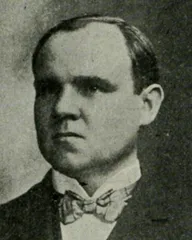
DEEPER TONE. BY JAMES E. TALMAGE, PH. D., F. G. s., F. R. s. (edin. ), PROF. OF GEOLOGY, UNIVERSITY OF UTAH. [Era readers will be as interested in reading as we are pleased in presenting this original paper by Dr. Talmage on the San Francisco cataclysm and its lessons. The matter is condensed by him, specially for the Era, from lectures and addresses given on request, during the two weeks following the earthquake disaster in California, April 18, 1906.—Editors.] To him who in the love of Nature holds Communion with her visible forms, she speaks A various language. —Thanatopsis, Bryant. In the placid lake, in green grottoes of the hills, in the gentle slopes of valleys, you may hear Nature's voice in tones both soft and sweet, lulling the weary heart and troubled mind, ap a child is brought to rest by its mother's croon. But Nature is no limited linguist; in range and in capacity for adaptation, her speech is infinite. She is not confined to the babbling music of rippling rills, nor to the soothing monotone of the zephyr, as it soughs through grassy dells, or rustles amid greening trees and bursting buds of spring. Have you ever heard, and if so, have you learned to understand, the melody of the even-song, or the cadence of the matin hymn, in carpeted canyon nooks? I press for no answer to that, for I dare not think that you, who are mountain-bred, yet more favored if mountain-born, you who dwell under the walls of these majestic temples of God, have not learned to understand Nature's softer speech, at least, nor that you are unthrilled by the music of her voice.
628 IMPROVEMENT ERA. But to another query you may reply if you will. Have you learned to comprehend, and to truly love, the Nature-music of deeper tone, of more solemn import—the grand diapason that fills the amphitheaters of the everlasting hills, when the full basso rolls from thunder-laden clouds, when mountain walls tremble and sway with the mighty tide-surge of awe-inspiring harmony? The earth-symphony would be less sublime, the world-drama a failure as the revelation of Deity as its author, were there lack of trilling treble or thundrous base, of nursery rhyme or epic canto, of green sward or snow drift, of sunshine or tempest, of smiles or tears, of ecstasy or agony, of life or of death. Neither sweettoned Israfil, nor stern-featured Azrael, the death angel, can be spared; these are brothers; one cannot say to the other, "I have no need of thee." In Nature's hymn what lov'st thou best— The treble trills of purling brooks? Or alto plaint of evening breeze? Or tenor tone in gathering storm? Or thunder-throated basso deep? I love them all; and more than each, The harmony that all compose. If one were mute, earth well might weep; God's anthem then were incomplete. Messages to earth from heaven, communications from God to man, are expressed in words and proclaimed in tones best suited to their burden and import. "On earth peace, good will toward men" was sung by angel choir to listening shepherds in the field, while a new star glorified the eastern sky, and the light of heaven's rejoicing banished the darkness of the western night. The awful dirge of Calvary was accompanied by thunder-peals and earthquake terror; the world-stage was darkened except as angry lightning flashed, revealing at intervals the dread details of the supreme tragedy. The discords of earthly speech, the confusion of human tongues, the myriad dialects of men, have their interpreters above. No prayer so broken, no petition so poorly worded, that it meet rejection in heaven, if only the utterance be in the tone of
7A' DEEPER TONE. 629 faith, and its timbre that of truth. Are we of earth as consistently careful to listen for, and act upon, the words of warning, of counsel, of command, as they are flashed hither from the court of heaven? With all our linguistic skill in deciphering the tongues of Babel, have we kept ourselves in practice as to the use of our mother tongue? Or is it necessary that when the Father would speak to us he must declare himself in symbols and signs, in miracles and wonders? Has man grown so deaf that nothing less than thunder-roll, or ocean-roar, or the rending and grinding of earthquake, can be heard? Is he so weak of vision as to readily sge only the flashing hues of devouring flame, the appalling blackness of the doom-cloud, or the accusing crimson of his brothers' blood? If gentle speech go unheeded, there shall be heard a sterner voice in deeper tones. Behold, it is written: For after your testimony cometh the testimony of earthquakes, that shall cause groanings in the midst of her, and men shall fall upon the ground, and shall not be able to stand. And also cometh the testimony of the voice of thunderings, and the voice of lightnings, and the voice of tempests, and the voice of the waves of the sea, heaving themselves beyond their bounds. And all things shall be in commotion; and surely, men's hearts shall fail them; for fear shall come upon all people; And angels shall fly through the midst of heaven, crying with a loud voice, sounding the trump of God, saying, Prepare ye, prepare ye, 0 inhabitants of the earth; for the judgment of our God is come: behold, and lo! the Bridegroom cometh, go ye out to meet him.* ' The wail of solemn requiem so recently wrung from the people of this land has not yet subsided. The groans of anguish, and the answering moans of sympathy that rose from ocean to ocean, the bugle blast that proclaimed distress and within an hour made of the nation one great relief society, are still ringing in our ears. Seemingly without a premonitory thrill, as far as known without a heralding note, a destructive earthquake shock convulsed the central portion of our California coast, in the early morning of April 18. San Francisco, the metropolis of the Pacific states, lay within the area of the principal disturbance; and the queen city, to * Doctrine and Covenants 88: 89-92.
630 IMPROVEMENT ERA. the last moment resting in supposed security behind the stately pillars of her Golden Gate, was wrecked and riven, while the timepiece ticked the passage of but a single minute. Under the earth-wave's thrill even the most stable of structures reared by man, his monumental piles of brick and stone and steel, went down even as do the giants of the forest before the hurricane's breath, and the wave-path was marked by colossal ruins. Buildings as strong as man can build fell as fall the card-houses of children's play. Many lives were lost as an immediate effect of the collapse of buildings; and for a brief period the survivors were in the grip of inevitable fright and terror. It was soon apparent that the destruction directly resulting from earthquake disruption, was to be followed by a more appalling horror, secondary to, yet resulting from, the first. Before the undulations of rock and earth had ceased, while wrecks of massive masonry yet rocked, flames burst from many sources, as if incendiaries by hundreds had been stationed at effective intervals and with concerted purpose had simultaneously applied the torch. Within an hour the fire fiend ruled the city. Opposition seemed futile, effective resistance impossible, for the earth-throes had rendered the water system inoperative. An army of fire fighters, veterans of renown, victors in many battles with the flames, marshaled themselves for the fight of their lives, only to learn the deadly strategy of their foe, as they found themselves disarmed. Their engines of war were ready, but ammunition they had none; their magazines had been robbed; the earthquake had stolen the water, before the pennons of the flame-squadrons appeared on the field. In the business district even the best of the so-called fire-proof structures were gutted to emptiness; in the residence sections, where houses that had been homes were mostly of wood, mansion and cottage were devoured, each in its turn as the flames advanced. Extreme dangers ofttimes necessitate extreme measures in the interests of protection; destruction rampant may sometimes be checked by destruction equally ruthless. Men have saved themselves from prairie fires by starting new flames in advance; the first fire starving to its death on reaching the newly-burned tract, where devastation had preceded it. Such was the plan of
IN DEEPER TONE. 631 battle in the San Francisco horror. To starve the ravenous flames by removing prey from their path, building blocks by hundreds, \vhole squares and entire streets of houses, were demolished by dynamite. Again and again, this desperate means proved ineffective, for the ravening fire found in the ruins enough to live upon, until it had crossed the narrow desert of man's making to the rich fields of houses and homes beyond. Early dispatches from the coast brought only dire predictions of the entire destruction of the chief city, and of awful horror in other places. Happily, the extreme reports were later somewhat trimmed to truth, but the veritable tale of woe is long and appalling. There were men on the scene; let us be thankful that many of these escaped the bolts of death. True to their manhood, they rose to the exigencies of the hour. The promptitude, and unity of action, the evident wisdom of the course pursued, the results as recorded in terms of property saved, sufferings mitigated, and lives preserved, required no ceremonial act of man to make of them a proclamation to the world, blazoned with seals of yellow flame, and red, red blood, declaring anew that amongst our citizens are a host belonging to the sanctified brotherhood of the truly great. " » Furthermore, before the day of the great catastrophe had waned, the work of gathering, for immediate transmittal, food and clothing, bedding, medicines, and money, was in systematic and vigorous operation the country over. Senators and representatives, collectively and as individuals, forgot that differences of policy had ever estranged them; tenets of democracy, precepts of republicanism were as trifles beneath consideration at such a time. President and cabinet, senate and house, moved under the inspiration of a single thought—how best to use the nation's wealth, its gold, its brawn, and its brain, in the hastening of relief. From beyond the seas came expressions of sympathy and offers of substantial assistance. Monarchies and republics alike extended the helping hand. The voice of disaster was Nature's call, and with its first note the brotherhood of nations burst forth as the impulse of love. Pessimist and misanthrope— thou who hast lost faith in thy
632 IMPROVEMENT ERA. Father's children, thou whose heart is screened from the radiant warmth of hope and trust, thou who proclaimest man to be but offspring of the bestial brute, con well this record of man's humanity, study this masterly picture of family love—canst thou yet deny the hereditary attributes of Fatherhood divine? If in this thou findest nought that is God-like, if thy mind be still shut to fact and reason, if thy heart be yet cold, thy soul even now filled with bitterness, go thou to thy den, to the caves of night, where thou shalt find congenial darkness and gloom. I dare affirm that thou didst not give a penny loaf to feed a starving child. Dark and deep as are the sloughs of human vice, strong as is the contrast between oppressor and victim, vast as are the hosts who profess to deny the saving sacrifice of Christ, the world is incalculably better for Christianity. Its influence is felt even in hearts that refuse its greeting as a welcome guest. Paganism knew not hospitals nor infirmaries, orphan homes, nor asylums for the unfortunate; charity, benevolence, self-sacrifice for the good of others, altruism, in its pure significance, these expressions had no equivalents in Pagan speech. My friend, think not that the world is wholly bad. Were it so, there were little of logical basis for hope or trust that it may improve. Many a human soul is so disfigured by vice, s<^ bedaubed by the filth of sin, as to seemingly belie its parentage; nevertheless, there is life in that soul, and it shall yet awaken and begin its upward pilgrimage; and, once started aright, it shall rise and rise, though an eternity may pass ere it regain all it has lost. I cannot believe that my Father's children are inherently and hopelessly bad. To me the world of human-kind is so good that it ought to be vastly better than it is; and so bad that of necessity it must be made better. Another thought suggested by the recent catastrophe, if we look upon the event as a type of destructive cataclysms in general, is this: Let us ponder well before we frame conclusions as to God's purposes in permitting the dreadful occurrence. The suggestion does not imply that we should fail to acknowledge the Almighty's Rand in this as in all else; but it is to be remembered
IN DEEPER TONE. 633 that the Lord has reserved unto himself the passing of judgment and the execution of the decree. As a principle, at once general and abstract, it is not to be denied that evil and suffering are the results of sin, regarding sin as the violation of law; yet it is manifestly contrary to reason, and indeed wholly unjust, to condemn as a convicted sinner one who suffers under the effects of sin. Suffering, nevertheless, is the inevitable effect of sin, and the demands of universal justice are inexorable. In the course of this mortal probation, the sinner is not always the one to suffer most from his misdeeds. Consider the case of a wayward son, one who wilfully spurns the wholesome counsel and worthy example of loving parents, who deliberately chooses the short-lived pleasure of nightly dissipation, with its nauseous after-taste, to the enduring happiness of a true home—tell me, who suffers more, this recreant son or the loving and heart-broken parents—the mother who descended into the valley of the deathshadow to give him life; the father who struggled and strove to provide for him;—who suffers more, I ask, this boy unfilial and unshamed, who buys his sinful pleasures with parents' tears, or the father and mother, praying in anguish and vainly striving to console each other in their shameful desertion? Who among men has suffered more than Jesus the Christ? Yet, did he sin? The Sinless One has suffered most of all because of sin. With reverence and submission, I acknowledge the hand of the Lord in this latest of great calamities. In it I see fulfilment of prophecy, marking the progress of the dispensation of the fulness of times, heralding the great and terrible day of the Lord. But I venture not to say, indeed I do not believe, that the greatest sufferers in this disaster are necessarily those who were most wicked, nor that the stricken city was of all cities the ripest for destruction, because of iniquity. Read again the record of Pagan murder and accident called disaster, concerning which Christ taught lessons and administered reproof: There were present at that season some that told him of the Galilaeans, whose blood Pilate had mingled with their sacrifices.
634 IMPROVEMENT ERA. And Jesus answering said unto them, Suppose ye that these Galilaeans were sinners above all the Galilaeans, because they suffered such things? I tell you, Nay: but, except ye repent, ye shall all likewise perish. Or those eighteen, upon whom the tower in Siloam fell, and slew them, think ye that they were sinners above all men that dwelt in Jerusalem? I tell you, Nay: but, except ye repent, ye shall all likewise perish.* Were this life all on which we may count for the adjustment of rights and wrongs, for the final balancing of individual merits and demerits, for the adjudication of sins and their penalties; were the span of one generation the time-limit allowed for restitution and judgment;—then with reason might we lament for those who suffer, and lose, and die. But if my Father cares for the wounded sparrow, I cannot indulge a momentary thought that one of his children will be forgotten. In the eternity of the hereafter, there shall be found provision for reparation, restoration, recompense. If mortality measures the whole of man's conscious and responsible existence, if the grave be indeed the tomb of the soul, then the suicide's heresy is to be regarded as argument. Equally inconsistent and false is the doctrine of direct and specific connection between individual illness or physical deformity and individual sin as the cause of the same. Bodily disease may not always be traced with certainty to its source; illness and physical affliction are often the inheritance of the relatively good and pure. Were the opposite true, we would have to regard every case of sickness, every instance of bodily defect, as a specific manifestation of heaven's punishment; and any attempt to mitigate or relieve would become an act of blasphemy. Do you remember reading about the blind man near the temple gate, to whom came Jesus and the disciples? The man had been sightless from birth; if his affliction was the direct result of his own transgression, he must have sinned in the pre-mortal state. Some one asked as to who had sinned to bring about such an affliction—the sightless beggar or his parents? Jesus answered that neither the blind man nor his parents had sinned to cause this dark heritage; and the reply is not without rebuke. That in some cases direct connection may be shown between *Luke 13: 1-5.
IN DEEPER TONE. 635 existing evil and its cause in specific sin, is beyond question. The derelict wreck of a once robust body, now tossed on waves of pain, prematurely sinking into the troughs of decrepitude, may tell the story of dissipation and vice as to the cause of its pitiful fate. To the stricken impotent at Bethesda pool, after the merciful miracle by which the man was relieved, the healer said: Behold, thou art made whole: sin no more, lest a worse thing come unto thee.* And on certain occasions the authoritative utterance, **Thy sins be forgiven thee,'' was made the equivalent of, * 'Thy faith hath made thee whole, "f Such instances are distinctive, and in no way do they justify man's sinful presumption in treating the afflicted one as a special subject of retributive justice, nor the blasphemy of man's judgment as to the sufferer's deserts. If any one of you has withheld his pennies or his dollars in the last great call for help; if you have sought excuse for so doing in the thought that the devastation was appointed, the stroke of disaster ordained, that the edicts of heaven are not to be opposed, or their efforts interfered with, I pray you seek repentance, for you have much need to seek. Go, carry to the altar your tardy offering, and rejoice if it find acceptance. The signs current unite in characterizing the present as the dispensation of God's fulness, as aforetime told. This is a time of rapid development, in the plot of life's drama, a period destined to be shortened for Mercy's sake. The glory of the Omnipotent is shown in the turning of evil to the accomplishment of good; in bending to heaven's service even the madness of human passions, the murderous rage of nations, the devastating fury of wind and wave, of earthquake and fire. Thus is the hand of God present and potent in all things. Naturally, the spread of information concerning the California catastrophe has drawn the attention of the reading public to the * John 5: 14. Read verses 1—14. t Matt. 9:2; Mark 2:5; see also Luke 7: 48; compare Matt. 9: 22; Mark 34; 10: 52; Luke 7: 50; 8: 48; 18: 42.
636 IMPROVEMENT ERA. subject of earthquakes in general, their cause and their nature as geologic phenomena. In this connection, let it be known that the foreign phrase terra jirma, indulgently adopted into our language but never fully naturalized in the realm of English speech, is used deceptively as often as otherwise. The expression means firm or solid ground, implying a stable condition of rock structure capable of withstanding the action of disruptive forces of at least ordinary intensity. The fact is, the outer or crustal portion of the lithosphere* is a very unstable structure. This crustal shell is fractured along many planes, and may be regarded as broken into separate crust-blocks. These planes of fracture are also planes of movement and dislocation, for along them the adjacent crustblocks slip upon one another, some moving upward, others downward, and at varying angles of dip, as the direction of local pressure may determine; the general effect is the adjustment of the crust-blocks to positions of greater stability, and the rise of mountain ranges. Such a slip of one crust-block upon another constitutes a fault, and the actual process of faulting necessarily starts an earth-jar, which is propagated as a wave through the rock-mass, much as a sound-wave is transmitted through a steel rail or other solid body. The arrival of an earth-jar or earth-wave constitutes the immediate cause of earth-tremor or earthquake, at the place of arrival. Earth-tremors due to subterranean movements are common rather than exceptional, the world over; only when the movement becomes terrifying or destructive, as gauged by human estimation, is the disturbance ranked as an earthquake proper. Tremors may be due to superficial causes, and even to surface operations. The passage of a street-car, or an ordinary wagon, to say nothing of such shakings as result from the rush of heavy trains, or from dynamite explosives or mines and quarries, even the impact of pattering rain drops in a brisk shower, any one of these or similar * Lithosphere, the rock-mass of the earth, the word itself meaning rockglobe; used in distinction from hydrosphere, or the water-globe, comprising the ocean in its entirety which overlies the solid lithosphere; and in further distinction from atmosphere, or gaseous globe, which overlies both lithosphere and hydrosphere.
IN DEEPER TONE. 637 disturbances may set the affected crust-blocks swinoring, and start a tremor that may last for hours. Terra firma is a misleading term; the earth is all a-tremble. While the slipping of crust-blocks, the faulting of the earth's crust, as the geologist would phrase it—is perhaps the most important proximate or immediate cause of earthquake origin, other disturbances may give rise to earth-waves. Earthquakes are known to be common in the regions of active valcanoes, particularly where the volcanoes are of the explosive type—ejecting so-called "ashes" and "cinders" instead of molten lava. In these instances, the earth wave may be due to sudden expansion or contraction resulting from rapid formation or condensation of vapors at depth. Indeed, any sudden operation of igneous energy may generate an earth-wave, and this, once started, travels with the undulatory movement of waves in general. Considering for illustration a simple case—that of the earthjar starting from a definite point within the crust, this point becomes the focus or centrum of the earth-wave. From the centrum the wave motion proceeds outward in all directions, with facility determined by the elasticity of the rock masses. At the point on the surface vertically above the centrum, which surface point is known as the epicentrum, the movement is evidently a vertical one. Outward from the epicentrum, in all directions, the earthwaves emerge at varying angles; and the actual motion at the surface comprises both vertical and horizontal factors. When the horizontal movement is relatively great, the surface disturbance is most pronounced. If buildings occupy such area, their destruction is assured, provided the earth-wave be strong; yet even a strong wave is less destructive where the element of horizontal movement is small, even though the vertical dislocation be great. This difference is so marked that in the case of great inland earthquakes it is possible to definitely map the ' 'area of great destruction, " and to recognize therein the proof of horizontal wave motion. The havoc wrought in San Francisco, as the late earth-wave traversed the coastal region, is due to the fact that the city lay within the area of relatively great horizontal thrust. The actual
638 IMPROVEMENT ERA. movement may have been much greater, yet with less injury to buildings, had the undulations been in a vertical plane only. Detailed and reliable reports as to the physical changes wrought by the recent earthquake are yet awaited. It is probable that such will show no well localized centrum or small area of origin, but rather an extensive plane marked by a long surface line along which the slip occurred. In short, it is most probable that the immediate cause was a fault movement—a simple adjustment of crust-blocks. Regarding the occurrence as an earth phenomenon alone, forgetting for the moment, if we can so forget, all that pertains to the human element, the cripplings and deaths, the loss, and the woe, we see in this merely one of the natural and inevitable disturbances necessary to earth development. Mountain ranges are not born without earth-throes and convulsions. The coasted area is a region of recent emergence from the sea, a region of young and yet growing mountains. Omitting, because of space limitations, the consideration of mountain birth and growth in general, let us study this fact: While we have attested proof of mountains having risen in a day or a night, their usual course of growth is slow and labored. The accumulations of sediment off the coasts of continents are the unborn ranges of the future. Sometime they must yield to the lateral pressure resulting from unequal radial contraction of the lithosphere; then must come crumpling and folding, bending and breaking, as the new-born range rises toward its altitude of proud supremacy. The upward movement, once started, continues by slips at intervals; and at each slip, the region trembles and quakes. Without mountain ranges, the earth could not meet the present needs of man. And mountain-making is impossible without earthquake and convulsion. From the view-point of human interest, as measured by the suffering and loss, the maimings and the deaths, as gauged in dollars, or as counted in terms of tears and blood, the recent disaster is of terrifying proportions. As a step in the ordinary progress of natural events, it is but an incident of earth's dynamic forces, and one of but ordinary rank. There have been greater convulsions, stronger earth-disruptions in the past. The geologist
IN DEEPER TONE. 639 does not hesitate to say that in the natural order of dynamic manifestations, the Pacific slope will be the scene of other earth disturbances in the future. Philadelphia, Pa.