Joseph Smith as a Boy
Improvement Era, vol. 9, no. 2, December 1905, pp. 108 to 111
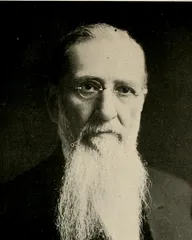
JOSEPH SMITH AS A BOY. BY PRESIDENT JOSEPH F. SMITH.
With the knowledge we have of the Church of Jesus Christ of Latter-day Saints, and looking back a hundred years to the birth of the prophet Joseph, the question naturally arises: "Can a good tree bring forth evil fruit?" We are informed that false prophets are also known by their fruits. ' 'By their fruits ye shall know them," says the Redeemer. That Joseph was a true prophet and brought forth good fruit is evidenced by the Latter-day Saints. They are the fruits of the doctrine, and the result of the organiza- tion, which he was instrumental in the hands of God, in bringing
forth. All that they have and are bear record that they are the product of a good tree which has brought forth good fruit. It could not be otherwise. How inconsistent, therefore, to charge Joseph Smith with being an imposter, a money-digger, and a deceiver! Let us look at him as a boy, and see if one reared as he was could be inclined to great evil. To me there is a sweet fascination in the contemplation of his childhood and youth. I love
to contemplate the innocence and the artless simplicity of his boy- hood. It bears record that he was honest, that he was led by the Spirit of God, to perform his wonderful mission. How could a child at his age be impelled by other than honest motives in the accomplishment of his high and holy calling? What he did he was led to do by the inspiration and guidance of his heavenly Father; of this I feel assured. He was much like other children; his play was like that of his companions; his thoughts, like those of most children, were inno- cent, and consequently he was incapable of the knavery and con- nivance that his enemies declare he practiced. Though poor, his
JOSEPH SMITH AS A BOY. 109
parents were honest and good; they delighted in the truth, and it was their honest desire to live according to the best light within them. Love and good will to all, found expression in Iheir hearts and acts; and their children were imbued with like sentiments. They were firm believers in God, and trusted in his watchcare over his children. They had frequently received manifestations of his loving kindness, in dreams, visions and inspirations; and God had healed their little ones in answer to prayer, when they were nigh unto death. It was in such an atmosphere that the boy was reared. Joseph was a remarkably quiet and well-disposed child who gave As early as the age of eight, he gave his parents little or no trouble. proof that, besides being thoughtful, easily governed, and of sweet and loving disposition, he possessed the foundation principles of a — good character filial affection, patience, endurance, courage. An incident related by his mother will illustrate. Typhoid fever had left him with a fever sore between his breast and shoulder, and he suffered excruciating pain for more than two weeks before the cause was discovered. The sore was then lanced, at which the pain left it, but shot into his leg, so that with that he suffered the greatest agony for several weeks more. His mother carried him for most of the two weeks in her arms, until she was worn out; whereupon, his elder brother Hyrum, noted for his tenderness, sympathy, and trustworthiness, insisted on watching by his bed- side. He sat faithfully beside his brother with the affected leg in his hands so that Joseph might the better endure the pain. Sev- eral incisions were made at different times, but to no seeming pur- pose, the pain of the little sufferer becoming each time more in- tense. At length the doctors decided to amputate the leg, but the mother protested, and the doctors concluded to make one more trial to heal the affected bone, by operation. ' 'We have come again, * said the doctors, approaching the '
patient boy's bed. "Yes," said Joseph, "but you have not come to take off my leg, have you, sir?" He was assured that, on the request of his mother, only an incision was contemplated. Then the principal surgeon asked that cords be brought to bind him to the bed while the operation was performed,— for anesthetics were unknown. To this Joseph objected, courageously answering that
110 IMPROVEMENT ERA.
he could endure it, if he had his liberty. "Will you, then, take some brandy or wine?" "No;" exclaimed Joseph, "I will not touch one particle of liquor, neither will I be tied down; but I will tell — you what I will do I will have m.y father sit on the bed and hold me in his arms, and then I will do whatever is necessary in order to have the bone taken out!" Then, looking at his mother, he said, "Mother, I want you to leave the room, for I know you can not bear to see me suffer so; father can stand it, but you have carried me so much, and w^atched over me so long, you are almost worn out. Now, mother, promise me that you will not stay, will you? The Lord will help me, and I shall get through with it." And God did help him through. But here, in the child, the boy, what evidence have we not of love and anxiety for mother; what confidence in father; what endurance, what patience in suffering, what self-reliance, what love of liberty, what temperance, what .
courage! Can such a spirit later befoul its purity with duplica- tion and deceit? Impossible. These evils are not the fruits of such a tree; rather these traits and virtues which the boy exhibited are the foundation principles of true character; and, belonging to the boy, they became second nature to the man. Such childhood is the basis of such manhood. Now what shall we say of the wonderful manifestation to him some seven or eight years later when he was still a boy of about fourteen years of age? Itwas in the early spring of 1820 when this same child, in answer to the word of God in James, sought God in prayer to know the right. He declares that in reply to his petition, he saw a pillar of light descending gradually until it fell upon him: "When the light rested upon me," he testifies in his own language, "I saw two personages, whose brightness and glory defy all description, standing above me in the air. One of them spake unto me, calling me by name, and said, pointing to the other, 'This is my beloved Son, hear him.' " Is it reasonable to suppose that there could have been premeditated deceit on the part of the boy, and such a boy, in his simple statement of what he saw? No; neither could the answer which the heavenly messenger gave to him have been composed in the child's own mind. Note the plainness and simplicity of his following statements. He says:
;
JOSEPH SMITH AS A BOY. Ill
I asked the personages who stood above me in the light, which of all the sects was right— and which I should join. I was answered that I must join none of them, for they were all wrong; and the personage who addressed me said that all the creeds were an abomination in his sight; that those professors were all corrupt that they draw near to me with their lips, but their hearts are far from me they ;
teach for doctrines the commandments of men, having a form of Godliness, but they deny the power thereof.
Keeping these things in mind, and many others which might be referred to of a similar nature in the boy's early life, let the doubter who considers the child an imposter, call up a noble lad of fourteen years before him. Look at him Let the reader do it. carefully, and ask yourselves, what motives underlie his acts and words; and decide when you look at him whether in his young life there is apt to be premeditated schemes of deception, pertaining to such mature and really wonderful things as those about which the boy Joseph was making declarations and statements, with the earnest simplicity of youth! No; here is yet uncontaminated childhood, that will tell its story straight; childhood that will out with the full, unvarnished truth. Joseph declared in the simplic- ity of his noble boyhood that he had seen this vision, and that he knew it to be true. It is a wonder, considering the circumstances, that he should not be believed, and received with rejoicing as a favored prophet of God. On the contrary, he was persecuted and made sport of by ministers of religion who above all should have hailed him as fav- ored of God. No wonder that in later life he thought how very strange it was that an obscure boy, a little over fourteen years of age, one doomed, too, to the necessity of obtaining a scanty main- tenance by his daily labors, should create in the great ones of the most popular sects of the day, a spirit of most bitter persecution and reviling just because he had testified that he had seen a vis- ion. Thanksgiving and repentance would have been more appro- priate on their part. And this bitter opposition and persecution from the religious organizations continued in the interval up to the twenty-third of September, 1823, during which seemingly uneventful time in his
life the boy continued to labor with his father in the field, and to prepare himself for important events to come. Then it was that the hiding place of the sacred records of Cumorah, containing the