Originality of the Book of Mormon
Improvement Era, vol. 8, no. 12, October 1905, pp. 881 to 902
ORIGINALITY OF THE BOOK OF MORMON. (Continued.)
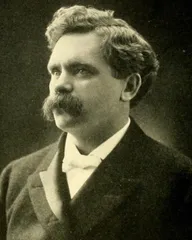
BY ELDER B. H. ROBERTS.
THE FALL OF ADAM— THE PURPOSE OF MAN'S EXISTENCE.
In the second book of Nephi occurs the following direct, ex- plicit statement:
Adam fell that man might be, and men are that they might have joy.
This assertion concerns two of the mightiest problems of theology: First). The reason for man's fall. Second. The purpose of Adam's existence. Before entering into a consideration of these doctrines, how- ever, I must establish the fact of their originality; for I fancy there will be many who at first glance will be disposed to question their being original with the Book of Mormon. It must be con-
ceded, of" course, that the fact of man's fall is frequently men- tioned in the Bible. The story of it is told at length in Genesis.*
- Genesis 3.
.
882 IMPRO VEMENT ERA
It is the subject of some of Paul's discourses;* and, indeed, it under- lies the whole Christian scheme for the redemption and salvation of man. Yet, strange to say, there is not to be found a direct, ex- plicit statement in all the Jewish scriptures as to why Adam fell. The same statement may be made with reference to the second part of this passage. That is, that there is nowhere in Jewish scriptures a direct, explicit statement as to the object of man's ex- istence. These statements, with reference to the absence of anything in Holy scripture on these two important points, will, I know, be regarded as extremely bold; and especially when made with ref- erence to so large -a body of literature as is comprised in the
Hebrew Yet I make them with absolute confidence; scriptures- and am helped to that conclusion from the fact that nowhere in the creeds of men, based upon Jewish and Christian scripture, is there to be found a direct statement upon these two subjects that has in it the warrant of explicit, scriptural authority. Nowhere in the creeds of men— the creeds of men! those great crystallizations of Christian truths, as men have con- ceived those truths to be; those embodied deductions of the teachings of Holy scripture —nowhere in them, I repeat, are these two great theological questions disposed of on scriptural authority. The Westminster Confession of Faith, which embodies the accepted doctrine of one of the largest bodies of Protestant Christendom, ascribes the purpose of all the creative acts of God to be "the manifestation of the glory of his eternal power, wis- dom and goodness.f And in an authoritative explanation of this part of the creed it is said, "The design of God in creation was the manifestation of his own glory." And again, "Our confession very explicitly takes the position that the chief end of God, in his eternal purposes and in their temporal execution in creation and providence, is the manifestation of his own glory. * * * The scriptures explicitly assert that this is the chief end of God in
- I Cor. 15: 21, 22; Romans 5: 12-17. f Westminster Confession, chapter 4 — Of Creation — section 1.
ORIGINALITY OF THE BOOK OF MORMON. 883
creation.* * * * The manifestation of his own glory is intrin- sically the highest and worthiest end that God could propose to him-
self."f The only business I have here with this declaration of the purpose of God in creation — including the creation of man, of course, — simply to is call attention to the fact that it nowhere has the direct warrant of scripture. The great Protestant body of Christians, known as the "Epis- copal Church," whose chief doctrines are embodied in The Book of Common Prayer, is silent upon the two subjects in question, viz., why Adam fell; the object of man's existence. Their Articles of Faith, it is true, speak of the fall of Adam, and its effect upon the human race: but nowhere do they attempt to say why it was that Adam fell, or give a reason for man's existence. Their creeds pro- claim their faith in God, "the Maker and Preserver of all things, both visible and invisible;" but nowhere declare the purpose of that creation, and, consequently, have no word as to the object of man's existence. The exposition of the Catholic creed on the same point, as set forth in the Douay Catechism, is as follows:
Ques. What signify the words creation of heaven and earth? Ans. They signify that God made heaven and earth and all crea- tures in them of nothing, by his word only. Ques. What moved God to make them? Ans. His own goodness, so that he may communicate himself to angels and to man, for whom he made all other creatures.J
Speaking of the creation of the angels, the same work con- tinues:
Ques. For what end did God create them? [the angels.]
- In proof of this last declaration, the expounder cites Col. 1: 16; Prov. 16: 4; Rev. 4: 11; Rom. 11: 36. See Commentary on the Confession of Faith, with questions for theological students and Bible classes, by the Rev. A.. A. Hodge, D. D., chapter 4. The reading of the passages quoted will convince any one that the statement of the creed is but poorly, or not at all, sustained by them.
t Commentary on the Confession, (Hodge) chapter 4. % Douay Catechism, chapter 3.
—
884 IMPROVEMENT ERA.
Ans. To be partakers of his glory and to be our guardians.
Referring again to man's creation, the following occurs:
Ques. Do we owe much to God for creation? Ans. Very much, because he made us in such a perfect state,
creating us for himself, and all things else for us.*
From all which it may be summarized that the purpose of God in the creation of men and angels, according to Catholic theology, is
First, that God might communicate himself to them. Second, that they might be partakers of his glory. Third, that he created them for himself, and all thing3 else for them. While this may be in part the truth, and so far excellent, it
has no higher warrant of authority than human deduction, based on conjecture, not scripture; and it certainly falls far short of giving to man that "pride of place" in existence which his
higher nature and his dignity as a son of God entitle him. The originality of these two Book of Mormon doctrines estab- lished, let us now consider if they are true and of what value they
are, and what effect they will probably have upon the ideas of men. I shall treat them separately first, and in relation after- wards. "Adam fell that man might be." I think it cannot be doubted, when the whole story of mart's fall is taken into account, that in some way — however hidden it
may be under allegory — his fall was closely associated with the propagation of the race. In an incidental way, Paul gives us to understand that Adam, in the matter of the first transgression, was not deceived, but that the woman was.f It therefore follows that
Adam must have sinned knowingly, and perhaps deliberately, making choice of two laws pressing upon him. With his spouse, Eve, he had received a commandment from God to be fruitful, to perpetuate his race in the earth. He had also been told not to partake of a certain fruit of the garden of Eden ; but, according to the story of Genesis, as
- Douay Catechism, chapter 3. f Tim. 2: 14.
ORIGINALITY OF THE BOOK OF MORMON. 885
also according to the assertion of Paul, Eve, who, with Adam, re- ceived the commandment to multiply in the earth, was deceived, and, by the persuasion of Lucifer, induced to partake of the for- bidden fruit. She, therefore, was in transgression, and subject to the penalty of that law which from the scriptures we learn in- cluded banishment from Eden, banishment from the presence of God, and also the death of the body. This meant, if Eve were per- mitted to stand alone in her transgression, that she must be alone, also, in suffering the penalty. In that event she would have been separated from Adam; which necessarily would have prevented obedience to the commandment given to them conjointly, to mul- tiply in the earth. In the presence of this situation, it is, there- fore, to be believed that Adam, not deceived either by the cunning of Lucifer or the blandishments of the woman, deliberately, and with a full knowledge of his act and its consequences, and in ordet* to carry out the purpose of God, in the creation of man, shared alike the woman's transgression and its effects; and this in order that the first great commandment he had received from God; viz., — "be fruitful and multiply and replenish the earth, and subdue — might not it" of fulfilment. Thus, "Adam fail that man fell
might be." The effect of this thought upon the ideas of men, concerning the great Patriarch of our race, will be revolutionary. It seems
to be the fashion of those who assume to teach the Christian re- ligion to denounce Adam in unmeasured terms; as if the fall of man had surprised, if indeed it did not altogether thwart, the original plan of God respecting the existence of man in the earth. The creeds of the churches generally fail to consider the fall as part of God's purpose regarding this world, and in its way as es- sential to the accomplishment of that purpose as the redemption through Jesus Christ. Certainly there would have been no occa- sion for the redemption, had there been no fall; and hence, no occa- sion for the display of all that wealth of grace and mercy and justice and love — all that richness of experience, involved in the gospel of Jesus Christ, had there been no fall. It cannot be but that it was part of God's purpose to display these qualities in their true relation, for the benefit, and blessing, and experience, and enlargement of man; and, since there would have been no oc~
886 IMPROVEMENT ERA.
casion for displaying them but for the fall, it logically follows that the fall, no less than the redemption, must have been part of God's original plan, respecting the earth-probation of man. The fall undoubtedly was a fact as much present to the foreknowledge of God as was the redemption; and the act which encompassed it must be regarded as more praise-worthy than blame-worthy, since it was essential to the accomplishment of the divine purpose. Yet,
as I say, those who assume to teach Christianity, roundly de- nounce Adam for his transgression. "The Catholic Church teaches," says Joseph Faa' Di Bruno, D. D., "that Adam by his sin has not only caused harm to himself, but to the whole human race; that by it he lost the supernatural justice and holiness which he received gratuitously from God, and lost it, not only for himself, but also for all of us; and that he, having stained himself with the sin of disobedience, has transmitted not only death and other bodily pains and infirmities to the whole human race, but also sin, which is the death of the soul."*
And again: Unhappily Adam, by his sin of disobedience, which was also a sin of pride, disbelief and ambition, forfeited, or more properly speaking, rejected that original justice; and we, as members of the human family, of which he was the head, are also implicated in that guilt of self-spoli- ation, or rejection and deprivation of those supernatural gifts; not indeed on account of our having willed it with our personal will, but having willed it with the will of our first parent, to whom we are linked by na- ture as members to their head.f
Still again, and this from the Catholic Catechism:
Q. Huw did we lose original justice? A. By Adam's disobedience to God in eating the forbidden fruit. Q. How do you prove that? A. Out of Rom. 5: 12, "By one man sin entered into the world, and by sin death; and so into all men death did pass, in whom all have sinned." Q. Had man ever died if he had never sinned?
- Catholic Belief, p. 6.
f Catholic Belief, p. 330.
f
ORIGINALITY OF THE BOOK OF MORMON. 887
A . He would not, but would live in a state of justice, and at length be translated alive to the fellowship of the angels.*
From a Protestant source I quote the following: In the fall of man we may observe, 1. The greatest infidelity. 2. Prodigious pride. 3. Horrid ingratitude. 4. Visible contempt of God's majesty and justice. 5. Unaccountable folly. 6. A cruelty to himself and to all his posterity. Infidels, however, have treated the ac- count of the fall and its effects, with contempt, and considered the whole as absurd; but their objections to the manner have been ably answered by a variety of authors; and as to the effects, one would hardly think anybody could deny. For that man is a fallen creature, is evident, if we consider his misery as an inhabitant of the natural world; the dis- orders of the globe we inhabit, and the dreadful scourges with which it is visited; the deplorable and shocking circumstances of our birth; the painful and dangerous travail of women; our natural uncleanliness, helplessness, ignorance and nakedness, the gross darkness in which we naturally are, both with respect to God and a future state; the general rebellion of the brute creation against us; the various poisons that lurk in the animal, vegetable and mineral world, ready to destroy us; the heavy curse of toil and sweat to which we are liable; the innumerable calamities, of life and the pangs of death.
In an article on man, the Dictionary just quoted also says:
God, it is said, made man upright, (Eccl. 7: 29,) without any imper- fection, corruption or principle of corruption in his body or soul; with light in his understanding, holiness in his will, and purity in his affec- tion. This constituted his original righteousness, which was universal, both with r. spect to the subject of it, the whole man, and the object of it, the whole law. Being thus in a state of holiness, he was necessarily in a state of happiness. He was a very glorious creature, the favorite of heaven, the Lord of the world, possessing perfect tranquility in his own breast, nnd immortal. Yet he was not without law: the law of nature, which was impressed on his heart. God superadded a positive law, not to eat of the forbidden fruit (Gen. 2: 17) under the penalty of death, natural, spiritual, and eternal. Had he obeyed this law he might have had reason to expect that he would not only have had the contin- uance of the natural and spiritual life, but have been transported to the
- Douay Catechism, p. 13.
f Buck's Theological Dictionary, p. 182.
888 IMPROVEMENT ERA.
upper paradise. Man's righteousness, however, though universal, was not immutable, as the event has proved. How long he lived in a state of innocence cannot easily be ascertained, yet most suppose it was but a short time. The positive law which God gave him he broke, by eating the forbidden fruit. The consequence of this evil act was, that man lost the chief good: his nature was corrupted, his powers depraved, his body subject to corruption, his soul exposed to misery, his posterity all involved in ruin, subject to eternal condemnation, and forever incapable to restore themselves to the favor of God, to obey his commands perfectly, and to satisfy his justice.*
Another Protestant authority says. The tree of knowledge of good and evil revealed to those who ate its fruit secrets of which they would better have remained ignorant; for the purity of man's happiness consisted in doing and loving good, with- out even knowing evil.f
From these several passages, as also, indeed, from the whole tenor of Christian writings upon this subject, the fall of Adam is quite generally deplored, and upon him is laid a very heavy burden of responsibility. It was he, they complain, who
Brought death into the world, and all our woe.
One great division of Christendom, in its creed, it is true, in dealing with the fall, concedes that "God was pleased, according
to his wise and holy counsel, to permit, [the fall] having purposed to order it to his own glory."! And, in an authoritative explanation of the section, they say: "This sin [the fall] was permissively embraced in the sover- eign purpose of God." And still further in explanation: "Its pur- pose being God's general plan, and one eminently wise and right- eous, to introduce all the new created subjects of moral govern- ment into a state of probation for a time, in which he makes their permanent character and destiny depend upon their own action." Still this sin, described as being permissively embraced in the sov-
ereign purpose of the Deity, God designed "to order it to his own
- Buck's Theological Dictionary.
t Old Testament History, William Smith, L. L. D., chapter 2. J Westminster Confession, chapter 6, section 1.
ORIGINALITY OF THE BOOK OF MORMON. 889
glory;" but it nowhere appears, according to this confession of faith, that the results of the fall are to be of any benefit to man. The only thing consulted in the theory of this creed seems to be the manifestation of the glory of God — a thing which represents God as a most selfish being — but just how the glory of God can be manifested by the fall which, according to this creed, results in the eternal damnation of the overwhelming majority of his creatures, is not apparent. Those who made this Westminster Confession, as also the large following which accept it, concede that their theory involves them at least in two difficulties which they confess it is impossible for them to meet. First, "How could sinful desires or volitions originate in the soul of moral agents created holy like Adam and Eve;" and, second, "how can sin be permissively embraced in the eternal pur- pose of God, and not involve him as responsible for the sin?" "If it be asked," say they, "why God, who abhors sin, and who benev- olently desires the excellence and happiness of his creatures, should sovereignly determine to permit such a fountain of pollu- tion, degradation and misery to be opened, we can only say, with profound reverence, 'Even so, Father, for so it seemed good in thy sight.* These difficulties, however, are the creed's and those who accept it, not ours, and do not further concern our discussion at this point. Infidels — under which general term (and I do not use it
offensively) I mean all those who do not accept the Christian creeds, nor believe the Bible to be a revelation — infidels, I say, quite gen- erally deride the fall of man as represented both in the creeds of Christendom and in the Bible. They regard the tremendous con- sequence attendant upon eating the forbidden fruit as altogether out of proportion with the act itself, and universally hold that a moral economy which would either design or permit such a calamity, as the fall is generally supposed to be, as altogether unworthy of an all-merciful and just Deity. Thomas Paine referring to it says:
- Commentary on the Confession of Faith, A. D. Hodge, pp.
105-108.
890 IMPROVEMENT ERA.
Putting aside everything that might excite laughter by its absurd- ity, or detestation by its profaneness, and confining ourselves merely to an examination of the parts, it is impossible to conceive a story more derogatory to the Almighty, more inconsistent with his wisdom, more contradictory to his power than this story is.
In their contentions against the story of Genesis, no less than in their war upon the fall and original sin in the men made creeds of Christendom, infidels have denounced God in most blasphemous terms, as the author of all the evil in this world, by permitting, through not preventing, the fall; and they have as soundly ridi-
culed and abused Adam for the part he took in the affair. He has been held up by them as weak and cowardly, because he referred his partaking of the forbidden fruit to the fact that the woman gave to him and he did eat; a circumstance into which they read an effort, on the part of man, to escape censure, perhaps punish- ment, and to cast the blame for his transgression upon the woman. The scoffers proclaim their preference for the variations of this story of a fall of man, as found in the mythologies of various peo- ples, say those of Greece or India.* But all this aside. The truth is that nothing could be more courageous, sympathetic or nobly hon-
orable, than the course of this world's great patriarch, in his relations to his wife Eve and the fall. The woman by deception was led into transgression, and stands under the penalty of a broken law. Banish- ment from the presence of God; banishment from the presence of her husband — death, await her. Thereupon, the man, not deceived, but knowingly, (as we are as.-ured by Paul) also transgresses. Why? In one aspect of the case, in order that he might share the woman's banishment from the comfortable presence of God, and — with her die than which no higher proof of love could be given — no nobler act of chivalry performed. But, primarily, he trans- gressed that "man might be." He transgressed a less important law that he might comply with one more important, if one may so speak of any of God's laws. The facts are, as we shall presently
- See IngersoWs Lectures, "Liberty of Man, Woman and Child,'* where the great orator contrasts the story of the Fall given in the Bible with that of Brahma, in the Hindoo mythology, and extravagantly praises the latter to the disparagement of the former.
ORIGINALITY OF THE BOOK OF MORMON. 891
see, that the conditions which confronted Adam, in his earth-life, were aforetime known to him; that of his own volition he accepted them, and came to earth to meet them; but before we can enter upon a more thorough consideration of these things, one or two other important facts must be brought into view. First of these is the other great and original truth in this Book of Mormon utterance, viz:
Men are that they might have joy.
That is to say, the purpose of man's earth- life is in some way to be made to contribute to his joy, which is but another way of sayingthat a man's earth- life is to eventuate in his advantage. "Men are that that they might have joy!" What is meant by that? Have we here the reappearance of the old Epicurean doc- trine, "pleasure is the supreme good, and chief end of life"? No, verily! For mark, in the first place, the different words "joy" and "pleasure." They are not synonymous. The first does not necessa- rily arise from the second. Joy may arise from quite other sources than pleasure, even from pain, when the endurance of pain is to eventuate in the achievement of some good; such as the travail of a mother in bringing forth her offspring; the weariness and pain and danger of toil, by a father to secure comforts for loved ones. Moreover, whatever apologists may say, it is very clear that the pleasure of the Epicurean philosophy, hailed as "the supreme good and chief end in life," was to arise from agreeable sensations, or whatever gratified the senses, and hence was, in the last analysis
of it — in its roots and branches — in its theory and in its practice,
sensualism. It was to result in physical ease and comfort and mental
inactivity, other than a conscious, self complacence — being regarded as "the supreme good and chief end of life," I judge this to be the
net result of this philosophy, since these are the very conditions in which Epicureans describe even the gods to exist;* and surely men
- In Cicero's description of the Epicurean conception of the gods, he says: "That which is truly happy cannot be burdened with any labor itself, nor can it impose any labor on another, nor can it be influenced by resentment or favor, because things which are liable to such failings must be weak and frail. * * * Their life, [i. e. of the
—
892 IMPROVEMENT ERA.
could not hope for more pleasure, or greater happiness than that possessed by their gods. Cicero even charges that the sensualism of Epicurus was so gross that he represents him as blaming his brother, Timocrates, "because he would not allow that everything which had any reference to a happy life, was to be measured by the belly; nor has he," continues Cicero, "said this once only, but often." This is not the joy, it is needless to say, contemplated in the Book of Mormon. Nor is the joy there contemplated the joy of — mere innocence mere innocence, which, say what you will of it, is but a negative sort of virtue. A virtue that is colorless, never quite sure of itself, always more or less uncertain, because untried.* — Such a virtue if mere absence of vice may be called virtue would be unproductive of that joy, the attainment of which is set forth in the Book of Mormon as the purpose of man's existence; for in the context it is written, ''They [Adam and Eve] would have remained in a state of innocence, having no joy, for they knew no misery; doing no good, for they knew no sin." From which it ap- pears that the joy contemplated in our Book of Mormon passage is to arisefrom something more than mere innocence, which is, impliedly, unproductive of the joy contemplated. The joy contem- plated in the Book of Mormon passage is to arise out of man's rough and thorough knowledge of evil, and of sin; through knowing misery }
sorrow, pain and suffering; through seeing good and evil locked in awful conflict; through a consciousness of having chosen, in that con- flict, the better part, the good; and not only in having chosen it, but in
having wedded it by eternal compact; having made it his, by right of conquest over evil. It is a joy that will arise from a consciousness of
having "fought the good fight," of having "kept the faith." It will arise from a consciousness of moral, spiritual and physical
gods] is most happy, and the most abounding with all kinds of blessings which can be conceived. They do nothing. They are embarrassed with no business; nor do they perform any work. They rejoice in the possession of their own wisdom and virtue. They are satisfied that they shall ever enjoy the fulness of eternal pleasure. * * * Nothing can be happy that is not at ease.—Tusculan Disputations, The Nature of the Gods. * II Nephi 2: 23.
ORIGINALITY OF THE BOOK OF MORMON. 893
strength; of strength gained in conflict. The strength that comes from experience; from having sounded the depths of the soul; from experiencing all the emotions of which mind is susceptible; from testing all the qualities and strength of the intellect. A joy that will come to man from a contemplation of the universe, and a con- sciousness that he is an heir to all that is — a joint heir with Jesus Christ and God; from knowing that he is an essential part of all
that is. It is a joy that will be born of the consciousness of exist- ence itself — that will revel in existence — in thoughts of and real- izations of existence's limitless possibilities. A joy born of the consciousness of the power of eternal increase. A joy arising from association with the intelligences of innumerable heavens — the Gods of all eternities. A joy born of a consciousness of being, of intelligence, of faith, knowledge, light, truth, mercy, justice, love, glory, dominion, wisdom, power; all feelings, affections, emotions* passions; all heights and all depths. "Men are that they might have joy," and that joy is based upon, and contemplates, all that is here set down. Still another fact must be brought into view, before we can treat these two great truths — the fall of man and the purpose for his existence — in relation to each other. This fact is the immor- tality of the spirit of man, by which I mean not only a never end- ing existence for the soul of man in the future, through the res- urrection, but a proper immortality that means the eternal exist- ence of the ego — interchangably called mind, spirit, soul, intelli-
gence — mean existence before birth, as well as existence after death; I
the theory that immortality refers to existence after death only, is evidently but half a truth. A real immortality is forever immortal, and is existence before life on earth, as surely as an existence after death. This view of the intelligence, or spirit of man, is agreeable to Bible teaching also. Without going into the subject at length, I call attention to the fact that Jesus himself had very clear conceptions of his own spirit existence before his birth into this world; a fact which is evident from the declaration he made to the Jews when he said, "Verily, I say unto you, before Abraham was, I am."f [i. e. existed]. And again, in his prayer in Geth-
t John 8: 58.
894 IMPROVEMENT ERA.
semane, "0 Father, glorify thou me with thine own self, with the glory which I had with thee before the world was."* This spirit pre-existence extends also to all the children of men, who, in their physical structure, and even in faculties of mind, so nearly resem- bled Jesus Christ, though, of course, immeasurably below him in the developed excellence of those qualities. We read of the sons of God shouting for joy in heaven, wh<m the foundations of the earth were laid;f of the war in heaven when Michael and his angels fought against the dragon (Satan), and the dragon and his angels fought, and he with them was cast out into the earth.$ These were the angels which kept not their first estate, but left their own habitation, and who are reserved in everlasting chains unto the judgment of the last days.§ "Before I formed tbee in the belly, I knew thee," said the Lord to Jeremiah, "and sanctified thee, and ordained thee a prophet unto the nations ;"|| "We have had fathers of the flesh, and we give them reverence," said Paul to the Hebrews, "shall we not much rather be in subjection unto the Father of spirits and live?"** All of which passages tend to prove that not only Jesus but the spirits of all men existed before they tabernacled in the flesh. This, of course, is but a brief glance at the question, as supported by the Jewish scriptures.ff The Book of Mormon, while not in any formal manner teach- ing this doctrine of the pre-existence of the spirit of man, does so very effectually in an incidental way. For example: the Lord Jesus, long ages before his advent into earth-life, revealed himself to the Book of Mormon character known as the Brother of Jared, and in doing so he said:
Behold, I am he who was prepared from the foundation of the
- John 17.
t Job 38: 4-7. J Revelation 12. § Jude 6. || Jeremiah 1; 5. ** Heb. 12.
ft Those who wish to extend their investigation on the subject are referred to the author's work on The Gospel, especially the section of Man's Relationship to Deity, found in both the second and third editions.
ORIGINALITY OF THE BOOK OF MORMON. 895
world to redeem my people; * * * * and never have I shown myself unto man whom I have created, for never has man believed in me as thou hast. Seest thou that ye are created after mine own image? Yea, even all men were created in the beginning after mine own image. Behold this body which ye now behold, is the body of my spirit; and man have I created after the body of my spirit; and even -s I appear unto thee to be in the spirit, will I appear unto my people in the flesh.
Again, in a vision, given to the first Nephi, in which he was permitted to see many events, to him future, connected with the affairs of this world, he reached a point at which he was for. bidden to write concerning some portion of those events, for it had been reserved for another to write of them, even one who would be an apostle of Jesus Christ in the earth. And Nephi heard, and bears record, that the name of that apostle was "John." So that it appears that the spirit of John, as well as that of Jeremiah and Jesus and others, was known to the Lord, and his earth mission appointed unto him. The Nephites were also plainly taught the indestructibility of the soul. The prophet Alma expressly declaring, "that the soul could never die;"t which, according to Orson Pratt, in a foot note on the passage, means that the soul could "never be dissolved, or its parts be separated, so as to disorganize the spiritual person- age;" and since the Book of Mormon teaches the pre-existence of this soul, or spirit, and also teaches its continued existence be- tween death and the resurrection,t as also its indestructibility after the resurrection, it is very clear that the Book of Mormon § teaches what I have called "proper immortality of the soul;" or, in other words, declares its essential, its eternal, existence; hence, its necessary existence, hence, that it is a self-existing entity. With this doctrine kept clearly in view, we may now consider the "fall ofman" and the "purpose of his existence" as related subjects — as standing somewhat in the relationship of means to an
- Ether R t Alma 42: 9. J Alma 40. § Alma 42: 9.
. —
896 IMPRO VEMENT ERA
end. We shall now be able to regard the fall of man, not as an accident, not as surprising, and all but thwarting, God's purposes, but as part of the divinely appointed program of man's earth exist- ence. Here, then, stands the truth, so far as it may be gathered from God's word and the nature of things: There is in man an
eternal, uncreated, self-existing entity, call it intelligence, mind, spirit, soul —what you will, so long as you recognize it, and regard its nature as eternal. There came a time when, in the progress of things, (which is only another way of saying in the "nature of things") an earth career, or earth existence, because of the things it has to teach, was necessary to the enlargement, to the advance- ment of these intelligences. Hence, an earth is prepared; and one sufficiently advanced and able, by the nature of him, to bring to pass the purposes of God, is chosen, through whom this earth-existence, with all its train of events — its mingled miseries and comforts, its sorrows and joys, its pains and pleasures, its good, and its evil — may be brought to pass. He comes to earth with his appointed spouse. He comes, primarily, to bring to pass man's earth-life. He comes to the earth with the solemn injunc- tion upon him: "Be fruitful and multiply, and replenish the earth, and subdue it." But he comes with the knowledge that this earth- existence of eternal "intelligences" is to be lived under circum- stances that will contribute to their enlargement, to their advance- ment. They are to experience joy and sorrow, pain and pleasure; witness the effect of good and evil, and exercise their agency in
the choice of good or of evil. To accomplish this end, the local, or earth, harmony of things must be broken. Evil to be seen, and experienced, must enter the world, which can only come to pass through the violation of law. The law is given— ''of the tree of the knowledge of good and evil, thou shalt not eat of it: for in the day thou eatest of it, thou shalt surely die." The woman, forget- ful of the purpose of the earth-mission of herself and spouse, is led, by flattery and deceit, into a violation of that law, and be- comes subject to its penalty— merely another name for its effect. But the man, not deceived, but discerning clearly the path of duty, and in order that earth-existence may be provided for the great host of spirits to come to earth, under the conditions prescribed
a
ORIGINALITY OF THE BOOK OF MORMON. 897
he also transgresses the law, not only that men might be, but that they might have that being under the very circumstances deemed essential to the enlargement, to the progress, of eternal intelli- gences. Adam did not sin because deceived by another. He did not sin maliciously, or with evil intent; or to gratify an inclination to rebellion against God, or to thwart the Divine purposes, or to manifest his own pride. Had his act of sin involved the taking of life rather than eating a forbidden fruit, it would be regarded as a sacrifice rather than a murder. This to show the nature of Adam's transgression. It was a trangression of the law — "for sin is the transgression of the law"* — that conditions deemed neces- sary to the progress of eternal intelligences might obtain. Adam sinned that men might be, and not only be, but have that being under conditions essential to progress. But Adam did sin. He did break the law; and violation of law involves the violator in its
penalties, as surelv Upon this principle as effect follows cause. depends the dignity and majesty of law. Take this fact away from moral government, and your moral laws become mere nullities. Therefore, notwithstanding Adam fell that men might be, and in his transgression there was at bottom a really exalted motive — motive that contemplated nothing less than bringing to pass the highly necessary purposes of God with respect to man's existence in the earth — yet his transgression of law was followed by certain moral effects, in the nature of man, and in the world. The har- mony of things was broken; discord ruled; changed relations be- tween God and men took place; darkness, sin, and death, stalked through the world, and conditions were brought to pass in the midst of which the eternal intelligences might gain those experi- ences that such conditions had to teach. Now, as to the second part of the great truth — "men are that they might have joy" —viewed also in the light of the intelligence or spirit in man being an eternal, uncreated, self-existing entity. Remembering what I have already said, in these pages, as to the
nature of this joy which it is the purpose of earth-existence to se- cure, remembering from what it is to arise — from the highest pos- * I John 3: 4.
898 IMPROVEMENT ERA.
sible development — the highest conceivable enlargement of physi- cal, intellectual, moral and spiritual power —what other conceiv- able purpose for existence in earth-life could there be for eternal intelligences than this attainment of joy springing from progress? Man's existence for the manifestation alone of God's glory, as That view repre- taught by the creeds of men, is not equal to it. sents man as but a thing created, and God as selfish and vain of glory. True, the Book of Mormon idea of the purpose of man's existence, is accompanied by a manifestation of God's glory; for with the progress of intelligences there must be an ever widening manifestation of the glory of God. It is written that "the glory of God is intelligence;" and it must follow, as clearly as the day follows night, that with the enlargement, with the progress, of in- telligences, there must ever be a constantly increasing splendor in the manifestation of the glory of God. But in the Book of Mor- mon doctrine, the manifestation of that glory is incidental. The primary purpose is not in that manifestation, but the joy arising from the progress of intelligences. And yet, that fact adds to the glory of God, since it represents the Lord as seeking the enlarge- ment and joy of kindred intelligences, to himself, rather than the mere selfish manifestation of his own, personal, glory. "This is my work and my glory," says the Lord, in another "Mormon" scripture, "to bring to pass the immortality and eternal life of man;"* and therein is God's joy. A joy that grows from the progress of others; from bringing to pass the immortality and eternal life of man. Not the immortality of the spirit of man, mark you, for that immortality is already existent; but to bring to pass the immortality of the BDirit and body, in their united condition, and which together con- stitutes man.f And the purpose for which man is, is that he might
- Pearl of Great Price, 1: 39.
t Or the soul; for, in the revelations of God in this last dispensation, the spirit and the body are called the soul. "Through the redemption which is made for you is brought to pass the resurrection from the dead. And the spirit and the body is the soul of man. And the resurrection from the dead is the redemption of the soul." Doctrine and Covenants Sec. 88: 14-16.
: —
ORIGINALITY OF THE BOOK OF MORMON. 899
have joy: that joy which, in the last analysis of things, should be even as God's joy, and God's glory, namely, the bringing to pass the progress, enlargement and joy of others.
It is gratifying to know that this Book of Mormon definition of life and its purpose, so far as it affects the human race, is re- ceiving unconscious support from some of the first philosophers of modern days, among whom I may mention Lester F. Ward, the au- thor of Outlines of Sociology, and other scientific and philosophical works; a lecturer in the School of Sociology of the Hartford So- ciety for Education Extension. His Outlines of Sociology was pub- lished in 1904; and, in the chapter of this work in which he dis-
cusses the relation of sociology to psychology, (chapter v) he deals with the question of life and its object. For the purpose of clearly setting forth his thought, he says: The biological [i. e. that which pertains to merely the life] must be clearlv marked off from the psychological [i. e., as here used, that which pertains to feeling] standpoint. The former is that of function, the latter that of feeling. It is convenient, and almost necessary, in order to gain a correct conception of these relations, to personify Nature, as it were, and bring her into strong contrast with the sentient [one capa- ble of sensation or preception] creature. Thus viewed, each may be con- ceived to have its own special end. The end of Nature is function, i. e. life. It is biological. The end of th3 creature is feeling, i. e. it is psychic. From the standpoint of Nature, feeling is a means to function. From the standpoint of the organism, function is a means to feeling. Pleasure and pain came into existence in order that a certain class of beings might live, but those beings, having been given existence, now live in order to enjoy.
Throughout the chapter, he maintains that the purpose of man's existence is for pleasure, but, of course, holds that this pleasure is that of the highest order, and not merely sensual plea- sure. Finally, applying the principles he lays down to the human race — its existence, the purpose of that existence, and the means through which the end is to be obtained, he adopts the following formula The object of nature is function [i. e., life]. The object of man is happiness, The object of society is effort.
900 IMPROVEMENT ERA.
Now, with very slight modifications, this formula maybe made to express the doctrine of Lehi, in the Book of Mormon, as repre- senting the divine economy respecting man: Earth- life became essential to intelligences— Adam fell that this earth-life might be realized. The purpose of man's earth-life is that he might have joy. The purpose of the Gospel is to bring to pass that joy. In condensed form, it may be made to stand as follows: The object of God in creation is existence. The object of man's existence is joy. The object of the Gospel is effort. A formula which so closely resembles the philosopher's that it justifies me in making the claim that the trend of the best modern
thought, on these lines, is
stated in the Book of Mormon. coming into harmony with the truths
This, then, is the order of things: There is an eternal law of opposites in existence, light —dark- ness; joy — sorrow; good — evil; and so following.
Evil is an eternal existence — uncreate, and may not be refer- red to God for its origin. Evil is introduced into this world through the transgression of Adam, and man falls under the censure of eternal and inexor- able justice. Through the atonement of Christ, however, man is freed from the effects of Adam's transgression. The resurrection re- deems him from the temporal death— the separation of the spirit and body, and he is brought back into the presence of God. There remains now only man's accountability for his own, individual trans- gressions. By the atonement of Christ mercy has been brought into the world's moral economy, and, as well as justice, operates upon man. God's righteous law has been given to man. Man is a free moral agent and may choose to obey the law, or may choose to follow after wickedness. If he choose the latter, he falls under the justice of the law. Through the atonement, the privilege of repentance is
ORIGINALII Y OF THE BOOK OF MORMON. 901
granted, and mercy claims the truly penitent, rescuing him from the otherwise inexorable claims of the law, and sets him in the way of salvation. Such, in brief, is the outline of the gospel of Christ in the Book of Mormon, so far as it affects the existence of good and evil, man's agency, and the effects of the redemption upon him. In concluding the two chapters dealing with the originality of the Book of Mormon, I submit the following questions to the candid reader: Was the unaided, native intelligence of Joseph Smith, or the intelligence or learning of any of those associated with him in translating the Book of Mormon, equal to the task of formulating the principles of moral philosophy and theology that are found in that book and here discussed? Was the intelligence and learning of Solomon Spaudling, or any other person to whom the origin of the book is ascribed, equal to such a task? There can be but one answer to that question, and the nature of it is obvious. The subjects considered, in these two chapters, touch the most difficult problems for the human understanding. They are problems which are not only confessedly unsolved, but unsolvable, by the philosophies of men. Yet the Book of Mormon, in its ac- count of peopling America; in the nativity it ascribes to the peo- ple; in its manner of accounting for Christian ideas among them; in the matter of new Christian truths it sets forth, and others — which it emphasizes the reason for Adam's fall, the purpose of man's existence, its definition of truth, its utterances upon the great fact of opposite existences,its doctrines of man's free agency and the atonement — on all these difficult subjects, the Book of Mormon throws great light, making clear much that, but for its utterances, would remain obscure. Beyond controversy, neither the native intelligence nor the learning of Joseph Smith, can possibly be regarded as equal to such a performance as bringing forth the knowledge which the Book of Mormon imparts upon these profound subjects; nor can the intelli- gence or learning of those who assisted him in translating the book be regarded as sufficient for such a task. Nor was the in- telligence and learning of any one to whom the origin of the book has ever been ascribed, equal to such an achievement. Indeed, the Book of Mormon sounds depths, on these subjects, not only be-
——
902 IMPROVEMENT ERA.
yond the intelligence and learning of this small group of men re- ferred to, but beyond the intelligence and learning of the age it-
self, in which it came forth. Therefore, it is useless to ascribe the knowledge it imparts, on these subjects, to human intelligence or learning at all.
Salt Lake City, Utah.