Editor’s Table
Improvement Era, vol. 7, no. 12, October 1904, pp. 957 to 961
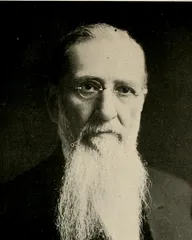
EDITOR'S TABLE.
SOCIAL DUTIES.
The improvement associations have local missionaries set apart by the bishops of the wards. The work of these officers is of great importance, and by proper care can be made very effective. In line with this work, and which should also be considered by our associations, are the social amenities due to strangers, and that we owe to each other. Not only are our young people frequently thoughtlessly neglectful in these respects, but this carelessness extends to the people of the ward as a whole, including the teachers and ward officers, whose special duty it is to look after these things. It has become so customary to look out for oneself, to be independent, that the thought of showing anxiety for others, or that any one in our midst could be in a dependent mood, seems not often to arise in our minds. This has led to an apparent coldness and lack of sociability among us which has caused offense to many of our friends, and been a stumbling block to strangers even of our own faith. I call to mind that not long ago, a young lady was desirous of obtaining a passage to England. Against much prejudice in her native land, she had joined the Church, embracing the gospel against the wishes of her friends. She had come to Utah, and now, after living here several months, she felt as if she were in a foreign land among strangers, and had concluded, therefore, to return to her old home. Enquiring as to the reason for her dissatisfaction, it was learned that she had been here for six, seven or eight months, and had not made a single acquaintance among the
958 IMPROVEMENT ERA.
Latter-day Saints. She had found employment with people not in the Church, and had never been invited into the home of a Latterday Saint. She went to meetings, but no one ever shook hands with her; no one took pains to enquire who she was, where she was living, where she came from, or where she was going. She was looked upon as a stranger, and in turn looked upon others as strangers, and had not the adaptability to come into the confidence of any Latter-day Saint. Hence, she became thoroughly discouraged, not to say disgusted, and concluded that if this was the reception and treatment she was to receive from the Saints, after having been turned away by her friends when she received the gospel, having joined the Church for the love of its principles, and having faith in its people — if this was to be the treatment, she wanted no more of it. It may be that the young woman in this really sad case was to blame for not insisting on being received, for not being independent and taking hold of affairs without aid, but all are not constituted that way, are not aggressive, but it is evident there was much fault, not in our social organization, for that is well-nigh — perfect with our teachers, and the priesthood quorums, our ward improvement, Sunday School, and women's associations but in the — execution of its arrangements, in the performance of duty by officers, and in the social amenities of men and women chosen for this important labor. All that the young woman needed was a kind word, some one to say, "How do you do? What is your name? Where are you living? Are you a member of the Church?" and upon learning that she was alone in the City of Salt Lake, without father, mother, sister or brother, friend or acquaintance, some one to ask her to pay them a visit, or offer her some kindness, or show some interest in her, in her lone condition. Of course, there are many examples, where proper action has been taken by officers of the Church or its organizations, to offset this one case where inattention was shown; but that there should be any neglected person among this people is both needless and wrong. One case is more than should ever be found, but 1 comprehend that there is among us too much indifference to those around us. We not only neglect in this way our neighbors who are strangers to us, but we actually neglect, criminally when it is
EDITOR'S TABLE. 9 59
really considered, our own people who should receive some notice and attention from us. living near neigh- The city people have become accustomed to together. There are instances bors for years without associating in business and upon the where good people, well acquainted twenty-five or more years, and yet street, have lived neighbors for to take dinner together, nor not invited each other to their homes, They live so near each other to have a social hour or evening. from door to door, yet never that they can almost shake hands, are perfectly exclusive. That call, nor associate together; they when, as Latter-day Saints, is not a wise nor a good way, especially preachwe should be looking after the welfare of mankind, by indeed. Would it not be much in* the gospel in word and invited our neighbor to dinner, or better if we arranged a little become acquainted and make come and join us in a little social, to not strangers to him, nor he to us? And let us him feel we are sanctioned of neighbor, as remember the definition which Christ well as the requirement: He that showeth mercy unto me » my is: Thou shalt love thy neighbor neighbor, and the commandment
^ ^1 there is really little sociability hope we shall do better. But that is not in keeping with among us, and there is an exclusiveness the warmth of the gospel. We do not think enough of each other we take little or no notice of e ach.
we do not care for each other; ,
without the other; and finally, we pass each other on the street unless we scarcely bow to a brother sMghtest recognition. We belongs him. That is not the spirit that are really intimate with that friendship and sociabihty :<<M monism." It is contrary to Latter-day Saints. I believe in the that ought to characterize and most loving, spirit that the kindest broadest most charitable, or to men to exercise it is possible for broad-minded and big-souled the spirit possessed and spirit ought to be possess! and that this diffused bv the Saints everywhere. in the honest in heart, and treat them Let us, then, gather spirit of warmth and love c aractenst.c and each other with the the drunken the or the gospel. Then talk about the unfortunate, them, either. They ought to be weak the erring! Do not shun let us save if it is possible, lavtd we as" everybody else; and,
960 IMPROVEMENT ERA.
them, too, as well as the worthy, the good and the pure. Let us save the sinner, and bring him to a knowledge of the truth, if possible.
Our Mutual Improvement Associations are invited to make a specialty of this social work; the bishops should lend their aid to the officers in selecting and setting apart capable and experienced missionaries, as well as ward teachers, .who should devote their energies, among other things, to the development of a more social spirit among the people. The indifferent youth as well as the stranger and the friendless, in our midst, should be made welcome at our gatherings, and be induced to feel at home among the people of God. And then, let it be remembered, every family, every person, ha? a duty in this line. Because men or women are not ward or association officers is no good reason why they should be exempt from the common social amenities of life, nor why they should not be subject to doing good temporally, spiritually and socially.
Joseph F. Smith.
"the lesser priesthood"
Is a work of 196 pages, just issued by the press of the Deseret News, and written by Prof. Jos. B. Keeler, of the faculty of the Brigham Young University, Provo, Utah. It is designed for the use of the Church schools and priesthood quorums, and is a compilation of authentic statements concerning tte subject which it treats. The notes and references on Church government are especially valuable, classified, as they are, and subdivided for the use of students. Each chapter contains a review and supplementary work.the whole being an excellent arrangement for study. It contains also a chapter on each of the auxiliary organizations; and, best of all, a brief concordance of the Book of Doctrine and Covenants, the most extensive heretofore published. The book is on sale at the Deseret News Book Store, price 50c.
OUR WORK.
FIVE ESSENTIALS FOR A SUCCESSFUL SUPERIN- TENDENT." Elder Preston D. Richards, to whom this subject was assigned spoke as follows in one of the officers' meetings of our late conference. Ward presidents may well apply the remarks to themselves until the "Five Essentials for a Successful Ward President" shall appear in the next number of the Era: — I believe it is understood that I am expected to approach this subject from the view-point of a ward president, and, therefore, if you do not see eye to eye with me, I will not attribute it to your defective eyesight so much as to the fact that we are viewing the elephant from different view-points. I have not attempted any classification of my points, with reference to their relative importance. Now, of course, the spiritual condition of the person, as referred to in the first session of our conference yesterday, must be right; and without that condition, it is of little use for us to consider further the essentials for a successful superintendent. If he is lacking in that one, he is not even fit for consideration in any line, as I look at it. The first essential that I have chosen, is the power to enthuse. This essential is beautifully illustrated, I consider, in this conference. There is not a member present who will go away from this conference and feel that he has not been enthused by our general superin tendency. There is not one who will not go away with a greater determination of accomplishing what the spirit of this