Editor’s Table
Improvement Era, vol. 7, no. 11, September 1904, pp. 878 to 883
880 IMPROVEMENT ERA.
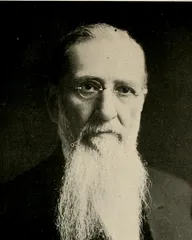
plant in our hearts respect, well-bred consideration, politeness and affability for each other and for all of our fellows. We should then observe the injunctions of the gospel on the subject, for they inculcate above all love for God and our fellow men. And love places the loved ones first. This is not saying that some have not these virtues, but those who possess them seem to be exceptions; just enough, it would appear, to make the opposite the rule. This is a subject for the officers of our associations, of the Church generally, and for parents and for teachers. They should consider it, and teach the young people not only the need there is for consideration for others, but also what genuine pleasure may be found in the exercise of habitual cordiality and politeness which originate in kindliness and in a thoughtful feeling for our fellowcreatures. Let it be shown how courtesy and consideration may be practiced in a thousand ways in our daily lives, and what happiness and satisfaction will result therefrom.So shall our natures be polished and softened by reason and discipline, while disrespect and unmannerly actions shall be completely banished. Joseph F. Smith,
"SCIENTIFIC ASPECTS OF MORMONISM-"
This is the title of a work written by Professor N. L, Nelson, of the Brigham Young University, Provo, and published by G. P. Putnam's Sons, New York. It is interesting to note that this is
the first book written strongly from the "Mormon" point of view, by a "Mormon," that any prominent eastern house has consented to publish. And Putnam's Sons have done full justice to the author by producing a piece of workmanship which is practically a perfect specimen of the book-maker's art. The work is a scholarly one, both in conception and in exe-
—
EDITOR'S TABLE. ^ 881
cution. The fascinating theme is evolved in a masterly style clearly, forcibly and logically. The fundamental principles of the gospel are presented from the standpoint of common sense, and the logical justification for their existence and order is well sustained. One rises from the thorough reading of the work with his mental horizon widened,and his power of thought increased. For the treatment of the theme is deep; and, better still, the mind is led into increasingly deep channels of thought, by the perusal of the work. A few of the ideas set forth are a little extreme, and are those of Prof. Nelson, rather than of "Mormonism," but the author has, as a general rule, frankly stated this fact in advancing each of these. To the discriminating reader, the book will be a constant source of pleasure and vigorous thought. For the careless reader, there may be a little danger — that he will expect
all the truths of "Mormonism" to be demonstrated by logical deduction, without the interposition of the spirit of truth. This, however, will be the fault of the reader, for the writer makes no such claim. A thoughtful, unbiased reading of the work cannot fail to impress one with a strong sense of the truth and the power for good, of "Mormonism." We commend it to lovers of good literature, and to students of social and religious conditions.
PROFESSIONAL PROSPECTS IN THE COUNTRY. Writing from Apia, Samoa, to the Era, Elder Francis M. Young, who is on a mission in that country, pleads for musicians for the country towns and villages. His remarks have merit and are worthy of consideration:
It looks as though there is a possibility of solving one of the
very important problems confronting us as a people, and supplying a demand very much felt, if little mentioned, and at the same time affording employment of a profitable nature, and opportunities unbounded for doing good. I have in mind the needs, in a musical line, of our outlying stakes. A proficient instructor in voice culture, choral training, and instrumental music, will here find an opening not unworthy the highest attainments. It is pleasant to note the successful termination of musical
882 IMPROVEMENT ERA.
courses in eastern institutions and Europe of several of our young people. Now the question presents itself, Will all these bright young men and women follow the example of most of our young doctors and lawyers, and hang out their shingles in the larger cities, where the market is already crowded with professionals? or
will they, looking ahead, be willing to sacrifice some of the lux-
uries of city life and launch their boats upon the swelling tide of our prosperous country towns and stakes? One thing in particular is noticeable with regard to our musical students. Many have refused flattering offers of remunerative employm.ent in Europe and the East. We can draw at least one reasonable conclusion from this, i. e., they have, to a greater degree than the ordinary person, that divine spark burning in their bosoms which is fed by the Holy Spirit, and their very callings draw them near to God; hence, they are anxious to return to their mountain homes, where Zion's influence throws a holo around them. If this be true, then they will find a warm reception among the tillers of the soil, and our honest country folks generally. It
is natural for music teachers to seek companionship among their fellow professionals, and be in touch with the "recitals" and musical treats enjoyed only in the largest cities. But there is
something else to live for. The same kind of opening which the modest but ever persistent Evan Stephens made for himself in Salt Lake City during the early 80's is now to be found in the various stakes of Zion. But the music teacher of today will be making money from the start. Public schools need supervisors of music, and the school boards are willing to pay them. Oar various ward choir leaders will be glad to improve themselves if a class in their own stake were organized. Then, private lessons alone will amply pay and employ a thorough teacher in any of the larger stakes of Zion. Pianos and organs are no longer rare pieces of furniture in our country homes. Scores of them are awaiting the touch of the trained hand to set into motion the current of musical talent now lying dormant, in as gifted a people as can be found anywhere. Are we to see the musical profession go like that of law and medicine ? Too often our young men insist upon locating in the
EDITOR'S TABLE. 883
and our needs in the country are being supplied by lawyers cities,
and doctors from the East, who realize there is more for them in the growing country than in the crowded city. They soon have plenty to do and send for their friends to join them in their practice. In conclusion, let us profit from the words of the Rev. Dr. Buchtel, Chancellor of the University of Denver, while visiting his son, who is thoroughly established as the leading physician in the out-of-the-way town of Vernal, in a valley of over six thousand inhabitants. The young doctor came to Vernal from Denver, upon an urgent callfrom the citizens, during a small- pox epidemic, Salt Lake City was first appealed to, but could not furnish the de •
sired help. Upon seeing the business his son was doing, he re •
marked: "I have learned a lesson here. Henceforth, I shall advise our graduates to go out into the country towns where they are needed, where they can do good to their fellow men, and at the same time be prosperous."
HANDY EDITION DOCTRINE AND COVENANTS. The Deseret Sunday School Union, Salt Lake City, has hit upon a happy idea in Church work publication, and has just
issued a vest pocket edition of the Doctrine and Covenants, which is printed from photo plates reduced from the standard edition, being therefore an exact reproduction. The new edition is very handy for carrying about, and will be very popular on that account. Bound in limp leather, 75 cents.
NOTES.
In No. 3 of the Mormon Point of View, N. L. Nelson writes of "The Spiritual Life." As an introduction, the author discourses on "Learn to Read Up Hill," in which he essays to excoriate the lazy reader who believes not in hunting the dictionary, and who shivers at meaningful words.
The Pioneer is the title of Hon. S. A. Kenner's new paper, which succeeds The Great Campaign. Essay Kaigh's Corner is pay enough for the subscription price.
—— — —
IN LIGHTER MOOD.
Gardener: "This here is a tobacco plant in full flower." Lady: "How very interesting! And how long will it be before the cigars are ripe?" New Yorker. A prominent Southern lawyer who had just repented of his wild ways and joined the church, was called upon in a religious meeting to pray. He started off very well, but did not know how-to stop. After asking the Divine blessing on everything he could think of, he finally^ with a determined effort, ended with these words: "Yours truly, P. Q. Mason." Harper's Weekly.
An Irishman was called upon to give evidence in a shooting affray. "Did you see the shot fired?" asked the magistrate. "No, sor, but I
heard it," replied the witness. "That is not satisfactory. Step down." As the Irishman turned to go, he laughed and was rebuked by the magistrate, who told him it was contempt of court. "Did yez see me laugh?" "No, but I heard you." "That is not satisfactory." And then the court laughed. Brooklyn Eagle.
Two young ladies on the promenade of a seaside resort had been watching the vessels pass, through a telescope lent them by an "ancient mariner." On handing the glass back one of them remarked that it was a very good one. "Yes, miss," said the old tar, "that 'ere telescope was given me by Lord Nelson." "Good gracious! Why, Nelson has been dead nearly a hundred years." "Well, I'm blowed," replied the salty one, quite unabashed, " 'ow the time do fly!" Woman's Home Companion.
The boy in this story is not the only one who misunderstands the singers: A school teacher at Three Rivers asked her pupils the other day who Nero was. The only response came from a little fellow who held up his hand. "Arthur," said the teacher, "do you know who Nero was?" "Yes, ma'am," he answered proudly, "he's the one we sing about in our Sunday school." The teacher was unable to recall any song in gospel hymns where Nero was mentioned. "What is the song like, Arthur?" she asked. "Nero, my God, to thee," was the answer given by the child. — Detroit Journal.
OUR WORK.
MUSIC IN THE M. I. A.
At the late M. I. A. conference, Music Director Ev^an Stephens gave a talk to the officers ou the musical programs, and singing, in our associations, which is here reproduced in full. It contains points worthy of adoption by music leaders. The Era is always open to Professor Stephens, or other musicians in our community, for suggestions or instructions that will better our musical programs.*
Possibly the matter of just what we shall do with the musical portion of our work has been somewhat neglected, and I am at fault for that. I have not taken up this matter as I should have done. I hope to do better during the next year, and if I do, that will mean more trouble for you, as well as for me; but I hope you will make your troubles a pleasure, and will be able to get more effective work from our musical portion than in the past. Just now, I would only like to suggest that you try to keep a definite aim in your musical work, in the associations. Go further than merely select three hymns for a meeting; have them selected with a view to some benefit to your members, in the future. I would advise that the singing of the young men, at the Mutual Improvement meetings, be so managed that the pieces used, generally, will be of use to the young men when they go away from home, in the missionary field, in particular. Let this be your chief aim, I should say, to select such hymns as will be suitable for them. We are too much inclined to take four or five hymns that we are fond of singing at home, and which would sound almost ridiculous, perhaps, if sung in the mission field, and, on this account, the boys often find that the hymns they have been used to singing at the associations are of little use to them when on missions. So, I would advise that we try to overcome this drawback. I would recommend, if you have nothing better, the M. I. A. song book, published