How?
Improvement Era, vol. 6, no. 9, July 1903, pp. 658 to 670
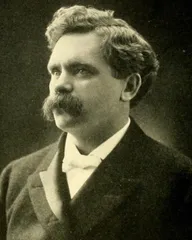
HOW? A DISCOURSE DELIVERED AT THE M. I. A. CONFERENCE, MAY 31, 1903, IN THE TABERNACLE, SALT LAKE CITY.
BY ELDER B. H. ROBERTS.
(Reported Specially for the Improvement Bra.)
My Brethren and Sisters — I arise this afternoon to announce a great disappointment. By reference to your printed programs you will see that President Joseph F. Smith is announced to make an address this afternoon, but he insists upon my taking his place. I tried to dissuade him from making the change, but he insisted upon it, and as he has the final word in such matters, I respond cheerfully to his request, and ask you, as soon as possible, to banish the remembrance of your disappointment and assist me by your faith and prayers, that what I may say may be fitting to this occasion and prompted by the Spirit of the Lord. I think I shall venture to take a text, but not from the Bible. My text will be one that I have made "out of my own head." Per- haps that will account for its being so brief. It consists of one
word only, and that one word is, "How ?" Away back in 1832, on the occasion of a number of elders being assembled in Kirtland, desiring to know the will of the Lord concerning themselves, and in what manner they should spend their time pending the commencement of a conference which had been called, the Lord said through his Prophet: I give unto you a commandment, that you shall teach one another
HOW? 659
"the doctrine of the kingdom; teach ye diligently, and my grace shall attend you, that ye may be instructed more perfectly in theory, in prin- ciple, in doctrine,in the law of the gospel, in all things that pertain unto
the kingdom of God, that are expedient for you to understand; of things both in heaven and in the earth, and under the earth; things which have been, things which are, things which must shortly come to pass; things which are at home, things which are abroad; the wars and the perplexities of the nations, and the judgments which are on the land, and a knowledge also of countries and kingdoms, that ye may be pre- pared in all things when I shall send you again to magnify the calling whereunto I have called you, and the mission with which I have com- missioned you.*
From this you will observe that the elders of the Church were commanded to enter a very extensive field in search of knowledge. Indeed, I cannot think of anything pertaining to things that lie within the scope or power of man's investigation that is not included within this commandment to search for knowledge. Among other things, you will observe that the elders are to make themselves acquainted with things which have been, things which are, things which must shortly come to pass; with things which are at home, and things which are abroad. I see in that a commandment to keep informed as to current events; and, in my opinion, this commandment can be made to apply not only to the elders in Ohio, to whom was directly given, but to all it
those who may be called upon to perform a similar labor, that of representing the work of God to the inhabitants of the earth. That responsibility rests upon the young men who hold the priest- hood in the Church today, and hence, this commandment applies to them. It applies to the members of the Mutual Improvement Associations; for one of the chief objects in view, when the or- ganization of Improvement Associations was effected, was the preparation of our young men to become exponents of the gospel of Jesus Christ, especially as revealed in the dispensation of that gospel through the Prophet Joseph Smith. No knowledge can be of more importance to the young man who expects to engage in this work than the knowledge of current events, and prevailing ideas in the world on religion; especially those current events
- Doctrine and Covenants, sec. 88: 77-81.
.
662 IMPRO VEMENT ERA
Senator Reed Smoot result in his expulsion from the Senate of the United States— a thing which is as unlikely as it is unjust I verily — believe that "Mormonism" would survive even that blow. The trouble with our reverend friends is, that they persist in mistaking always the head of the octopus, and hence never strike it. It is not my purpose to discuss the issues raised between the
Church of Jesus Christ of Latter-day Saints and this Los Angeles Presbyterian Assembly, in a spirit of retaliation. I do not intend to answer railing with railing, nor do I wish to revile those who revile us. I understand the law of the gospel of Christ to be that we should not be overcome of evil, but overcome evil with good. Besides, [patience is one of "Mormonism's" chief virtues. But all this does not mean that we shall not have an appreciation of our own rights and liberties under the constitution and institutions of our country; nor does it prevent us from pointing out the un- just conduct of our assailants; nor debar us from making protest, in proper spirit, against their proposed invasions of our rights ; nor blind us to the absurdity of their plans for our destruc_ tion. But we will not abuse our traducers, nor revile them because they revile us. Thank God, the Church of Jesus Christ of Latter-day Saints occupies a position so exalted that it may smile at the efforts of men who propose to "crush" it. Especially by such means as those proposed by the Reverend Doctor Thompson. The resolutions of the Presbyterian Assembly, at Los Angeles, its fulminations against the Church of Christ, are all shafts that fall broken and harmless at the feet of the people of God. There is one passage in Byron's "Childe Harold" with which I have always been deeply impressed.as setting forth the dignity and exaltation of God in his relation to those who doubt the reality of his revelations, seek
to prove them myths, and blaspheme his name. It is where the poet refers to the character and works of Voltaire and Gibbon. Concluding his reflections upon these two really great men, he- says:
They were gigantic minds, and their steep aim Was, Titan-like, on daring doubts to pile Thoughts which should call down thunder, and the flame Of heaven, again assailed, if heaven the while On man and man's research could deign do more than smile.-
HOW? 663
In like exalted station stands the Church of Christ today. The Bride, the Lamb's Wife, has no fear of her enemies. She stands too near the Bridegroom, too near his glorious coming, too near the holy visible union with him, which is to be eternal, to fear the vain ravings of modern priests of Baal. Let us examine more thoroughly, however, the proposition of this Reverend Doctor Thompson, and find out, if we can, how the Christian gentleman really proposes to proceed with his crushing process. Be it remembered he lays down the doctrine that " 'Mor- monism' is not to be educated, not to be civilized, not to be re- formed!" Then how will he proceed? He decides to eliminate educational methods, civilized methods, and reform methods. After eliminating these, what method has he left for crushing — "Mormonism?" None but force brute force; and force in the last either mobs or armies. analysis means Can it be that a body of divines, ministers of Jesus Christ, living in the twentieth cen- tury of the Christian era, are ready to recommend the throwing aside of all legitimatemethods of dealing with a body of people supposed to be in error on matters of religion, and leave it to be justly inferred that they favor the employment of force to accom- plish that which only love and goodwill toward men should under- take ? Have we been correctly informed by the dispatches which say that the man who recommended such procedure is the one who was most applauded by the assembled ministers of Jesus Christ? Can it be that we are living in an age that boasts of its Christian civil- ization? Or, by some devilish cantrip slight, have we been carried back to the dark ages, when the rack, and thumbscrews, and gibbets, were the agencies through which men's theological opinions and religious principles were corrected? The ages when reluctant victims were dragged to the foot of the altar, and made to burn incense at orthodox shrines, though the heart abhorred and disclaimed the sacrilegious act of the hand? For the instruction of those who would favor the abandon- ment of what are recognized as Christian and civilized methods of dealing with those supposed to entertain erroneous religious what effect physical force and persecution principles, let us see has had upon "Mormonism" in the past. From the commence- ment, those who have been engaged in God's work in these last days
G64 IMPROVEMENT ERA.
have suffered violence,and it will be well to ascertain the results of these methods. Fr jm the first announcement Joseph Smith made of a revelation from God, until now, there has not been lacking those who have favored the crushing of "Mormonism." They at- tempted to beat down the testimony of the Prophet Joseph Smith by force of ridicule, at first, and slander and misrepresentation. When the Nephite record, the Book of Mormon, was placed in his hands for translation, mobs frequently attempted to wrest that sacred record from his custody. Failing in that, they tried to prevent it from being printed, and even so far succeeded in fright- ening Mr. Grandin, of Palmyra, who had engaged to publish it,
that he at one time suspended work upon it. When that difficulty was overcome, and the work was printed, then mass meetings were held and resolutions passed in the vicinity, urging the people not to purchase the Book of Mormon or to read it; but, in spite of these efforts, the first edition of the Book of Mormon
was disposed of and read by the people. When the Church was organized, the rage of its opponents increased, and persecution after persecution followed each other in rapid succession in New York, Ohio, Missouri, and Illinois, and hundreds perished in the unholy warfare waged against the Church of Christ. Finally, the opposition concentrated its hatred upon the earthly head of the Church —the Prophet Joseph Smith. Time and time again was he hailed before judges, and, singularly enough, was always acquitted; up to the day of his death at the hands of a mob, he was never condemned by the courts of his country. His enemies, were forced to the conclusion, and they said it: "The law cannot reach this man; powder and ball must." Actuated by the same spirit of hatred that was rampant in this very Presbyterian Assembly at Los Angeles, mob forces of
western Illinois came to the conclusion that "Mormonism" was not to be educated, not to be civilized, not to be reformed, "it must be crushed;" and they flattered themselves that, if this master spirit of "Mormonism," Joseph Smith, could only be crushed, then there would be an end to"Mormonism;" for it was supposed that thi3 man — was then the head of the "octopus" its vulnerable point. This must be struck, to miss it would be to be lost! So they struck; cruelly, murderously struck. But what of the effect on "Mormon-
HOW? G65
ism?" Did the "octopus" die? No. There was momentary con- fusion, it is true; and profound sorrow. It could not be otherwise.
But "Mormonism" did not die. It survived that truly awful shock. The fact is that the work which the Prophet Joseph Smith did, under Divine guidance, was greater than the man; good, great, and neceseary as he was to that which, under God, he wrought, yet, as the heavens stand above and are higher than the earth, so the work of God which Joseph Smith brought forth stands above 1
and is higher, and greater, and more enduring than he. Hence, it did not fail when he fell a martyr by the old well-curb at Carthage jail. It not only survived, but gained somewhat of strength from the blood of its chief martyr. It was some time a Christian aphor-
ism, that the blood of the martyrs was the seed of the church. It
proved to be so in this case; and after the first moment of con- fusion was passed, those in whose hearts the spirit of hatred had been fostered, discovered that they had, as some of them said,
"scotched, not killed," the "octopus." Presently, they saw arising from the body what they took to be another head, Brigham Young. He dealt with the problems that arose before his people in a spirit most masterful, and with ability most astonishing. He conducted an exodus the most wonderful of modern times, and safely planted his people a thousand miles beyond the frontiers of the United States, where he laid the foundation of our present commonwealth of Utah, and incidentally made possible the settlement of the whole intermountain region of the United States. The desire to strike this head, in many quarters, was quite as ardent as it had been to strike Joseph Smith; but, happily, he was beyond reach. From a distance, however, the sectarian harpies, who were the predecessors of the Presbyterian divines assembled at Los Angeles, croaked in chorus, "only wait till the head of this 'octopus/ Brig- ham Young, dies, and then 'Mormonism' will succumb by reason of disintegrating forces, for it cannot be that the system will pro- duce another genius such as this wonderful man." In the course of time, the wing of the angel of Death struck this most shining mark, Brigham Young; but "Mormonism" lived on. Not only lived, but extended its borders, deepened its foundations, and, year by year, has grown more terrible to the distorted vision of sectarian priests, alike jealous of its success and fearful of its influence upon their crumbling creeds.
6G6 IMPROVEMENT ERA.
Since the death of Brigham Young, I do not remember that anyone has accredited the ruling force in "Mormonism" to any individual leader. Of late, its enemies have been speaking of the genius and power of the "Mormon" Church organization. Mr. Thompson himself quotes Dr. Richard T. Ely as declaring "there is nothing comparable to the organization of the Church of Jesus
Christ of Latter-day Saints, except the German army." A declar- ation of that sort is encouraging. It indicates growth. It is no
longer some individual leader that is the secret of "Mormon" success. It is the institution itself. That is what we have been telling our opponents right along, and it is gratifying to observe that they are beginning to understand that it is an institution, and not an individual, with which they have to deal; an organization, not a man. I am not quite satisfied, however, with the comparison that is made of it to the German army. I think the German army is not comparable at all with the perfection in strength, and in all that makes for excellence, in the Church of Christ, but I have not time to discuss that here. I see by the headlines of the daily press of our city that a declaration of war is made between the Presbyterians and the "Mormons." I wonder sometimes what kind of a Rip Van Winkle sleep the writers of dispatch headlines, and Presbyterians as well, have been indulging in all these years, when they say that a dec- laration of war has just been made. That declaration was made over eighty years ago, when the Lord Almighty revealed himself in person to Joseph Smith, and in answer to his inquiry, "which of allthese contending sects are right, and which shall I join," he was told that God acknowledged none of them as his church or kingdom; That they drew near to God with their lips, while their hearts were far removed from him; that they taught for doctrine the commandments of men; that they had the form of godliness, but denied the power thereof; that their creeds were an abomin- ation in his sight. Such, in substance, was God's first message to the world through his great modern prophet. It is in the nature of a dec- claration of war, not upon the Presbyterians, however; nor upon Methodists; nor Catholics; nor upon men at all, but upon error; upon false creeds; upon false religions; upon hypocricies clothed
HOW? 667
in religious garb, — a declaration of war upon all untruth, and it is useless to hope for peace with the sectarian Christian sects, when "Mormonism" bears in its hands such a message as this. It isa harsh message, but a true one; we are not responsible for it. We do not pretend to have sat in judgment upon the creeds of men. No man has the right to sit in judgment upon the creed of an- other. Joseph Smith did nut sit in judgment upon the creeds of
Christendom. On the contrary, he confessed his inability to do so. His youth, his inexperience, his lack of judgment, all proclaim him unfitted for such an office when he inquired of God con- cerning the creeds of men. His appeal to God for wisdom to know which of the sects he should regard as the very Church of Christ was self-confessed inability to judge in the matter. Hence, Joseph Smith did not pass judgment upon the sects of Christen- dom; but God did. He was competent to judge. He formulated the decision which it became Joseph Smith's duty to announce, and which it is now the Church's duty to continue proclaiming. The message, I repeat, is a bold one; but in the very boldness and greatness of such a declaration, we may see something of the Divine Majesty. It became necessary to sweep aside the rubbish of theo-
logical dogma, and doctrines which had accumulated through the ages, and make bare the rocks of truth, on which to lay anew the foundations of the work of God. Singulary enough, our Presby- terian friends, especially, seem to be rendering us valuable assist- ance in the work of confirming as true the message of God to the world, whereof we, with them, are made witnesses. We willing witnesses, they reluctant ones; we conscious witnesses, they uncon- scious ones; we witnesses of good will, they of strife. What I mean is this: the Lord declared that sectarian creeds were an abomination unto him; and of all abominable creeds, I know of none quite so abominable as this same Presbyterian creed. So abomin- able is it —so against all sense of even human conception of justice and mercy, that the Presbyterian Assembly at Los Angeles was found devoting its best efforts to reform it. But that very effort to reform it proclaims its errancy, and, I take the liberty of adding, its abomination also. While we cannot enter into anything like a detailed examination of that creed, allow me to call your attention to one or two points in it which
€68 1MPR0VEMEN1 ERA.
clearly brings it within the descriptive term used by the Lord in the revelation to Joseph Smith. That is, sectarian creeds are an abomination in his sight. Take the following sections from chapter three of their creed on "God's Eternal Decrees:"
Section. III. — By the decree of God, for the manifestation of his glory, some men and angels are predestined unto everlasting life, and others foreordained to everlasting death. Section IV. —These angels and men, thus predestined and foreor- dained, are particularly and unchangeably designed, and their number is so certain and definite, that it cannot be either increased or dimin- ished. Section V. —Those of mankind that are predestined unto life, God, before the foundation of the world was laid, according to his eternal and immutable purpose, and the secret counsel and good pleasure of his will, hath chosen in Christ unto everlasting glory, out of his mere free grace and love, without any foresight of faith or good works, or perse- verance in either of them, or any other thing in the creature, as condi- tions, or causes moving him thereunto, and all to the praise of his glori- ous grace."
I call attention especially to the fact that those elected to salvation owe that election to God's mere free grace and love, without any foresight, on the part of God, of their faith or good works or perseverance in either of them. The election is an act of the arbitrary will of God. In fact, the Presbyterians' own explanation of this part of the creed is: Election to salvation "is not conditioned upon foreseen faith or good works or persever- ance, but that in each case it rests upon sovereign grace and per- sonal love according to the secret counsel of his [God's] will." No wonder that Raban, Bishop of Mayence, when writing to Hincmar, Archbishop of Rheims, when this same doctrine was rising in the church, said: "To what purpose shall I labor in the service of God? am predestined to death, I shall never escape from it; If I
and if I am predestined to life, even though I do wickedly, I shall, no doubt, arrive at eternal rest!" The rank absurdity of this doctrine was justly satirized by Burns in the opening stanza of his "Holy Willie's Prayer:"
HOW? 669
0, Thou wha in the heavens dost dwell, Wha, as it pleaseth best thysel', Sends ane to heaven and ten to hell A' for thy glory, An no for ony guid or ill They've done afore thee.
In the application of this principle of election and reprobation to mankind, those who founded it had to meet the difficult problem as to how it would affect that very great portion of mankind who died in infancy; and, however heartless the men of those times may appear to us of modern days, it must be said for them that they had at least the courage of their convictions; and they said in Chapter X of the creed: Section III. —Elect infants, dying in infancy, are regenerated and saved by Christ through the spirit, who worketh when, and where, and how he pleaseth. So also are all other elect persons, who are incapable of being outwardly called by the ministry of the Word.
The very use of the expression "elect infants" implied that there were infants not elect, whose fate, in all reason, under this creed, would be the same as that of adults who were not of the elect; and hence, the popular understanding that the Presbyterian creed implied the damnation of infants; and it should be remembered, in this connection, that the Presbyterian idea of damnation is an ever- lasting punishment in hell from which there is no hope of deliver- ance. This implication as to infants was not denied, for a long time, by those who accepted the creed ; but, being oppressed with the appar- ent injustice of the damnation of innocent babes because not among the elect, Presbyterians began to offer the explanation, early in our last century, that they believed all infants dying in infancy were elect; and such has been the agitation upon that question, both within and without the Presbyterian church, that at last the assembly at Los Angeles, authorized to speak for the Presbyterian church, declares, in effect, that their belief is that all infants dying in infancy are of the elect. This is certainly very gracious on their part. It makes one feel a little more easy regarding the fate of innocent babes, now that we know that chil- dren dying in infancy, according to the reformed Presbyterian
670 IMPROVEMENT ERA.
creed, are among the elect! Still we cannot but deplore the fact
that many thousands of mothers, within the membership of the Presbyterian church, have mourned their innocent babes dying in infancy as among the probably eternally lost; butit ; s refreshing to see the indication of progress even among our Presbyterian friends, and it is to be hoped that the light will continue to grow in their minds until they shall not only see the impropriety of leaving the salvation of infants dying in infancy, in doubt, but shall correct, also, this other abominable part of their creed respecting election in general. The amendment of the creed respecting the fate of infants helps it but a very little. The damnation of a good man, because he is not of the elect, is just as outrageous as the damna- tion of an innocent babe. In some respects of the case, it is even worse. Here, we will say, is a man who throughout his life has
made every effort to realize, in his living, the lofty ideal of posses- sing "clean hands and a pure heart;" who entertains only aspira- tions that are noble, and performs deeds only that are honorable; who in the relationships of life, as son, brother, husband, father, and citizen, discharges, with reasonable fidelity, all his duties in
these relations, and, as nearly as man can while under the effects of the fall and pestered with human inclinations to perversity, leads what is recognized as a virtuous life. Yet, if not of the elect, this man is doomed eternally, and his struggling for the
attainment of his lofty ideals and his noble life, avail him nothing in the way of warding off damnation because, forsooth, he is not ;
of the elect, and hence must perish everlastingly. That such conclusion is forced upon those accepting the Presbyterian creed, is evidenced from chapter X, Section IV of that creed:
Section IV. — Others not elected, although they may be called by the ministry of the word, and may have some common operations of the Spirit, [i. e, aspirations for righteousness] yet they never truly come unto Christ, and therefore cannot be saved, much less can men not profes- sing the Christian religion be saved in any other way whatsoever, be they ever so diligent to frame their lives according to the light of nature and the law of that religion they do profess; and to assert and maintain tha* they may, is very pernicious, and to be detested."
That is to say, however righteous or honorable men may be,
HOW? 671
and though they accept, as far as them lies the power, the in
Christian faith, yet, if not among the elect, their doom is sealed, and that doom is everlasting damnation from the comfortable presence of God! I suggest that our friends consider their creed again, and pass a resolution that all such men as the supposed righteous man just now described are of the elect, as well as in- fants dying in infancy. Equally necessary is it that they should reform their creed with reference to the fate of the heathen. For, in the application of the principle laid down in the section of the creed last quoted is relegated to eternal damnation all "men not professiong the Christian religion." In explaining the application of this section of the creed to such persons, in an authoritative work on Presbyterianism, ("Commentary of the Confession of Faith with Questions for Theological Students and Bible Classes,"by the Eev. A. A. Hodge, D. D.,) it is said: The heathen in mass, with no single definite and unquestionable exception on record, are evidently strangers to God, and going down to death in an unsaved condition. The presumed possibility of being saved without a knowledge of Christ remains, after eighteen hundred years, a possibility illustrated by no example.
When it is remembered that of the population of the earth at present, after two thousand years of Christianity, less than one- third of the population of the world is even nominally Christian, while more than two-thirds are outside of any form of Christianity whatsoever; and when it is further remembered that in past ages the proportion of Christians to the population of the world has been very much less than this; and when it is further remembered the gospel, there are no means by that, in Presbyterian ideas of which the gospel may be applied except in this present life, and those who fail to receive the gospel here are eternally lost, we are not much surprised at the infidel who draws the conclusion, when contemplating the doctrines of this abominable creed, that, if this creed be true, then God, when he created the human race, was but creating, in the main, fuel for the flames of hell out of human souls. Is it any wonder, if other creeds of divided Christendom contain similar doctrines, or other doctrines which as flagrantly violate every conception of the relative claims of mercy and justice, that
—
672 IMPROVEMENT ERA.
God declared the creeds of men an abomination in his sight? I
told you in the beginning of my remarks that I would not have time to examine even this one creed in detail, but could only point out one or two items that would tend to demonstrate the truth of the Lord's revelation to Joseph Smith respecting the abom- ination of the creeds of men; and, having done this, I
must stop, as our time has expired. But I cannot close these remarks in any other than a hopeful spirit. I say again, it is encouraging to see our Presbyterian friends amending their creed; and I sincerely trust that the light which has appar- ently begun to dawn upon their minds will grow brighter and brighter unto the perfect day; until the7 will not only change their creed respecting the fate of infants, but will go on adding line upon line and precept upon precept, here and there eliminating that which is so glaringly abominable, until at last they shall be so accustomed to the light of truth that they will be able to look upon the fullness thereof as it is revealed in the gospel of Jesus Christ in these last days, through the Prophet Joseph Smith. The Lord bless you, and also the Presbyterians, in the name of Jesus Christ. Amen.
CHEER UP.
"Then cheer up and bear up, and laugh at old Fate; Let her wreak on your head what she will: With noble and fearless forbearance await Every blow, every loss, every ill.
"Hope on, and remember the dreariest way Has nothing of sadness or sorrow For the brave heart that smiles at the ills of today, And hopes for a brighter tomorrow." Selected.