Editor’s Table
Improvement Era, vol. 6, no. 3, January 1903, pp. 226 to 231
226 IMPROVEMENT ERA. The World's New Girdle. Another achievement was added to this age of wonders, when, on October 31, 1902, the last mile of cable from Vancouver to Australia was laid. This last link in the girdle of the world is the longest uninterrupted length of cable ever dropped into the ocean. The span from Vancouver to Fanning Island is three thousand five hundred and sixty-one miles. Mr. Chamberlain has been an im- portant factor in this new undertaking, through which electricity conveys, by its instantaneous action, human intelligence around the globe. England has now girdled the world by her cables. Her commerce, past and future, made the cable a necessity, and the whole civilized world is now in the closest touch. What a wonder- ful advancement it is to convert millions of people and millions of square miles into a neighborhood. We may read every morning what transpires in the most distant parts of the world. This grand achievement has hardly been announced before we begin to ask ourselves whether the cable is to be superseded by wireless telegraphy, now in process of development. The circle of the globe, if we begin at Vancouver, runs in a southwesterly direction to Norfolk Island, by way of the Fanning and Fiji Islands, thence west to Australia. It passes through Aus- tralia, in a northerly direction, to Singapore; thence across India to Bombay. It then crosses the Indian ocean to Aden, on the Red Sea, and follows the Suez Canal to the Mediterranean, and then over to Gibraltar. From this English fort, it traverses the ocean just west of France to England, and crosses the Atlantic to St. Johns, Nova Scotia, and then on through Canada to Vancouver. This is truly an age of marvels. We no sooner wonder at one, than we are led to ask, what next? Cuban Prosperity. The message of President Palma of Cuba shows that the re- ceipts of the government for the current year are seventeen million five hundred and thirteen thousand eight hundred dollars, and that there will be a surplus over expenditures of two million six hun- dred and thirteen thousand eight hundred and eighty-six dollars. The president is quite optimistic, and says that good order prevails, and that the sanitary conditions of the Island are good. His dec-
CURRENT STORY OF THE WORLD. 227 laration that the relations with the United States are especially cordial will be well received in this country. It is to be hoped that Cuba will not let her disappointment over her failure to get our tariff on Cuban sugar reduced, last winter, lessen the feeling of gratitude that should exist there toward the United States. We have been generous to Cuba. The Daukhobors. In South-eastern Russia for a number of years, the govern- ment of the Czar has had trouble with a people called Daukhobors, because of their peculiar belief and practices. They are very similar to Quakers, and refuse to bear arms, as they do not believe in the shedding of blood, under any circumstances. They also refused to obey certain civil requirements, when they interfered with their belief. The Russian government is very intolerant to any who do not yield immediate obedience to its demands. The Daukhobors positively refused, and many of their leaders were exiled to Siberia. They are a good, sober, industrious, class of people, and their treatment seemed hard, so much so that Tolstoi was led to champion their cause. It was a religious intensity, and the government found it necessary to give some attention to it, and yet its laws must be obeyed. Finally, these Russian Quakers appealed to the Canadian government for land and a place of refuge. Canada welcomed them, and set them apart a district of thirty-six miles in the Territory of Assiniboin, near Yorktown, in a north-westerly direction from Winnipeg. The Daukhobors have been in the Territory about four years, and have been a very industrious and prosperous people. In their religion, however, they have been extremis cs, and latterly they have grown wild. Their creed has become a sort of mania, by which they lost their reason, and, consequently, their self- control. Unexpectedly, October 29, the announcement came that something like 1,800 of these were on the march from their homes, which they had abandoned, toward Manitoba. The weather was freezing cold, and there were in the company about 1,100 womsn and children. It is said that one baby was born on a Monday, and the mother was up and on the march the next day.
228 IMPR0VEMEN1 ERA. Some were traveling bare-footed, and without sufficient clothing to protect them from the rigorous climate. Where were they going? What did it all mean? Their reply was: "We are looking for new light, we are looking for Jesus." They were going to meet Jesus, they told the officer who inquired about their destination. "And where then?" asked the officer. "We don't know," was the reply. Of course, many remained in their villages, and tried to persuade their fellow religionists to remain. The wanderers left their grain and other belongings just where they were. They proclaim a perfect freedom even for their horses; they do not eat meat or the products of animals; they turned their horses loose. All animals are safe with them. They would not even kill a mosquito, but give it a gentle warning to leave. They do not believe in physical laws, and take no stock in a criminal code that may be drawn by man. They declare that God is the only law-giver. As these people approached Manitoba, its premier protested to the central government against the Daukhobors coming any farther. Thereupon, special steps were taken to control their movement. A train was sent to take them back. There was some protest against their return, but wherever a leader was refractory, the police took him up bodily and carried him into the train. Others were pushed along. Finally they were gotten back to their villages where it his hoped they will subside from their wild excitement. The leaders, however, declare that they will migrate when spring comes. They have written letters to South American states asking for admission. Count Tolstoi, and other European friends, have written them expostulating with them on the foolishness of giving up their animals and animal food, and clothes taken from animals. The Canadian government has shown great leniency and good judgment in dealing with their eccentricities. This wild excitement will doubtless lead Canada, in the future, away from her course of encouraging so many nationalities to settle in her dominion, The Galatians, I am told, have not been altogether satisfactory as colonists, and the Minonites do not easily adjust themselves to Canada's educational system.
EDITOR'S TABLE. LOOKING FOR EASY WORK. I have often thought of the undesirableness of the young men of our community seeking for light employments, and lucrative positions, without regard to manual and mechanical skill, and knowledge and ability in agriculture. None can deny that there is too great a tendency among the young men, especially in our larger cities, to seek the lighter em- ployments. Politics, law, medicine, trade, clerking, banking are all needful and good in their place, but we need builders, mechanics, farmers, and men who can use their powers to produce something for the use of man. Salaried positions, in which little responsibility is required, are well enough for young men who are making a beginning, but it should be the ambition of all to get out and take upon themselves responsibility, and to become independently themselves becoming producers, and skillful workers. If life is valuable in comparison with the experience we ob- tain, every youth will increase the worth of his life in proportion to the new obstacles that he is enabled to conquer. In a routine, there are no difficulties to encounter; neither is there profit to the mind or body in the sameness of dependent positions. But let the man who would grow and develop, go forth into the practical and productive ways of life. These will lead to broad-mindedness and independence, while the other road ends in narrowness and de- pendence. And here also, a word to parents who have daughters. Are you fitting them for the practical duties of mother and wife, that they may in due time go out and make homes what they should be? Or, are you training your daughters to play the lady by making them accomplished in flourishes, and expert in ostentatious embellish- ments? Is mother doing all the work? If you say yes, to the last
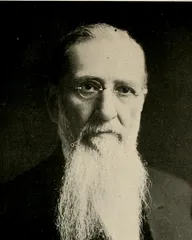
230 IMPROVEMENT ERA. two questions, you are not doing your full duty to your child. For, while accomplishment and polished grace, attainments in music and art, and a knowledge of the sciences, are good and useful in their place, it is not intended that these shall replace the common labors of life. Where children are so trained, their parents have done them a positive injustice, of which both the children and the parents may live to be ashamed. While we are educating our children in all that may be termed the beautiful in science and art, we should not fail to insist that they shall learn to do practical things, and that they do not despise the common labors of life. Any other course toward them is an injustice to the boys and girls, as well as to ourselves and the com- munity in general. I believe the morals of the people will improve as skill in workmanship and productive labors, is acquired. Parents, too, will find it easier to govern and control their children, if these are trained in useful manual labor. We shall not then witness the sad spectacle of young men loafing about our cities hunting for some easy place that just suits their notions of work, which, if they can not find, they will not labor at all, but go without in idleness. Mischief and devilment, frequently so common because the hands are unemployed, will decrease, and better order will prevail. Thus, while not decrying education in the aesthetic sense, I think it is a serious duty devolving upon parents and those who have educational matters in hand to provide a supplemental if not a co-ordinate course in practical labor, for every boy and girl, which shall make them proficient in handiwork, and enable them to expend their powers in the production of something for the material use and benefit of man. Joseph F. Smith. A NEW YEAR'S WARNING. In these prosperous times, when money is easily obtained, peo- ple become reckless in its expenditure. Luxuries are indulged in. Expenses that would appal a man in times of depression are now met with little consideration. Almost any scheme appeals to in- dividuals as one safe to invest dollars in. Money is borrowed without thought of how it is to be repaid. Mortgages are care- lessly executed. Many things are purchased which might almost
EDITOR'S TABLE. 231 as well be dispensed with. Enterprises are established and carried on, with nothing but prospects and credit to back them. Money is easily made and more easily spent. When men who are now in debt obtain means, they are not satisfied to spend it in canceling their obligations, but use their money, and as much more as they can borrow, to invest in speculative enterprises, believing they can see splendid returns. And so one might enumerate a thousand ways in which the good times which we now enjoy, blind men's eyes with their glittering allurements of prospective wealth. In all this action,a word of caution to the young men, and to the Saints in general, is not out of place. Many remember the crash that followed the inflation of 1890-3, for there are quite a number of gray-haired men in our community who have constantly borne heavy burdens since then because of it. That experience should be a lesson now. What should it teach? In the first place, it should be a lesson to us not to build enterprises without solid support. It should teach us to pay our debts while money is easy to obtain; to be careful and economical in our expenditures; to reach out in new speculations only so far as we can see our way clear to pay and let go, in case of storm. If we can get along with the old house, for another year, perhaps if the good times continue, we may then be able to pay cash for the new one, and thus make a large discount; on the other hand, if we build it now, the highest price must be paid for all the material, and we must borrow money on a mortgage, and run the risk of losing the whole, should an unexpected money stringency suddenly appear. Remem- ber that a thousand dollars worth of property now, mav go for a hundred when the storm comes. And then, if there should be no storm, we are still safe, and will make more money by waiting. What is said of the house, applies with equal force to other things that you wish to purchase or invest in. It applies to the farmers with their old wagons, machines, and farm implements; to the clerks who contemplate investing in real estate, and a thousand and one other objects, on the installment plan; it applies to the mechanic, artisan, and merchant, who are reaching out to expand and enlarge their trade facilities and businesses; and to tb.3 bishops and authorities of the Church, in their public affairs and undertakings. t Not that energy and enterprise should be discour-