The “Mormon” Doctrine of Deity: A Rejoinder to Reverend C. Van der Donckt’s “Reply” to Elder Roberts’ Discourse
Improvement Era, vol. 6, no. 2, December 1902, pp. 81 to 102
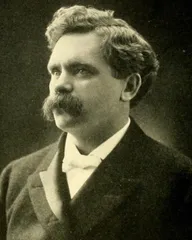
Vol. VI. DECEMBER, 1902. No. 2,
THE "MORMON" DOCTRINE OF DEITY. A REJOINDER TO REV. C. VAN DER DONCKT'S "REPLY" TO ELDER ROBERTS' DISCOURSE ON THE ABOVE SUBJECT.
BY B. H. ROBERTS.
I —THE FORM OP GOD. I have read with great interest and care the Rev. C, Van Der Donckt's reply to my discourse on "Mormon" doctrine of Deity. With regard to his Reply in general, I observe three things: first, the Reverend gentleman labors with some pains to demonstrate that "Mormon" views of Deity with respect to the form and nature of God are at variance with the Catholic and even the orthodox Protestant views on that subject; second, the "Mormon" views of Deity are in conflict with the accepted Christian philosophy; third, that "Mormon" doctrines stand i > sharp contrast to both Catholic and protestant ideas respecting the unity of God, All this is
easily proved; and would have been conceded cheerfully without proofs. "Mormons" not only admit the variances, but glory in them. The foregoing, however, is not the issue between Mr. Van Der Donckt and myself. After the variances referred to are admitted-, these questions remain: Which is most in agreement with what
God has revealed concerning^ his form and nature, "Mormon" or orthodox Christian doctrine? Which is most in harmony with sound reason and the Scriptures, "Mormon" doctrine, or the commonly accepted Christian philosophy? Which in their teaching presents the true doctrine of God's unity, "Mormons" or orthodox Chris- tians? These are the issues; and so far as the Reverend gentle- man has maintained the orthodox Christian doctrine against the "Mormon" doctrine, I undertake to controvert his arguments.
Of God Being a Spirit. Following the order of my treatise, the gentleman first deals with the form of God. His first premise is that "God is a Spirit," quoting the words of the Savior (John 4: 24;) and Paul's words, "The Lord is a spirit," (II Cor. 3: 17.) He then argues that a different from a man, and quotes the remark of Jesus to spirit is
his disciples, when he appeared to them after his resurrection: "A spirit hath not flesh and bones as ye see me have." (Luke 24: 37-39.) Also the words of Jesus to Peter, "Flesh and blood hath not revealed it [that Jesus is the Christ] unto thee, but my Father who is in heaven." (Matt. 16, 17.) The gentleman in all this sees a striking contrast between men, flesh and blood, and the Father; which "conveys the sense that God hath not flesh and blood like man, but is a spirit." That God is a spirit Mr. V. holds is proved also from his being called "invisible" in the Bible; and from this premise argues: "All material beings are visible beings. Absolutely invisible beings are immaterial, or bodiless:" and, therefore, to help the gentleman out a little, not like man in form. With reference to the passage — "Flesh and blood hath not revealed it unto thee, but my Father who heaven" — and the Rev- is in
erend gentleman's remarks thereon, I wish to say, in passing, that the antithesis between man and God in the passage extends mere- ly tothe fact that the source of Peter's revelation was God, nob man; and is no attempt at defining a difference between the nature of God and the nature of man. Here also I may say that the Latter-day Saints do not hold that God is a personage of flesh and blood, but a personage ot flesh and bone, inhabited by a spirit, just as Jesus was after his resurrection. Joseph Smith taught con-
THE "MORMON" DOCTRINE OF DEITY, 83
cerning the resurrection that "all [men] will be raised by the power of God, having spirit in their bodies, and not blood."* Again, in speaking of the general assembly and church of the first born, (Heb. 12: 23,) he said: "Flesh and blood cannot go there; but flesh and bones, quickened by the Spirit of God, can."t So that it must be remembered throughout this discussion that the Latter- day Saints do not believe that God is a personage of flesh and blood; but a personage of flesh and bone and spirit, united. I would remind the reader, also, that while Jesus said, "God is a spirit," and that a spirit "hath not flesh and bone as ye see me have," he nowhere says that a spirit is immaterial or not sub- stance. That is a conclusion drawn from the false philosophy of the ancient pagans. But let us examine these premises and arguments of Mr. Van Der Donckt, more in detail. The inspired apostle says: "Our God is a consuming fire ." "Now," to use the words of (Heb. 12: 29.) Mr. v., "although we must believe whatever God reveals to us up- on one single word of his, just as firmly as upon a thousand; never- theless, I will add" that Moses, who solemnly received the word from God wh^'chhe delivered unto Israel, also says, " Ihe Lord thy God is a consuming fire" (Exod. 4:24.) Is Mr.V.ready to believe on these solemn assertiop.s of scripture — hence of the Lord — that God is a fire, and therefore that fire is God? Or would he insist upon interpreting these passages by others, and by reason? Would he not want to quote Moses again where he says, "Thy God is * *
- as a consuming fire" (Ex. 9: 3,), and accept this as a reasonable interpretation of the passages stating so definitely that "God is a fire?" Again, "God is light." (I John 1:5.) Would Mr. V. from that
definition of God believe and teach that God is light, mere cosmic light? Or would he find an interpretation, or explanation neces- sary? And still again, "God is love." (I John 4: 7, 16.) Love is an attribute of mind, of spirit; must one conclude then from this
Discourse delivered at Nauvoo, March 20, 1842. Mill. Star, Vol. XIX, p. 213. tDiscourse delivered at Nauvoo, Oct. 9, 1843. Mill. Star, Vol. XXII, p. 231.
«4 IMPROVEMENl ERA.
definition that God is a mere attribute of mind? These reflections will demonstrate that these definitions of God, so far as they are such, together with the one Mr. V. commences his argument with, "God is a Spirit," need defining. He endeavors to anticipate the "Mormon" answer to this argument by saying: I am well aware that the Latter-day Saints interpret those texts as meaning a spirit clothed with a body, but what nearly the whole of mankind, Christians, Jews, and Mohammedans, have believed for ages, cannot be upset by the gratuitous assertions of a religious innovator of this last century.
At this point, I will not appeal to or quote the "gratuitous as- sertion of a religious innovator of this last century" meaning — Joseph Smith. There is no need of that. If I were an unbeliever in the true Deity of Christ, I might take up the gentleman's argu- ment in this way: You say God is a spirit, and hence bodiless, immaterial? His answer must be, "Yes." But Jesus says, "a spirit hath not flesh and bones as ye see me have" —hence Jesus is not God, because he is a personage of flesh and bone, in the form of man —not bodiless or immaterial. This, of course, is not my point. I merely refer to it in the beaten way of good fellow- ship, and by way of caution to my Catholic friend, who, I am sure, in his way, is as anxious to maintain the true Deity of the Naz- arene as am; but his mBthod of handling the text, "God is a I
spirit," might lead him into serious difliculty in upholding the truth
that Jesua was and is true Deity, if in argument with an infidel. But now for the "Mormon" exposition of the text. Is Jesus Christ God? Was he God as he stood there among his disciples in his glorious and, to use Mr. V's words, "sacred" resurrected body? There is but one answer that the Reverend Catholic gentleman or any orthodox Protestant can give, and that is in the affirmative "yes; Jesus is God." But "God is a spirit?" True, he is; but Jesus is a spirit inside a body — inside an immortal, indestructible body of flesh and bone; therefore, if Jesus is God, and God is a spirit, he is an embodied spirit, just as the Latter-day Saints teach. Now let it be understood that Latter-day Saints are not so foolish as to believe that so much phosphate, lime,carbon,hydrogen and oxygen as may compose the body of a perfected man, is God.
TEE "MORMON" DOCTRINE OF DEITY. 85
They recognize the fact that the body without the spirit is dead, being alone; but the spirit having through natural processes gathered to itself a body, and that body having been purified by the power of God — who has promised in holy scripture that he will "change our vile body, that it may be fashioned like unto his glorious body-, according to the working whereby he is able even to subdue all things unto himself" (Phil. 3: 20, 21) —when this is done, even the body takes upon it some of the divine nature. It indeed becomes "sacred," and something more than "sacred," it
becomes incorporated with, and forever united to, a spirit that is divine, and henceforth becomes an integral part of God. Of which process, of a divine spirit taking on a body of flesh and bone, Jesus Christ is the most perfect example. At this point, I shall pass for the present a few items that stand next in order in Mr. Van Der Donckt's argument, in order .
to consider some statements and arguments of his made further on in the "Reply," because they are immediately related to what has just been said. Mr. V. holds that it is proved by Holy Writ that "angels as well as God are bodiless beings." After quoting passages of scripture in support of this statement, he then adds: "Could plainer words be found to teach that angels, both good and bad, are spirits, devoid of bodies? Now, the Creator is certainly more perfect than his creatures, and pure minds are more perfect than minds united to bodies * (men)." In support of which he quotes the following: "The corruptible body is a load upon the soul, and the earthly habitation presseth down the mind;" (Wis- — dom 9: 15,)t and Paul saying "who shall deliver me from this body of death?" J (Rom. 6: 24.) Therefore, the Creator is a pure spirit.
I fear Mr. V. in these statements has run into more difficulty. Let us see. According to his doctrine, "Angels as well as God are
- Italics are mine.
t This is a book received by the Catholic Church on alleged apostol- ical tradition, but not found in the Hebrew Bible nor Protestant ver- sions of the Bible.
J Quoted thus by Mr. V. In both Catholic and Protestant Bibles it stands, "Who shall deliver me from the body of this death."
bodiless beings." "Angels, both good and bad, are spirits, devoid of bodies. The Creator is more perfect than his creatures, and pure minds [minds separated from bodies] are more perfect than minds united to bodies. * * * Therefore, the Creator is a pure spirit." But where does this leave Jesus? Was and is Jesus God —true Deity? Yes. But Jesus is a spirit and body united into one glorious per- sonage. His mind was and is no>v united to and dwelling in a body. Our Catholic friend says, "pure minds [i. e. minds not united to bodies] are more perfect than minds united to bodies." He also says, "Angels both good and bad, are spirits (i. e. minds) devoid of bodies." Therefore, it must follow from his premises and argument that angels are superior to Jesus, since his spirit is united to a body, while they are minds not united to bodies! I
will not press the point that the same conclusion could be drawn from his premises and argument with reference even to bad spirits, whom he says are bodiless, and hence, upon his theory, superior to minds or spirits united to bodies, for that would be ungenerous upon my part, and would lay upon his faulty argument an imputa- tation of awful blasphemy, which I am sure was not intended, and would be as revolting to him as to myself. Mr. V., I am sure^ would contend as earnestly as I would that Jesus is superior to the angels,though it is perfectly clear that he is a spirit united to a body, "When he had by himself purged our sins, [Jesus] sat down on the right hand of the majesty on high; being made so much better than the angels, as he hath by inheritance obtained a more ex- cellent name than they. * * * ^j^^ again when he bringeth in the first begotten into the world, he saith, and let all the angels of God worship him. And of the angels he saith, who maketh his angels spirits, and his ministers a flame of fire. But unto the Son he saith, 1 hy throne, God, is for ever and ever'' (Heb. 1 : 3-8.) In this passage the superiority of Jesus over the angels is mani- first, by the direct affirmation of God that he fested in four ways: was made "better" than the angels; second, that by inheritance he obtained a more exalted name; third, the angels are commanded to worship him; fourth, God, the father, addressing Jesus said: "Thy throne, God, is for ever and ever." In this passage the
THE "MORMON" DOCTRINE OF DEITY. 87
father directly addresses Jesus by the title, "God:" And as God is exalted above all angels, Jesus must be superior to angels, for he is "God," if we may believe the words of the Father — whom to disbelieve would be blasphemy. Mr. Van Der Donckt admits in his argument, of course, that Jesus is God; and also admits the persistence of him in the physi- cal condition, in which he left the earth with his resurrected body. For in explaining the scripture passage about seeing God "face to face," he remarks The first and chief element of the happiness of heaven will consist in the beatific vision; that is, in seeing God face to face, unveiled, as he really is. The "face to face," however, is literally true only of our blessed Savior, who ascended into heaven with his sacred body. Other- wise, as God is a spirit, he has no body, and, consequently, no face. (?) From this it is clear that, in the mind of the Reverend gentle- man, Jesus not only ascended into heaven with his "sacred body," but now dwells there spirit and body united; and the blessed who shall inherit heaven will see him there literally, "face to face." * Other- wise than this "face to face" view of Jesus, — according to Mr. V. —we shall only see God, since he is a spirit, "with the spiritual eye, with the soul's intellectual perception, elevated by a super- natural influx from God!" This admission with reference to Jesus and his existence as an immortal personage of flesh and bone, and our literal view of him in heaven "face fo face," draws with it
some consequences which my Catholic friend evidently overlooked. In the creed usually named after St. Athanasius, it is said: "Such as the Father is, such is the Son." I take it that this, in the view
of those who accept the Athanasian creed, has reference to the "substance" of the Father, as well as to other things pertaining to Him; for, according to that creed, the "substance" of the Father
- In an article for the Era, on the Doctrine and Claims of the Catholic Church, Bishop Scanlan also said of the Divinity of Christ: "The Catholic Church teaches that Jesus Christ is not a mere elect child or special creation ofGod, or in any sense or manner a creature, but that he is the eternal and only Son of God, God of God, Light of Light; the expression of the Eternal Father, with whom he is one in nature and substance, and to whom he is equal in all divine attributes, power and glory."— Era, Vol. 1, p. 14.
and Son is one and undivided. "We worship one God in Trinity, and Trinity in Unity," says the creed; "neither confounding the persons nor dividing the substance" It must be, therefore, ac- cording to his creed, that all the "substance" of God there is, is in Jesus Christ, as well as all the attributes of God. The terms of the creed forbid us believing that part of the "substance" of God was enclosed in the flesh and bone body of Jesus, and the re- mainder existed outside of that body; for that would be dividing the "substance" of God, a thing the Athanasian creed forbids: therefore, all the "substance" of God inhabits the body of Jesus Christ, and he is wholly God. In this view of the subject, there is no God except the Deity enclosed in the flesh and bone body of Jesus Christ. But that would place our Catholic friend after all — he has said about God being a spirit, and about the superiority of pure minds (i, e. spirits not united in bodies) over minds united to bodies — under the necessity of accepting as God, the Supreme, the Almighty, a personage that is a spirit and body united in one glorious personage, and in form like man, a thing most abhorrent to our friend's principles. On the other hand, if it be contended that besides the Son of God, Jesus, a personage of flesh and bone and spirit, there exists God, a spirit, then there is likely to arise again the conception of the "substance" being divided, and the existence of two individual Gods instead of one. The one a spirit unembodied, and the other a spirit enclosed in a body of flesh and bone— the glorified Man, Christ. This danger is also increasedby the part of the creed now being considered, viz., "Such as the Father is, ouch is the Son;" for it must follow, if this be true, that such as the Son is, such is the Father also. And this must hold with reference to God, wholly; to his substance, essence, personality, form, as well as to all attributes possessed, or else it is not true at all. And if true, since we know that Jesus is an immortal being of flesh and bone and spirit united into one glorious personage (and Mr. V. ad- mits that, and also that the blessed in heaven shall see Him as such a personage, literally "face to face"), then God the Father must be the same, a personage of flesh and bone and spirit united— a thing most abhorrent to Mr. V's principles. At this point, I must complain of the gentleman's argument a
THE "MORMON" DOCTRINE OF DEITY. 89
little. However able and fair his article may be considered on the whole, I think, on the question of the "form of God," I am justi- fied in charging that he has not dealt at all with my strong scrip-
ture proofs relative to that matter. He makes but the very slightest reference to the passage:
And God said. Let us make man in our image, after our likeness.
* So God created man in his own image, in the image of God
created he him; male and female created he them. (Genesis i: 26, 27.)
And he considered nowhere the very definite passage: God * * * hath in these last days spoken unto us by his Son,
* who, being the brightness of his glory and the express image of
his person, and upholding all things by the word of his power, when he hath by himself purged our sins, sat down on the right hand of the Majesty on high. (Heb. i: 3.)
"Now, "to use the solemn words of the Reverend gentleman himself, "we must believe whatever God reveals to us upon one single word of his, just as firmly as uf on a thousand," I shall hold that it was incumbent upon Mr. V. to deal with these passages, and set forth in what way they are to be understood, if not to be understood as they read. I can think of no language that could express the truth more forcibly, that man was created in the form of God and, therefore, that God in form is like man, than the language of these two passages. When the word of God says: "God created man in his own image, in the image of God created he him;" and then again, in speaking of Jesus, who certainly bore all the semblance, figure and stature of a man —who was a man—when the divine Spirit, I say, in speaking of him, says that he was the express image
of God's person — I shall dispair of human language expressing any fact whatsoever, if this language does not say that in form God and man are alike. And what the word of God in plainness teaches so plain that he who "runs may read," so plain that "wayfaring men though fools need not err therein" — "is not to be set aside by the gratuitous assertions" of "religious innovators" of early Chris- tian centuries who corrupted the plain meaning of God's word by their vain philosophies, and oppositions of science, falsely so called. Mr. Van Der Donckt makes no reference to this plain passage in Hebrews i: 3; and I am under the necessity of thinking that in
respect of both this passage and the one in Genesis, he has no means at his command by which he can satisfactorily explain away their force. They stand, therefore, with their strength unimpaired, in proof of the doctrines taught in the discourse at which Mr. V. leveled his "Reply." Of God Being Invisible. Mr. Van Der Donckt thinks he sees further proof of God's being a "Spirit," and therefore immaterial or bodiless, in the fact that he is spoken of in the Bible as being "invisible." Moses "was strong as" seeing him that is invisible," (Heb. xi: 27;) "No man hath seen God at any time" (I John iv: 12;) "The King of kings whom no man hath seen nor can see," (I Tim. vi: 16); are the pas- sages he relies upon for the proof of his contention. Of course, Mr. V. is aware of the fact —for he mentions it
that these passages are confronted with the explicit statement of scripture that God has been seen by men. Moses saw him. At one stage of his experience, the great Hebrew prophet was told that he could not see God's face; "for," said the Lord, "there shall, no man see me and live." But even at that time, Moses was placed in a cleft of the rock, "and thou shalt see my back parts," said the Lord to him; "but my face shall not be seen." (Exodus xxiii: 18-
23.) On another occasion, Moses, Aaron, Nadab and Abihu, and seventy of the Elders of Israel, saw God. And they saw the God of Israel: and there was under his feet as it were a paved work of saphire stone, and as it were the body of heaven in his clearness. And upon the nobles of the children of Israel he laid not his hand: also they saw God, and did eat and drink. (Ex. xxiv: 9-11.)
Isaiah saw him: "I saw the Lord sitting upon a throne, high and lifted up, and his train filled the temple." At the same time the seraphims proclaimed his holiness, saying, "Holy, holy, holy is the Lord of hosts; the whole earth is full of his glory." Then said Isaiah: "Woe is me ! for I am undone; because I am a man of un- clean lips, and I dwell in the midst of a people of unclean lips; for mine eyes have seen the King, the Lord of hosts." (Isaiah vi; 1-5.) To harmonize these apparitions of God to men with his theory of the invisibility of God, Mr. V. appeals to the writings of some of the Christian fathers, and Cardinal Newman, from whose teachings he concludes that God the Father is called "invisible" because "he
THE "MORMON" DOCTRINE OF DEITY. 91
never appeared to bodily eyes; whereas the Son manifested himself as an angel, and as a man after his incarnation. * * * When- ever the Eternal Son of God, or angels at God's behest, showed themselves to man, they became visible only through a body, or a material garb assumed for the occasion /" Surely Tertullian, Ambrose, Augustine, the great English Cardinal of the Roman church, and Mr. V. are in sore straits when they must needs take refuge in the belief of such jugglery with matter as this, in order to reconcile apparently conflicting scrip- tures. And what a shuffling off and on of material garbs there must have been, as from time to time hosts of angels and spirits appeared unto men !
It is but the materialization of the spiritualist mediums on a little larger scale. But there is a better way of harmonizing the contradictions; and better authority for the conclusion to be reached than the Christian fathers and Cardinal Newman. I mean the scriptures themselves. Take this expression of the scripture, "No man hath seen God at any time." (I John iv: 12.) Standing alone, it seems emphatic and conclusive. And in the same connection this also, from the testimony of John: "No man hath seen God at any time; the only begotten Son which is bosom of the Father, he hath de- in' the
clared him." (St. John i: 18.)But consider these texts in connec- tion with what the Master himself said on the same subject: "It is written in the prophets, and they shall be all taught of God. Every man, therefore, that hath heard, and hath learned of the Father, cometh unto me. Not that any man hath seen the Father, save he which is of God, he hath seen the Father." (St. John vi: 45, 46.) Now we have the key to the matter. "No man hath seen God at any time, save [except] he which is of God, he hath seen the Father." If any one shall contend that this "he which is of God" has reference to Jesus only, the complete answer to that will be found in the account of the Martyr Stephen's glorious view of the Father and the Son together and at one time: "But he [Stephen] being full of the Holy Ghost, looked up steadfastly into heaven, and saw the glory of God, and Jesus standing on the right hand of God, and said. Behold, 1 see the heavens opened, and the Son of Man standing on the right hand of God." Undoubtedly, for reasons that are wise.
God the Father ha3 been "invisible" to men except under very special conditions; for the most part the "Only Begotten hath declared him," and stood as his representative; and in the absance of those special conditions, no man hath seen God the Father; no man in the absence of these conditions can see his face and live. Pie must be "of God" as Stephen was, then he may see God, even
the Father, as that martyr evidently did. Here, too, may be cited a passage from one of the revelations of the Lord to Joseph the Prophet, which throws more light upon the subject. Speaking of the Higher or Melchisedek Priesthood, the Lord says:
This greater Priesthood administereth the gospel and holdeth the key of the mysteries of the kingdoin even the knowledge of God; therefore, in the ordinances thereof, the power of godliness is manifest; and without the ordinances thereof, and the authority of the Priesthood, the power of godliness is not manifest unto men in the flesh; /or without this no man can see the face of God, even the Father, and live." (Doc. and Gov. sec, 84: 19-22.)
God, then, in the Bible is called "invisible," not because he is absolutely so by reason of his nature, because he is "immaterial or bodiless;" but because he is not to be seen by men except under very special conditions. The special conditions complied with, however, certain holy men have seen God the Father, and have borne witness of the fact. Of course, it follows that the "invisi- bility" of God as here set forth does not carry with it the idea that
God is immaterial or bodiless; nor would it follow that God is im- material, even if absolutely invisible to human eyes in our present existence. Mr. V. advances a strange doctrine when he says that "All material beings are visible. Absolutely invisible beings are imma- terial or bodiless." I take it that his assertion is equivalent to say- ing that all material things are visible ; and that absolutely invisible things are immaterial or bodiless. Is that true? Is the atmosphere vis- ible? No. But it is material. "It is composed of atoms of matter whose weight is such that the pressure upon every square inch amounts to fifteen pounds; and upon the body of an ordinary-sized man some fourteen tons; but notwithstanding this, man could not construct a microscope sufficiently powerful to render these atoms visible."*
Samuel Kinn's Harmony of Bible and Science, p. 338.
THE ''MORMON" DOCTRINE OF DEITY. 93
What of the ether extending throughout the universe, in which millions of suns and their attendant planets move as moats in a sunbeam; is that visible ? No; but it is material nevertheless. So with many things that, notwithstanding they are absolutely invisi- ible, are material for all that, and have some of the qualities in common with grosser matter. We know but little of substances, as yet; less of their essence: but since there are many material substances absolutely invisible to us, is it unreasonable to believe that there are beings consisting of substances more refined, pure and glorious than the material that is visible to our limited and imperfect vision ? —beings invisible to us, unless our eyes be quick- ened by the power of God, yet material, and having form, and limi- tations, and relations to other beings and things; and also possessed of many other qualities common to matter ? In view of these facts, is not Mr. Van Der Donckt a little reckless, and too dog- matic, in stating the datum from which he argues for the absolute invisibility of God, and hence also his supposed immateriality, or bodiless state? Mr. Van Der Donckt argues that angels and spirits are also bodiless or immaterial. Was it a bodiless or immaterial angel that wrestled with Jacob until the breaking of the day; and who, when he could not prevail against the patriarch, touched the sinew of his thigh that forthwith it shrank? (Gen. xxxii: 23-32). Were they immaterial or bodiless angels who called at the tent-home of the patriarch Abraham, on the plains of Mamre, for whom Sarah baked cakes, and Abraham's servant prepared a roast of veal; and, when all things were made ready, the patriarch stood by, and the three heavenly personages — one of them is called "the Lord" "did eat" (Gen. xviii) —were they immaterial or bodiless? Perhaps the Reverend gentleman will say, however, that these cases, and a score of others of similar nature that might be quoted, are answered by his statement —made on the authority of some Chris- tian fathers and Cardinal Newman — that when angels "showed themselves to man they became visible [hence, materialized accord- ing to my friend's theory of visible and invisible beings] only through a body, or a material garb assumed for the occasion !" For which theory, as whimsical as it is nonsensical, I venture to tell the Reverend gentleman there is no warrant of divine authority; noth-
ing but the assumptions and speculations of church-men seeking to harmonize Christian doctrine with the vain speculations of old pagan philosophers. I know nothing that equals this theory for absurdity, except it be the idea of Epicurus, who, after affirming that the gods were of human form, explained —"Yet that form is not body (i. e. material), but something like body; nor does it con- tain any blood, but something like blood !"* As for the rest of Mr. V's theory of immateriality and invisibility of angels and spirits, I shall trust to what I have said on those subjects in dealing with the invisibility of God, to be a sufficient answer.
Of Anthropomorphism and Understanding the Bible Literally.
I must say a wori upon Mr. V's remarks respecting the plain
anthropomorphism of the Bible, and the matter of understanding that sacred book literally. With reference to the first he says:
All men after the example of the inspired writings, make frequent
use of the figure called anthropomorphism, attributing to the Deity a hu- man body, human members, human passions, etc, and that is done, not to imply that God is possessed of form, limbs, etc., but sim'ply to make spiritual things or certain truths more intelligible to man.
I would like to know upon what authority Mr. V. adjudges the "inspired writings" not to imply that God is really possessed of form, limbs, passions, etc., after attributing them to him in the clearest manner. The "inspired writings" plainly and most forc- ibly attribute to Diety a form like man's, with limbs, organs, etc., but the Bible does not teach that this ascription of form, limbs, organs and passions to God, is unreal, and "simply to make spiritual things or certain truths mo^e intelligible to man." On the con- trary, the Bible emphasizes the doctrine of anthropomorphism by declaring in its very first chapter that man was created in the image of God: "So God created man in his own image, in the image of God created he him.'' The explanation is offered that it was necessary to attribute human form, members and passions, to God, in order to make spiritual things intelligible to man; but what is the reason for ascribing the divine form to man, as in the passage
Cicero p. 327, (Young's translation.) , Tuscul. Dispt.
THE "MORMON" DOCTRINE OF DEITY. 95
just quoted ? Was that done to make human beings or certain truths more intelligible to God ?Or was it placed in the word of God because it is simply true ? The truth that God in form is like man is further emphasized by the fact that Jesus is declared to have been in "the express image" of the Father's person (Heb. i: 3); and until Mr. V., or some other person of his school of thought, can prove very clearly that the word of God supports his theory of the unreality of the Bible's ascription of form, organs, proportions, passions and feel- ings, to God and other heavenly beings, the truth that God in form is like man will stand secure on the foundation of the revelations it has pleased God to give of his own being and nature. But the strangest part of the Reverend gentleman's contention on the matter now in hand is that the Latter-day Saints understand the anthropomorphic expressions in the scriptures as he explains them; and cites our cat'^chism (chapter 5, question 9) in proof of it ! I quote the reference given:
   Q.        If God is a person, how can he be everywhere present ?
A.       His person cannot be in more than one place at the same time,
but he is everywhere present by his Holy Spirit.
This is preceded by the following passages from the same book and chapter:
  Q.  What kind of a being is God ?
A.       He is in the form of a man.
2.       Q.        How do you learn this ?
A.       The scriptures declare that man was made             in the    image of
God. * * * 3. Q. Have you any further proof of God's being in the form of a man ? A. Yes. Jesus Christ was in the form of a man, and was at the same time in the image of God's person. * * * 4. Q. Is it not said that God is a spirit ?
A. Yes; the scriptures say so. John iv: 24. * * * 5. Q. How, then, can God be like man ? A. Man has a spirit, though clothed with a body, and God is simi- larly constituted. 6. Q. Has God a body then ? A. Yes; like unto man's body in figure.
Yet Mr. V. would have it believed that the Latter-day Saints understand the expression of scripture ascribing human form, limbs and organs to God as he explains them— "not to imply that God is possessed of form, limbs, etc., but simply to make spiritual things more intelligible to man !" This is a splendid illustration of Mr. V's ability to misunderstand. Mr. V. next takes up the subject of understanding the lan- guage of the Bible literally. He says it is from anthropomorphic pass iges of the Bible that the Latter-day Saints conclude that God has a body —such passages as speak of the face, hands, feet and other limbs and organs of God.- He holds these passages to be figurative. "I contend," he remarks, "that if we must understand the Bible literally in those passages ("God created man in his own image") from which they attempt to prove that God has a body, we must interpret it literally in other similar passages"* I assent to that. It is well known that the language of the Bible is highly
figurative, almost extravagantly so in places, and much allowance
must be made for the imagery of prophetic natures which, like poetic temperaments, are given to imagery. But Mr. V. is not true to this canon of interpretation he lays down, viz., the same rule oj interpretation must be applied to passages that are similar in character. After laying down this principle of interpretation, he proceeds to depart from it by placing for comparison very dissimilar passages. What similarity is there, for example, in the plain, mat- ter of fact statement, "God created man in his own image, in the image of God created he him;" and the passage he quotes from Psalms: "If I take my wings early in the morning, and dwell in the uttermost part of the sea, even there shall thy hand lead me, and thy right hand shall hold me." And this also: "Whither shall I flee from thy face. If I ascend into heaven, thou art there; if I de-
scend into hell, thou art there?" Has not the Reverend gentleman placed for comparison here the most dissimilar passages that per- haps could be found in the whole Bible? Yet he insists that the prosy passage from Genesis must be regarded as equally figurative with David's poetry, and insists that if "Mormons" believe literally that God made man in his own image and likeness, or that Moses and
^Italics are mine —R.
THE "MORMON" DOCTRINE OF DEITY. 97
seventy Elders saw the God of Israel, as plainly declared by Moses, then "They must believe that God had such a very long hand as to extend to the uttermost parts of the sea;" and "such an extremely long face, reaching from heaven to hell;" and "conclude that David had wings !" Further remarks on this head are not necessary. One is under no obligation to seriously discuss nonsense. Oj the Incarnation of the Son of God.
, Another case of misapprehension of "Mormon" ideas will be found in what Mr. Van Der Donckt says with reference to the Latter-day Saints' sacred books not teaching the Christian truth of the incarnation of Deity in the person of Jesus Christ. The sacred books of the Latter-day Saints may not contain the verbiage of so called Christian literature on the subject; but if full recognition
of the fact that Jesuswas in the beginning with the Father was the "Word," and, moreover, the "Word" that "was God," and afterwards was made flesh and dwelt among men is to believe — in the incarnation of the Son of God, then the sacred books of the Latter-day Saints teach this doctrine; for over and over again in our sacred books will passages to that effect be found (especially sec- tion 93 of the Doctrine and Covenants). Moreover, the Reverend gentleman should remember that "Mormons" include among their sacred books, the Holy Bible, and all the doctrine of incarnation taught in that book is our doctrine. I think the main difference
between the Latter-day Saints and "Christians," on the subject of incarnation, is that the Latter-day Saints believe that incarnation does not stop with the Lord Jesus Christ. Our sacred books teach that not only was Jesus Christ in the beginning with God, but the spirits of all men were also with him in the beginning, and that these sons of God, as well as the Lord Jesus Christ, became incar- nate in bodies of flesh and bone (Doc. and Gov. section 93). But Mr. V. thinks he discovers in this doctrine of incarnation a proof that "God has not a body and therefore is not an exalted man."
"It is plain," says he, "that the Son of God became flesh only at the time of his sojourn on earth. Now had he been flesh or man before, as the 'Mormons' hold, how could he become what he was already from all eternity." This is another instance of Mr. V's misapprehension of what "Mormons" teach. We nowhere teach
that Jesus Christ, the Son of God, was flesh and bone from all eternity. When seeking to make "Mormonism" appear inconsis- tent with itself, the Reverend gentleman is in duty bound to keep in mind our whole doctrine, on any particular subject he is treating. He should remember that our theology holds that the Father, Son, and Holy Ghost are distinct and separate personages, in the sense that they are three distinct individuals; and that the Father is a personage of flesh and bone, as Jesus also now is; but previous to Messiah's birth into the world, he was a spirit, the First Born of the hosts of spirits in heaven, and was with the Father in the begin- ning of the creation of our earth and its heavens. Indeed, under the direction of the Father, he was the creator of them (Heb. i: 3,- Col. XV : 17; John i: 3); but he came to the earth to receive a tabernacle, that in all things he might become as his Father is, a divine spirit inseparably united to a sacred and glorified body one glorious spiritual personage. As much of Mr. V's argument on this head is built on a misapprehension of our doctrine, it will not be necessary for me to follow him through the interminable windings of his argument with reference to it. "There is never a proper ending to reasoning which proceeds on a false foundation". (Cicero.) Mr. V. next brings as proof against God's being an exalted man, what he calls the direct statement of the Bible that God is not man: "God is not a man, that he should lie; neither the son of man, that he should be changed" (Numbers xxiii: 19.). "I am God and not man" (Psalm). These passages simply present the contrast between man as he is now, and with all his imperfec- tions on his head, and God. The Latter-day Saints do not teach that man in his present state and condition is God; on the con- trary, they hold that there is a very, very wide difference between them, all the difference indicated by the Bible; but they do believe that through the eternities that will pass over man's head, and with God for guide and teacher, he may become as his Father in heaven is,and that such is his destiny. It follows that when man shall attain to that destiny, the contrast now so striking between man and God will not exist. The contrast noted in the scriptures by Mr. V. is not between perfected men and God, but between very imperfect men — men who lie and are changeable —and God; and
THE ''MORMON'' DOCTRINE OF DEITY. 99
since the Latter-day Saints do not hold that man while imperfect is God, or like God, or God like him, the argument of the gentleman, based on the passages quoted, is of no force. It could be said of
some grandly developed, noble, high-minded man, such as a Glad- stone, a Bismarck, or a Washington: He is not a child that he should halt in reason, or falter in action, or be frightened by phantoms of the dark. But such a contrast does not include the idea that the child may not change his status, and finally become all that the great man is with whom he is now contrasted. Clearly, the con- trast is one of conditions more than of natures, and at its very highest value is the contrast between a perfected nature and one not yet perfected. The same answer applies to the Reverend gentleman's contention based on the passages, "Thou art always the selfsame;" "I am the Lord and change not;" "The Father of lights, with whom there is no change nor shadow of alteration." These passages teach what the Reverend gentleman calls the "immutability of God," which he holds to preclude the idea that God rose from a state of imperfection to that of perfection —since he is always the "selfsame." Before answering at length, I couple with this Mr. Van Der Donckt's final — argument on this division of the subject the scriptural evidences — and arguments on the form and nature of God namely, "The Latter- day Saints' theory of the Man-God supposes a past and present with God. The Bible excludes that succession of time," says the Reverend gentleman, "and speaks of God as the Everlasting pres- ent; 'I Am Who Am;' 'From eternity to eternity thou art God.'" Against this argument, base upon God's reputed unchangeableness, and being always as he now is, from all eternity to eternity, I wish to say, first, that the God-nature is doubtless always the same, with- out reference to those who may attain unto it; and speaking of the God-nature, it is always the "Selfsame, from eternity to eternity; but after that statement, against the Reverend gentleman's argu- — ment bottomed on God's immutability and eternity and, in fact, against all his arguments, from first to last, respecting the form and nature of God, I place Jesus of Nazareth, the Messiah, the revelation of God to man. I place him as my premises, and my
argument against all the Reverend gentleman has said, or can say, on this division of the subject. I call attention to the fact that
100 IMPROVEMENl ERA.
neither in my discourse which brought forth Mr. Van Der Donckt'a "reply," nor in this rejoinder, have I turned to those numerous passages of the Bible that speak of the face, limbs or organs of God. Not that I mistrust the force of those passages as evidence, but because I have thought it unnecessary to appeal to them, so long as I had in Jesus, the Messiah, a full length and complete representation of God, not only as to the reality of his being, but as to the kind of being God is. And now I ask, as I did in my dis- course, is Jesus God ? Is he a manifestation of God — a revelation^ of him ? If so, there must be in him an end of controversy; for whatever Jesus Christ was and is, God must be, or Jesus Christ is no manifestation, no revelation of God. Is Jesus Christ in form
like man ? Is he possessed of a body of flesh and bone which is eternally united to him — an integral part of him? Does he pos- sess body, parts and passions? There can be but one answer to all these questions, and that is, "Yes; he possessed and now possesses all these things." Then God also possesses them; for even accord- ing to Catholic and orthodox Christian doctrine, Jesus Christ was and is God, and the complete manifestation and revelation of God the Father. Also the specific points of argument based upon God's un- changeability, and there being no succession of time with God that, too, is answered in the person and experience of Jesus Christ. According to Catholic teaching, Jesus was a spirit identical with
God the Father in substance, before he became man; but at a cer- tain time he became man; was not that a change? By it, he became something he was not before. His humanity, according to their teaching, was added to the Son of God when he received his taber- nacle of flesh and bone; and he was certainly changed from an un- embodied state to an embodied one; and there was a "before and after" —in reference to this great event, in the God Jesus' expe-
rience. Is it thinkable that this change was a deterioration ? Was the Son of God's divinity debased to the human, or was so much of humanity as he took on raised to the divine nature, and henceforth made an integral part of it ? The orthodox doctrine of Christianity is — Catholic and Pro- testant alike —that Jesus Christ is God; that he always was and is God, according to both orthodox theology and Christian philos-
TEE "MORMON" DOCTRINE OF DEITY. 101
ophy. Yet it is said of this Jesus that he "increased in wisdom and stature, and injavor with God and man." (Luke ii: 52.) Here is certainly a change in condition; here is succession of time with — God a before and after; here is being and becoming; for whereas, he was a spirit, he became man; and in becoming man, he passed through all the phases in life from infancy to manhood. It is sig- nificant also that it was not until Jesus had arisen from the tomb and stood in the presence of his disciples, a glorified personage, body and spirit united, that he exclaimed, "All power is given unto me in heaven and in earth." If "given" then, there must have been a time when he did not possess all power in heaven and in earth; and hence, a change from possessing some power to the con- dition of possessing "all power," a fullness of power — "for pleased it
the Father that in him should all fullness dwell." (Col. i: 19.) But more of this, when I come to deal with Mr. Van Der Donckt's philosophical proofs on the subject. I shall close this part of my rejoinder with the following summary of the facts maintained thus far in my argument: First: —While the scriptures declare that God is a spirit, it does not follow that he is necessarily an unbodied spirit; on the con- trary, it is clear that he is an embodied spirit; for Jesus Christ is
God, and he, we know, is a spirit and body united; and he is said to be the express image of his Father's person; therefore, the Father of Jesus Christ, or God the Father, must be just what Jesus is — spirit embodied in a tabernacle of flesh and bone. Second: — Although the Bible says that God is a spirit, and speaks of angels as spirits also, and points out some differences between the nature of men and spirits, it does not follow that spirits are immaterial beings, and therefore without form. On the contrary, the evidence of scripture is to the effect that angels are very substantial personages. One wrestled bodily with Jacob and lamed him; while three others "did eat" of the substantial meal provided by Abraham; and there are many other proofs as to their being substantial, material personages. Third: — It is an assumption absolutely unwarranted by authority of the word of God to say that when spirits, or angels, or Jesus — before his incarnation^showed themselves to men, they merely assumed the material garb for the occasion.
Fourth: — Although the Bible in sundry passages speaks of God the Father as "invisible," it does not follow that he is abso- lutely so, nor invisible from the nature of his being; on the contrary, it is clear from what has been set forth that under certain special conditions, God the Father, as well as Jesus — before his incarna-
tion —and certain angels, have been seen; and hence, the invisibility
of God the Father, arises from his being invisible to men in their normal condition, unquickened by, and unclothed with, the power of God. Fifth: —The doctrine that all absolutely invisible things are immaterial is simply untrue, being contradicted by the fact that a number of absolutely invisible things are known to be material, and possess some of the properties of grosser matter. Sixth: —The Bible distinctly ascribes to God and angels the form, limbs, organs, feelings and passions of men; and the Bible no- where leads us to believe that this ascription of bodily form and organs and passions to God is simply to "make spiritual things, or certain truths more intelligible to man," nor does it follow because some passages of the Bible are figurative, and hence not to be taken literally, that all the passages ascribing human form, organs and feelings to God are figurative, and hence not to be taken literally. It is only when anthropomorphic passages and expressions are similarly used, as other clearly figurative passages and expressions are, that they are to be adjudged as figurative and not to be taken literally.
Seventh: — And lastly, beside all premises and arguments to the effect that God is an unbodied spirit, without form, without limbs, organs, features, human feelings, or passions such as love, compassion, pity, etc., etc., — beside all this, I place the Lord Jesus Christ, the Image of God the Father's person, the full length rep- resentation and revelation of God to men, as an all sufficient answer, and say that whatsoever Jesus Christ was and is, so, too, has been and is God, the Father; for such is clearly the teaching of Holy Scripture. f To be continued.)