History of the Prophet Joseph
Improvement Era, vol. 5, no. 8, June 1902, pp. 561 to 572
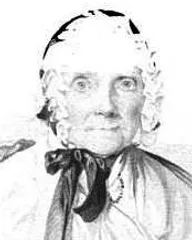
IMPROVEMENT ERA. Vol. V. JUNE, 1902. No. 8.
HISTORY OF THE PROPHET JOSEPH. BY HIS MOTHER, LUCY SMITH.
CHAPTER XXXV. JOSEPH SMITH, SENIOR, AND DON CARLOS, VISIT STOCKHOLM.
In the summer after the Church was organized, my husband set out, with Don Carlos, to visit his father, Asael Smith. After a tedious journey, they arrived at the house of John Smith, my husband's brother. His wife Clarissa had never before seen my husband, but as soon as he entered, she exclaimed, "There, Mr. Smith, is your brother Joseph." John, turning suddenly, cried out, "Joseph, is this you?" "It is I," said Joseph; "is my father yet alive? I have come to see him once more, before he dies." For a particular account of this visit, I shall give my readers an extract from brother John Smith's journal. He writes as fol- lows:
The next morning after brother Joseph arrived, we set out to- gether for Stockholm to see our father, who was living at that place with our brother Silas. We arrived about dark at the house of my brother Jesse, who was absent with his wife. The children informed us,
662 IMPROVEMENT ERA.
that their parents were with our father, who was supposed to be dying. We hastened without delay to the house of brother Silas, and upon arriv- ing there, were told that father was just recovering from a severe fit, and, as it was not considered advisable to let him or mother know that Joseph was there, we went to spend the night with brother Jesse. As soon as we were settled, brothers Jesse and Joseph entered into conversation respecting their families. Joseph briefly related the history of his family, the death of Alvin, etc. He then began to speak of the discovery and translation of the Book of Mormon. At this Jesse grew very angry, and exclaimed, "If you say another word about that Book of Mormon, you shall not stay a minute longer in my house, and if I can't get you out any other way, I will hew you down'with my broadaxe." We had always been accustomed to being treated with much harshness by our brother, but he had never carried it to so great an extent before. However, we spent the night with him, and the next morning visited our aged parents. They were overjoyed to see Joseph, for he had been absent from them so long, that they had been fearful of never beholding his face again in the flesh. After the usual salutations, enquiries, and explanations, the subject of the Book of Mormon was introduced. Father received with glad- ness, that which Joseph communicated; and remarked, that he had always expected that something would appear to make known the true Gospel. In a few moments brother Jesse came in, and on hearing that the subject of our conversation was the Book of Mormon, his wrath rose as high as it did the night before. "My father's mind,'" said Jesse, "is weak; and I will not have it corrupted with such blasphemous stuff, so just shut up your head." Brother Joseph reasoned mildly with him, but to no purpose. Brother Silas then said, "Jesse, our brother has come to make us a visit, and I am glad to see him, and am willing he should talk as he pleases in my house." Jesse replied in so insulting a manner, and continued to talk so abusively, that Silas was under the necessity of requesting him to leave the house. After this, brother Joseph proceeded in conversation, and father seemed to be pleased with every word which he said. But I must confess that was too pious, at that time, to believe one word of it. I
I returnedhome next day, leaving Joseph with my father. Soon after which, Jesse came to my house and informed me, that all my brothers were coming to make me a visit, "and as true as you live," said he, "they all believe that cursed Mormon book, every word of it.and they are setting a trap for you, to make you believe it." I thanked him for taking so much trouble upon himself, to inform
HISTORY OF THE PROPHET JOSEPH. 563
me that my brothers were coming to see me, but told him that I consid- ered myself amply able to judge for myself in matters of religion. "I know," he replied, "that you are a pretty good judge of such things, but I tell you that they are as wary as the devil. And I want you to go with me and see our sister Susan and sister-in-law Fanny, and we will bar their minds against Joseph's influence." We accordingly visited them, and conversed upon the subject as we thought proper, and requested them to be at my house the next day. My brothers arrived according to previous arrangement, and Jesse, who came also, was very careful to hear every word which passed among us, and would not allow one word to be said about the Book of Mormon in his presence. They agreed that night to visit our sisters the following day, and as we were about leaving, brother Asael took me aside and said, "Now, John, I want you to have some conversation with Joseph, but if you do, you must cheat it out of Jesse. And if you wish, I can work the card for you."
I told him that I would be glad to have a talk with Joseph alone, if I could get an opportunity. "Well," replied Asael, "I will take a certain number in my carriage, and Silas will take the rest, and you may bring out a horse for Joseph to ride, but when we are out of sight, take the horse back to the stable again, and keep Joseph over night." I did as Asael advised, and that evening Joseph explained to me the principles of "Mormonism," the truth of which I have never since denied. The next morning, we (Joseph and myself) went to our sisters, where we met our brothers. Jesse censured me very sharply for keep- ing Joseph over night. In the evening, when we were about to separate, I agreed to take Joseph in my wagon twenty miles on his journey the next day. Jesse rode home with me that evening, leaving Joseph with our sisters. As Joseph did not expect to see Jesse again, when we were about starting, Joseph gave Jesse his hand in a pleasant, affectionate manner, and said,
"Farewell, brother Jesse." "Farewell, Jo, for ever," replied Jesse, in a surly tone. "I am afraid," returned Joseph,in a kind, but solemn manner, "it will be for ever, unless you repent." This was too much for even Jesse's obdurate heart. He melted into tears; however, he made no reply, nor ever mentioned the circumstance afterwards. I took my brother twenty miles on his journey the next day, as I had agreed. Before he left me, he requested me to promise him, that
564 IMPROVEMENT ERA.
I would read a Book of Mormon, which he had given me, and even should I not believe it, that I would not condemn it; "for," said he, "if you do not condemn it, you shall have a testimony of its truth." I fulfilled my promise, and thus proved his testimony to be true.
Just before my husband's return, as Joseph was about com- mencing a discourse one Sunday morning, Parley P. Pratt came in, very much fatigued. He had heard of us at considerable distance, and had traveled very fast, in order to get there by meeting time, as he wished to hear what we had to say, that he might be pre- pared to show us our error. But when Joseph had finished his discourse, Mr. Pratt arose, and expressed his hearty concurrence in every sentiment advanced. The following day he was baptized and ordained. In a few days he set off for Canaan, N. Y., where his brother Orson resided, whom he baptized on the nineteenth of September, 1830. About this time Joseph's trouble commenced at Colesville with the mob, who served a writ upon him, and dragged him from the desk as he was about taking his text to preach. But as a relation of this affair is given in his history,* I shall mention only one circumstance pertaining to it, for which I am dependent upon Esquire Reid, Joseph's counsel in the case, and I shall relate it as near in his own words as my memory will admit:
I was so busy at that time, when Mr. Smith sent for me, that it
was almost impossible for me to attend the case, and never having seen Mr. Smith, I determined to decline going. But soon after coming to this conclusion, I thought I heard some one say to me, "You must go, and deliver the Lord's Anointed!" Supposing it was the man who came after me, 1 replied, "The Lord's Anointed? What do you mean by the Lord's Anointed?" He was surprised at being accosted in this manner, and replied, "What do you mean, sir? I said nothing about the Lord's Anointed." I was convinced that he told the truth, for these few words filled my mind with peculiar feelings, such as I had never before experi- enced; and I immediately hastened to the place of trial. Whilst I was engaged in the case, these emotions increased, and when I came to speak upon it, I was inspired with an eloquence which was altogether new to
- See Times and Seasons, vol. IV., pp. 40 and 61. Supp. to Mill.
Star, vol. XIV., p. 31.
HISTORY OF THE PROPHET JOSEPH. 565
me, and which was overpowering and irresistible. I succeeded, as I ex- pected, in obtaining the prisoner's discharge. This the more enraged the adverse party, and I soon discovered that Mr. Smith was liable to abuse from them, should he not make his escape. The most of them being fond of liquor, I invited them room to drink, and into another thus succeeded in attracting their attention, until Mr. Smith was be- yond their reach. I knew not where he went, but I was satisfied that he was out of their hands.
Since this circumstance occurred, until this day, Mr. Reid has been a faithful friend to Joseph, although he has never attached himself to the Church. After escaping the hands of the mob, Joseph traveled till day- break the next morning, before he ventured to ask for victuals, although he had taken nothing, save a small crust of bread, for two days. About day-break he arrived at the house of one of his wife's sisters, where he found Emma, who had suffered great anxiety about him, since his first arrest. They returned home together, and immediately afterwards Joseph received a commandment by revela- tion, to move his family to Waterloo.
Joseph had at this time just completed a house, which he had built on a small farm, that he had purchased of his father-in-law; however, he locked up his house with his furniture in it, and re-
paired with Emma, immediately to Manchester. About the time of his arrival at our house, Hyrum had settled up his business, for the purpose of being at liberty to do whatever the Lord required of him: and he requested Joseph to ask the Lord for a revelation con- cerning the matter. The answer given was, that he should take a bed, his family, and what clothing he needed for them, and go straightway to Colesville, for his enemies were combining in secret chambers to take away his life. At the same time, Mr. Smith re- ceived a commandment to go forthwith to Waterloo, and prepare a place for his family, as our enemies also sought his destruction in the neighborhood in which we then resided, but in Waterloo he should find favor in the eyes of the people. The next day, by ten o'clock, Hyrum was on his journey. Joseph and Emma left for Macedon, and William went away from home in another direction, on business. Samuel was absent on a third mission to Livonia, for which he had set out on" the first of October, soon after the arrival
566 IMPROVEMENT ERA.
of my husband and Don Carlos from their visit to father Smith. Catherine and Don Carlos were also away from home. Calvin Stodard and his wife, Sophronia, had moved several miles distant, some time previous. This left no one but Mr. Smith, myself, and our little girl, Lucy, at home.
CHAPTER XXXVI.
JOSEPH SMITH, SENIOR, IMPRISONED —AN ATTEMPT TO TAKE HYRUM. On the same day that Hyrum left for Colesville, which was Wednesday, the neighbors began to call, one after another, and in- quire very particularly for Hyrum. This gave me great anxiety, for I knew that they had no busi- ness with him. The same night, my husband was taken rather ill, and, continuing unwell the next day, he was unable to take break- fast with me. About ten o'clock I commenced preparing him some milk porridge, but, before it was ready for him, a Quaker gentle- man called to see him, and the following is the substance of their conversation: Quaker. — "Friend Smith, have a note against thee for four- I
teen dollars, which I have lately bought, and I have come to see if thou hast the money for me." Mr. Smith. — "Why, sir, did you purchase that note? You certainly was in no want of the money?" — "That business of my own; want the money, and Quaker. is I
must have it."
Mr. Smith. — can pay you "I now, — the you six dollars rest willhave to wait as cannot get for, for you." Quaker. — "No, I
not wait one hour; and I will it
thou dost not if
pay me immediately, thou shalt go forthwith to the jail, unless (running to the fire place, and making violent gestures with his hands towards the fire) thou wilt burn up those Books of Mormon; but if thou wilt burn them up, then I will forgive thee the whole debt." Mr. Smith, (decidedly).— "That I shall not do." Quaker. — "Then, thou shalt go to jail."
HISTORY OF THE PROPHET JOSEPH. 567
"Sir," I interrupted (taking my gold beads from my neck, and holding them towards him), "these beads are the full value of the remainder of the debt. I beseech you to take them, and give up the note." Quaker. — "No, I will not. Thou must pay the money, or thy husband shall go straightway to jail." "Now, here, sir," I replied, "just look at yourself as you are. Because God has raised up my son to bring forth a book, which was written for the salvation of the souls of men, for the salvation of your soul as well as mine, you have come here to distress me, by taking my husband to jail; and you think, by this, that you will compel us to deny the work of God, and destroy a book which was translated by the gift and power of God. But, sir, we shall not burn the Book of Mormon, nor deny the inspiration of the Al- mighty." The Quaker then stepped to the door, and called a constable, who was waiting there for the signal. The constable came for- ward, and, laying his hand on Mr. Smith's shoulder, said, "You are my prisoner." I entreated the officer to allow me time to get some one to
become my husband's security, but he refused. I then requested that he might be permitted to eat the porridge which I had been preparing, as he had taken no nourishment since the night before. This was also denied, and the Quaker ordered my husband to get immediately into a wagon which stood waiting to convey him to prison. After they had taken him to the wagon, the Quaker stood over him as guard, and the officer came back and ate up the food which I had prepared for my husband, who sat in the burning sun, faint and sick. I shall make no remarks in regard to my feelings on this oc- casion. Any human heart can imagine how I felt. But verily, verily, those men will have their reward. They drove off with my husband, leaving me alone with my little girl. The next morning, I went on foot several miles to see a friend by the name of Abner Lackey, who, I hoped, would assist me. I was not disappointed. He went without delay to the mag- istrate's office, and had my papers prepared, so that I could get my
568 IMPROVEMENT ERA.
husband out of the prison cell, although he would still be confined in the jail yard. Shortly after I returned home, a pert young gentleman came in, and asked if Mr. Hyrum Smith was at home. I told him, as I had others, that he was in Colesville. The young man said that Hyrum was owing a small debt to Dr. Mclntyre, and that he had come to collect it by the doctor's orders, as he (Mclntyre) was from home. I told the young man that this debt was to be paid in corn and bean's, which should be sent to him the next day. I then hired a man to take the produce the following day to the doctor's house, which was accordingly done, and, when the man returned, he in- formed me that the clerk agreed to erase the account. It was
now too late in the day to set out for Canandaigua, where my hus- band was confined in prison, and I concluded to defer going till the next morning, in hopes that some of my sons would return during the interval. The night came on, but neither of my sons made their appearance. When the night closed in, the darkness was hideous, scarcely any object was discernible. I sat down and began to contemplate the situation of myself and family. My husband, an affectionate companion and tender father as ever blessed the confidence of a family, was an imprisoned debtor, torn from his family and immured in a dungeon, where he had already lain two dismal nights, and now another must be added to the number, be- fore I could reach him to render him any assistance. And where were his children? Alvin was murdered by a quack physician; but still he lay at peace. Hyrum was flying from his home, and why I knew not; the secret combinations of his enemies were not yet fully developed. Joseph had but recently escaped from his per- secutors, who sought to accomplish hi 3 destruction. Samuel was gone, without purse or scrip, to preach the Gospel, for which he was as much despised 'and hated as were the ancient disciples. "William was also gone, and, I had not, unlike Naomi, even my daughters-in-law, to comfort my heart in this the hour of my af- fliction.
While I was thus meditating, a heavy rap at the door brought me suddenly to my feet. I bade the stranger enter. He asked me, in a hurried manner, where Hyrum was. I answered the question as usual. Just then, a second person came in, and
HISTORY OF THE PROPHET JOSEPH. 569
the first observed to a second, "Mrs. Smith says her son is not at home." The person addressed looked suspiciously around, and remarked, "He is at home, for your neighbors have seen him here today." "Then, sir," I replied, "they have seen what I have not." "We have a search warrant," rejoined he, "and if you do not give him up, we shall be under the necessity of taking whatever we find that belongs to him." Finding some corn stored in the cham- ber above the room where Hyrum had lived, they declared their intention of taking it, but I forbade their meddling with it. At this instant a third stranger entered, and then a fourth. The last observed, "I do not know, but you will think strange of so many of us coming in, but my candle was out, and I came in to re- light it by your fire." I told him I did not know what to think. I
had but little reason to consider myself safe either day or night, and that I would like to know what their business was, and for what cause they were seizing upon our property. The foremost replied that it was wanted to settle a debt which Hyrum was owing to Dr. M'Intyre. I told him that it was paid. He disputed my word, and ordered his men to take the corn. As they were going up stairs, I looked out of the window, and one glance almost turned my head giddy. As far as I could see by the light of two candles and a pair of carriage lamps, the heads of men appeared in every direction,some on foot, some on horseback, and the rest in wagons. I saw that there was no way but for me to sit quietly
down, and see my house pillaged by a banditti of blacklegs, relig- ious bigots, and cut-throats, who were united in one purpose, namely, that of destroying us from the face of the earth. Plow- ever, there was one resource, and to that I applied. I went aside,
and kneeled before the Lord, and begged that he would not let my children fall into their hands, and that they might be satisfied with plunder without taking life.
Just at this instant, William bounded into the house. "Mother," he cried, "in the name of God, what is this host of men doing here? Are they robbing or stealing? What are they about?" I told him, in short, that they had taken his father to prison,
and had now come after Hyrum, but, not finding him, they were plundering the house. Hereupon, William seized a large hand-
570 IMPROVEMENT ERA.
spike, sprang up stairs, and, in one instant, cleared the scoun- drels out of the chamber. They scampered down stairs; he flew after them, and, bounding into the very midst of the crowd, he brandished his handspike in every direction, exclaiming, "Away from here, you cut-throats, instantly, or I will be the death of every one of you." The lights were immediately extinguished, yet he continued to harangue thern boisterously, until he discovered that his au- dience had left him. They seemed to believe what he said, and fled in every direction, leaving us again to ourselves. Between twelve and one o'clock, Calvin Stodard and his wife, Sophronia, arrived at our house. Calvin said he had been troubled about us all the afternoon, and, finally, about the setting of the sun, he told Sophronia that he would even then start for her fath- er's if she felt inclined to go with him.
Within an hour after their arrival, Samuel came. He was much fatigued, for he had traveled twenty- one miles after sunset. I told him our situation, and that I wished him to go early the next morning to Canandaigua, and procure his father's release from the dungeon. "Well, mother," said he, "I am sick; fix me a bed, that I may lay down and rest myself, or I shall not be able to go, for I have taken a heavy cold, and my bones ache dreadfully." However, by a little nursing and some rest, he was able to set off by sunrise, and arrived at Canandaigua at ten o'clock. After informing the jailor of his business, he requested that his father might be immediately liberated from the cell. The jailor refused, because it was Sunday, but permitted Samuel to go into the cell, where he found my husband confined in the same dungeon with a man committed for murder. Upon Samuel inquiring what his treat- ment had been, Mr. Smith replied as follows:
Immediately after I left your mother, the men by whom I was taken commenced using every possible argument to induce me to re- nounce the Book of Mormon, saying, "how much better it would be for you to deny that silly thing, than to be disgraced and imprisoned, when you might not only escape this,but also have the note back, as well as the money which you have paid on it." To this I made no reply. They still went on in the same manner till we arrived at the jail, when they hur- ried me into this dismal dungeon. I shuddered when I first heard these
HISTORY OF THE PROPHET JOSEPH. 571
heavy doors creaking upon their hinges; but then I thought to myself, I was not the first man who had been imprisoned for the truth's sake; and when I should meet Paul in the Paradise of God, I could tell him that I, too, had been in bonds for the Gospel which he had preached. And this has been my only consolation. From the time I entered until now, and this is the fourth day, I
have had nothing to eat, save a pint basin full of very weak broth; and there [pointing to the opposite side of the cell] lies the basin yet.
Samuel was very much wounded by this, and, having obtained permission of the jailor, he immediately went out and brought his father some comfortable food. After which he remained with him until the next morning, when the business was attended to, and Mr. Smith went out into the jail yard to a cooper's shop,where he obtained employment at coopering, and followed the same until he was released, which was thirty days. He preached during his confinement here every Sunday, and when he was released he bap- tized two persons whom he had thus converted.
CHAPTER XXXVII. THE FAMILY OF JOSEPH SMITH, SENIOR, REMOVE TO WATERLOO. Samuel returned from Canandaigua the same day that my husband was liberated from the cell. After relating to us the success he had met with at Canandaigua, he gave us an account of his third mission to Livonia: When I arrived at Mr. Green's, said he, Mrs. Green informed me that her husband was absent from home, that there was no prospect of selling my books, and even the one which I had left with them, she ex- pected I would have to take away, as Mr. Green had no disposition to purchase it, although she had read it herself, and was much pleased with it. I then talked with her a short time, and, binding my knapsack upon my shoulders, rose to depart; but, as I bade her farewell, it was impressed upon my mind to leave the book with her. I made her a present of it, and told her that the Spirit forbade me taking it away. She burst into tears, and requested me to pray with her. I did so, and afterwards explained to her the most profitable manner of reading the book which I had left with her; which was, to ask God, when she read it, for a testimony of the truth of what she had read, and she would re- ceive the Spirit of God, which would enable her to discern the things of God. I then left her, and returned home.
672 IMPROVEMENT ERA.
I shall now turn aside from my narrative, and give a history of the above book. When Mr.Green returned home,his wife requested him to read it, informing him very particularly with regard to what Samuel had said to her, relative to obtaining a testimony of the truth of it. This, he, for a while, refused to do, but finally yielded to her persuasions, and took the book, and commenced perusing the same, calling upon God for the testimony of his Spirit. The result of which was, that he and Mrs. Green were in a short time baptized. They gave the book to Phineas Young, Mrs. Green's brother, who read it, and commenced preaching it forthwith. It
was next handed to Brigham Young, and from him to Mrs. Mur- ray, his sister, who is also the mother of Heber C. Kimball's wife. They all received the work without hesitancy, and rejoiced in the truth thereof. Joseph Young was at this time in Canada, preaching the Methodist doctrine; but, as soon as Brigham became convinced of the truth of the Gospel, as contained in the Book of Mormon, he went straightway to his brother Joseph, and per- suaded him to cease preaching Methodism, and embrace the truth, as set forth in the Book of Mormon, which he carried with him. Thus was this book the means of convincing this whole fam- ily, and bringing them into the Church, where they have continued
faithful members from the commencement of their career until now. And, through their faithfulness and zeal, some of them have become as great and honorable men as ever stood upon the earth. I shall now resume my subject. The first business which Samuel set himself about after he returned home, was preparing to move the family to Waterloo, according to the revelation given to Joseph. And after much fatigue and perplexities of various kinds, he succeeded in getting us there. We moved into a house belonging to an individual by the name of Kellog. Shortly after arriving there,we were made to realize that the hearts of the people were in the hands of the Lord; for we had scarely unpacked our goods, when one of our new neighbors, a Mr. Osgood, came in and invited usto drive our stock and teams to his barn-yard, and feed them from his barn, free of cost, until we could make further arrangements. Many of our neighbors came in, and wel- comed us to Waterloo. Among whom was Mr. Hooper, a tavern-