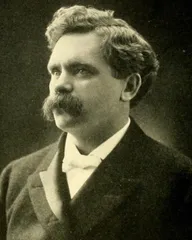
B. H. Roberts
Improvement Era, vol. 5, no. 7, May 1902, pp. 551 to 552
EDITOR^S TABLE.
THE PRIESTHOOD AND ITS OFFICES. In the Era for February, it was stated that several persons who had acted as counselors in the First Presidency had never been ordained apostles. Several correspondents have objected to the statement that Sidney Rigdon, Jedediah M. Grant, Daniel H. Wells, John R. Winder, and others, were not ordained apostles. We still maintain, upon lack of convincing evidence to the contrary, that none of these brethren was ever ordained an apostle. We do know positively that John R. Winder, Sidney Rigdon, Wm. Law and Hyrum Smith, all of whom were members in the First Presidency of the Church, were never ordained apostles. But, be that as it
may, however, the main point we wish to make is this, that it was not necessary that they should so be ordained apostles in order to hold the position of counselor in the First Presidency. The leading fact to be remembered is that the Priesthood is greater than any of its offices; and that any man holding the Melchizedek Priesthood may, by virtue of its possession, perform any ordinance pertaining thereto, or connected therewith, when called upon to do so by one holding the proper authority, which proper authority is vested in the President of the Church, or in any whom he may designate. Every officer in the Church is under his direction, and he is directed of God. He is also selected of the Lord to be the head of the Church, and so becomes, when the Priesthood of the Church, (which includes its officers,) and its members, shall have so accepted and upheld him.
(Doctrine and Covenants section 107:22). No man can justly pre- sume to have authority to preside, merely by virtue of his Priesthood, as case with Joseph Smith of the reorganized church, for in is the
addition, he must be chosen and accepted by the Church. The reverse was the case with him. Such action was repudiated by the Twelve, the quorum in authority after the martyrdom, and by the whole Church. An office in the Priesthood is a calling, like Apostle, High Priest, Seventy, Elder, and derives all its authority from that Priest-
550 IMPROVEMENT ERA.
hood; these officers hold different callings, but the same Priesthood. The apostolic office, in its very nature, is a proselyting office. When an Apostle presides, he, like the High Priest, the Seventy, the Elder, or the Bishop, presides because of the High Priesthood which has been conferred upon him; and furthermore, because he has been called upon so to do by the acknowledged head of the Church. (Doctrine and Cove- nants, section 107:23-33.) And so with the High Priest who has been called to officiate in the First Presidency, in which case he is "accounted equal" with the President of the Church in holding the keys of the Presidency, (section 90:6) as long as the President remains. When he dies, the calling of his counselors ends, and the responsibility of Presidency falls upon the quorum of Twelve Apos- tles, because they hold the Holy Melchizedek Priesthood and are the
next quorum in authority. (Doctrine and Covenants, section 107:24) It is not the apostleship, (Doctrine and Covenants section 107) but the Priesthood and the calling by proper authority which enables any person to preside. Every man holding the Holy Melchizedek Priest- hood may act in any capacity and do all things that such Priesthood authorizes, it makes no difference what office in that Priesthood he holds, providing he is called upon by proper authority to so officiate; but he would have no right to depart from the limitations of his office, unless he is specially called upon by one whose calling, from those over him up to the head, would clearly authorize him to give such instructions. It is always to be presumed, also, that order will
be observed, and that the servants of the Lord will not depart from that order, and call upon men to do things which the law of the Priesthood and the nature of their office, does not authorize, unless there is special occasion for it. The Lord says that all things are governed by law. (See Doctrine and Covenants section 88:42). It
is not consistent, for instance, to imagine that the Lord would call
upon a deacon to baptize. Witness the calling, on Feb. 14, 1835, of David Whitmer and Martin Harris, both High Priests, by the Prophet Joseph, in conform- ity with prior revelation from God (see Doctrine and Covenants sec- tion 18) to "search out the Twelve." They chose the Twelve, or- dained, and set them apart for their exalted callings, because they