Characteristics of Deity, from a “Mormon” Viewpoint I
Improvement Era, vol. 5, no. 1, November 1901, pp. 29 to 42
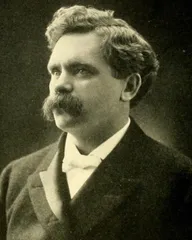
—
CHARACTERISTICS OF DEITY, FROM A "MORMON" VIEWPOINT. BY B. H. ROBERTS.
[This lecture, originally delivered before the conference of the M. I. A. of the Salt Lake stake of Zion, August 18, 1901, has been specially edited and prepared for the Era by the author, Elder B. H. Roberts. Editors.]
PART I— FORM OF GOD. My brethren and sisters, there are two things which con- join to make this Young Men's and Young conference of the Women's Improvement Associations of the Salt Lake Stake of Zion an interesting occasion. One is the approaching working season of the Young Men's Associations. They will this winter — take up a course of study in "Mormon" doctrine the first prin- ciples of the Gospel, or at least, some of them; and a large division of the Manual which has been prepared for their use will deal with the subject of the Godhead. For this reason I thought the time opportune to call attention to some of the doctrinal fea- tures pertaining to this subject. The Prophet Joseph Smith, made this important statement: "It is the first principle of the Gospel to know for a certainty the character of God;" and then he added — something which to some ears is a little offensive "and to know that we may converse with him, as one man converses with another." On the same occasion, he also said: "God himself was once as we are now, and is an exalted man, and sits enthroned in yonder heavens."* Since to know the character of God is one of
History of Joseph Smith: Millennial Star, Vol. xxiii, p. 246.
30 IMPROVEMENT ERA.
the first principles of the Gospel, the subject of the Godhead is given a prominent place in the Manual for our Young Men's associations during the coming season. That is one thing which makes this conference an interesting occasion. Another thing which contributes to the interest of this conference, and also to this subject of the Godhead, is the attention which of late has been given to what is called the "Mormon view of God" by sectarian ministers among us. This interest found ex- pression in a course of lectures during the past few months by one of the prominent ministers of this city, (this was Rev. Alfred H. Henry, Pastor First M. E. church;) and also in a discourse delivered by another minister before the Teachers' association of the Utah Presbytery, (this was Dr. Paden of the Presbyterian church, August 16, 1901) in which certain strictures were offered concerning our doctrine of God. It will perhaps be well to read the report of what, in substance was said on that' occasion by the reverend gentleman who thought proper to take up this subject before that association. I read from the synopsis of his
discourse published in one of the morning papers:
At this point Dr. Paden made his address, first taking up some of the standard writings on "Mormon" doctrine and reading from them the ideas of God as incorporated in the "Mormon" faith. He read from the Catechism in relation to the Godhead, wherein it is stated that there are not only more Gods than one, but that God is a being of parts, with a body like that of a man. He then read from the Doctrine and Coven- ants, where it is stated that the words of the priesthood are the words of God. After calling attention to the material view of God as set forth in these teachings, the speaker said that he thought he could see a tend- ency towards a more spiritual idea of God among the younger and more enlightened members of the dominant church, and noticed this in the writings of Dr. Talmage especially. Eeferring to the Adam-God idea, the speaker said that he had not investigated it much, but thought that the "Mormon" Church was ashamed of such an idea. He placed special stress on the idea thatwhen men attempted to give God a human form they fashioned him after their own weaknesses and frailties. A carnal man, he said, had a carnal God, and a spiritual man a spiritual God. The teaching of a material God, said he, and of a plurality of Gods, I think is heathenish. The material conception of God is the crudest possible con- ception.
CHARACTERISTICS OF DEITY. 31
I take it that we may classify under three heads the com- plaints here made against us with reference to the doctrine of Deity. First, we believe that God is a being with a body, in form like man's; that he possessess body, parts and passions; that, in a word, God is an exalted man. Second, we believe in a plurality of Gods. Third, we believe that somewhere, and some time, through development, through enlargement, through purification until per- fection is attained, man at the last, may become like God — a God. I think these three complaints may be said to cover the whole ground of what our reverend critics regard as our errors in doc- trine on the subject of Diety. The task before me, on this occasion, is to take this subject and present to you what in reality the Church of Jesus Christ of Latter-day Saints teaches with reference to the Godhead. Very naturally, one stands in awe of the subject, so large it is, One can only approach it with feelings of and so sacred it is. reverential awe, and with a deep sense of his own inability to grasp the truth and make it plain to the understandings of men. In the presence of such a task, one feels like invoking the powers divine to aid him in his undertaking; and, paraphrasing Milton a little,
one could well cry aloud, What in me is dark, illumine; what low, raise and support, that to the height of this great argument I may justify the faith we hold of God. Here let me say that we are dependent upon that which God has been pleased to reveal concerning himself for what we know of him. Today, as in olden-times, man cannot by searching find out God.* While it is true that in a certain sense the heavens declare his glory, and the firmament showeth his handiwork, and proclaim to some extent his eternal power and Godhead, yet noth- ing absolutely definite with respect of God may be learned from those works of nature: I will narrow the field still more, and say (
that such conceptions of God as we entertain must be in harmony with the doctrines of the New Testament on this subject; for, accepting as we do, the New Testament as the word of God at —
- Job xi:7.
32 IMPROVEMENT ERA
least, as part of it — any modern revelation which we may claim to possess must be in harmony with that revelation. Consequently, on this occasion, all we have to do is to consider the New Testa- ment doctrine with reference to the Godhead. This, I believe,
will simplify our task. Start we then with the teachings of the Lord Jesus Christ. It is to be observed in passing that Jesus himself came with no abstract definition of God. Nowhere in his teachings can you find any argument about the existence of God. That- he takes for granted; assumes as true; and from that basis proceeds as a teacher of men. Nay more; he claims God as his Father. It is
not necessary to quote texts in proof of this statement; the New Testament is replete with declarations of that character. What may be of more importance for us at the present moment is to call attention to the fact that God himself also acknowledged the relationship which Jesus claimed. Most emphatically did he do so on the memorable occasion of the baptism of Jesus in the river Jordan. You remember how the scriptures, according to Matthew, tell us that as Jesus came up out of the water from his baptism, the heavens were opened, and the Spirit of God descended like a dove upon him; and at the same moment, out of the stillness came the voice of God, saying, "This is my beloved Son, in whom I am well pleased." On another occasion the Father acknowledges the relationship —at the transfiguration of Jesus in the mount, in
the presence of three of his apostles, Peter and James and John, and the z ;'igels Moses and Eiias. The company was overshadowed by a glorious light, and the voice of God was heard to say of Jesus, "This is my beloved Son; hear him." Of this the apostles in sub- sequent years testified, and we have on record their testimony. So that the existence of God the Father, and the relationship of Jesus to him, is most clearly shown in these scriptures. But Jesus him- self claimed to be the Son of God, and in this connection there is clearly claimed for him divinity, that is to say, Godship. Let me read to you a direct passage upon that subject; it is to be found in the gospel according to St. John, and reads as follows:
In the beginning was the Word, and the Word was with God, and the Word was God. * * And the Word was made flesh,
CHARACTERISTICS OF DEITY. 33
and dwelt among us, (and we beheld his glory, the glory as of the only begotten of the Father), full of grace and truth.*
— The identity between Jesus of Nazareth "the Word made flesh" —and the "Word" that was "with God in the beginning," and that "was God," is so clear that it cannot possibly be doubted. N So that the Son is God, as well as the Father is God. Other evidences go to establish the fact that Jesus had the Godlike power of crea- tion. In this very passage I have just read, it is said:
All things were made by him; [that is, by the Word] and without him was not anything made that was made. In him was life; and the life was the light of men.f
One other scripture of like import, but perhaps even more emphatic than the foregoing, is that saying of Paul's in the epistle to the Hebrews:
God, who at sundry times and in divers manners spake in time past unto the fathers by the prophets, hath in these last days spoken unto us
by his Son, whom he hath appointed heir of all things, by whom also he made the worlds.J
Not only one world, but many worlds, for the word is used in the plural. So that we find that God the Son was God the Father's agent in the work of creation, and that under the Father's direc- tion he created many worlds. There can be no question then as to the divinity, the Godship, of Jesus of Nazareth, since he is not only God the Son but God the Creator also — of course under the direc- tion of the Father. Again, the Holy Ghost is spoken of in the scriptures as God. I think, perchance, the clearest verification of that statement is to be found in connection with the circumstance of Ananias and his wife attempting to deceive the apostles with reference to the' price for which they had sold a certain parcel of land they owned, which price they proposed putting into the common fund of the Church; but selfishness asserted itself, and they concluded to lie as to the price of the land, and only consecrate a part to the common
- John i.
f Verses 3, 4. % Heb. i: 1-3.
34 IMPROVEMENT ERA.
fund. It was an attempt to get credit for a full consecration of
what they possessed, on what was a partial dedication of their goods. They proposed to live a lie, and to tell one if necessary to cover the lie they proposed to live. When Ananias stood in the presence of the apostles, Peter put this very pointed question to him: "Why hath Satan filled thine heart to lie to the Holy Ghost?"
- "Thou hast not lied unto men, but unto God."* To lie to the Holy Ghost is to lie to God, because the Holy Ghost is God. And frequently in the scriptures the Holy Spirit is spoken of in this way. These three, the Father, Son, and the Holy Ghost, it is true, are spoken of in the most definite manner as being God; but the distinction of one from the other is also clearly marked in the
scriptures. Take that circumstance to which I have already alluded —the baptism of Jesus. There we may see the three distinct personalities most clearly.The Son coming up out of the water from his baptism; the heavens opening and the Holy Spirit de- scending upon him; while out of heaven the voice of God is heard saying, "This is my beloved Son, in whom I am well pleased." Here three Gods are distinctly apparent. They are seen to be distinct from each other. They appear simultaneously, not as one, but as three; and however completely they may be one in spirit, in pur- pose, in will, they are clearly distinct as persons —as individuals. In several instances in the scriptures these three personages are accorded equal dignity in the Godhead. An example is found in the commission which Jesus gave to his disciples after his res- urrection, when he sent them out into the world to preach the gos- pel to all nations. He stood in the presence of the eleven, and said:
All power is given unto me in heaven and in earth. Go ye, there- fore, and teach all nations, baptizing them in the name of the Father, and of the Son, and of the Holy Ghost.f
Each of the three is here given equal dignity in the Godhead. Again, in the apostolic benediction:
- Acts v.
tMatt. xxviii: 18-20.
CHARACTERISTICS OF DEITY. 35
May the grace of our Lord Jesus Christ, the love of God, and the communion of the Holy Ghost be with you all.
In one particular, at least, Jesus came very nearly exalting the Holy Ghost to a seeming superiority over the other personages in the Godhead; for he said:
All manner of sin and blasphemy shall be forgiven unto men; but the blasphemy against the Holy Ghost shall not be forgiven unto men. And whosoever speaketh a word against the Son of Man, it shall be for- given him: but whosoever speaketh against the Holy Ghost, it shall not be forgiven him, neither in this world, neither in the world to come.*
I take it, however, that this seeming superior dignity accorded to the Holy Ghost by the Son of God, is owing to the nature of the third personage in the Trinity, and the kind of testimony he can impart unto the soul of man because of his being a personage of spirit — a testimony that is better than the seeing of the eye, more sure than the hearing of the ear, because it is spirit testify- — — ing to spirit soul communing with soul it is the soul of God imparting to the soul of man; and if men, after receiving that wit- ness from God shall blaspheme against it, farewell hope of forgive- ness for such a sin, in this world or in the world to come! These three personages are of equal dignity in the Godhead, according to the teachings of the New Testament, which teach- ings, I pray you keep in mind, we most heartily accept. This simple Christian teaching respecting the Godhead, gave birth to what in ecclesiastical history is called "The Apostles' Creed." A vague tradition hath it that before the Apostles dis- persed to go into the world to preach the gospel they fomulated a creed with respect of the Church's belief in God. Whether that tradition be true or not, I do not know, and for matter of that, it makes little difference. Suffice it to say that the so-called "Apostles' Creed," for two centuries expressed the faith of the early Christians upon the question of God. It stands as follows:
I believe in God, the Father, Almighty; and in Jesus Christ, his only Begotten Son, our Lord, who was born of the Virgin Mary by the
- Matt, xii: 31, 32.
36 IMPROVEMENT ERA.
Holy Ghost, was crucified under Pontius Pilate, buried, arose from the dead on the third day, ascended to the heavens, and sits at the right
hand of the Father, whence he will come, to judge the living and the dead; and in the Holy Ghost.
This was the first formulated creed upon the subject of the God- head, so fur as known; and the ancient saints were content to allow this expression of their belief to excite their reverence without arous- ing their curiosity as to the nature of God. Happy, perhaps, for this world, certainly it would have contributed to the honor of ecclesias- tical history, had this simple formula of the New Testament doctrine respecting God been allowed to stand sufficient until it should please God to raise the curtain yet a little more and give definite rev- elation with respect of himself and especially of his own nature. But this did not satisfy the so-called Christians at the close of the third and the beginning of the fourth century. By a succession of most bitter and cruel persecutions, the great, strong characters among the Christians by that time had been stricken down; and, as some of our historians record it, only weak and timorous men were left in the church to grapple with the rising power of "science," falsely so-called.For a long time the paganization of the Christian religion had been going on. The men who esteemed themselves to be philosophers must needs corrupt the simple truth of the "Apostles' Creed," respecting the three persons of the God- head, by the false philosophies of the orient, and the idle specula- tions of the Greeks; until this simple expression of Christian faith in God was changed from what we find it in the "Apostles' Creed"
to the "Athanasian Creed," and those vain philosophizings and defi- nitions which have grown out of it, and which reduce the dignity of the Godhead to a —to a "being" impersonal, mere vacuum in-
corporeal,without a body, without without passions; and parts, I
might add without sense or reason or any other attribute —an also,
absolute nonentity, which they placed in the seat of God, and at- tempted to confer upon this conception divine powers, clothe it with divine attributes, and give it divine honors! Let us now consider the form of God. In those scriptures which take us back to the days of creation, when God created the earth and all things therein —God is represented as saying to some- one:
CHARACTERISTICS OF DEITY. 37
Let us make man in our image, after our likeness. * * * So God created man in his own image, in the image of God created he him, male and female created he them.
Now, if that were untouched by "philosophy," I think it would not be difficult to understand. Man was created in the image and likeness of God. What idea does this language convey to the mind of man, except that man, when his creation was completed, stood forth the counterpart of God in form?But our philoso- phers have not been willing to let it stand so.They will not have God limited to any form. They will not have him prescribed by the extensions of his person to some line or other of limitation. No; he must needs be in his person, as well as in mind or spirit, all-pervading, filling the universe', with a center nowhere, with a circumference everywhere. We must expand the person of God out until it fills the universe. And so they tell us that this plain, simple, straightforward language of Moses, which says that man — was created in the image of God and which everybody can under- stand—means, not the image of God's personality, but God's "moral image!" Man was created in the moral image of God, they say. It is rather refreshing in the midst of so much nonsense that
is uttered upon this subject, in order to hide the truth and perpet-
uate the false notions of a paganized Christianity, to find now and then a Christian scholar who rises up out of the vagaries of modern Christianity and proclaims the straightforward truth. Let me read to you the words of one such —the Rev. Dr. Charles A. Briggs; and this note will be found in the Manual that your Im- provement Associations will use the coming winter. It may be said, of course, by our Presbyterian friends, that Dr. Briggs is a heretic; that he has been cast out of their church. Grant it; but with open arms, he has been received by the Episcopal church, and ordained into its priesthood; and has an influence that is consider- able in the Christian world, notwithstanding the door of the Pres- byterian church was shut in his face. But however heretical Dr. Briggs' opinions may be considered by his former Presbyterian brethren, his scholarship at least cannot be challenged. Speaking of man being formed in the image and likeness of God, he says:
Some theologians refer the form to the higher nature of man [that
—
38 IMPROVEMENT ERA.
is, to that moral image in which it is supposed man was created]; but there is nothing in the text or context to suggest such an interpretation. The context urges us to think of the entire man as distinguished from the lower forms of creation, — that which is essential to man, and may be — communicated by descent to his seed. The bodily form cannot be ex- cluded from the representation.*
I say it is rather refreshing to hear one speak like that whose
scholarship, at least, is above all question. And yet still another voice; and this time from one who stands high in scientific circles, one who has written a work on the "Harmony of the Bible and Science," which is a most valuable contribution to that branch of
literature. The gentleman I speak of is a Fellow of the Royal As- tronomical Society, and principal of the College at Highbury New Park, England. On this subject of man being formed in the image of God, he says:
I think the statement that man was made in the Divine image is in- tended to be more literal than we generally suppose; for judging from what we read throughout the scriptures, it seems very clear that our Lord, as well as the angels, had a bodily form similar to that of man, only far more spiritual and far more glorious; but which, however, is in- visible to man unless special capabilities of sight are given him, like that experienced by Elisha's servant when, in answer to the prophet's prayer, he saw the heavenly hosts surrounding the city of Dothan.
After discussing this question at some length, and bringing to bear upon it numerous Biblical illustrations, this celebrated man Samuel Kinns —whose scientific and scholarly standing I have already referred to, speaks of the effect of this belief upon man, and thus concludes his statement on that head:
I am sure if a man would only consider a little more the divinity of his human form, and would remember that God has indeed created him in his own image, the thought would so elevate and refine him that he would feel it his duty to glorify God in his body as well as in his spirit.
But, as a matter of fact, I care not a fig for the statements of either learned divines or scientists on this subject; for the reason that we have higher and better authority to which we can
Messianic Prophecy, (Briggs) p. 70.
CHARACTERISTICS OF DEITY. 39
appeal —the scriptures. And here I pass by that marvelous ap- pearance of God unto Abraham in the plains of Mamre, when three men came into his tent, one of whom was the Lord, who conversed with him, and partook of his hospitality, and disclosed to him his intention with reference to the destruction of Sodom and Gomorrah.* I pass by also that marvelous revelation of God to Joshua,
when Joshua drew near to Jericho and saw a person in the form of a man standing with sword in hand; Joshua approached him and said: "Art thou for us, or for our adversaries?" "Nay," replied the person, "but as captain of the host of the Lord am I now come." And Joshua bowed himself to the very earth in reverence, and worshiped that august warrior.f Do not tell me that it was an "angel"; for had it been an angel, the divine homage paid by Israel's grand old warrior would have been forbidden. Do you not remember the time when John the beloved disciple stood in the presence of an angel and bowed down to worship him, and how the angel quickly caught him up and said, "See thou do it not: for I am thy fellow servant, and of thy brethren the prophets, and of them which keep the sayings of this book: worship God"?J The fact that this personage before whom Joshua bowed to the earth received divine worship at his hands, proclaims trumpet-tongued that he indeed was God. Furthermore, he bade Joshua to remove the shoes from his feet, for even the ground on which he stood was holy. I pass by that marvelous vision given of the Son of God to a pagan king. This king had cast the three Hebrew children into the fiery furnace, and lo! before his startled vision were four men walking about in the furnace, "and," said he,
"the form of the fourth is like the Son of God."§ I pass by, I say, such incidents as these and come to more important testimony. The great Apostle to the Gentiles writing to the Colossian
- Gen. xviii.
t Joshua, v. 13, 14. $ Rev. 22: 8, 9. Also Rev. 19: 10. § Dan. 3: 25.
40 IMPROVEMENT ERA.
saints, speaks of the Lord Jesus Christ, "in whom we have redemp- tion through his blood, even the forgiveness of sins," as being in "the image of the invisible God."* Again, writing to the Hebrew saints, and speaking of Jesus, he says: Who being the brightness of his [the Father's] glory, and the ex- press image of his [the Father's] person, and upholding all things by the word of his power, when he had by himself purged our sins, sat down on the right hand of the Majesty on high.f In the face of these scriptures, will any one who believes in the Bible say that it is blasphemy to speak of God as being pos- sessed of a bodily form? We find that the Son of God himself stood among his fellows as a man, with all the limitations as to his body which pertain to man's body; with head, trunk and limbs; with eyes, mouth, and ears; with affections, with passions; for he exhib- ited anger as well as love in the course of his ministry; he was a man susceptible to all that man could suffer, called by way of pre- eminence the "man of sorrows," and one "acquainted with grief;" for in addition to his own, he bore yours and mine, and suffered that we might not suffer if we would obey his gospel. And yet we are told that it is blasphemy to speak of God as being in human form —that it is heathenism. In passing, let me call your atten- tion to the fact that our sectarian friends are pretending to the use of gentle phrases now. They do not propose any more to hurt our feelings at all by harshness. We are to be wooed by gentle methods. And yet they denounce a sacred article of our faith as "heathenism!" I think if we were to use such language with reference to them, they would not commend it for its gentleness.
But I have a text to propose to them: "What think ye of Christ?" I suppose that thousands of sermons every year are preached from that text by Christian ministers. And now I arraign them before their favorite text, and I ask them, What think ye of Christ? Is he God? Yes. Is he man? — Yes there is no escap- ing it. His resurrection and the immortality that succeeds
- Col. 1: 15.
fHeb. 1: 1,2.
CHARACTERISTICS OF DEITY. 41
his resurrection is a reality. He himself attested it in numerous ways. He appeared to a number of the apostles, who, when they saw him, were seized with fright, supposing they had seen a spirit; but he said unto them: "Why are ye troubled? And why do thoughts arise in your hearts? Behold my hands and my feet, that it is I myself: handle me, and see; for a spirit hath not flesh and bones, as ye see me have."* Then in further attestation of the reality of his existence, as if to put away all doubt, he said, "Have ye here any meat?" And they brought him some broiled fish and honeycomb, and "he took it, and did eat before them."f Think of it! A resurrected, immortal person actually eating of material food! I wonder that our spiritually-minded friends do not arraign him for such a material act as that after his resurrec- tion! A Scotch Presbyterian is particularly zealous for a strict observance of the Sabbath. One who was a little liberal in his views of the law pertaining to the Sabbath was once arguing with an orthodox brother on the subject, and urged that even Jesus so far bent the law pertaining to the Sabbath that he justified his dis- ciples in walking through the fields of corn on the Sabbath, and rubbing the ears of corn in their hands, blowing away the chaff, and eating the corn. "0 weel," says Donald, "mebbe the Lord did that; but it doesna heighten him in my opinion." And so this resur- rected second personage of the Godhead ate material food after his resurrection; but I take it that the fact does not heighten him in the opinion of our ultra spiritually minded folk. It comes in
conflict, undoubtedly, with their notions of what life ought to be after the resurrection. But not only did he do this, but with his resurrected hands he prepared a meal on the sea shore for his own disciples and invited them to partake of the food that he with his resurrected hands had provided.^ Moreover, for forty days he continued ministering to his disciples after his resurrection, eating and drinking with them,§ and then, as they were gathered together on one occasion, lo! he ascended from their midst, and a cloud received him out of their
- Luke 24: 36-39. tLuke 24: 41-43. JJohn 21: 9-13 and Acts 10:41. § Acts x: 41.
42 IMPROVEMENT ERA.
sight. Presently two personages in white apparel stood beside them and said: "Ye men of Galilee, why stand ye gazing up into heaven? This same Jesus, which is taken up from you into heaven, shall so come in like manner as ye have seen him go into heaven."* What! With his body of flesh and bones, with the marks in his hands and in his feet? Shall he come again in that form? The old Jewish prophet, Zechariah, foresaw that he would. He describes the time of his glorious coming, when his blessed, nail-pierced feet shall touch the Mount of Olives again, and it shall cleave in twain, and open a great valley for the escape of the distressed house of Judah, sore oppressed in the siege of their great city, Jerusalem. We are told that "They shall look upon him whom they have pierced and they shall mourn for him, as one mourneth for his only son;" and one shall look upon him in that day and shall say, "What are these wounds in thy hands and in thy feet?" and he shall answer, "These are the wounds that I received in the house of my friends."f What think ye of Christ? Is he God? Yes. Is he man? Yes. Will that resurrected, immortal, glorified man ever be dis- tilled into some bodiless, formless essence, to be diffused as the perfume of a rose is diffused throughout the circumambient air? Will he become an impersonal, incorporeal, immaterial God with- out body, without parts, without passions? Will it be? Can it
be? What think ye of Christ? Is he God? Yes. Is he an exalted man? Yes; in the name of all the Gods he is. Then, why do you sectarian ministers arraign the faith of the members of the Church of Jesus Christ, of Latter-day Saints because they believe and affirm that God is an exalted man, and that he has a body, tangible, immortal, indestructible, and will so remain embodied throughout the countless ages of eternity? And since the Son is in the form and likeness of his Father, being as Paul tells us, "in the express image of His person" — so, too, the Father God is a man of immortal tabernacle, glorified and exalted: for as the Son is, so also is the Father, a personage of tabernacle, of flesh and of bone as tangible as man's, as tangible as Christ's most glorious, resurrected body.
*Acts i: 11. t Zech. the 12th, 13th and 14th chapters. (To be concluded.)