The Story of “Mormonism”, I
Improvement Era, vol. 4, no. 8, June 1901, pp. 608 to 614
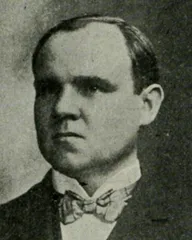
THE STORY OF '^MORMONISM/'* BY DR. JAMES E. TALMAGE, OF THE UNIVERSITY OP UTAH.
First, permit me to express the mingled satisfaction, pleasure,
and encouragement, which the present opportunity affords. I re- joice in the thought that a people, who, because notoriously un- popular, have been so generally maligned that even the passing vagrant has considered it his privilege to throw a stone or hurl*a clod at them, may now be heard at the nation's seats of learning, and by those whose profession it is to seek, because they love, the truth. To me, an assembly of students, as pupils and professors alike are, is a distinguished gathering, before which any speaker may
feel honored in appearing. Students are philosophers —lovers of wisdom by profession and in fact. In this august brotherhood, I am proud to claim some rights of fellowship, however unworthy a member I may be; and whenever I meet others of the fraternity, I feel within my soul the swelling impulses that tell of kinship. Be- fore such a gathering the speaker is bound, by more than ordinary obligations, to present his best and most mature thought as to the truth on which he treats. Our present theme is fitting to such an assembly, dealing, as it does, with living topics of profound im- portance. In the minds of many, perhaps of the majority of people, the scene of the "Mormon" drama is laid almost entirely in Utah; in- deed, the terms '* 'Mormon' question," and "Utah question" are often
- A lecture delivered by invitation at the University of Michigan,
at Cornell University, and elsewhere.
—
THE STORY OF "MORMONISM." 609
Tised interchangeably. True it is, that the development of "Mor- monism" is closely associated with the history of the long-time Territory and present State of Utah; but the origin of the system must be sought in regions far distant from the present gathering- place of the Latter-day Saints, and at a period ante-dating the ac- quisition of Utah as a part of our national domain. I have here used the term "origin" in its commonest applica- tion, —that of the first stages apparent to ordinary observation, the visible birth of the system. But a long, long period of prepar- ation led to this physical coming forth of the "Mormon" religion, a period marked by a multitude of historical events, some of them preceding by centuries the earthly establishment of this modern system of prophetic trust. The "Mormon" people regard the estab- lishment of their Church as the culmination of a long series of notable events. To them it is the result of causes unnumbered that have been operating through ages of human history, and they see in it the cause of many developments yet to appear. This to them establishes an intimate relationship between the events of their own history, and the prophecies of ancient times. In reading the earliest pages of "Mormon" history, we are in- troduced to a man whose name will ever be prominent in the story of The Church — the founder of the organization by a common usage of the term; the head of the system as an earthly establishment; —one who accepted by The Church an embassador is as specially
commissioned God, ofbe the toprophet thefirst of latter-day dis- pensation —Joseph Smith. Rarely indeed does present an history
organization, religious, social, or political, in which an individual holds as conspicuous and in all ways as important a place as does this man in the development of "Mormonism." The earnest in- vestigator, the sincere truth-seeker, can ignore neither the man nor his work; for The Church under consideration has risen from the testimony solemnly set forth, and the startling declarations made by this person, who, at the time of his earliest announce-
ments, was a farmer's boy in the first half of his teens. If his claims to ordination under the hands of divinely commissioned mes- sengers be fallacious, forming as such claims do the foundation of The Church organization, the superstructure cannot stand; if, on the other hand, such declarations be true, then indeed is there little
610 IMPROVEMENT ERA.
cause to wonder at the phenomenally rapid rise and the surprising stability of the edifice so begun. This man was born at Sharon, Vermont, in December, 1805. He was the son of industrious parents who possessed strong re- ligious tendencies and tolerant natures. For generations his an-
cestors had been laborers, by occupation tillers of the soil; and though comfortable circumstances had generally been their lot, re- verses and losses in the father's house had rendered the family almost abjectly poor; so that from his earliest days, the lad Joseph was made acquainted with the pleasures and pains of hard work. He is described as being more than ordinarily studious for his years; and when that powerful wave of religious agitation and sectarian revival which characterized the first quarter of the last century, reached the home of the Smiths, Joseph with others of the family were profoundly affected. The household became somewhat divided on the subject of religion, and some of the members identified themselves with the most popular sects; but Joseph, while having a favorable feeling for the Methodist sect in comparison with others, confesses that his soul was sorely troubled over the con- templation of the strife and tumult existing among the religious bodies; and he hesitated. He tried in vain to solve the mystery presented to him in the warring factions of what professed to be the church of Christ. Surely, thought he, these several churches, opposed as they are to one another on what appear to be the vital points, cannot all be right. While puzzling over this anomaly he chanced upon this verse of the epistle of St. James: "// any of you lack wisdom let him ask oj God, that giveth to all men liberally, and upbraideth not; and it shall be given him." In common with so many others, the earnest youth found here within the scriptures, admonition and counsel as directly applicable to his case and circumstances as if the lines had been addressed with his own name in the superscription. A brief period of hesi- tation, in which he shrank from the thought that a mortal like him- self, weak, youthful, and unlearned, should approach the Creator with a personal request, was followed by a humble and contrite re- solve to act upon the counsel of the ancient apostle. The result, to which he bore solemn record, (at first with the simplicity and enthusiasm of youth, afterward confirming the same with increas-
THE STORY OF "MORMONISM." 611
ing powers of manhood, and finally voluntarily sealing the testi- mony with his life's blood), proved most startling to the sectarian world — a world in which according to popular belief no new revela- tion of truth is possible. For while growth, progress, advance- ment, development of known truths, and the acquisition of new ones, characterize every living science, the churches of the world have declared that nothing new must be expected from the fountain- head of wisdom. The testimony of this lad is, that in response to'his supplication, drawn forth by the sacred admonitions of an inspired apostle, he received a divine ministration; heavenly beings manifested — themselves to him, two, clothed in purity, and alike in form and feature. Pointing to the other, one said, "This is my beloved Son, hear him." In answer to the lad's prayer, the heavenly personage so designated informed Joseph that the Spirit of God dwelt not with warring sects, which, while professing a form of godliness, de- nied the power thereof, and that the authority of the heavenly priesthood would yet be restored to the earth. Overjoyed at the glorious manifestation thus granted unto him, he withheld not the tidings of the heavenly vision from relatives and acquaintances. Prom the ministers, who had been so energetic in their efforts to convert the boy, he received, to his surprise, the greatest abuse and the utmost ridicule. "Visions and manifestations from God," said they, "are of the past, and all such things ceased with the apostles of old; the canon of scriptures is full; religion of men has reached its perfection in plan; and this, unlike all other sys- tems contrived or accepted by human kind, is incapable of exten- sion. It is true God lives, but he cares not for his children of modern times, as he did for those of ancient days; he has shut himself away from the people, closed the windows of heaven, and has suspended all direct communication with those of earth." The persecution thus originating with those who called themselves ministers of Christ, spread throughout the community; and the sects that before could not agree nor abide in peace for a day, were united in their efforts to oppose the youth who thus testified of facts, which though denied vehemently, produced an effect that alarmed them the more. And such a spectacle has ofttimes pre- sented itself before the world—men who cannot tolerate one an-
612 IMPROVEMENT ERA
other in peace, swear fidelity and support in strife with a common opponent. However, the importance of this alleged revelation from the heavens to the earth is such as to warrant comment '
and discussion. If a fact, it is a full contradiction of the vague theories that had been increasing and accumulating for centuries, denying personality and parts to Deity. In 1820, there lived one person who knew that the word of the Creator, "Let us make man in our own image, after our likeness," had a meaning more than in metaphor. But this wonderful vision was not the only manifestation of heavenly power and personality made to the young man; nor the only incident of the kind destined to bring upon him the unmitigated fury of persecution. Sometime after this visitation, which constituted him a living witness of God unto men, and which demonstrated the great fact that humanity is the child of Deity, he was visited by an immortal personage who
told him of an ancient record hidden where it had been placed of old in a certain hill near his home. This record, said the messenger, was engraved on plates of gold, and had been deposited by the an- cestors of the natives of this land, who were at one time a white and delightsome people. He testifies that he was told that if he remained faithful to his trust and the confidence reposed in him, he would some day receive the record into his keeping, and be commissioned and empowered to translate it. The record proved to be an account of certain colonies of immigrants to this hemisphere from the east, several centuries before the Christian era. The principal company was led by one Lehi, described as a personage of some importance and wealth, who had formerly lived at Jeru- salem in the reign of Zedekiah, and who left his eastern home about 600 B. C. The book told of the journeyings across the water, in vessels constructed according to revealed plan, of the people's landing on the western shores of South America near the spot now marked by the city of Valparaiso; of their prosperity and rapid growth amid the bounteous elements of the new world; of the in- crease of pride and consequent dissension with the accumulation of material wealth, and of the division of the people into factions which became later two great nations with deadly enmity between them. One part following Nephi, the youngest but most gifted son of Lehi, designated themselves Nephites; the other faction, led
THE STORY OF "MORMONISM." 613
by the elder and wicked brother of Nephi, whose name was Laman, were known as Lamanites. The Nephites lived in cities, some of which attained great size and were distinguished by singular architectural beauty. Con- tinually advancing northward, these people soon occupied the greater part of the valleys of the Orinoco, the Amazon, and the Magdalena. Indeed, during the one thousand years covered by this remarkable record, the Nephites had crossed the Isthmus, which is graphically described as a neck of land but a day's .I'ourney from sea to sea, and had occupied successively extensive tracts in what is now Mexico, the valley of the Mississippi, and the Eastern States. It is not to be supposed that these vast regions were all populated
at one time by the Nephites; they were continually moving to es- cape the depredations of their hereditary foes, the Lamanites and ;
they deserted in turn all their cities established along the course of migration. The unprejudiced student sees in the discoveries of the ancient and now forest-covered cities of Mexico, Central America, Yucatan, and the northern regions of South America, a verification of this history. Before their more powerful foes, the Nephites dwindled and fled; until about the year 400 A. D,, they were entirely annihilated after a series of decisive battles, the last of which was fought near the very hill, called Cumorah, in the State of New York, where the hidden record was subsequently revealed to Joseph Smith. The Lamanites led a roving, aggressive life; kept few or no records, and soon lost the art of history writing. They lived on the results of the chase, and by plunder, degenerating in habit until they became typical progenitors of the dark-skinned race, afterward discovered by Columbus and named Indians. The last writer in the ancient record was Moroni— the same personage who appeared as a resurrected being, a divinely appointed herald, to reveal the depository of the sacred documents; but the
greater part of the plates since translated had been engraved by the father of Moroni, the Nephite prophet. Mormon. This man, at once warrior, prophet and historian, had made a transcript and compilation of the heterogeneous records that had accumulated during the troubled history of the Nephite nation; this compilation was named on the plates ''The Book of Mormon," which name has
614 IMPROVEMENT ERA.
— been given to the modern translation, a work that has already made its way over most of the civilized world. The translation and publication of the Book of Mormon were marked by many scenes of trouble and contention, but success attended the undertaking, and the first edition of the work appeared in print in 1830. The question, what is the Book of Mormon?— a very pertinent one on the part of every earnest student and investigator of this — phase of American history, has been partly answered already. The work has been derisively called the "Mormon Bible," a name that carries with it the misrepresentation that in the faith of ttis people the book takes the place of the scriptural volume which is universally accepted by Christian sects. No designation could be more misleading, and in every way more untruthful. The Latter- day Saints have but one "Bible" and that the Bible. They place it foremost among the standard works of The Church; they accept its admonitions, its doctrines, and accord to them a literal signifi-
cance; it is to them, and ever has been, the word of God, a compi- lation made by human agency of works by various inspired writers; they accept its teachings in fullness, modifying the meaning in no- wise, except in the rare cases of undoubted mistranslation, concern- ing which Biblical scholars of all faiths differ and criticise; and even in such cases, their reverence for the sacred letter renders them even more cautious than the majority of Bible commentators and critics in placing free construction upon the text. The historical part of the Jewish scriptures tells of the divine dealings with the people of the eastern hemisphere; the Book of Mormon recounts the mercies and judgments of God, the inspired teachings of his proph- ets, the rise and fall of his people as organized communities on the
western world. (To be continued.)