The Church of Jesus Christ of Latter-day Saints at the Parliament of Religions
Improvement Era, vol. 2, no. 10, August 1899, pp. 750 to 766
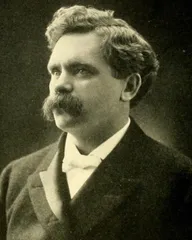
CHURCH OF JESUS CHRIST OF LAT- TER-DAY SAINTS AT THE PARLIA- MENT OF RELIGIONS.
"CHRISTIAN TREATMENT OF MORMONS."
BY B. H. ROBERTS.
in.
As before stated, the Parliament opened on the 11th of September, 1893, amid the most auspicious surroundings. One who described the opening scenes writes: Long before the appointed hour, the building swarmed with dele- gates and visitors, and the Hall of Columbus was crowded with four thousand eager listeners from all parts of the country and foreign lands. At 10 o'clock there marched down the aisle arm in arm, the representa- tives of a dozen world-faiths, beneath the waving flags of many nations, and amid the enthusiastic cheering of the vast audience. The platform at this juncture presented a most picturesque and impressive spectacle. In the center, clad in scarlet robes and seated in a high chair of state, was Cardinal Gibbons, the highest prelate of his church in the United States, who,as was fitting in this Columbian year, was to open the meeting with prayer. On either side of him were grouped the Oriental delegates, whose many colored raiment vied with his own in brilliancy. Conspicuous among these followers of Brahma and Buddha and Mohammed was the eloquent monk Vivekananda of Bombay, clad in gorgeous red apparel, his bronzed face surmounted with a huge turban of yellow. Beside him, attired in orange and white sat B. B. Nagarkar of the Brahmo-Somaj, or association of Hindu Theists, and Dharmapala, the learned Buddhist
THE CHURCH AT THE PARLIAMENT OF RELIGIONS. 751
scholar from Ceylon, who brought the greetings of four hundred and seventy-five millions of Buddhists, and whose slight, lithe person was swathed in pure white, while his black hair fell in curls upon his shoulders. There were present, also, Mohammedan and Parsee and Jain eccle- iastics, each a picturesque study in color and movement, and all eager to explain and defend their forms and faith. The most gorgeous group was composed of the Chinese and Japanese delegates, great dignitaries in their own country, arrayed in costly silk vestments of all the colors of the rainbow, and officially representing the Buddhist, Taoist, Confucian and Shinto forms of worship. In dark, almost ascetic garb, there sat among his fellow Orientals, Protab Chunder Mozoomdr. Mr. Mozoomdr, the leader of the Brahmo- Somaj, or Hindoo Theists in India, visited this country some years since, and delighted large audiences with his eloquence and perfect command of the English tongue. Another striking figure was*] the Greek Archbishop of Zante, his venerable beard sweeping his chest, his head crowned with a strange looking hat, leaning on a quaintly carved staff, and displaying a large silver cross suspended from his girdle. A ruddy-cheeked, long-locked Greek monk from Asia Minor, who sat by his side, boasted that he had never yet worn a head-covering or spent a penny of his own for food or shelter. The ebon-hued but bright faces of Bishop Arnett, of the African Methodist Church, and of a young African prince, were relieved by the handsome costumes of the ladies of the company, while forming a somber background to all was the dark raiment of the Protestant delegates and invited guests.*
The Parliament was opened with prayer by Cardinal Gibbons, who repeated the Lord's prayer, which since that time has been most appropriately and beautifully called the "universal prayer;" and indeed, for the first time I realized that our Master had given to the world a prayer that men of all shades of religious opinion and all religious belief, could join without impropriety in repeating together. Then followed addresses of welcome and responses, etc.,and day after day sessions of the Parliament went on; always interesting, sometimes intensely so. During the first session of the Parliament, the writer recalled his last interview with Dr. Barrows, and remembered that his
*From a sermon by the Rev. Wendor, of Oakland, California.
: '
752 IMPROVEMENT ERA.
language was, that my "paper would be read-" and it occurred to- me that the Rev. Doctor might mean that someone else, perhaps one of the Secretaries, would be appointed to read the paper instead of myself. Accordingly I addressed the following commu- nication to him.
My Dear Sir: You will pardon me for again intruding upon your attention, but in the last hurried interview I had with you relative to the paper on "Mormonism", I am left in a little uncertainty as to whether I am to be permitted to read my own paper or you would have it read by someone else. Now, in order that there may be a perfect understanding between us on that, to me, very important matter, I write you this note to say, that under no circumstances could I consent to have my paper read by any person but myself. Either, therefore, I must be granted the privilege of reading it, or it cannot be presented to the Parliament. The disadvantage at which the Church I represent would be placed by having an unsympathetic person read its paper is too obvious to need comment, especially in writing to you who are so well acquainted with such matters. Besides, my coming here and remaining through the sessions of this Parliament is for the purpose of reading my paper. Very respectfully and truly yours, B. H. Roberts. P. S. An answer at* your very earliest convenience will be highly appreciated, and my anxiety in the matter, my dear sir, must excuse my urgency. — B. H. R.
In reply to this communication, the following letter was received Chicago, U. S. A., September 14th, 1893. Elder B. H. Roberts, No. 1626 Michigan Ave., City. My Dear Sir: An opportunity will be given you to read your paper on Mormonism, but the date I cannot fix at present. John Henry Barrows. After six days had elapsed the following letter was received:
rnj „' Chicago U. S. A., September 20th, 1893. Elder B. H. Roberts, No. 1626 Michigan Ave., Chicago. My Dear Sir: Will you read your paper in Hall No. 3 next Mon- day morning, September 25th? Yours very truly, John Henry Barrows.
TEE CEURCE AT TEE PARLIAMENT OF RELIGIONS. 753
Hall No. 3 was one of the committee rooms at the side of the great Washington Hall where the main body of the Parliament assembled. It was capable of seating from fifty to one or two hundred people, and there had been conducted in it a section of the Parlia- ment which discussed the questions of science and religion pre- sided over by my friend, Mr. Snell. To Dr. Barrows note asking me if I would read my paper in Hall No. 3, I wrote the following answer, and as I met him be- tween the sessions of the Parliament I handed it to him. 1626 Michigan Ave., Chicago, September 21st, 1893. Rev. Dr. John Eenry Barrows, Chairman Parliament of Religions. My Dear Sir: Your note asking if I would read my paper on ''Mormonism" in Hall No. 3, next Monday morning, September 25th, was received this morning; and in reply will say that it will afford me pleas- ure to do so, provided; that such presentation shall not bar me from pre- senting the paper also before the Parliament of Religions in the Hall of Columbus. What would suit me better would [be to present another paper in Hall No. 3, on Monday, or to speak on "Mormonism" from another point of view than that presented in the paper I have prepared for the Parlia- ment; and one that would be more suited to the character of the meetings being held in Hall No. 3. Very truly and respectfully yours, B. H. Roberts.
Without taking time to read this communication, he informed me verbally that the presentation of my paper in Hall No. 3 was intended to be the only presentation that would be granted to the Mormon Church. The conversation was very hurried, but there was no mistaking the intention of the managers of the Parliament to thus get rid of what they evidently regarded a very trouble- some church and representative. The next day I addressed the following note to Dr. Barrows, which will be self-explanatory, and carries us very near the close of my connection with the Parliament: 1626 Michigan Avenue, Chicago, September 22nd, 1893. Rev. Dr. John Eenry Barrows, Chairman Parliament of Religions, My Dear Sir: After handing my note to you yesterday, and learn-
—
754 IMPROVEMENT ERA.
ing from you what I feared when I received your letter asking me if I — would read my paper on Mormonism in Hall No. 3 in the scientific section — namely, that that would be the only hearing granted to "Mor- monism," I concluded it would be necessary to write you again relative to this paper and cause I have in charge: — The Presidency of the "Mormon" Church understanding that free- dom was to be given to all religions and sects to make a statement of their respective faiths, distinguishing characteristics and achievements, etc., made application for that privilege to be extended to the "Mormon" faith. I was appointed to be its representative and came to Chicago on
that business. In my first interview with President Bonney, I learned to my sur- prise that there were serious objections raised to the admission of "Mormonism" to the Parliament, and I was led to believe that an under- standing had been reached that the request of the Presidency of that Church be not granted. I was requested by President Bonney, however, to make a statement, in writing, of the reasons why "Mormonism" should be heard, and an outline of what we would want to say if admitted, and he promised to have the matter reconsidered. I complied with the request, and as you are acquainted with those papers, further reference to them is not necessary. The result of that reconsideration was the statement of President Bonney to me that you would receive a paper on "Mormonism" from me, and make such use of it as under all the circumstances might seem wisest and best. I presented myself and paper to you, and after reminding me of the
very guarded acceptance of it promised by President Bonney, and telling me of the "stormy" meetings you had had in your committee over it after you kindly permitted me to call attention again to the reasons why the "Mormon" Church should have a hearing, and the wrong it would be not to allow her voice to be heard in the Parliament —you accepted my paper and the next day told me that you would "have it read." Fearing that might mean that you would have the paper read but not by me, I wrote you to say that I could not permit my paper to be read by any one but myself, and you courteously replied by note that an opportunity would be given me to read my paper. You now ask me if I will read it in Hall No. 3— designated as the scientific section of the Parliament. In what I am going to say, I do not cast any reflections on the char- acter and importance of the meetings held in that hall, they are both inter- esting and important in their line, and the presiding officer is both broad-
THE CHURCH AT THE PARLIAMENT OF RELIGIONS. 755
minded and courteous. I have attended a number of the meetings there and the attendance ranges from a score to one and, in some cases, two hundred or more. But now I submit that in view of all the facts as here — stated the hesitation about admitting "Mormonism" to the Parliament at all, etc., etc., — may be pardoned for saying that I to ask me to read my paper there and let that be the only hearing that "Mormonism" has, looks very like an attempt to side track the Church I represent while the Parlia- ment preserves a reputation for broad-minded toleration that could not even exclude a "Mormon," while, as a matter of fact, it hears of him either — not at all or else only as in a corner you will see at once how impossi- ble it is for me to accede to your request. Hall No. 3, whatever be said in praise of the meetings held there, isnot the Hall of the Parliament of Religions, nor the platform from — which the great religious sects and faiths have spoken Christianity, Judaism, Islam, Buddhism. Nor has there appeared in the papers any account of its proceedings. A hearing such as could be obtained in Hall No. 3 is not the kind of hearing the "Mormon" Church asks for or can accept. She asks to speak through her representative in the full Parlia- ment before all the world, having full time (half hour) allotted to her in which to proclaim to it what to her are the great truths of religion. If that cannot be accorded, she will be content with the distinction of being the one voice in all the world that could not be heard in such an
assembly, and will seek other means for expressing her views. I do not say this to urge you to give me permission to speak, nor
have I any personal interest in the matter further than to do my full duty as I understand it, to the cause and people I represent; that done I shall be content with the result. I ask you to pardon so great a trespass upon your time, which I
know is valuable, but for the life of me, I could not say less. May I
hope for an immediate reply to this as it is a matter of some importance to me as affecting my movements? Very truly and very respectfully yours, B. H. Roberts.
I communicated to Mr. Snell, the chairman of the Scientific
Section, my reasons for not accepting the invitation to read my paper in Hall No. 3, on September 25th. In the morning session of Sunday, the 24th, in Hall No. 3, that gentleman was kind enough to make that explanation to those who were there
assembled. The Chicago News of the day following, September
756 IMPROVEMENT ERA.
25th, gave the following account of his remarks under the caption here given: SPOKE FOR MORMONISM.
SECRETARY SNELL STIRS UP THE PARLIAMENT OF RELIGIONS. DECLARES THAT FAIR PLAY WAS NOT ACCORDED THE CHURCH OF LATTER- DAY SAINTS.
Merwin Marie Snell, assistant secretary to the chairman of the World's Parliament of Religions, jumped into the breach yesterday-
afternoon on behalf of the Mormon Church. Mr. Snell was full of religious fair play, besides possessing a quantity of knowledge about the Church of Jesus Christ of Latter-day Saints, and learning from Elder Roberts, president of the "Seventies" of the Church, that he would not address the branch meeting of the Parliament in Hall No. 3 at the Art Institute, as arranged on the program, decided to become a Mormon himself for the time and expound the beliefs of that religious sect. What the meeting lacked in numbers it made up in spice. Mr. Snell,
before proceeding with his presentation, took occasion to say some severe things about the committee of arrangements of the Religious Parliament. This body, Mr. Snell stated, when it was arranging its program, had voted that the Mormon Church should have no representa- tion in the Parliament. An application was made that it be allowed to make a presentation, and after consideration this was granted, but when Elder Roberts had come here he was denied the privilege of going be- fore the Parliament. All other religions of every kind and from every country were allowed to make their presentations, but this was denied the Mormons, an act that Mr. Snell considered was the "darkest blot in the history of civilization in this country. And this ineradicable blot," continued the speaker, "seems to have been due to contemptible ignorance of the religion. First told they could not go before the Parliament, then told they could, then told they could not, but could come here with their presentation. Elder Roberts declined to be thus treated and declares that unless he is allowed to deliver his presentation in the Parliament, he will proclaim to the world at large that he came here and was refused a hearing when no other religious representative was denied one." Mr. Snell proceeded to say he had, without preparation, decided to speak for the Mormons. "Are you a Mormon?" asked a ministerial-looking man who occupied, a front seat.
—
THE CHURCH AT THE PARLIAMENT OF RELIGIONS. 757
"I'm a Mormon this afternoon," was the answer. "Were you yesterday?" "That makes no difference, I am now." Continuing Mr. Snell said, the Mormon Church had suffered through the preposterous ignorance and prejudice of other religious bodies. The same was true of the Catholic Church, "I never saw a Protestant," said he, "whose mind was not full of lies about the Catholic Church." "What's that? What's that?" Interrupted the ministerial-looking gentleman again, "You say you never saw a Protestant whose "
"Yes, I say I never saw a Protestant whose mind was not full of lies about the Catholic Church." At this point another gentleman in the audience arose and took exceptions to the interruptions.The little wave of excitement passed over and Mr. Snell was allowed to proceed quietly with his talk.
To my communication of the 22nd of September I received no reply whatever, but I continued from day to day my attendance upon the Parliament, never missing a single session least the opportunity would be given and I should not be on hand to respond. At last, amid what was considered a blaze of glory, the great Parliament came to a close, on the 27th of September, 1893. As soon as the Parliament was adjourned, I began seeking an opportunity for a hearing through some of the leading papers in Chicago, but for sometime failed to awaken any interest in the subject. At last, however, I succeeded in getting a hearing through the columns of the Chicago Inter- Ocean, and published the following open letter which is a faithful history of the treatment of the Church in the World's Parliament of Religions:
TO CHARLES C. BONNEY, PRESIDENT OF THE WORLD'S CONGRESS AUXILIARY, AND DR. JOHN HENRY BARROWS, CHAIRMAN GENERAL COMMITTEE RELIGIOUS PARLIAMENT:
Gentlemen: The World's Great Parliament of Religions is over. It will take its place in the history of the ninteenth century
as one of the most important events connected with the most important century since the one in which the Messiah was born. Your names will be forever linked with it, and whatever may be its glory or its shame will reflect upon you as its chief promoters and managers. The general impression is that the Parliament, what-
758 IMPROVEMENT ERA.
ever else may be regarded as its shortcomings, has been ambitious to establish a reputation for broad-minded fairness, toleration of differences in religious thought and even-handed and high-minded justice to all men of all religious faiths, giving all an opportunity, through their accredited representatives, to set forth, without fear or favor, what to them are the great and supreme truths of religion. And I doubt not but for this page of the history of the Parliament of Religions, which it becomes my duty to write* the Parliament would fairly have achieved the reputation for fairness and toleration which it was apparently ambitious to gain. But, gentlemen, the pages of your Parliament's history are blurred with blunders that would be inexcusable in school-boys without experience ior tact; and by a spirit of narrow bigotry which, despite all your pretentions to toleration and catholicity of spirit, may plainly be discerned.
Gentlemen, the spirit and value of your Parliament will be judged by another and better Parliament, a more universal one, the Parliament of enlightened public opinion, and before that Parliament I now summon you to answer a few questions, which, in order that the force of them may appear, I find it necessary to precede by a few brief statements. In the inter-Rocky mountain region of the United States, filling those high valleys with settlements for an extent of a thousand miles, from the Canadian to the Mexican lines in fact, live a people numbering over three hundred thousand, whose history, character and religion have attracted more attention and awakened more universal interest than any religious body of modern times. It is conceded that their ecclesiastical organization is the most wonder- ful in the world, as their religious faith, perhaps, is the most remarkable. Moreover, their religion and its church organization were brought into existence by one of the most unique, as also one of the greatest characters that have arisen in American history, Joseph Smith, commonly known as the "Mormon Prophet." That religion is American in its origin, and is the most remarkable religious movement that America has to offer for the consideration of those who have come to inquire into the religions of the West. It is a religion, too, that is sanctified by the blood of its martyrs- In 1833, twelve hundred of its devotees were driven by mobs from
THE CHURCH AT THE PARLIAMENT OF RELIGIONS. 759
their homes in one county in Missouri, their weary way into the bleak Missouri bottoms made light by the flames which rose from more than two hundred of their houses set on fire by mobs. Only five years later twelve thousand were expelled from the same state
by mobocratic forces. Some four hundred, in the two drivings, were either killed outright or died from the exposure resulting from being expelled from their homes at an inclement season of the year. I say nothing of the destruction of their property and the lands of which they were robbed by these persecutions. The exiles found a refuge in Illinois for a few years, but ere long the same bitter, intolerant, sectarian spirit set at work its forces, and the results were that Joseph Smith and his brother Hyrum were mur- dered. Two years later, the Church, being continually harrassed and persecuted, scores of Saint's houses and stacks of grain having been burned, and a few more of them killed, still more of them kidnapped and whipped, commenced that wonderful exodus across wilderness and desert which pioneered the way into our greater West, where their history has been no less thrilling or dramatic than it was in Missouri and Illinois, one item being the confiscation of over a million dollars worth of Church property, 4 consisting of real estate and personal property which had been donated to the Church by its members for charitable and educational pur- poses. Were you afraid that I would speak of these things in your Parliament if admitted to your platform? Look at the paper
which I proposed to read, if admitted, a copy of which is in Dr. Barrows' hands. You will find but the very slightest reference made to these things there, for we were more anxious to tell you about the great truths of our religion than to relate our sufferings, which, if told, would have put Christians to shame before the "heathen" (?) you have invited to your Parliament. The Mormon Church occupies a striking position in the Chris- tian religious world. Let me explain. Not to you learned gentle- men, who know all about these things, but for the enlightenment of others who may read this as well as yourselves. The Catholic claim is that Jesus Christ organized his Church nineteen centuries
ago, and that from that time to this there has been an unbroken
—
760 IMPROVEMENT ERA.
line of succession in authority, and a preservation of all the truths
of the Gospel. The Protestants claim, on the other hand, that while Jesus established his Church and taught his Gospel when on earth, in the course of a few centuries false teachers arose who burdened Christianity with pagan philosophy and forms of worship foreign to its spirit and genius, and the truth of the Gospel was either subverted or its beauty buried beneath the rubbish of human invention. The great church of England and says, that "laity clergy, learned and unlearned, all ages, sects and degress have been drowned in abominable idolatry, most detested by God and damnable to man for eight hundred years and more." (Official,
Homily on Idolatry).Wesley said that the reason that the spiritual gifts of the gospel were no longer enjoyed was because the "Christians had turned heathens again and only had a dead — form left" such is the position of Protestant and Catholic. Mormonism accepting the facts of history as Protestants do, and easily perceiving that men have transgressed the laws and changed the ordinances of the Gospel, or as Protestants put it, "turned heathens again," or "that all sects have been drowned in abominable idolatry for eight hundred years and more" —Mormons, I say, insist
that, such being the case, the only way the Gospel of Jesus Christ can be restored, and divine authority to administer in its ordinances regained, is by a re-opening of the heavens and the committing of a new dispensation of it to men, which is exactly what Mormonism — claims to be the Gospelof Jesus Christ restored to the earth; and that is the message we have for the world and the declaration I desired to make at your Parliament. The questions I wish to propound to you, gentlemen, are these: First, knowing of the existence of this Church with its bold position to present and defend—with its intensely interesting his- tory, its wonderful organization, its victories in the midst of appal- ling opposition — when you were inviting all religions and sects to your Parliament, why did you not send official notice of your Par- liament to the Presidency of the "Mormon" Church, and an invita- tion to participate in its proceedings? Second, when your Parliament assembled on the 11th inst., you knew of the presence in this city of the Presidency of the
THE CHURCH AT 1HE PARLIAMENT OF RELIGIONS. 761
"Mormon" Church. Why did you not invite them to a seat on the platform of your Parliament? The veteran President of the Church, Wilford Woodruff, scarce bent beneath the weight of eighty-six years of age, though he would have appeared in no scarlet robes, or purple, or orange-colored garments, or fantastic turban, would have come in the simple attire of an American citizen. Either as the President of the Church of Jesus Christ of Latter-day Saints, or as the greatest living pioneer not only of Utah but of America, he would have graced your platform; while the simple beauty of his character and the purity of his life would do honor to any platform that either the Church or the State can erect in all this land. Why did you not invite him to yours? While you are formulating an answer to these questions, let me call your attention to a few other things: The Presidency of the "Mormon" Church generously refused to take note of the slight put upon them and the organization ,they preside over by your neglect to notifythem of your Parlia- ment, or to invite them or their representatives to participate in it,but remembering that the Church had been falsely accused of — working only among the poor and degraded could only succeed — with the ignorant were afraid to come to the ligh.t, etc., they thought to correct the error by seeking an opportunity for an exposition of its doctrines on the platform of the World's Parlia- ment of Religions, where its positions and principles could be com- pared with the attitude and doctrines of other religions by the enlightened religious thought of the age. Accordingly they wrote you, President Bonney, asking that an opportunity be granted their representative to make a statement of the "Mormon" faith, its
distinguishing characteristics, and its achievements. Shortly after the letter was sent, I was appointed to represent the Church at the Parliament. On arriving in Chicago I secured an acceptable introduction to you, President Bonney, and you generously accorded me an interview of five minutes in which to present my case. In that interview I learned that it had been decided not to grant the "Mormon's" application for a hearing in the Parliament, on account of the deep prejudice existing against the Church because of its marriage system. My friend who had introduced me to you, and through whose influence the interview was obtained, urged the
762 IMPROVEMENT ERA.
injustice there would be in not giving the Church I represented an opportunity to make a statement of her faith, and showed you some letters of introduction I had presented to him, showing my standing in: the community where I live. You finally asked what my answer would be to those who raised objections to our admission based upon the prejudice exist- ing against my people because of our marriage system. My reply, in substance, as I remember it, was: 1. That in such a gathering where non-Christians and Christians were going to meet, and where people, not only in the past but now, justified and tolerated plural marriages, it was a question that ought not to be considered.
That plural maraiages in our Church had been discontinued by
the official action of the Church, and therefore it was not a matter that should be considered when the question was discussed as to whether we should be admitted to the Parliament, as reference to it needform no part of our paper further than an announcement of its abandonment as a historic fact. You asked me to set fortk the reason in writing why we should be admitted, and also enclose an outline of what we wanted to say if admitted, and you would have the question considered. I did as you desired, and after
waiting a week or ten days and receiving no reply I returned home, acquainting you with the fact, and asking you to send to me there the final decision respecting our application. On the 2nd inst., I received a letter from you saying that "Rev. Dr. John Henry Bar- rows would receive from our Church the statement of its faith and achievements as proposed in your [my] first communication; and will make such use of it, as under all the circumstances, may seem wisest and best." Not a very cordial invitation to return to Chicago and partici- pate in the Parliament; and, sir, while it is difficult to discern the motives that underlie human conduct, and one may misjudge his fellows, I shall take the liberty of saying, until you disclaim it, that it was the purpose of your letter to discourage my coming or presenting my paper; for under all circumstances a child might see what would "seem the wisest and best" use for you to make of any paper the "Mormom" Church would prepare and send to you. It would be "wisest and best" to pigeon-hole it and conven- iently forget all about it. Sir, we live far off in the West, and it
THE CHURCH AT THE PARLIAMENT OF RELIGIONS. 763
may be that there is some hayseed about us: we are young, too, but we were not born yesterday.* Contrary, as I think, to your expectation, I prepared my paper and on the 8th inst., presented myself with it to you, Dr. Barrows, in your office.You reminded me of the guarded promise made by President Bonney of its acceptance, and then we together went
over the story of objections to the admission of a "Mormon" to the Parliament —there was a strong sentiment against us, and in your committtee you had had several "stormy" meetings, etc. I
told you in reply that "Mormonism" had a moral right to be heard in that Parliament; you talked to me about public sentiment be- ing against us. I asked you to take into account the public senti-
ment that would condemn you if you did not admit us, a sentiment, as you should have known, that will come from the fair-minded among church members and also from the forty millions of Ameri- can citizens who have no sectarian church connection —to say •nothing of the enlightened opinion of the representatives of the peoples of the Orient. It was finally decided, however, that an opportunity would be given me to read my paper, so said your note of Sept. 14th, but you could not fix the date. I waited day after day, and at last
received your note of Sept. 20th, with just this in it:
"Will you read your paper in .Hall 3 next Monday morning, Sept. 25th?"
To this I replied: "It would give me pleasure to do so pro- vided such presentation shall not debar me from presenting the paper also before the Parliament of Religions in the Hall of Columbus." I suggested, however, that I would prefer to prepare another paper for the meeting in Hall 3 that would be more in
*I regret the tone of my letter at this point. It has been criticized
by some, but by none so severely as by myself. I can only say in exten- uation that it was written hurriedly and under great stress of feeling ;
but after all allowance is made on that score, it is still a tone altogether beneath the dignity of the occasion, and I deeply regret having dropped into it, even for a moment. B. H. R.
764 IMPROVEMENT ERA.
keeping with the character of those meetings. When I handed that to you in the Columbus Hall, you gave me to understand that the reading in Hall 3 was to be all the hearing the Church I represent was to have, whereupon I told you that I could not con- sent to that arrangement, and that same day I wrote you a letter which I placed in the hands of your secretary, Thursday night, from which I quote:
"You ask me if I will read it (my paper) in Hall 3, designated as the scientific section of the Parliament. In what I am going to say I do not cast any reflection on the character and importance of the meet- ings held in that hall. They are both interesting and important in their line, and the presiding officer is both broad-minded and courteous. But — now I submit that in view of all the facts as here stated the hesitation about admitting "Mormonism" to the Parliament, etc., etc., I may be— pardoned for saying that, to me, to read my paper there and let that be the only hearing that "Mormonism" has, looks very like an attempt to sidetrack the Church I represent, while the Parliament preserves a repu- tation for broad-minded toleration that could not exclude even a "Mor- mon," while as a matter of fact it hears of him either not at all, or else only as in a corner. You will see at once how impossible it is for me to accede to your request. Hall 3, whatever may be said in praise of the meetings held there, is not the hall of the Parliament of Religions, nor the platform from which the great religious faiths have spoken. "A hearing such as could be obtained in Hall 3 is not the kind of a hearing the "Mormon" Church asks for or can accept. She asks to speak through her representative in the full Parliament before all the world, having full time (half an hour) allotted to her in which to proclaim to it what to her are the great truths of religion. If that cannot be accorded, she will be content with the distinction of being the one voice in all the world that could not be heard in such an assembly."
That letter from which the above is quoted was handed per- sonally by me to your secretary last Thursday night (21st inst.,) and, by the way, reverend sir, I have received no answer to that letter, though I urged an immediate reply, as it was a matter of some importance to me as affecting my movements. Call you that Christian courtesy? Christian etiquette it may be, for you are a Christian clergyman of high standing, and I will not presume to judge of your conduct. Now, gentlemen, 1^ have written my page in the history of
THE CHURCH AT THE PARLIAMENT OF RELIGIONS. 765
your Parliament; the world knows of your treatment, in part at least, of the "Mormon" Church. What will you say to justify your conduct? Will you say that "Mormonism" is such a new arrival in the religious field, and so small a society that you could not give it a place? I would reply, first, that you once agreed to give it a hearing in the Parliament; and, second, I ask you to think of some five or six hearings given to the representatives of the Brahmo- Somaj of India, a sect which sprang into existence about the same time that the "Mormon" Church was organized, and after its sixty-three years of existence numbers but six thousand or seven thousand followers, as against over three hundred thousand people in the Church I represent; and — the Brahmo-Somaj while I admire the ability with which its claims have been set forth by its eloquent and learned representa- tives — does not occupy so important a position in relation to the religion of India as "Mormonism" does to Christianity. Will you say that you fulfilled your agreement to give me a hearing by offering me the privilege of reading my paper in a small side-hall, where I might have from a, score to a hundred hearers? You ventured to insult me and my people with such a proposition. Don't insult the intelligence of the public by making
such a statement, expecting that they will accept it. Will you say that I represent a polygamous people? I would reply, What if I do? Do not the gentlemen who so ably repre- sented the faiths of the Orient in your Parliament, also represent polygamous peoples? But I explained to you that since the "Mor- mon" Church had officially discontinued plural marriages that sub- ject need form no part of the presentation of "Mormonism" to the
Parliament, except to announce the fact of its discontinuance. Look at the paper I prepared for the Parliament, a copy of which you hold, there is not a word about polygamy. Were you really afraid that I would announce the position of the Church on that subject? Gentlemen, you should have extended a hearty invitation to and give the "Mormon" Church to participate in your Parliament, her representative a full and fair hearing, not in some out-of-the-
way corner, but in general Parliament. You should have done that if for nothing else than to have had the joyful news pro-
766 IMPROVEMENT ERA.
claimed that polygamy had been discontinued by the "Mormons." If you thought us in error, as Christian ministers, you should have been anxious to learn and have the world find out wherein we were in error, that you, as lovers ofhuman souls could find out where we were wrong, and then in kindness and for our good show us our error— and what could have been better for you Christians than to have exposed our error from our own statement of our faith, and then reclaimed us? But you have missed your opportunity. I hold the smiling, benevolent mask of toleration and courage, behind which the Parliment has been hiding, in my hands, and the old harridan of sectarian bigotry stands uncovered, and her loathsome visage, distorted by the wrinkles of narrow-mindedness, intolerance and cowardice, is to be seen once more by all the world. Gentlemen, "where you should have been lions, you have been hares; where foxes, geese." Turn which way you will and you will be confronted by the facts which proclaim that you have shrunk before the fear of public sentiment within your churches, allunmindful of that greater public sentiment outside of your churches which demands generous, open, and fair treatment even for "Mormons", in such a gathering as your Parliament. Why, the political parties of the country have outstripped you churchmen in generosity. When plural marriages were dis- continued by official proclamation of the Church, the Gentiles of Utah accepted it as a settlement of the question that had been at issue. "Mormons" and non-Mormons ceased the strife that had raged for years in Utah ; individuals dropping the local issues, stepped within the Republican or Democratic party lines, and sent mixed delegations of the "Mormons" and non-Mormons to the great national party conventions, where they were received and given seats and votes, equal with other delegates. But you, gentlemen, who should have been the first welcome even the slightest to — change for the better— as you look at it in "Mormon" affairs, you have stood shivering in terror of public sentiment! Gentlemen, I have taken an appeal from your Parliament to a greater one, the Parliament of an enlightened public opinion, and I challenge you to appear before it and explain your conduct. Very truly and respectfully yours, B. H. Roberts.